
Rewrite code in connected nodes to repair the computer.
Trace a process that behaves unexpectedly, find an oversight, and fix it. Reviews describe the satisfaction of finally reaching the expected output.
What makes it fun
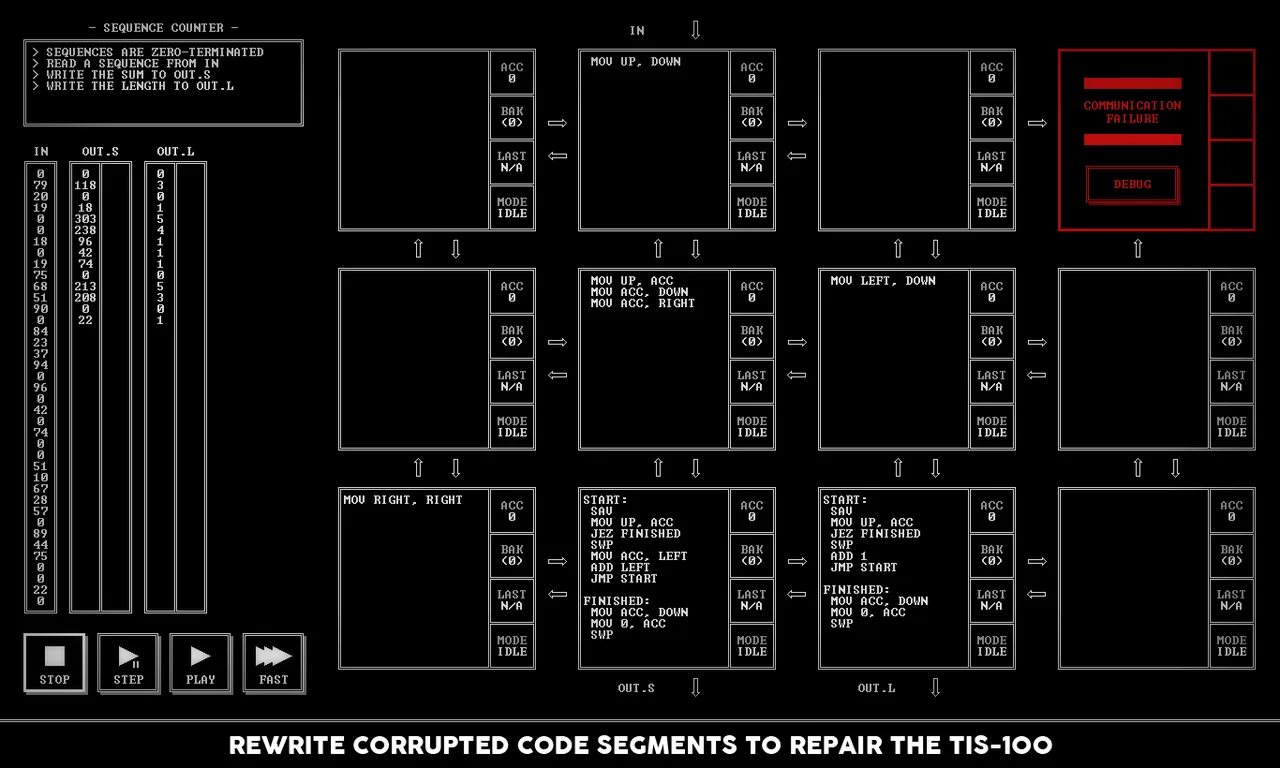
Route values through the nodes
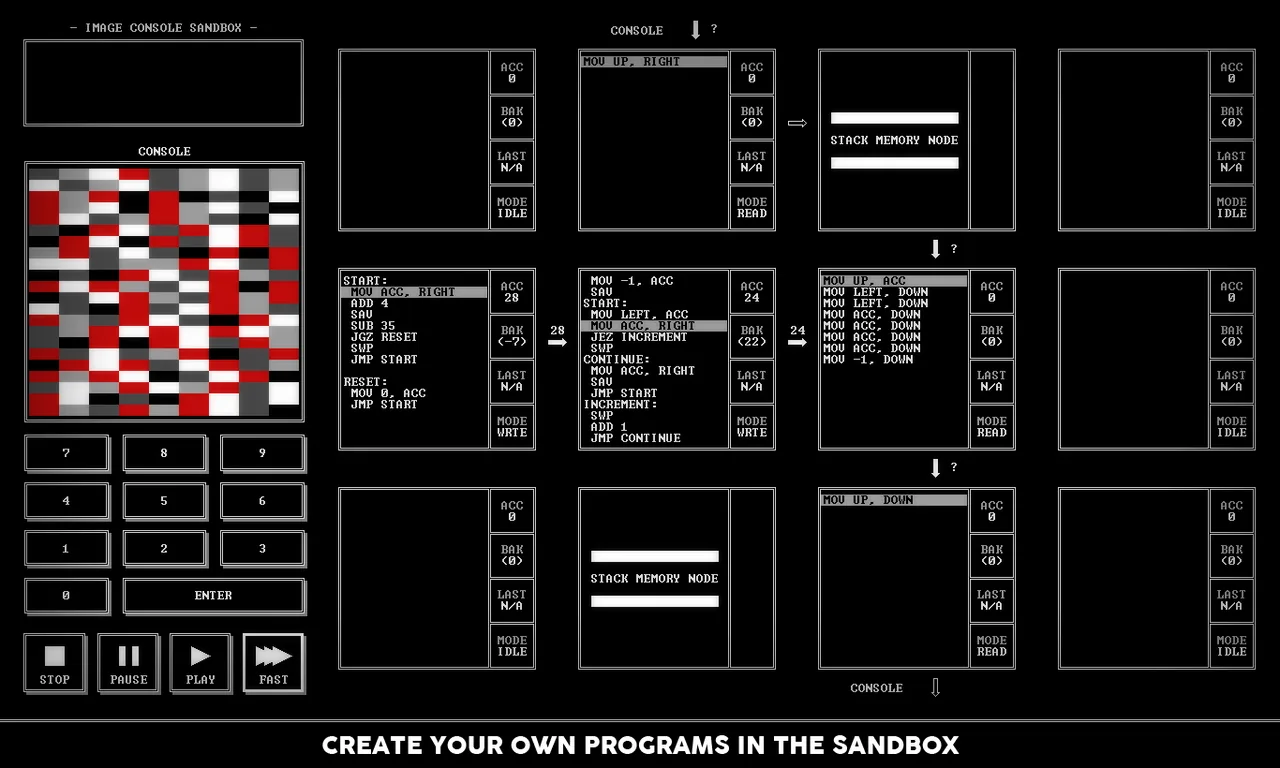
Each node has limited room for instructions, so you split the work and pass values to its neighbors. The appeal lies in making those small programs work together to produce the required output.
Find the mistimed handoff
When the output is wrong, you can step through the code or use breakpoints to follow its execution. Spotting a mistimed value transfer or a missed instruction, then fixing the output, is satisfying.
Refine a working solution
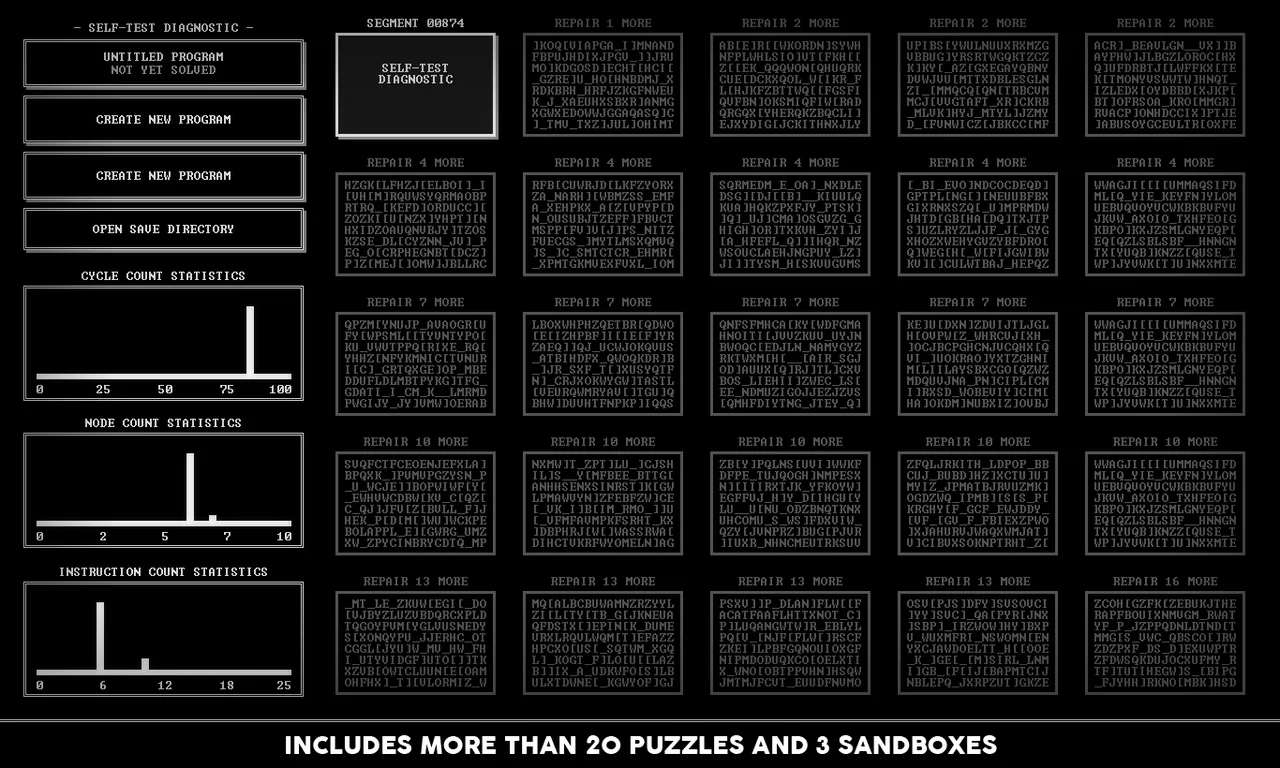
After solving a puzzle, you can revisit your code while checking its node, instruction, and cycle counts. There is still room to try a different arrangement that produces the same output.
Game details
As of Oct 29, 2026- Languages
- English / 1 language total
A typical run
An engineering student wrote out plans and felt rewarded when the code ran and produced the expected output.
What sets it apart
A humanities reviewer with little programming experience enjoyed using restricted instructions and repeated runs to approach the intended result.
Learning curve and difficulty
A reviewer describes adding code to a working solution and having to rewrite everything. It illustrates a case where a local addition was not enough.
What players like
Reviews highlight the pleasure of improving already solved problems.
Reviewers value getting a solution working despite its constraints.
Common complaints
Reviews describe getting stuck on difficult puzzles or losing a sense of enjoyment or accomplishment.
Who it’s for
For players who want to refine a working solution.
Who might not enjoy it
Choose it expecting to spend time stuck on difficult problems rather than moving through effortlessly.

97% Overwhelmingly Positive ・ US$6.99
View on Steam ↗Image: TIS-100 on Steam