Predy Media › Programming › 7 picks
Feature7 Programming Games on Steam (November 2026) | Indie games with 90%+ Positive Reviews





Image source: Steam Store (TIS-100, Opus Magnum, SHENZHEN I/O, SpaceChem, Human Resource Machine, while True: learn(), Autonauts)
Explore seven programming games on Steam, from writing instructions to designing moving machines and assigning jobs to robots. See how each one asks you to think. Start with the kind of problem you want to tackle: passing values between steps, placing parts, or dividing up jobs. Then consider whether you want to stop once a system works or keep refining its steps and speed.
See the 7 games ▾
Chosen from indie games on Steam with 90%+ positive reviews and 500+ reviews (as of Nov 4, 2026). They are listed by share of positive reviews, not ranked.

TIS-100
Separate processing from storage and work out how data should pass through the system.

Who it’s for
For readers who want to think through exchanges between small processes, trace their behaviour and fix them.
For readers who want to reduce wasted instructions and execution even after finding a working solution.
What kind of game?
You write instructions for processing units called Basic Execution Nodes.
When storage is insufficient, coordinate with other processing or storage nodes.
The decision is where to process data and where to retain values.
Reviewers appreciate the challenge of finding a solution within a restricted environment.
They also describe the joy of tracing and fixing a process until it produces the intended output.
Revisiting solved puzzles to reduce wasted instructions or execution is appreciated too.
For players who dig deeper
One reviewer describes failures caused by mistimed data transfers.
They enjoyed the moment when reordering instructions made it work.
Another reviewer suggested assigning storage or part of a function to other nodes when a process would not fit.
What reviewers say
What reviewers liked
- The challenge of finding solutions with limited instructions or storage is appreciated.
- Reviewers enjoy making their solutions more efficient.
- Reviewers describe satisfaction in tracing and fixing processes until they produce the intended output.
- Reviewers value it as an introduction to assembly-like thinking.
- Reviewers enjoy competing with friends over scores.
- Learning the system with the manual at hand is appreciated.
Concerns
- Reviewers found the later puzzles very difficult.
- Reviewers struggled with the limits on available instructions or storage.
- Reviewers found the system and explanations difficult to understand at the outset.
Key facts
- Positive review rate
- 97% Overwhelmingly Positive3,399 reviews · all languages
- Price (US)
- US$6.99
- Languages
- Japanese Not supportedEnglish Interface and subtitlesSimplified Chinese Not supportedKorean Not supported1 language in total
- Steam Deck
- Unsupported
- Release date
- Jul 21, 2015
- Developer
- Zachtronics
- Playtime (when reviewed)
- 7.7 hrsMedian when the reviews were posted (100 reviews)
Screenshots
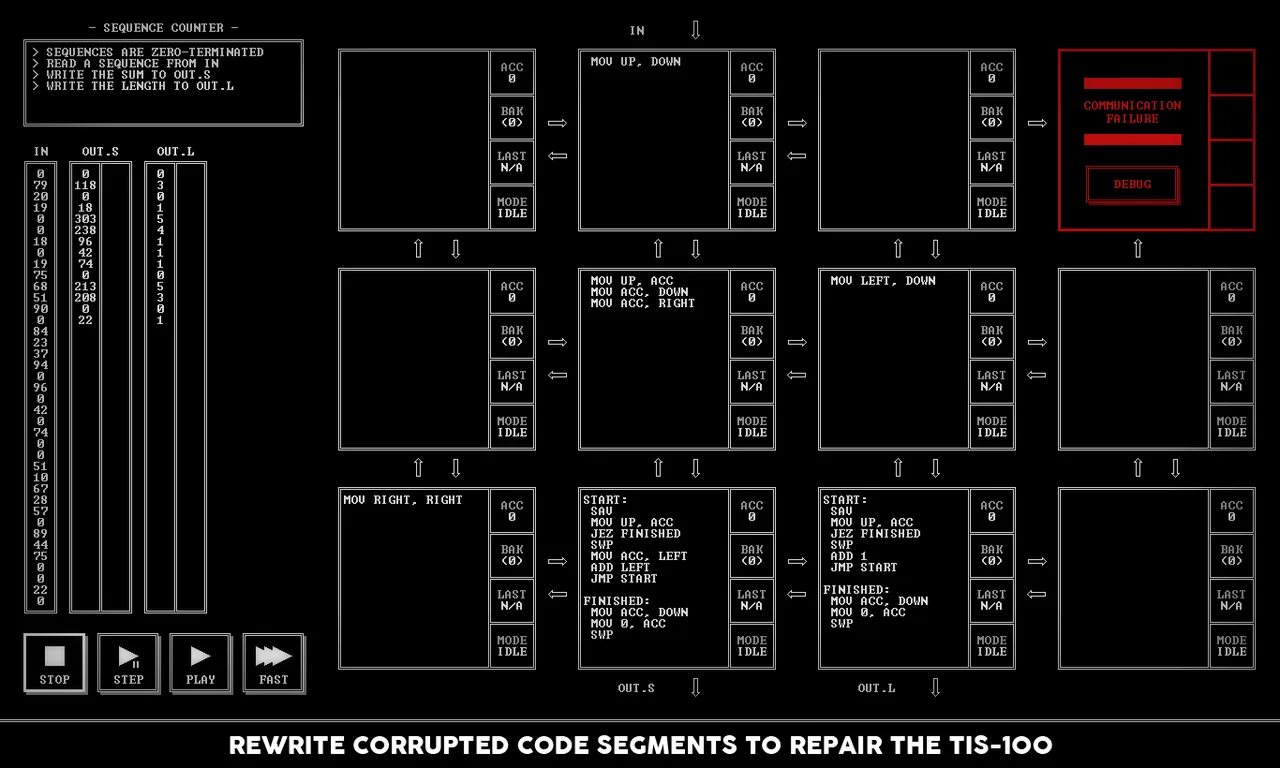
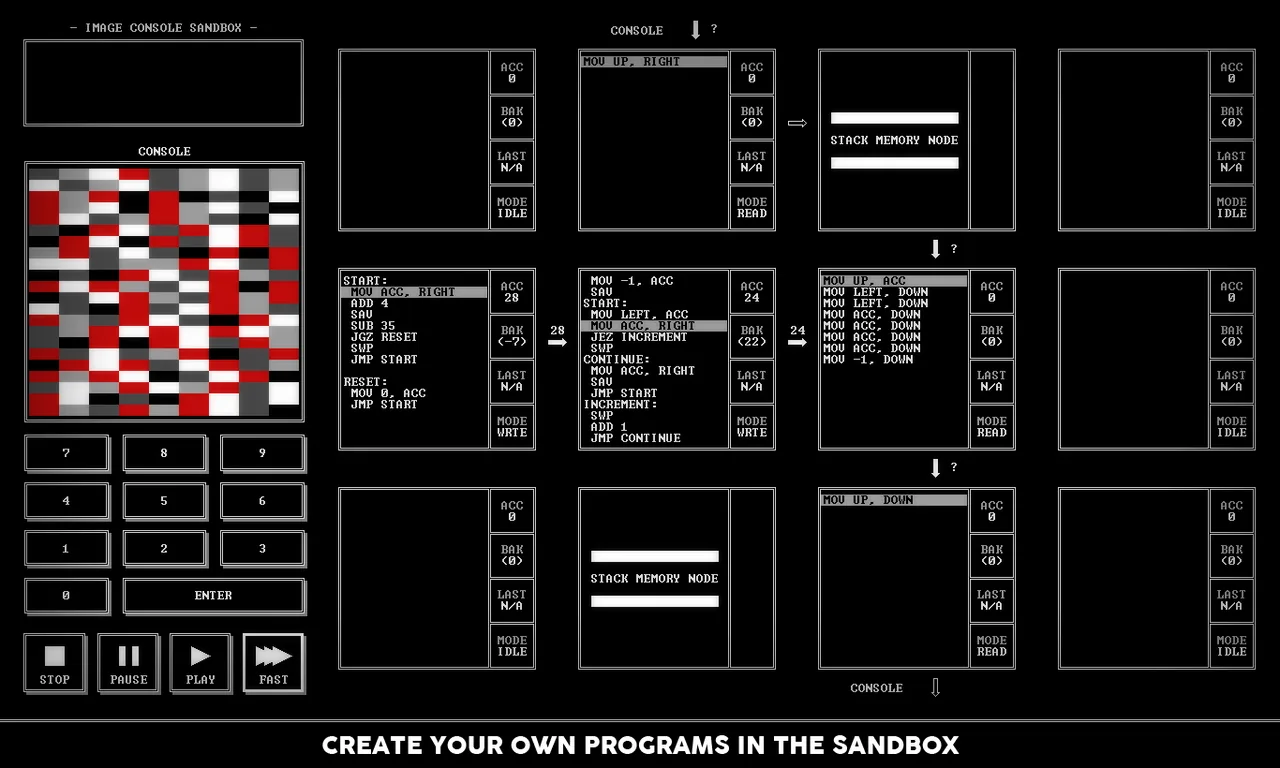
Read the full game guide →View on Steam ↗Source: TIS-100 on the Steam Store
Opus Magnum
Build a machine, watch it run, and feel drawn to make its workings more elegant.

Who it’s for
For readers who want to design a machine’s movements and enjoy watching it run.
For readers who want to revisit solved puzzles and refine designs toward different goals.
What kind of game?
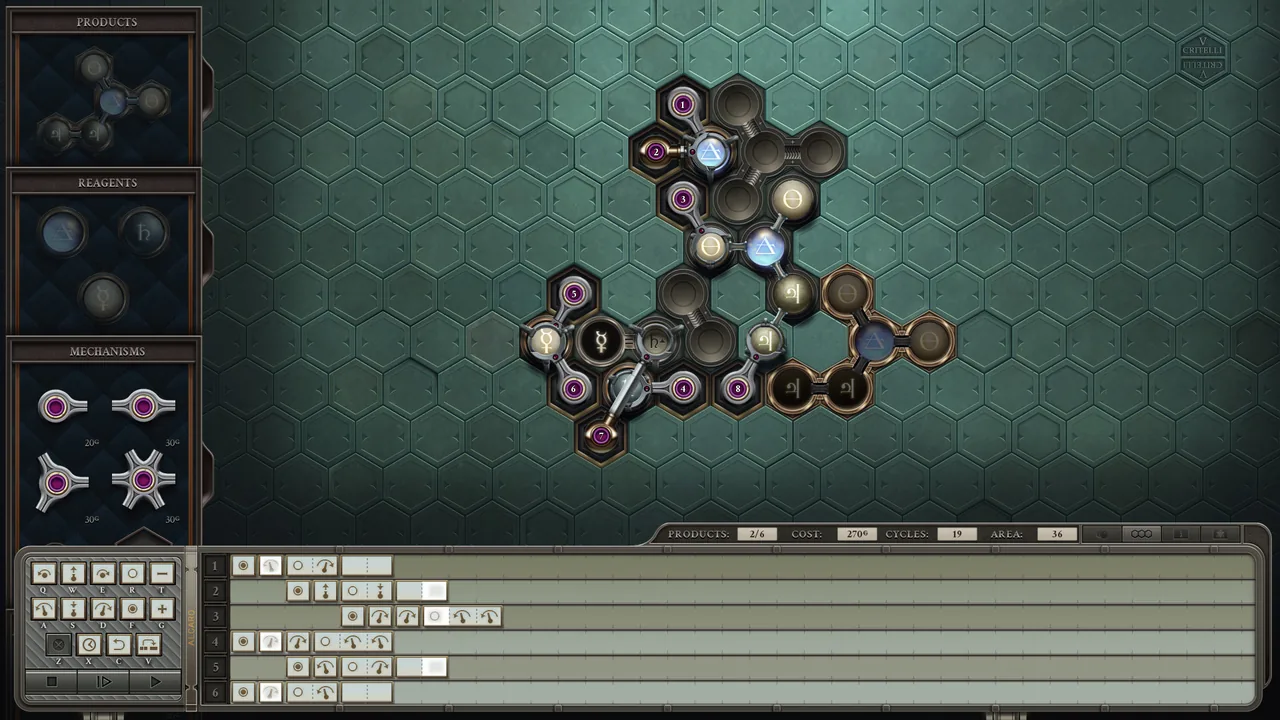
Program the arms of the transmutation engine.
Cost and occupied area shape how you arrange them.
Reviewers appreciate being able to finish a design in their own way rather than guess a prescribed answer.
Reviews also describe enjoying the sight of the machine they built in motion.
Returning to a working solution to trim wasted movement is also appreciated.
So is being able to share the finished mechanism as a GIF.
For players who dig deeper
One reviewer enjoyed replacing arms with cheaper alternatives and saving space by changing their length or how they swung.
Another enjoyed changing their approach to tackle a difficult scoring category.
They realized the method could also make earlier solutions more efficient.
What reviewers say
What reviewers liked
- Reviewers enjoy refining working solutions to make them more efficient.
- The freedom to construct a solution in one’s own way is appreciated.
- Reviewers say other people’s scores make them want to try improving.
- Reviewers enjoy watching the machines they built in motion.
- Additional puzzles after the main campaign are appreciated.
- Being able to save a machine’s movements as a GIF is appreciated.
Concerns
- Reviewers found the repetition required for the Sigmar’s Garden achievement burdensome.
- Reviewers dislike the time spent waiting for machines to run.
- Reviews call for clearer onboarding and control guidance.
Key facts
- Positive review rate
- 97% Overwhelmingly Positive6,081 reviews · all languages
- Price (US)
- US$19.99On sale on Nov 4, 2026: US$9.99 (50% off)
- Languages
- Japanese Interface and subtitlesEnglish Interface and subtitlesSimplified Chinese Interface and subtitlesKorean Interface and subtitles13 languages in total
- Steam Deck
- Playable
- Release date
- Dec 8, 2017
- Developer
- Zachtronics
- Playtime (when reviewed)
- 18.1 hrsMedian when the reviews were posted (100 reviews)
Screenshots

Read the full game guide →View on Steam ↗Source: Opus Magnum on the Steam Store
SHENZHEN I/O
Move between circuitry and code to build a device that fulfils the brief.

Who it’s for
For readers who want to consult documents and consider component placement alongside instructions.
For readers who want to keep reducing waste after getting a system to work.
What kind of game?
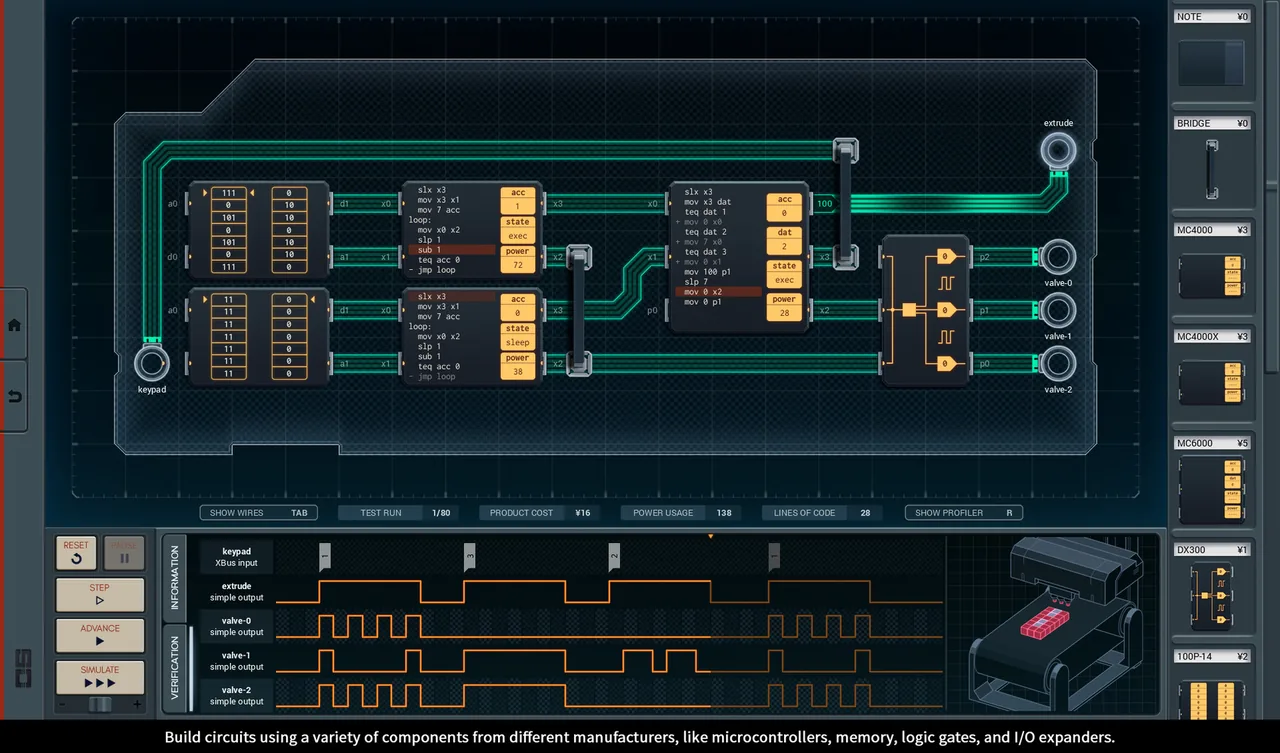
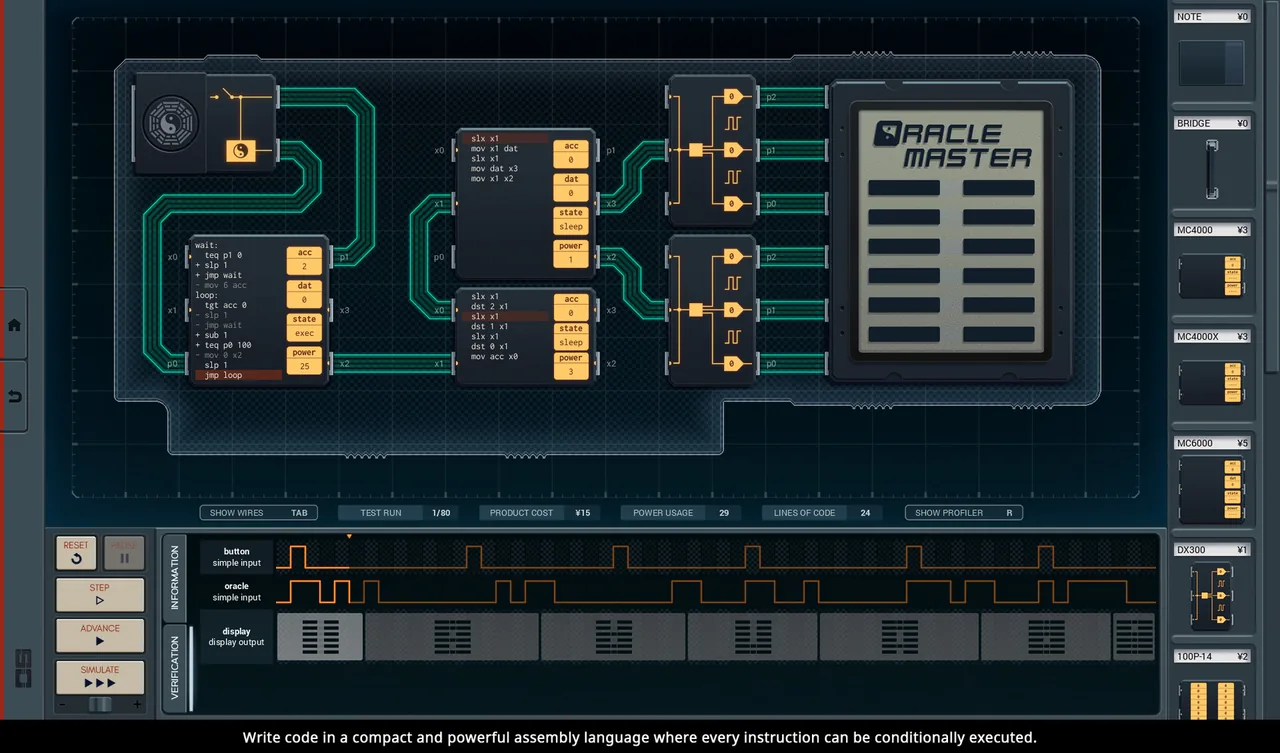
You arrange components and write conditionally executed assembly instructions.
Component costs inform your choices, including which memory components to use.
Memory has room for a finite set of values, so deciding what to retain becomes part of the design.
Reviewers appreciate considering combinations of components as well as code.
The experience of building circuits while consulting technical documents is also appreciated.
Reviewers enjoy refining efficiency after finding a working solution.
For players who dig deeper
One reviewer enjoyed reading the inputs and outputs, building the flow and checking edge cases.
They also said that pushing efficiency made the design harder to maintain.
Another reviewer described recognizing recurring problems and learning efficient ways to handle them as a key to solving puzzles.
What reviewers say
What reviewers liked
- The experience of playing with technical documents at hand is appreciated.
- Considering circuitry and code together is appreciated.
- Solitaire is also appreciated.
- Reviewers enjoy further improving the efficiency of working solutions.
- Reviewers describe satisfaction when their systems work.
Concerns
- Reviewers struggled to learn how the game works because the early guidance felt too thin.
- Reviewers found fitting components and wiring into tight spaces restrictive.
- Reviewers were held up by the difficulty of later puzzles.
Key facts
- Positive review rate
- 95% Overwhelmingly Positive3,765 reviews · all languages
- Price (US)
- US$14.99
- Languages
- Japanese Not supportedEnglish Interface and subtitlesSimplified Chinese Interface and subtitlesKorean Not supported2 languages in total
- Steam Deck
- Playable
- Release date
- Nov 18, 2016
- Developer
- Zachtronics
- Playtime (when reviewed)
- 10.7 hrsMedian when the reviews were posted (100 reviews)
Screenshots
Read the full game guide →View on Steam ↗Source: SHENZHEN I/O on the Steam Store

SpaceChem
Connect reactors and think the system through until it works.

Who it’s for
For readers who want to divide responsibilities between connected processes and keep trying until they work.
For readers who want to make a working process more efficient.
What kind of game?
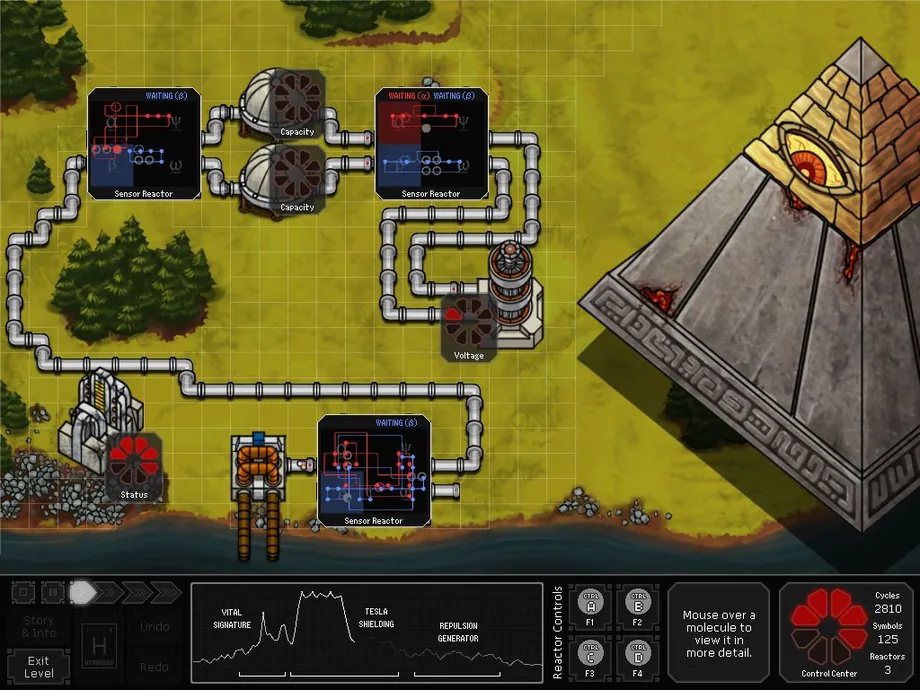
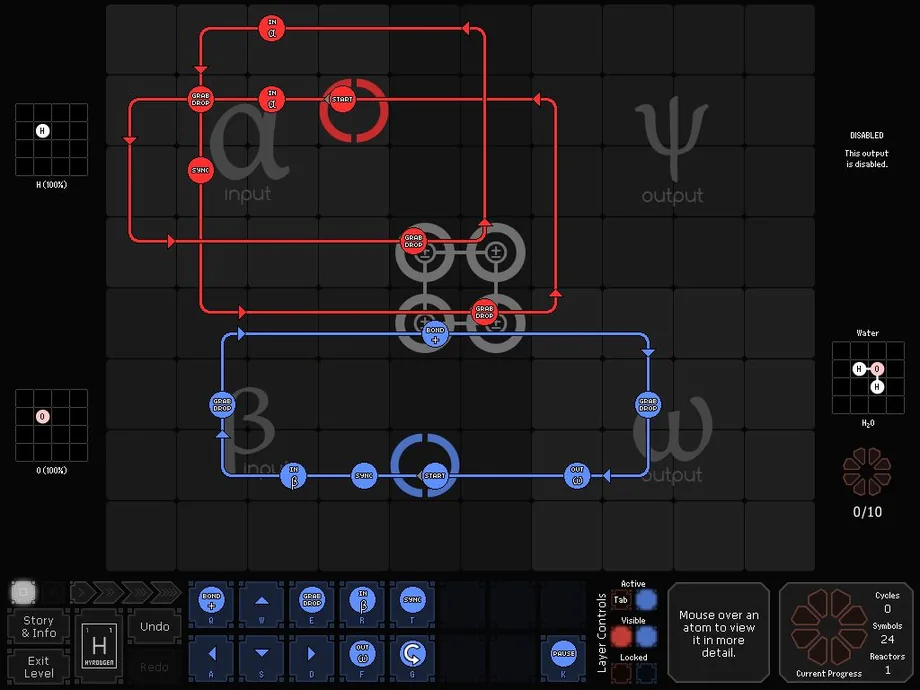
Connect reactors with pipes to process raw materials into the required products.
The reactor quota shapes where you assign each processing job.
Reviewers describe satisfaction when a system finally works after repeated attempts.
They also enjoy making the process more efficient after finding a working solution.
The freedom to devise one’s own solution is another appreciated feature.
Reviews also describe increasing difficulty, suggesting that patience with a stuck design matters.
For players who dig deeper
One reviewer found satisfaction in replanning around constraints revealed by a failed attempt.
Another reviewer said that the board space available for instructions was part of what made a successful solution beautiful.
What reviewers say
What reviewers liked
- Reviewers enjoy making their solutions more efficient.
- The freedom to devise one’s own solution is appreciated.
- Reviewers describe satisfaction in completing a working system.
- The story is appreciated as a backdrop to the puzzles.
- Comparing scores becomes part of the enjoyment.
- Community puzzles beyond the main campaign are appreciated.
Concerns
- Reviewers say the puzzles grow harder as the game progresses.
- Reviewers describe awkward controls.
- Reviewers find the restrictions on space or tools confining.
Key facts
- Positive review rate
- 95% Overwhelmingly Positive2,635 reviews · all languages
- Price (US)
- US$9.99
- Languages
- Japanese Interface and subtitlesEnglish Interface and subtitlesSimplified Chinese Not supportedKorean Not supported8 languages in total
- Steam Deck
- Playable
- Release date
- Mar 3, 2011
- Developer
- Zachtronics
- Playtime (when reviewed)
- 10.2 hrsMedian when the reviews were posted (100 reviews)
Screenshots
Read the full game guide →View on Steam ↗Source: SpaceChem on the Steam Store

Human Resource Machine
Plan how values are handled and assemble the worker’s routine.

Who it’s for
For readers who want to follow the worker’s movements while thinking through the process.
For readers who want to distinguish solving a task from pursuing extra goals and refine routines at their own pace.
What kind of game?
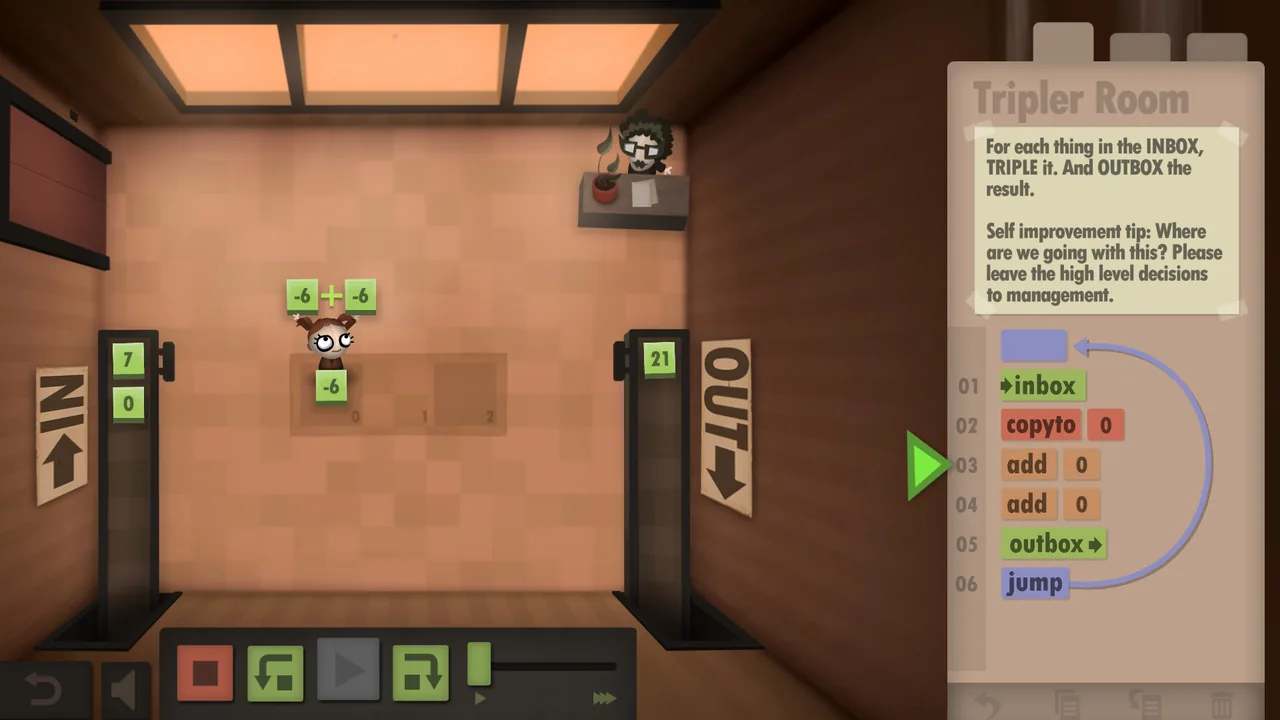
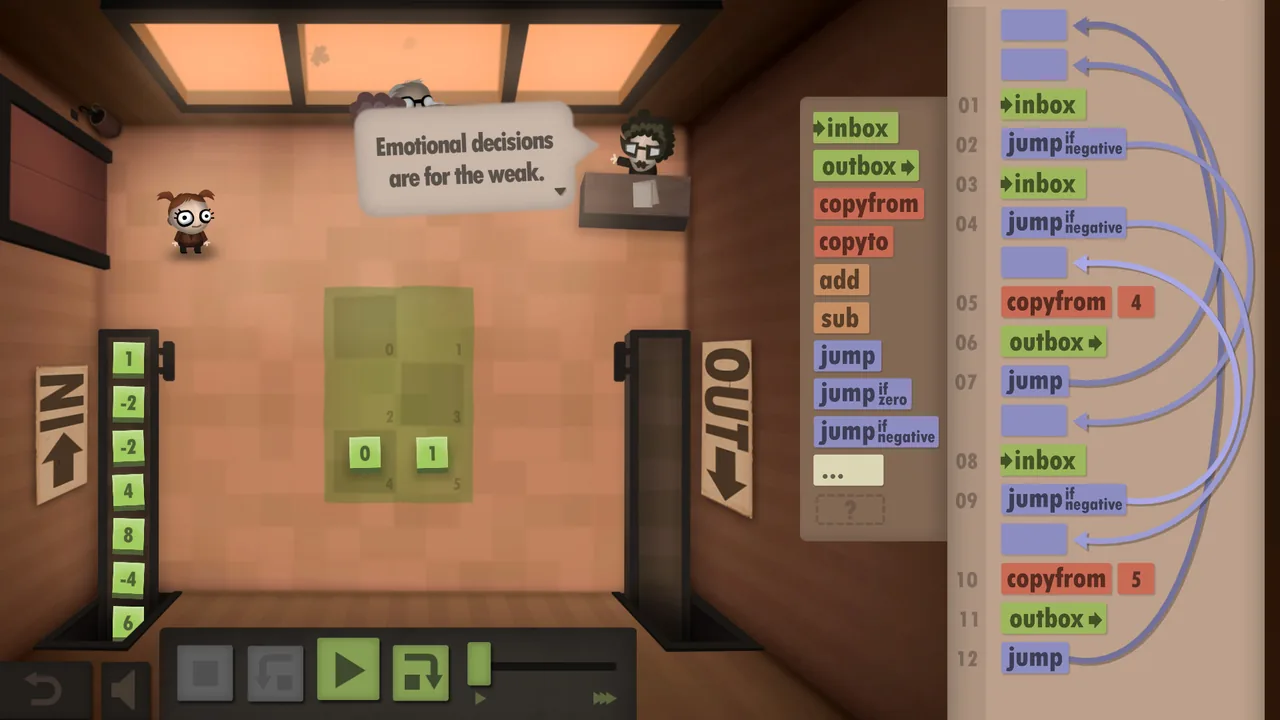
Arrange the worker’s instructions.
Use held and floor storage to retain the values needed next.
Reviewers appreciate being able to follow the meaning of instructions through the worker’s movements.
They also describe the joy of finally getting a planned routine to work.
Extra goals let you revisit length or speed.
Reviews also describe finding those goals difficult.
For players who dig deeper
One reviewer changed a solution that processed a whole string before outputting it to one that output characters while processing.
After consulting a guide and changing their approach, they met the goals for that puzzle.
Another reviewer describes merging exit paths to cut the instruction count and splitting loops to cut execution steps.
What reviewers say
What reviewers liked
- The humour of the office setting is appreciated.
- The progression that gradually introduces ways of thinking is appreciated.
- Reviewers enjoy revisiting solved puzzles to trim commands or execution steps.
- Reviewers like the art style of the office and its workers.
- Following what instructions do through the worker’s movements is appreciated.
- Reviewers describe satisfaction when their planned routine works.
Concerns
- Reviewers found the additional optimization goals difficult.
- Reviewers found long instruction lists or branches difficult to follow on screen.
- Reviewers dislike waiting for long processes to execute.
Key facts
- Positive review rate
- 94% Very Positive3,294 reviews · all languages
- Price (US)
- US$14.99
- Languages
- Japanese Interface and subtitlesEnglish Full audioSimplified Chinese Interface and subtitlesKorean Interface and subtitles19 languages in total
- Steam Deck
- Verified
- Release date
- Oct 16, 2015
- Developer
- Tomorrow Corporation
- Playtime (when reviewed)
- 7.7 hrsMedian when the reviews were posted (100 reviews)
Screenshots
Read the full game guide →View on Steam ↗Source: Human Resource Machine on the Steam Store

while True: learn()
Arrange data flows and work out how to sort them.

Who it’s for
For readers who want to build visual flows and experiment with sorting.
For readers who want to refine solutions toward gold medals.
What kind of game?
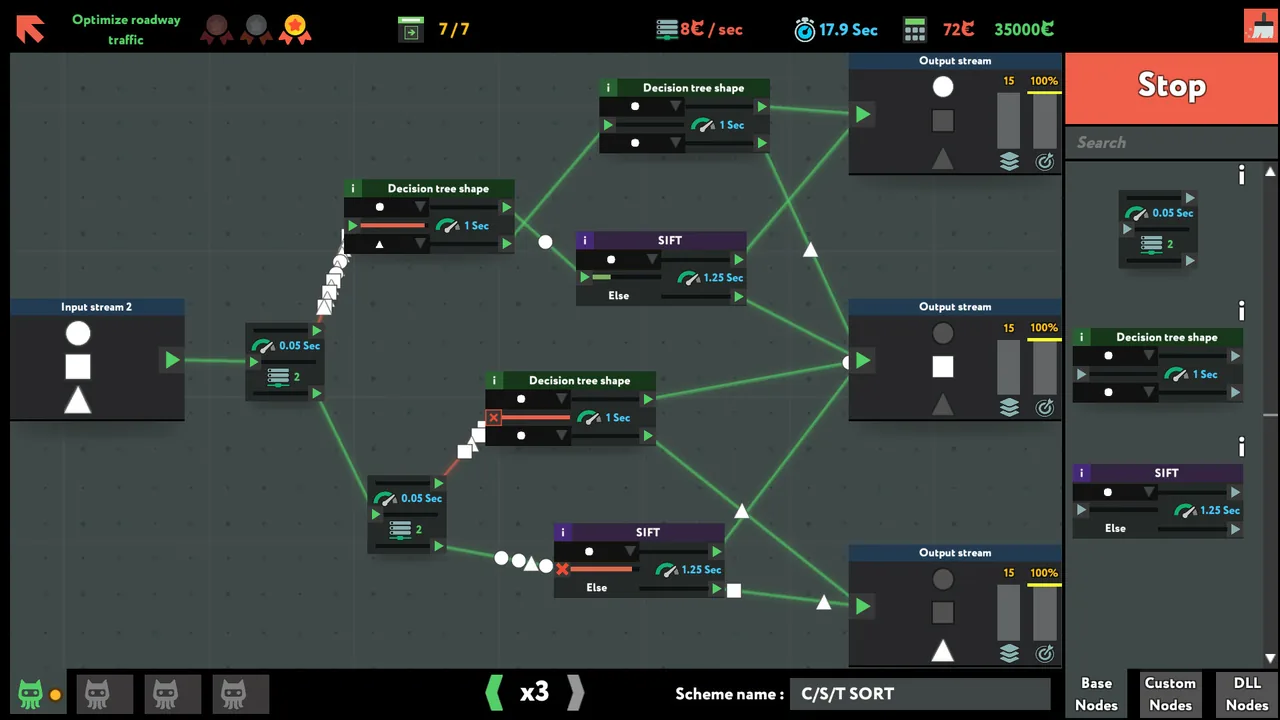
Connect ready-made blocks.
For gold medals, sacrificing accuracy for speed can be an option.
Reviewers enjoy the puzzles built around arranging a visual flow of data.
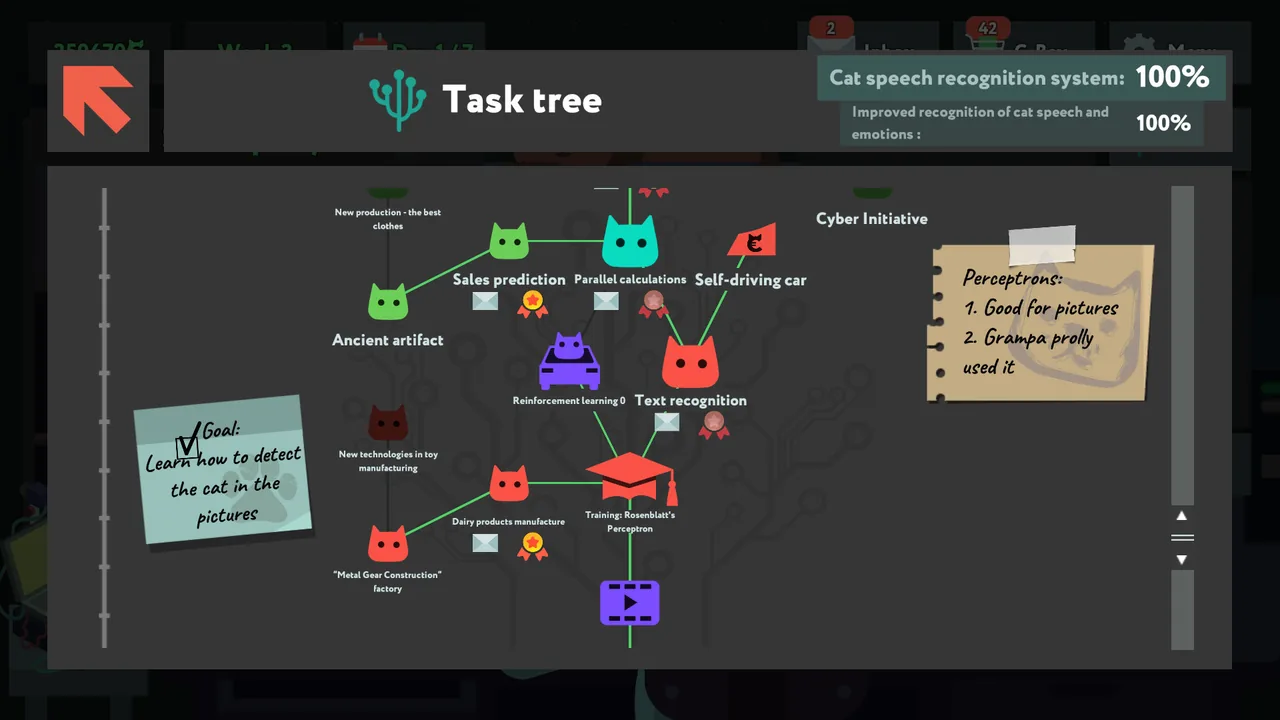
Reviews also describe enjoying encountering the history of machine learning.
Links to related articles and videos are also appreciated.
Consider whether reading and watching those materials appeals to you.
For players who dig deeper
One reviewer enjoyed speeding up the flow by changing branch connections and accuracy.
Another was delighted to earn gold with fewer nodes than expected.
What reviewers say
What reviewers liked
- Reviewers enjoy encountering the history of machine learning and computing.
- Links to related articles, videos, and other resources are appreciated.
- The puzzles involving visual data flows are appreciated.
- The approachable visual style is appreciated.
- Reviewers describe satisfaction in solving the tasks.
- Reviewers enjoy working out solutions for gold medals.
Concerns
- Reviewers dislike repeatedly waiting for nodes to finish training.
- Reviewers found the explanations insufficient for understanding how machine learning works internally.
Key facts
- Positive review rate
- 91% Very Positive7,402 reviews · all languages
- Price (US)
- US$12.99
- Languages
- Japanese Interface and subtitlesEnglish Interface and subtitlesSimplified Chinese Interface and subtitlesKorean Interface and subtitles32 languages in total
- Steam Deck
- Verified
- Release date
- Jan 18, 2019
- Developer
- Luden.io
- Playtime (when reviewed)
- 3.5 hrsMedian when the reviews were posted (100 reviews)
Screenshots
Read the full game guide →View on Steam ↗Source: while True: learn() on the Steam Store

Autonauts
Teach robots a sequence of tasks and bring the place you live to life.

Who it’s for
For readers who want to combine robot jobs and build a functioning settlement.
For readers who enjoy teaching steps, observing the results and revising them.
What kind of game?
Teach tasks to robots.
Settlement Mode limits your bots, so you have to assign them jobs such as gathering and cooking.
Reviewers enjoy planning the steps for individual robots.
They also describe the pleasure of watching robots at work.
The calm atmosphere for developing automation is appreciated too.
Reviewers also enjoy revising bot routines and how their jobs fit together.
For players who dig deeper
One reviewer found that taking an item before a robot arrived left it stuck.
They explain that repeating the find, move and pick-up steps while the bot's hands are empty lets it confirm collection before continuing.
Another reviewer enjoyed planning the order of work to fit the steps into a robot’s memory.
What reviewers say
What reviewers liked
- Reviewers enjoy planning robot procedures and delegating jobs.
- The calm atmosphere for enjoying automation is appreciated.
- Reviewers describe the pleasure of watching robots work.
- The approachable introduction to the systems is appreciated.
- The friendly visual style is appreciated.
- Reviewers enjoy revising bot routines and how their jobs fit together.
Concerns
- Reviewers found robot instructions or editing controls unclear.
- Reviewers found demonstrating actions to robots burdensome.
- Reviewers found repeated tasks monotonous as they progressed.
- Reviewers describe how much work it takes to reorganize a settlement after progressing.
Key facts
- Positive review rate
- 90% Very Positive3,605 reviews · all languages
- Price (US)
- US$19.99
- Languages
- Japanese Interface and subtitlesEnglish Interface and subtitlesSimplified Chinese Interface and subtitlesKorean Interface and subtitles11 languages in total
- Steam Deck
- Playable
- Release date
- Oct 18, 2019
- Developer
- Denki
- Playtime (when reviewed)
- 43.4 hrsMedian when the reviews were posted (100 reviews)
Screenshots


Read the full game guide →View on Steam ↗Source: Autonauts on the Steam Store
Summary
Do you want to write code, design machines, or arrange data flows? Choose a game by the task that interests you.
Once your setup works, consider whether you want to keep refining its steps or layout.