Predy Media › Colony sim › 7 picks
Feature7 Recommended Colony Management Games on Steam (October 2026) | Indie games with 90%+ Positive Reviews



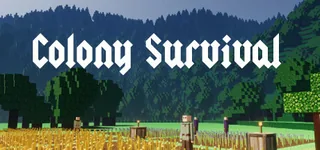
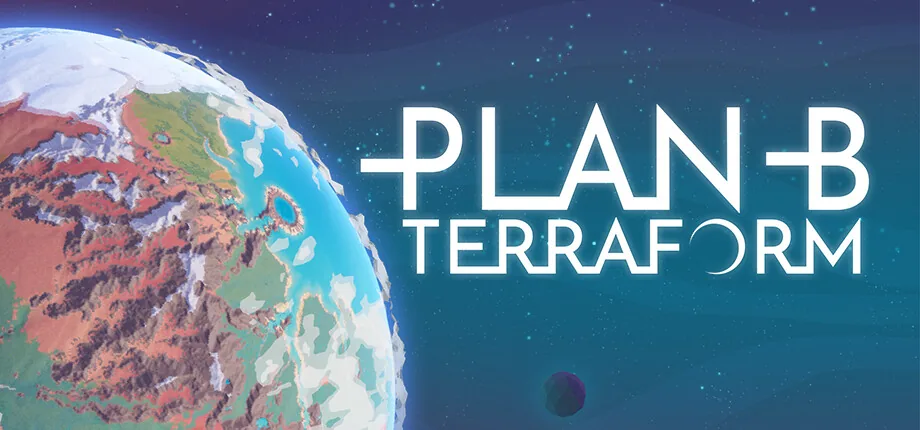

Image source: Steam Store (RimWorld, Oxygen Not Included, WorldBox - God Simulator, Colony Survival, Plan B: Terraform, Banished, Factory Town)
From colonists’ moods and generational change to underground heat and plumbing, intervention in civilizations, defense and logistics, this guide compares Steam colony games while keeping official mechanics and review impressions separate. Do you want to follow residents’ moods and ages, design heat control and plumbing, intervene in civilizations, or plan defenses and logistics? Each section separates resource and time choices, the mechanics behind them, and the pleasures and burdens described in reviews.
See the 7 games ▾
Chosen from indie games on Steam with 90%+ positive reviews and 500+ reviews (as of Oct 29, 2026). They are listed by share of positive reviews, not ranked.
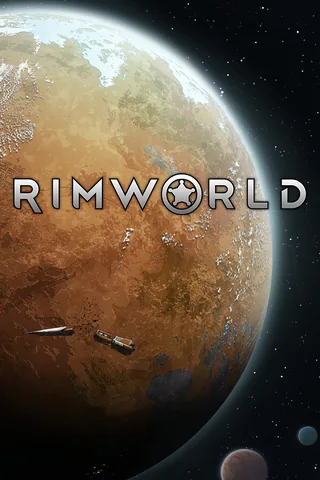
RimWorld
Reassign a colony’s roles around backgrounds, moods and physical condition.
Who it’s for
It suits players who want to reassign roles around colonists’ backgrounds and injuries, then follow the AI Storyteller’s disasters and raids as a story of setbacks and recovery.
It also suits those who want to choose a settlement policy, such as peaceful living or recruiting prisoners, and select different mod content for their next colony idea.
What kind of game?
Choose Randy Random for unpredictable events, Cassandra Classic for rising tension, or Phoebe Chillax for a calmer pace.
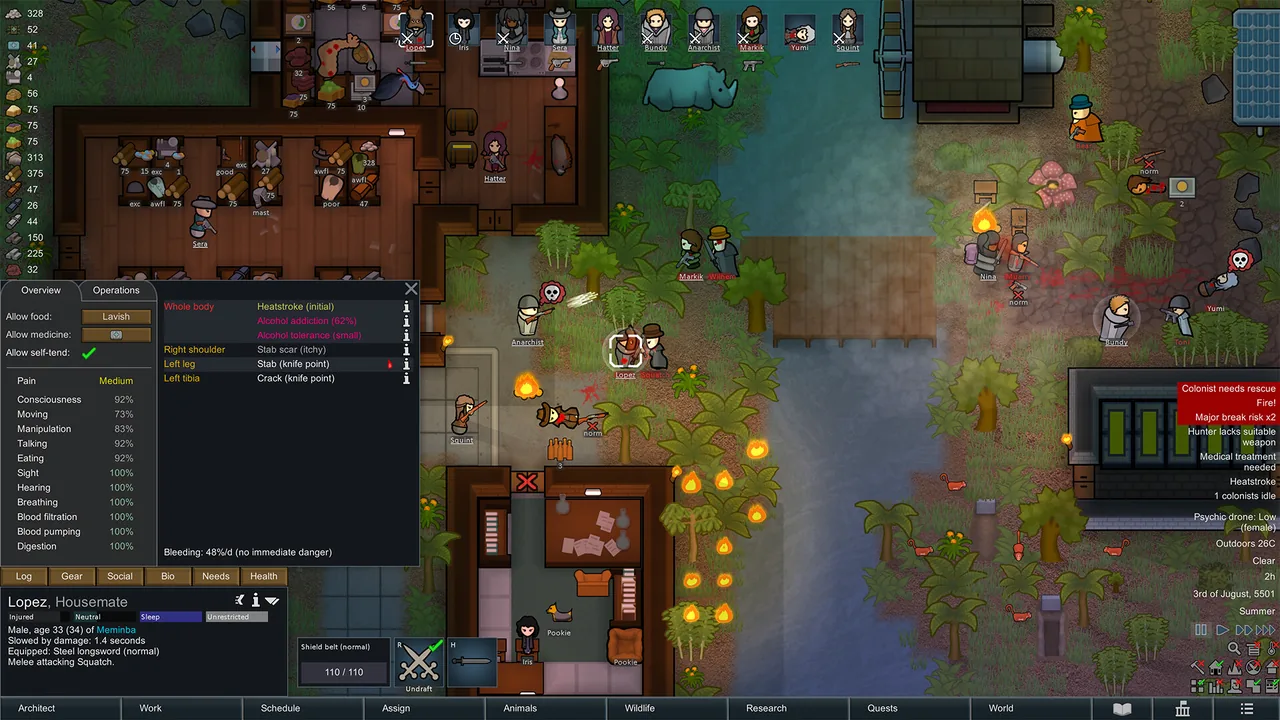
Colonists are not interchangeable workers: you match backgrounds to jobs, and someone skilled at negotiation may refuse physical work.
Food and beds are not enough: hunger, fatigue, cramped rooms and nearby deaths affect moods, and a colonist at breaking point can derail everyday plans.
Injuries are tracked by body part, so damaged eyes affect shooting or surgery, while injured legs affect movement.
A Peg leg restores walking at a slower pace, while an expensive Bionic leg offers greater running speed at a higher financial cost.
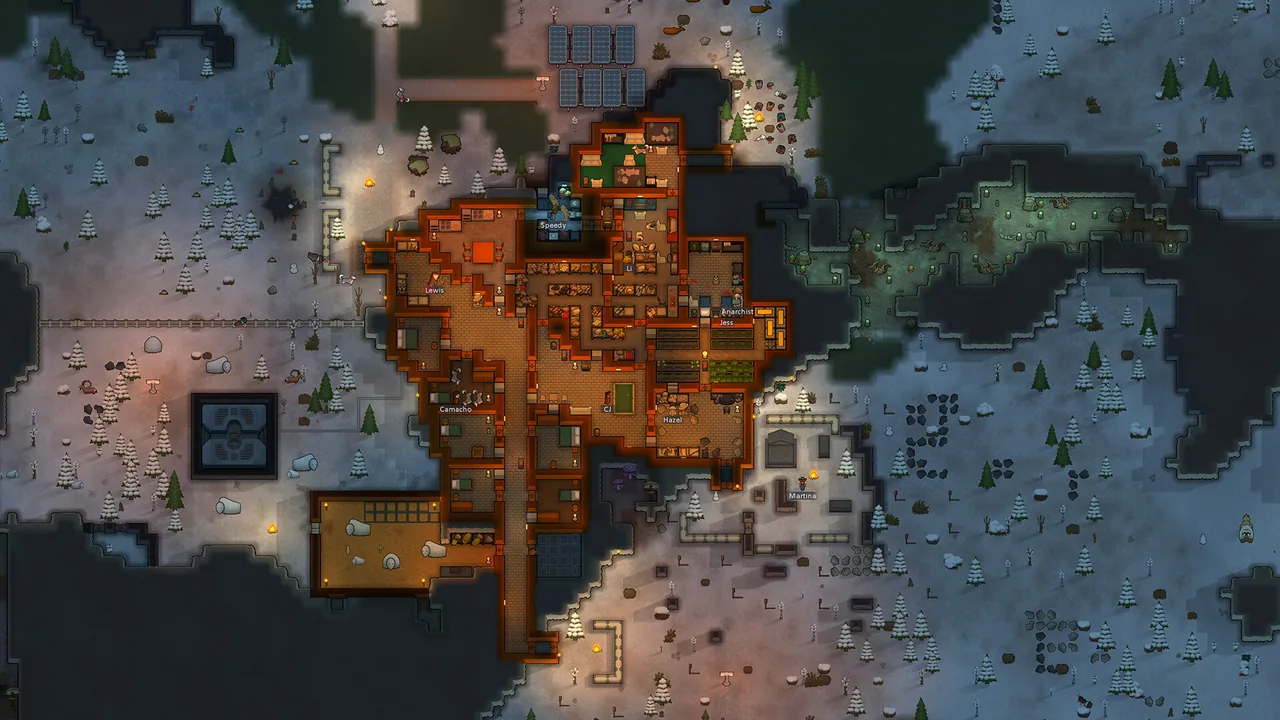
Form caravans of people and animals to trade, rescue captives, or attack other factions. You can also move the whole colony.
For players who dig deeper
Custom playstyle separates threat strength from production yields, letting you increase combat pressure without automatically making harvesting harsher.
Damage adaptation raises pressure while the colony avoids losses, separately from the effects of wealth and population.
Reviews describe colonists breaking down over food or bedrooms and disrupting the response to a raid.
What reviewers say
What reviewers liked
- Players enjoy the unplanned stories that raids, mental breaks or relationships create for their colonists.
- Choices such as recruiting attackers or deciding how to treat prisoners appeal to reviewers who want to set their own colony policy.
- Mods earn praise for bringing new features or ways to play to familiar colony management.
- For reviewers who keep playing over the long term, the base game or DLC feels worth the cost.
- Players maintaining a modded game welcome performance improvements or care for existing mod setups.
- Reviewers like using Peaceful and storyteller settings to shift the balance between daily life and disruptive events.
Concerns
- Players describe putting the colony first and struggling to stop for other plans or bedtime.
- Reviews describe trouble with mod load order, breakage after updates, and performance.
- Reviews describe colonists' mental breaks derailing preparations or responses to raids.
- Reviewers describe the price of the DLC as a burden.
Key facts
- Positive review rate
- 97% Overwhelmingly Positive210,869 reviews · all languages
- Price (US)
- US$34.99
- Languages
- Japanese Interface and subtitlesEnglish Interface and subtitlesSimplified Chinese Interface and subtitlesKorean Interface and subtitles24 languages in total
- Steam Deck
- Verified
- Release date
- Oct 17, 2018
- Developer
- Ludeon Studios
- Playtime (when reviewed)
- 277.4 hrsMedian when the reviews were posted (100 reviews)
Screenshots
Read the full game guide →View on Steam ↗Source: RimWorld on the Steam Store
Oxygen Not Included
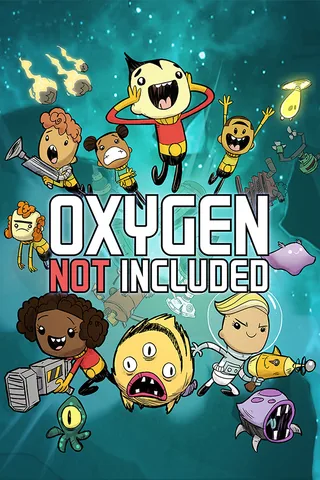
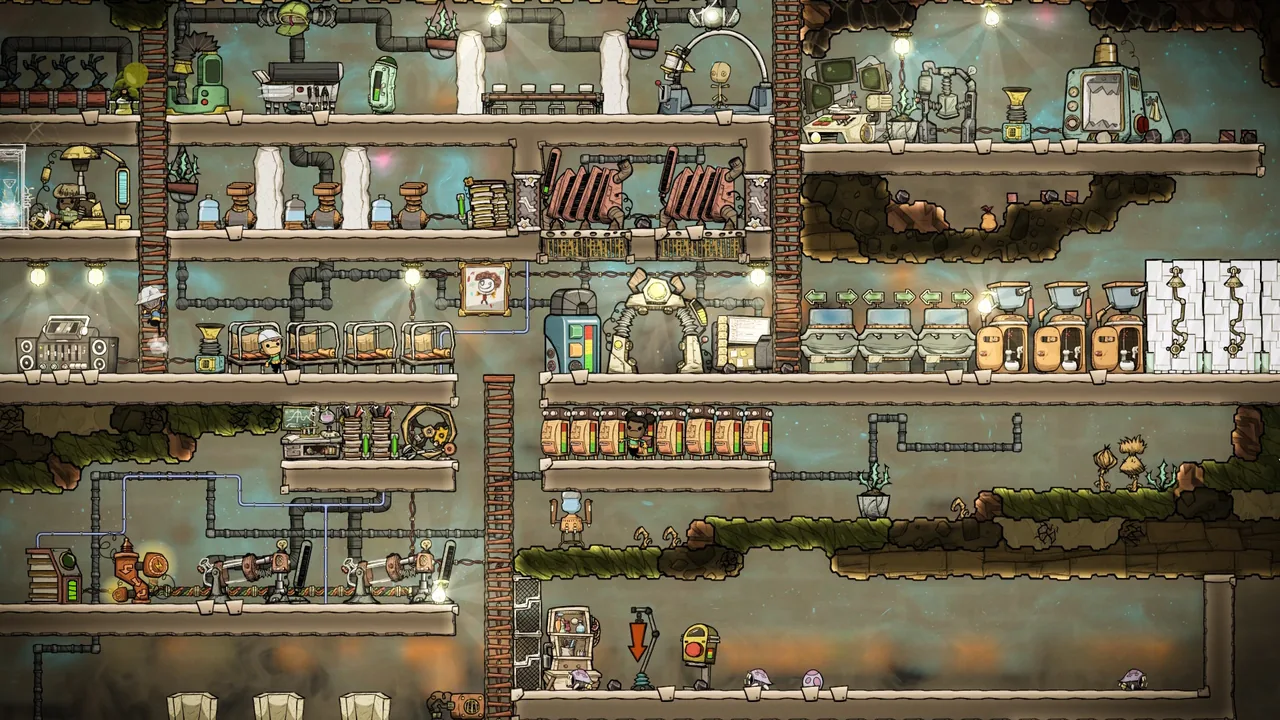
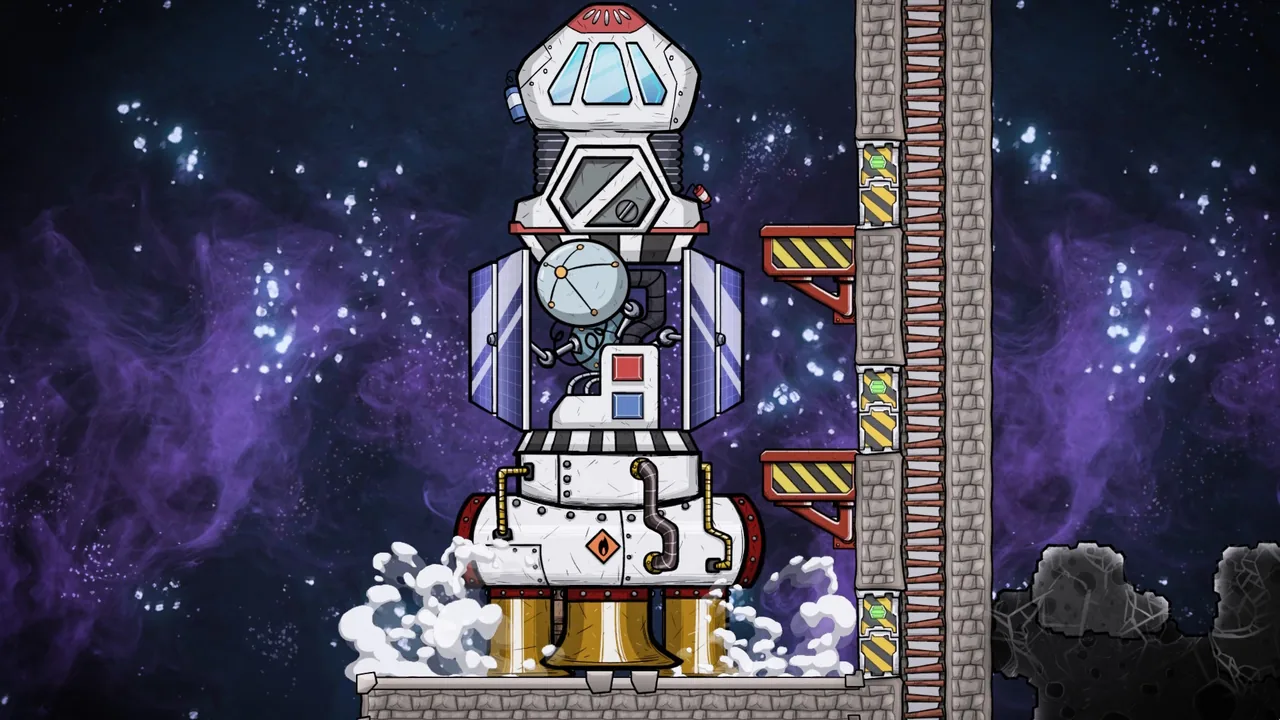
Connect oxygen, heat and pipes to design an underground habitat.
Who it’s for
It suits players who want to diagnose problems through the Oxygen Overlay and temperature information, then redesign oxygen, heat, and power as connected systems.
It also suits those who would rather decide their own pipe layouts and population-growth policy than copy a finished guide, exploring different designs for the same goal.
What kind of game?
The Oxygen Overlay shows airflow and carbon dioxide buildup, helping you make breathable spaces rather than just watch an oxygen stockpile.
Lay pipes through excavated space to deliver gases and liquids, and supply equipment with power as the underground colony expands.
Equipment generates heat that can affect living areas, so expanding production also calls for temperature control.
Duplicants respond differently to stress, so food, accommodation, and leisure are also part of keeping the base running.
Build resource cycles by turning waste into fuel or unbreathable gas into usable air, instead of simply exhausting what you excavate.
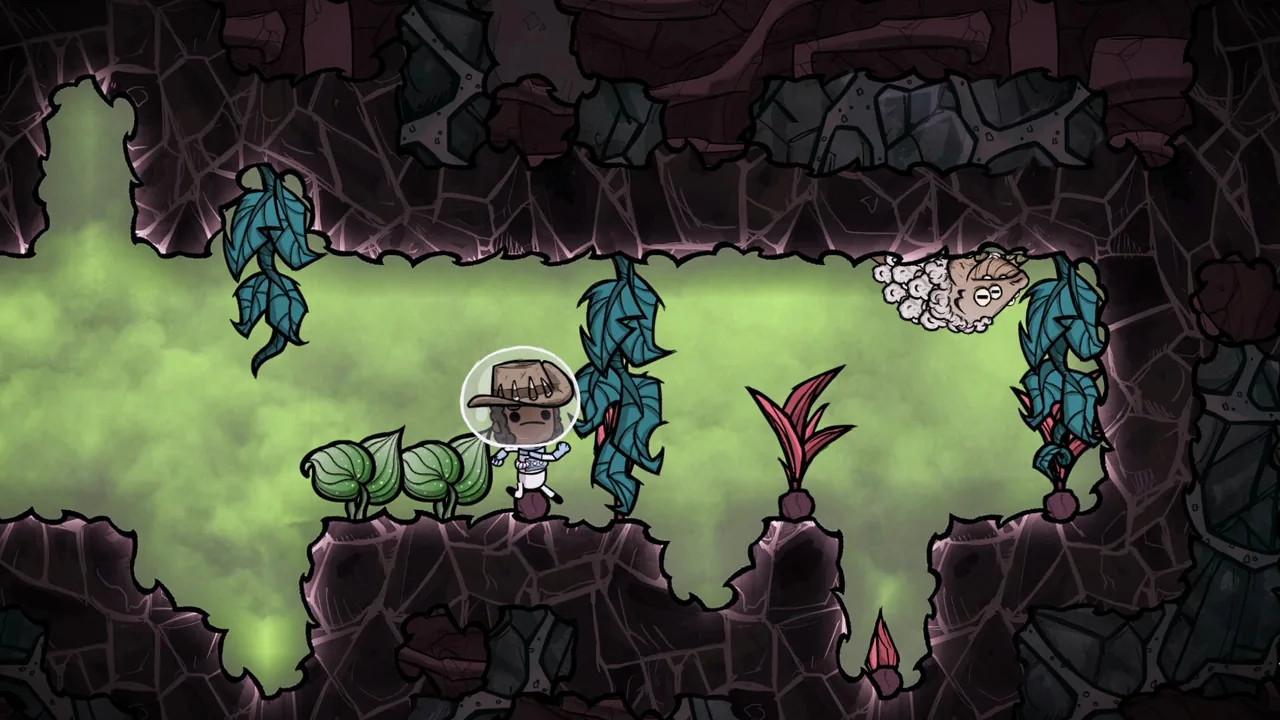
Procedurally generated asteroids give this single-player game changing environments in which to rethink the placement of essential facilities.
For players who dig deeper
Automation Ribbon handles automation signals through Ribbon Writers and Ribbon Readers, while directly mixing ordinary automation wires with ribbon causes a signal overload.
Gas Shutoff and Liquid Shutoff consume power while open, making automated fluid control part of the power budget as well.
Reviews report slowdown in large colonies, so long-term base plans must account for the strain of running a bigger colony as well as resource balance.
What reviewers say
What reviewers liked
- Players enjoy working out how heat, gases, liquids and power interact, then redesigning systems rather than simply adding more supply.
- The freedom to build around a personal plan and try alternative solutions, instead of just following guides, appeals to reviewers.
- Updates that make controls more convenient or add things to try are welcomed by long-term base builders.
- Reviewers describe caring for Duplicants as residents to protect and look after, not just workers producing goods.
- The detailed, comic animations of Duplicants working or making mistakes draw praise.
- Changing asteroid environments and ecosystems, including DLC additions, give reviewers enjoyable reasons to try other layouts and equipment.
- Players appreciate using mods to add conveniences or buildings where the base game's controls or displays need help.
Concerns
- Sparse guidance or a steep learning curve makes learning base building demanding for reviewers, who describe needing to seek information or learn through trial and rebuilding.
- Reviewers describe losing track of time and finding it hard to keep a session short.
- Sluggish map displays or simulation speeds feature in accounts of mid- or late-game bases.
- Reviewers describe the work of troubleshooting mods that stop working or checking compatibility after an update.
Key facts
- Positive review rate
- 96% Overwhelmingly Positive136,140 reviews · all languages
- Price (US)
- US$24.99
- Languages
- Japanese Not supportedEnglish Full audioSimplified Chinese Full audioKorean Full audio4 languages in total
- Steam Deck
- Verified
- Release date
- Jul 31, 2019
- Developer
- Klei Entertainment
- Playtime (when reviewed)
- 271.6 hrsMedian when the reviews were posted (100 reviews)
Screenshots
Read the full game guide →View on Steam ↗Source: Oxygen Not Included on the Steam Store

WorldBox - God Simulator
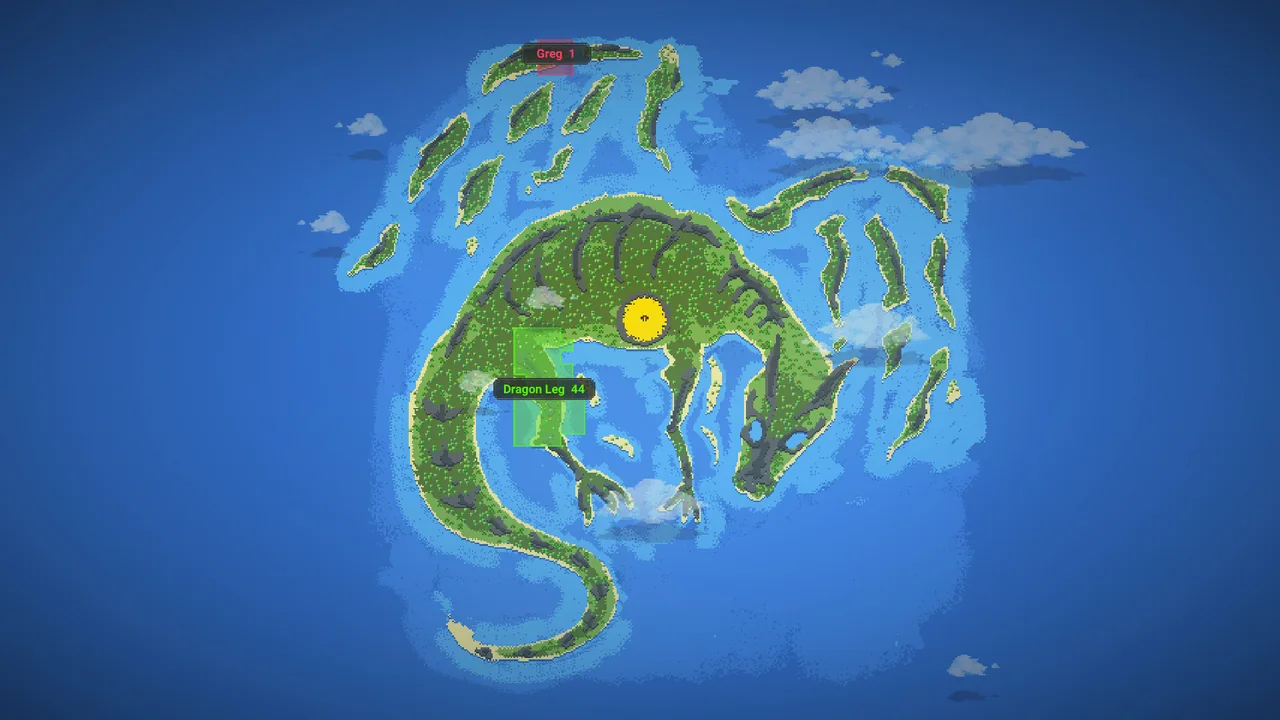
A sandbox about deciding when to watch civilizations rise and fall, and when to redirect them through terrain, creatures, or divine powers.
Who it’s for
It suits players who want to see how civilizations develop from a chosen landscape and mix of creatures, intervening with divine powers when needed instead of directly managing village production chains.
Players who enjoy following a favorite resident's traits and history can use the Trait Editor or intervene in conflicts between kingdoms to shape the setting for their own stories.
What kind of game?
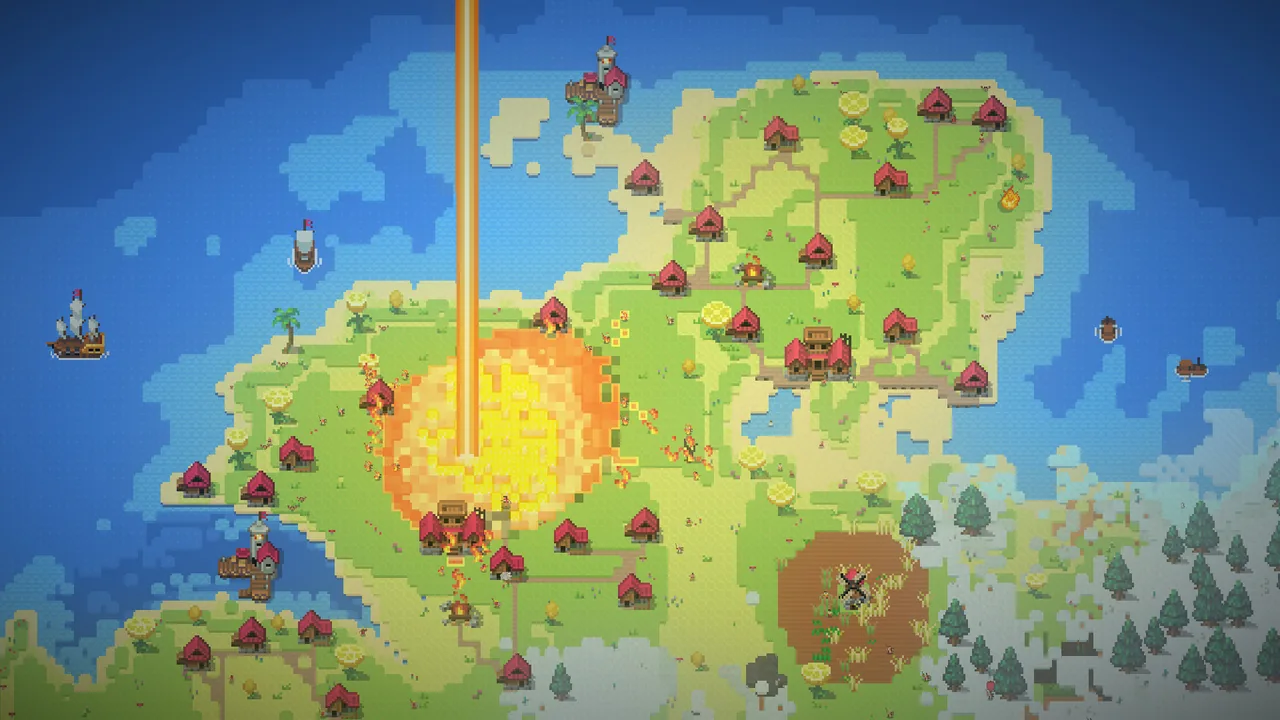
In WorldBox - God Simulator, you shape land, add life and intervene as civilizations build their own kingdoms, rather than assign each resident production jobs.
Divine powers that require no resources let you help or simply watch a world where animals seek food, kingdoms seek territory, and towns rebel.
The Trait Editor lets you discover traits by inspecting creatures and add unlocked traits to an individual. You can also remove traits, even ones you have not unlocked.
Seeking locked traits takes time spent exploring or meeting special achievement conditions, so you choose between creating with the tools already available and expanding your options for customization.
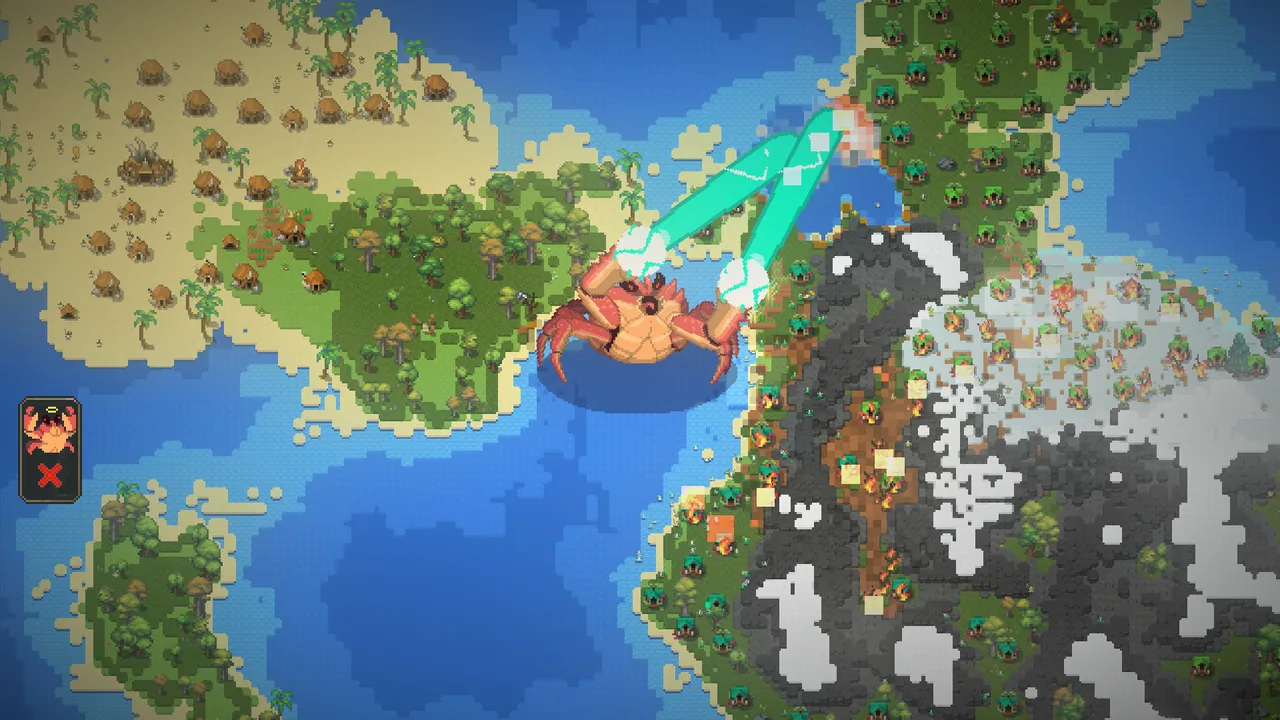
You can also take direct control of Crabzilla and destroy what you built, rather than treat preserving civilization as the only goal.
This single-player world can be painted with brushes or generated procedurally, and finished maps can be shared through Steam Workshop.
For players who dig deeper
Ages are extended periods that affect the environment and civilizations, rather than brief recurring seasons, so a prolonged winter such as the Age of Ice changes the conditions you observe.
Plots expose plans by members of Clans, including wars and alliances, letting you follow the people behind a country's changes before those plans unfold.
Families retain genealogy and information about parents and lovers after transformations such as zombification or evolution, allowing you to follow a resident's history despite a changed form.
Reviewers want to reuse carefully made subspecies and cultures in other worlds but say they cannot save or export them, a distinction worth considering if reusing settings matters as much as growing a world.
What reviewers say
What reviewers liked
- Reviews describe the pleasure of watching civilizations and kingdoms act on their own as the world changes.
- Reviews also describe the fun of destroying a civilization after creating it.
- Reviews praise how the game has changed since its early versions and the systems added in updates.
- Reviewers enjoy changing creatures' traits or genes to make the beings they have in mind.
- Reviews describe becoming emotionally invested in residents while following what happens to them.
- Reviewers like the look of the world drawn in pixel art.
Concerns
- Reviews say the PC version feels expensive for the amount of content it offers.
- Looking up unlock conditions or completing them frustrates reviewers who want to start creating freely with creatures and traits.
- Reviews also say the wait between updates feels long.
- Reviews say civilizations tend to end up at war, making events feel repetitive.
- Reviewers want to get mods through the Workshop, which currently offers maps.
Key facts
- Positive review rate
- 95% Overwhelmingly Positive51,895 reviews · all languages
- Price (US)
- US$19.99
- Languages
- Japanese Interface and subtitlesEnglish Interface and subtitlesSimplified Chinese Interface and subtitlesKorean Interface and subtitles27 languages in total
- Steam Deck
- Verified
- Release date
- Dec 3, 2021
- Developer
- Maxim Karpenko
- Playtime (when reviewed)
- 29.8 hrsMedian when the reviews were posted (100 reviews)
Screenshots
Read the full game guide →View on Steam ↗Source: WorldBox - God Simulator on the Steam Store

Colony Survival
A first-person colony builder where residents handle production while you design the town and its nightly defenses.
Who it’s for
It suits players who want residents to handle mining and processing so they can focus their own efforts on the town's appearance and defensive routes.
It also suits players who enjoy watching a town come to life as production and defenses develop, or who want to choose between building together with friends and trading between separate settlements.
What kind of game?
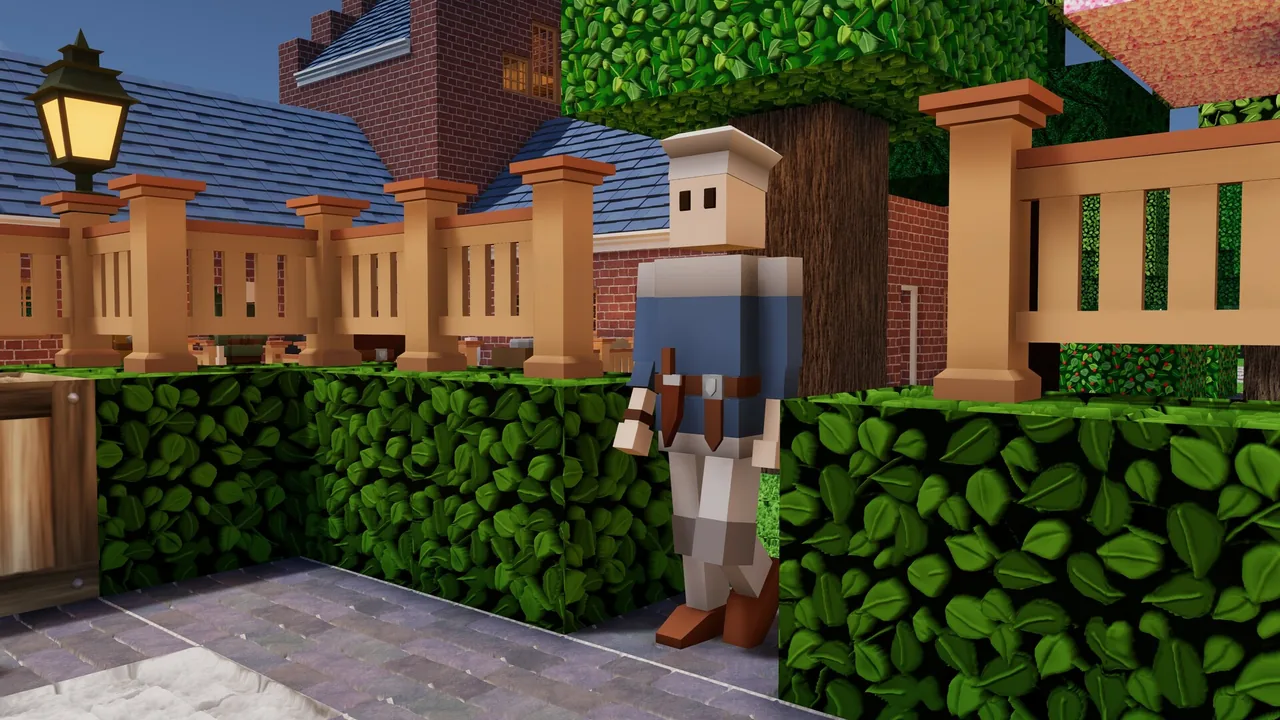
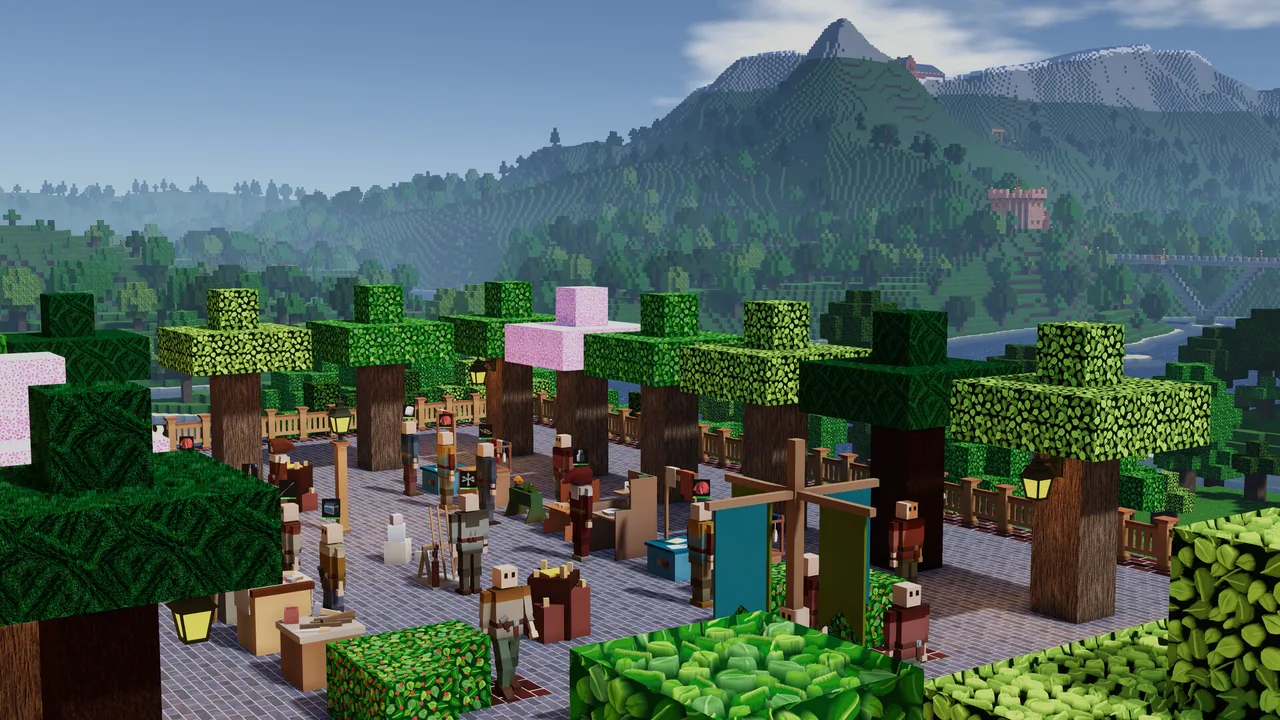
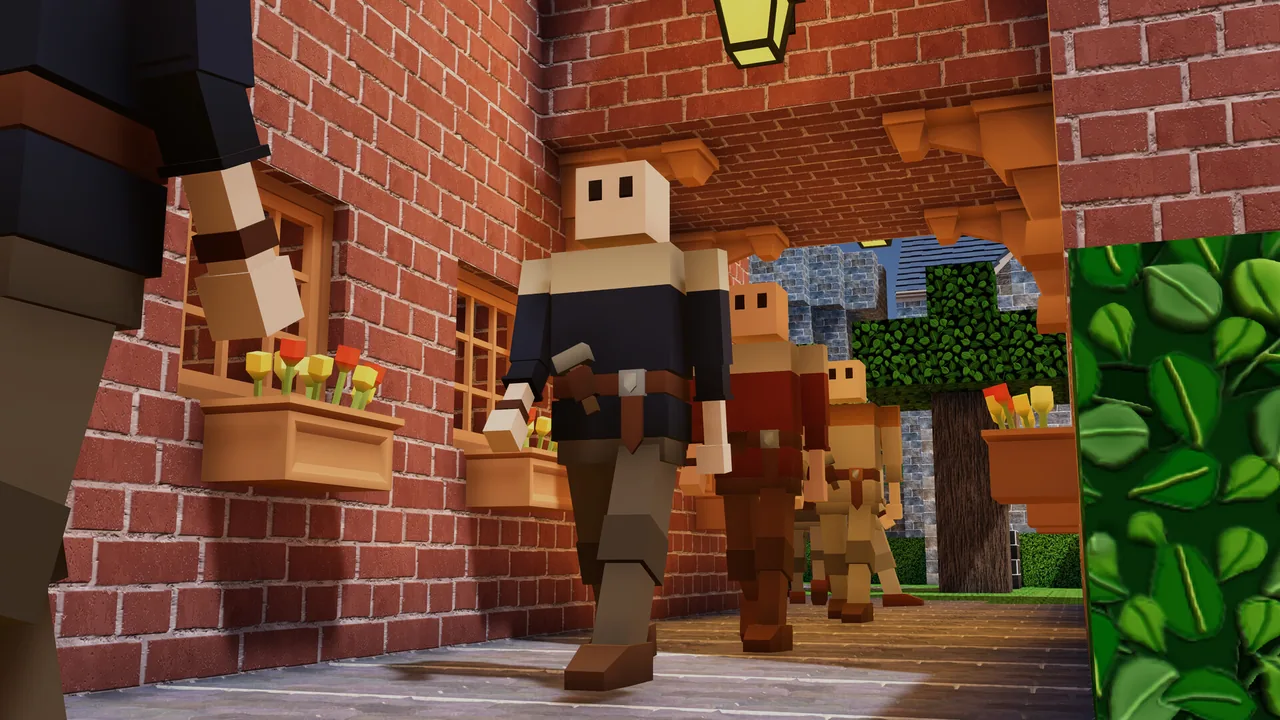
Colony Survival puts you inside a voxel town in first person, with residents mining and crafting for you rather than leaving you to gather every material yourself.
Research unlocks jobs, tools, and weapons, prompting you to reorganize production by adding workplaces and workers for the materials you need.
Specialized resources needed for research can come from expensive market purchases or Outposts in regions found with the Astrolabe, so you weigh the price against the work of exploring and building.
Research unlocks and blocks that store Colony Points can raise Threat Level, so preparing for development also means organizing defenses and supplies for stronger attacks.
Unlocking the Overseer’s Desk gives you a top-down view and access to Blueprints, letting you alternate between walking through the site and planning the town as a whole.
You can play alone, share a colony in co-op, or run separate colonies and trade, while Split Screen also lets you build alongside someone sitting next to you.
For players who dig deeper
Threat Banners change how threat is distributed across Outposts, letting you distinguish resource-gathering sites from fortresses that take on more of the enemy pressure.
The Placer Tool lays out designs saved with the Scanner Tool, but construction workers still have to build them: reusing a design does not skip the construction work.
The Colony screen lets you choose which resource counters to display, so you can monitor items beyond ammunition when deciding what the next expansion needs to supply.
Reviews find late-game production demands or the work of unlocking another colony laborious, so weigh the enjoyment of research progress against repeated expansion.
What reviewers say
What reviewers liked
- Reviewers welcome content and visual improvements from updates, including new options they find when returning to the game.
- The freedom to build towns and fortresses around personal designs appeals to reviewers.
- Players enjoy tying colonist production and town construction to defenses against nightly attacks.
- Reviewers enjoy building colonies with friends.
- Town building or the colonists' work feels pleasantly unhurried to these reviewers.
- Watching a planned village grow or residents bring it to life is a source of enjoyment in reviews.
- Reviewers like leaving mining and crafting to colonists while they work on the town.
- Reviewers appreciate being able to play on older or less powerful PCs.
Concerns
- Reviewers say the purchase price feels high.
- As production and research advance, repeated expansion and waits for crafting or unlocks feel like busywork to reviewers.
- Reviewers point to awkward controls or screens that are hard to use.
- Reviewers want more variety in enemy types or behavior.
- Getting to grips with the controls or progression can be difficult at first, according to reviews.
Key facts
- Positive review rate
- 92% Very Positive8,286 reviews · all languages
- Price (US)
- US$24.95
- Languages
- Japanese Full audioEnglish Full audioSimplified Chinese Full audioKorean Full audio10 languages in total
- Steam Deck
- Verified
- Release date
- Jun 16, 2017
- Developer
- Pipliz
- Playtime (when reviewed)
- 38.8 hrsMedian when the reviews were posted (100 reviews)
Screenshots
Read the full game guide →View on Steam ↗Source: Colony Survival on the Steam Store

Plan B: Terraform
The logistics sustaining your cities also reshape the planet.
Who it’s for
It suits players who want to see their expanding factories reflected in growing cities and a greener planet.
It also suits those who enjoy rearranging production sites and routes around changing water and terrain to keep supplies flowing.
What kind of game?
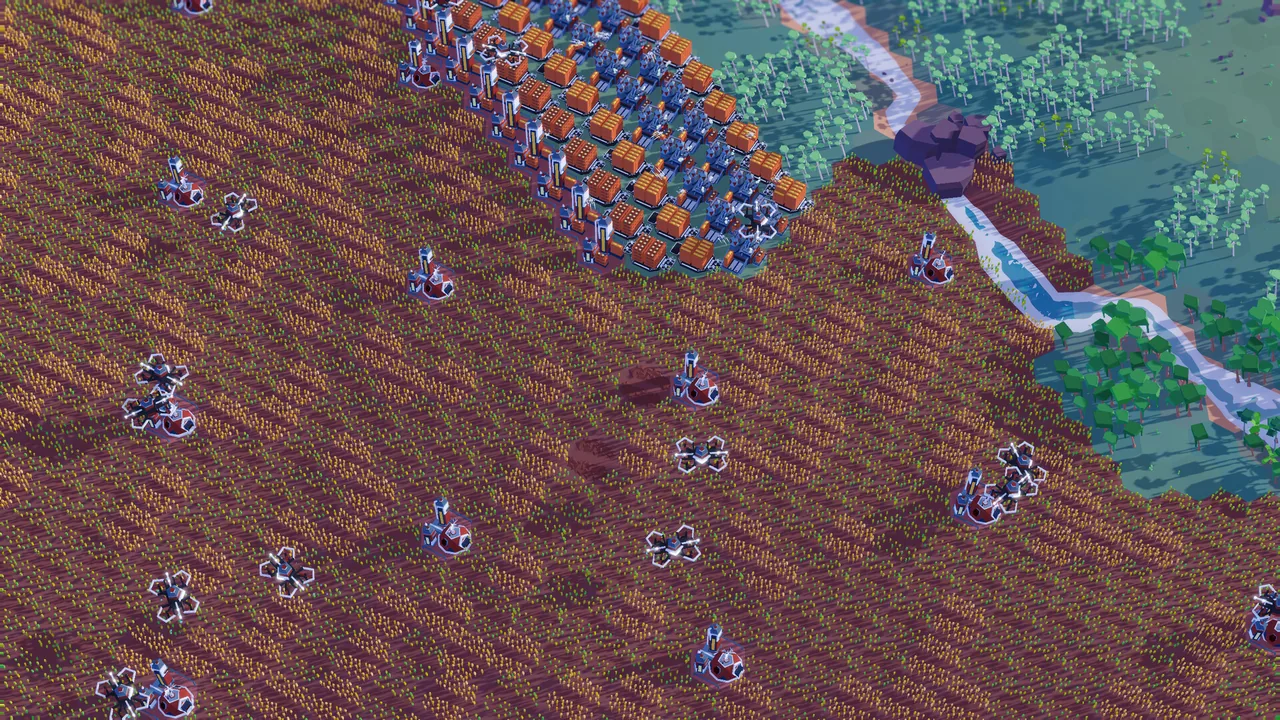
Rather than centering management on individual residents’ lives, this colony sim combines supplying cities and transforming a planet through extraction, manufacturing and transport.
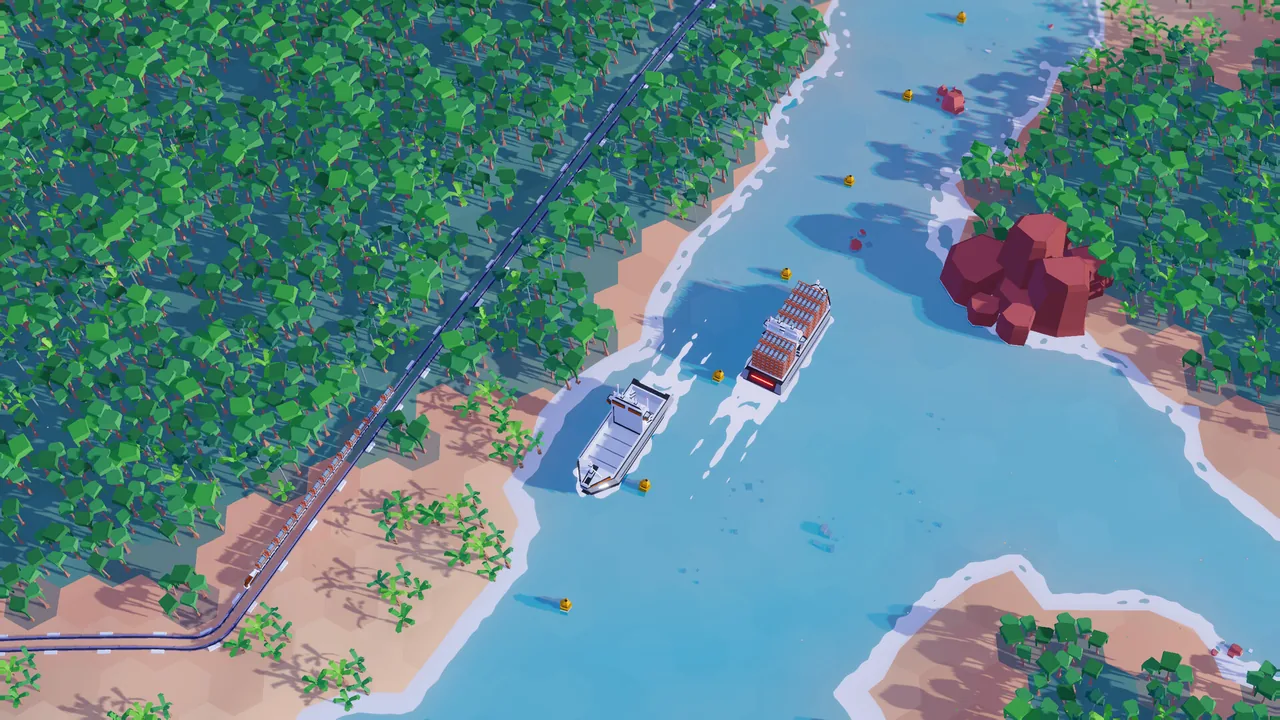
You connect mines and factories, carry goods to cities by truck, train or ship, and expand the network as demand grows.
Greenhouse Gas Generators warm the atmosphere, melting ice and bringing rain, rivers and oceans. Once conditions allow, you can plant trees and grow forests, changing the land you build on.
The current tech tree lets you choose what to unlock, while a larger population earns tech points faster.
The Terrain Tool consumes dirt or dynamite to reshape land, making it a planning choice whether to alter terrain around an existing layout or move facilities as conditions change.
Alongside building supply networks in single-player, Creative Mode lets you relax resource constraints and concentrate on shaping the planet.
For players who dig deeper
Production statistics distinguish actual output and consumption from maximum values, letting you compare what is flowing with available capacity before adding facilities.
Backup Supply on facilities such as transport stops reduces collection from them when receiving depots are sufficiently stocked, allowing newly mined supplies to serve as a fallback behind recycled materials.
Reviews praise the challenge of coordinating deliveries and waste collection, finding satisfaction in city management that goes beyond supplying goods.
Reviews describe both the burden of rebuilding and the pleasure of adapting; consider whether you prefer keeping a finished layout or revising it as conditions change.
What reviewers say
What reviewers liked
- Players enjoy watching the planet's scenery and environment change.
- Players like seeing the results of their deliveries in the growth of cities.
- Getting a supply network running through adjustments to resource flow and transport layout feels satisfying to reviewers.
- Streamlined management helps reviewers get into factory and logistics building without so much overhead.
- Reviewers appreciate being able to copy facilities when reworking a layout.
Concerns
- Reviewers find it tiresome to rebuild production setups or transport routes as conditions change.
- Reviewers say the later game can become repetitive as growing cities call for more of the same production setups.
- Reviews report slowdowns as builds grow or when moving the camera.
- Reviewers find depot capacity and drone range restrictive, especially when increasing throughput means placing more depots.
- Reviews point to difficulty gauging production and transport throughput from the available information.
Key facts
- Positive review rate
- 91% Very Positive3,642 reviews · all languages
- Price (US)
- US$15.99
- Languages
- Japanese Interface and subtitlesEnglish Interface and subtitlesSimplified Chinese Interface and subtitlesKorean Interface and subtitles16 languages in total
- Steam Deck
- Playable
- Release date
- Aug 29, 2025
- Developer
- Gaddy Games
- Playtime (when reviewed)
- 27.4 hrsMedian when the reviews were posted (100 reviews)
Screenshots

Read the full game guide →View on Steam ↗Source: Plan B: Terraform on the Steam Store
Banished
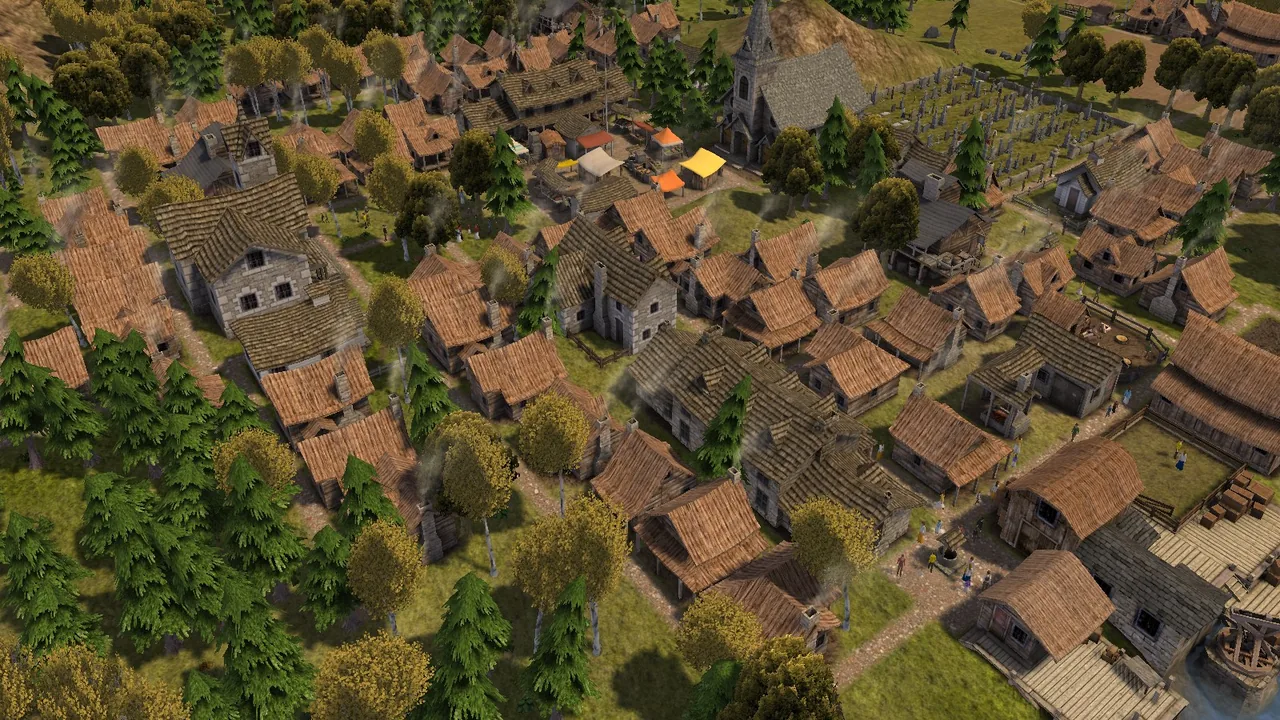
A colony builder where generations and essential supplies determine how quickly a village can afford to grow.
Who it’s for
It suits players who want to adjust the pace of village growth around residents’ ages and jobs, alongside food and fuel reserves.
It also suits those who would rather choose a building order from available land and resources than pursue the next skill-tree unlock, then try a different survival plan under restrictions such as Uneducated.
What kind of game?
Banished does not unlock buildings through a skill tree: once the resources are available, you choose what to build according to the village’s needs.
Instead of managing money, you support residents as they are born, work, have children, grow old, and die; adding homes alone does not ensure growth.
Bartering through the Trading Post adds livestock and crops to your options, but the trade vessels’ long routes also carry the risk of introducing disease.
Replanting forests, mining iron, or quarrying stone reserves land for resources, giving up space that could otherwise serve expansion.
You distribute work among farming, hunting, smithing, mining, teaching, and healing, balancing continued production with residents’ health and happiness.
This is a single-player game, and differences in scarce resources between maps call for production and trade suited to the location rather than a fixed building order.
For players who dig deeper
Uneducated sets a population target without building schools, while Isolationist does so without a Trading Post, giving village design a different purpose from simply adding more facilities.
One with Nature asks you to grow the population without crop fields, orchards, or pastures, making food supply without those farming facilities the challenge.
Reviewers describe more births leading to food shortages, or restrained growth leaving too few young workers to replace an aging workforce, making the next generation as important to long-term planning as today’s stockpiles.
Reviews report being unable to earn achievements with mods enabled, raising a choice between playing with building additions or translations and pursuing achievements.
What reviewers say
What reviewers liked
- Planning supplies such as food, firewood and tools appeals to reviewers for the tension of possible shortages or the satisfaction of keeping village life stable.
- Players welcome focusing on village supplies and construction instead of fighting enemies.
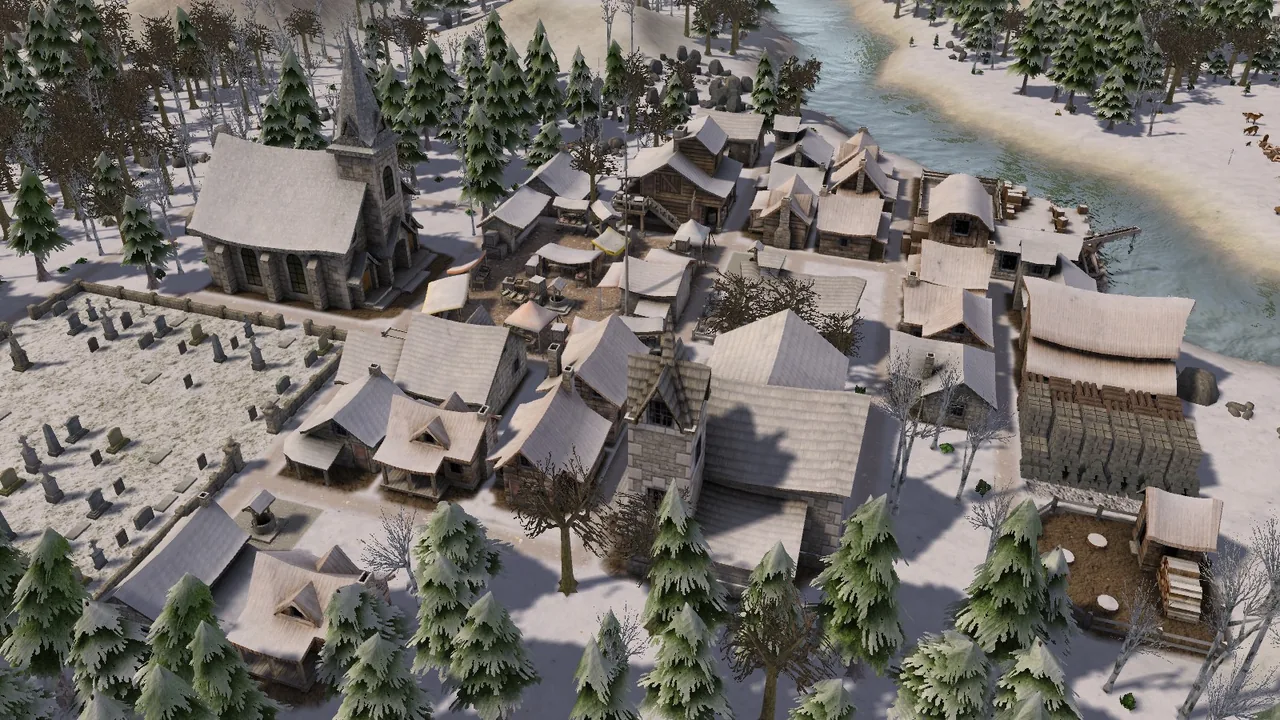
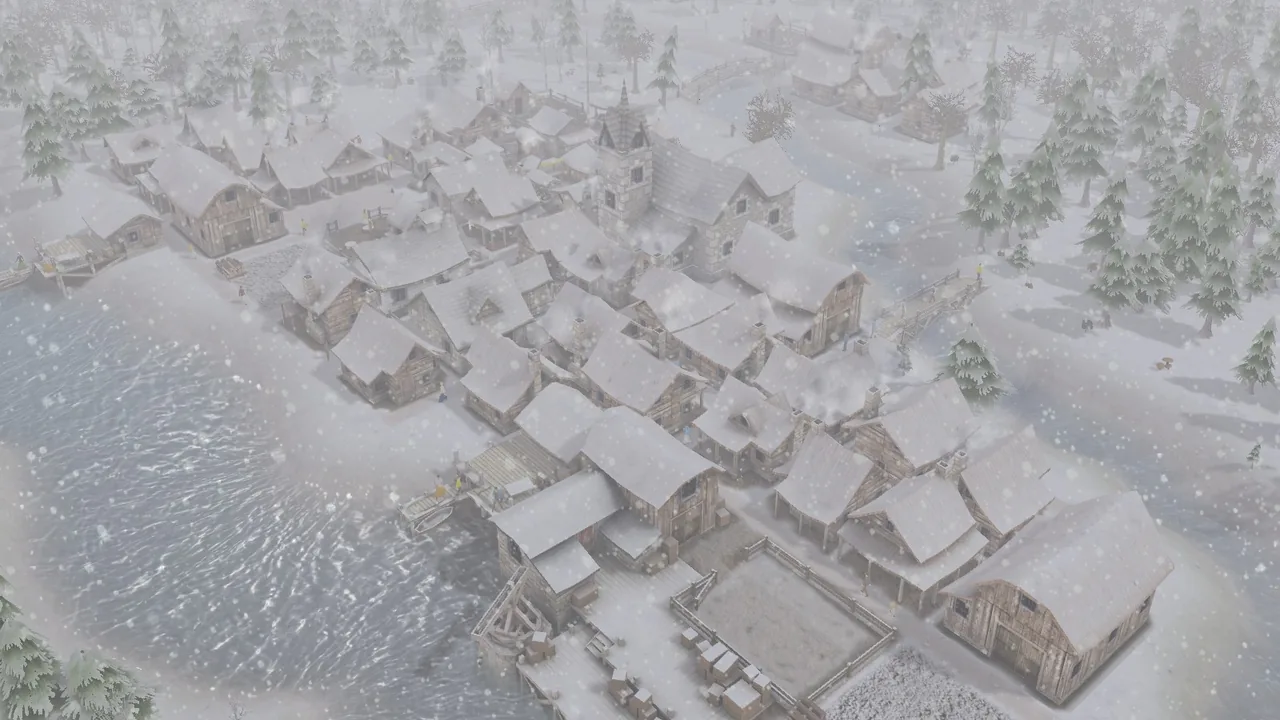
- Seasonal scenery or residents going about their lives make watching the village enjoyable for reviewers.
- Births and aging make workforce planning more interesting than simply raising the population, according to reviews.
- Reviewers appreciate mods that add buildings and change how they build their towns.
- Reviewers enjoy the challenge of pursuing achievements.
Concerns
- Once they know how to keep a town alive, reviewers find too little change in the goals or how a game unfolds.
- Reviewers are frustrated when travel and hauling supplies slow down building or production.
- Slowdowns or freezes have disrupted reviewers' larger villages or long-running saves.
- Reviewers say village development takes too long and the pace feels slow.
- Reviewers say the in-game guidance leaves them looking elsewhere to understand how the systems work.
Key facts
- Positive review rate
- 90% Very Positive37,956 reviews · all languages
- Price (US)
- US$19.99
- Languages
- Japanese Not supportedEnglish Full audioSimplified Chinese Not supportedKorean Not supported1 languages in total
- Steam Deck
- Playable
- Release date
- Feb 19, 2014
- Developer
- Shining Rock Software LLC
- Playtime (when reviewed)
- 49.8 hrsMedian when the reviews were posted (100 reviews)
Screenshots
Read the full game guide →View on Steam ↗Source: Banished on the Steam Store
Factory Town
Vertical automation keeps a growing town supplied.
Who it’s for
It suits players who want town building based on varied supplies alongside automated factory logistics.
It also suits those who want to experiment with vertical supply networks at their own pace, using terrain and different transport methods.
What kind of game?
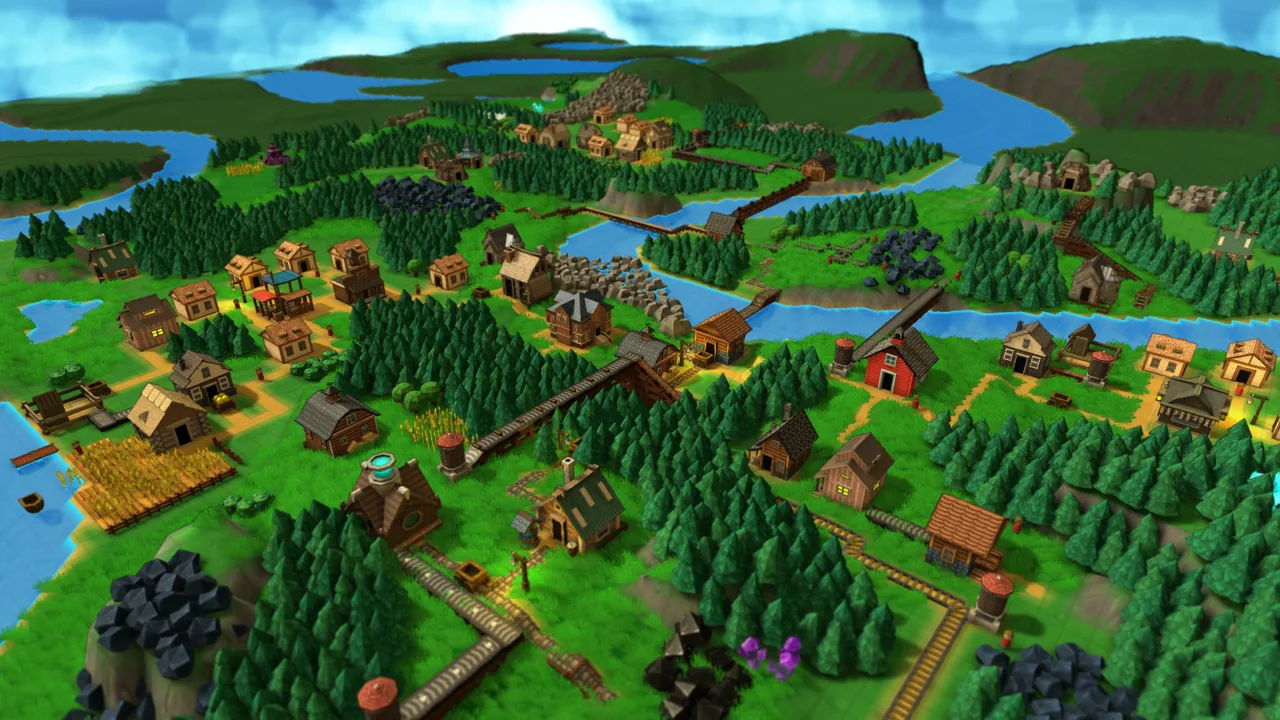
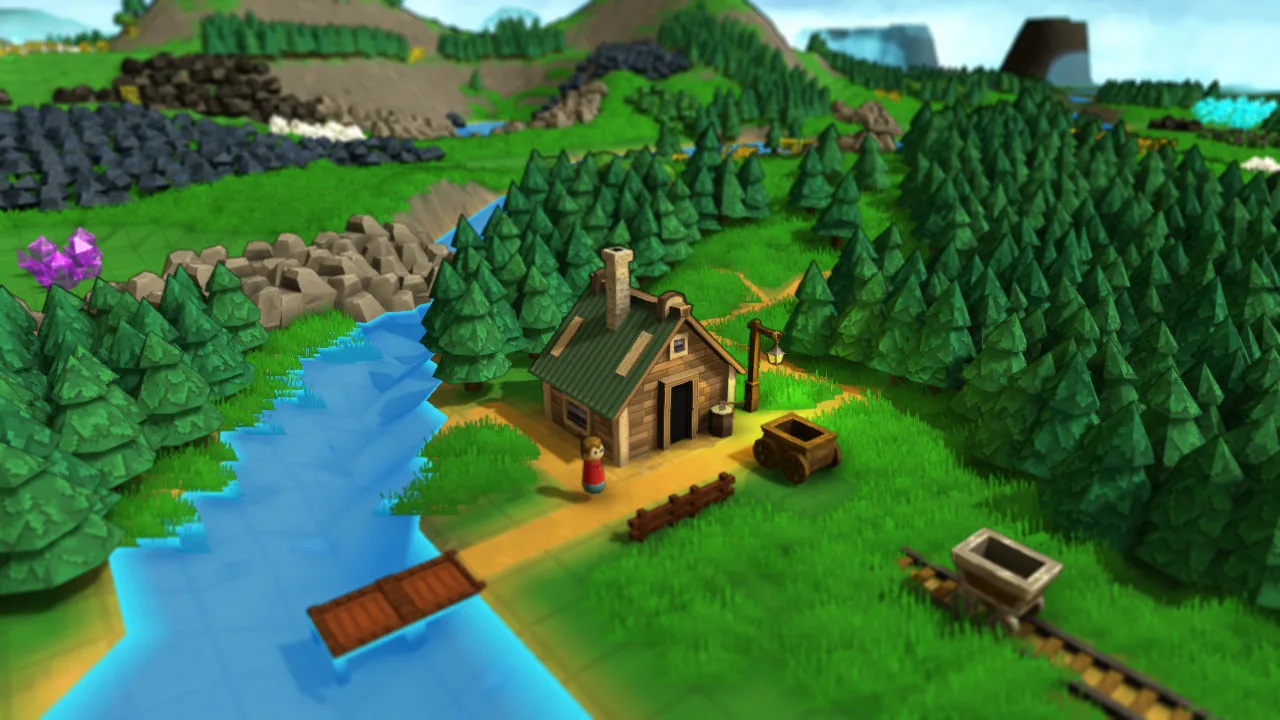
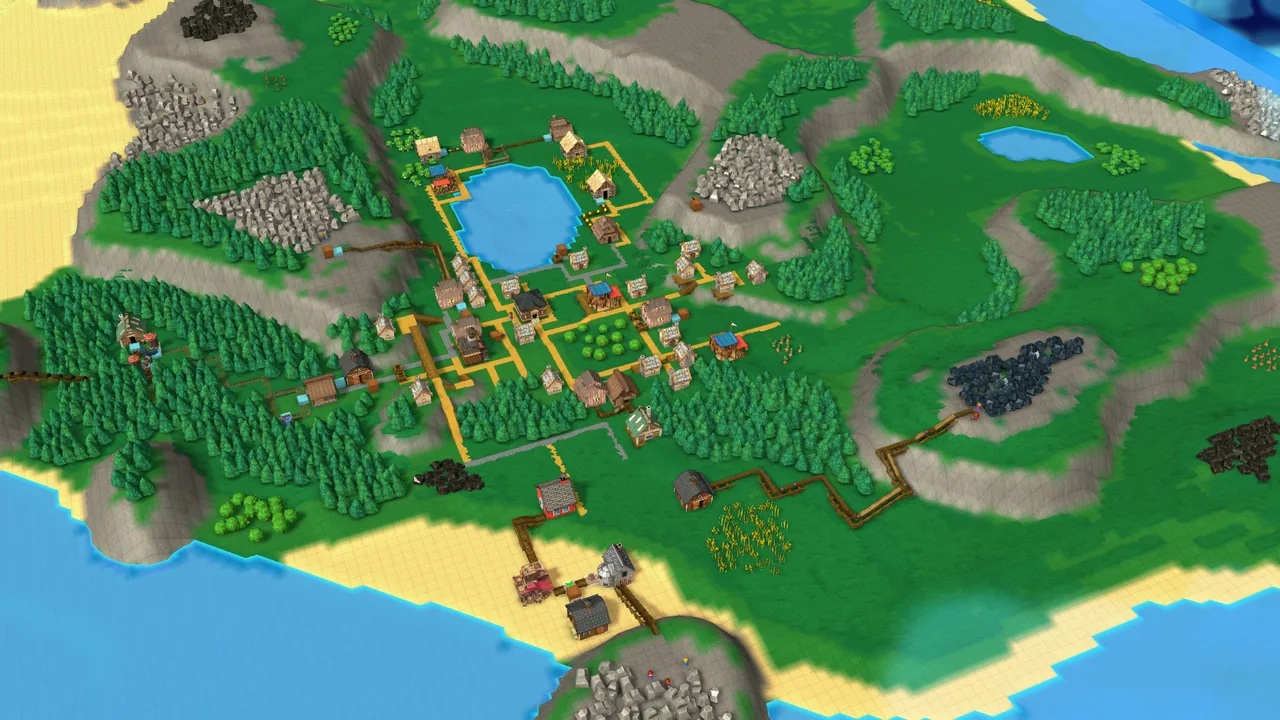
This colony sim has you produce food, clothing, tools and books, building the factories and transport networks that supply a village.
You begin with workers carrying goods, then automate supply by shifting work to conveyor belts, gravity-fed chutes, trains and pipes.
Roads and footpaths from a Town Center define the town’s reach, and its markets distribute goods to connected houses, making housing and market placement part of the supply network.
Supplying residents raises happiness, research unlocks new production and transport options, and later magical technologies offer further production boosts.
At eligible production buildings, you can choose between spending coins on Coin Boosters to speed production and assigning additional workers.
With no enemies or starvation to contend with, you can focus on designing production and transport in objective-based campaigns, custom maps or Creative/Sandbox mode.
For players who dig deeper
Schools distribute paper, books and other research items to connected houses, earning the corresponding Research Points. Research therefore involves delivery to houses as well as production.
Adjustable route height allows vertical separation as well as following terrain, and reviews praise using pipe layers and vertical layouts to organize networks.
Town Specialty bonuses depend on town level, which also depends on connected houses and their growth, so the chance of extra recipe output involves housing links as well as factories.
Merge blocks let you set ratios for incoming directions, controlling how goods from different inputs combine rather than merely joining belts.
What reviewers say
What reviewers liked
- Reviewers enjoy building factories and towns without feeling rushed.
- Reviewers enjoy working out where to place production buildings and transport routes.
- Combining town building with automated production appeals to reviewers.
- Players report being pleased with smooth or stable performance on their own systems.
- Using height to arrange buildings and transport routes is a design freedom reviewers enjoy.
- Reviewers like learning the production and logistics systems as they progress through the campaign.
- Choosing transport methods to suit the situation is welcomed in reviews.
Concerns
- Reviews point to gaps in explanations of controls and game mechanics.
- Reviews describe placing roads, belts and other transport routes as cumbersome.
- Rebuilding a basic town and production facilities on the next campaign map feels like a chore to players.
- Later production or technology goals feel stretched out to reviewers who describe waiting or busywork.
Key facts
- Positive review rate
- 90% Very Positive4,161 reviews · all languages
- Price (US)
- US$19.99
- Languages
- Japanese Interface and subtitlesEnglish Interface and subtitlesSimplified Chinese Interface and subtitlesKorean Not supported10 languages in total
- Steam Deck
- Verified
- Release date
- Nov 18, 2021
- Developer
- Erik Asmussen
- Playtime (when reviewed)
- 29.1 hrsMedian when the reviews were posted (100 reviews)
Screenshots
Read the full game guide →View on Steam ↗Source: Factory Town on the Steam Store
Summary
Return to RimWorld to reorganize colonists’ roles around their backgrounds and moods, or Banished to set expansion pace around generations and essential supplies.
Oxygen Not Included is a starting point for linked heat, gas and plumbing design; WorldBox - God Simulator is the place to compare watching civilizations with intervening through divine powers.
For first-person construction alongside delegated production and planned defenses, revisit Colony Survival.
Return to Plan B: Terraform to mine, process and transport resources to cities while terraforming the planet, or Factory Town to build factory logistics across a three-dimensional landscape and sell goods to nearby villages.