Predy Media > Colony sim > Game page
Game pageBanished Features and Reception
Who It Suits
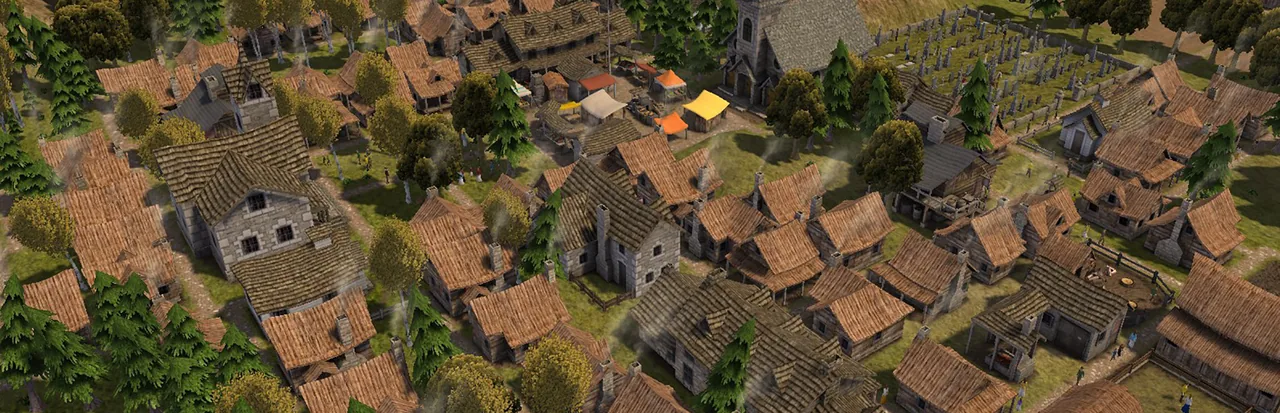
Banished is a town builder without combat. You keep food and firewood coming as citizens age and new generations take their place.
Build homes too quickly and food consumption rises before the children can work. The timing depends on your stores and available labor.
What makes it fun
When to build homes
New homes make room for families, but food consumption rises before their children can work. Delay building too long and your workers age, so you weigh food stores against the town's future workforce.
Small shortages spread
Run out of tools and the harvest slows; run out of food and you lose workers too. The challenge is deciding which part of production to restore before the shortage spreads.
A quiet village, a hard winter
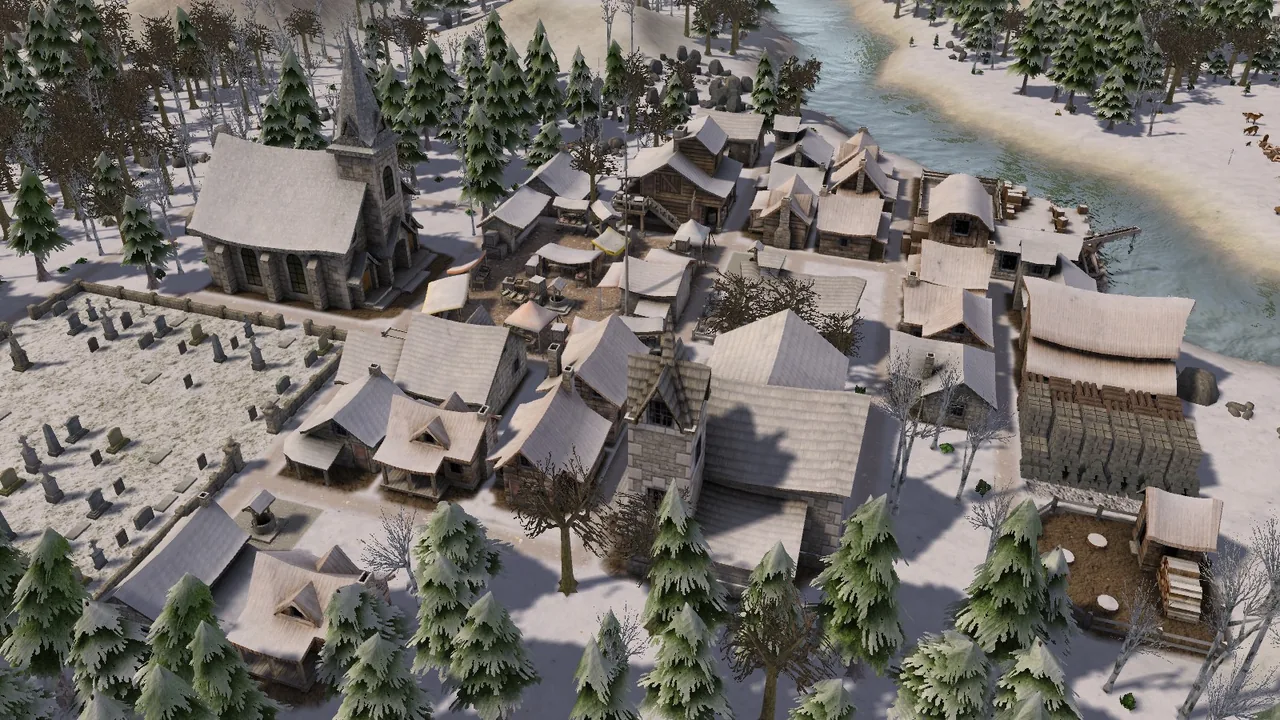
The trees change color and snow settles on the roofs, but you still need to watch the food and firewood stores. Enjoying the view goes hand in hand with preparing for winter.
Game details
As of Oct 29, 2026- Steam Deck
- Playable
- Release date
- Feb 19, 2014
- Developer
- Shining Rock Software LLC
- Languages
- English (Full audio) / 1 languages total
A typical run
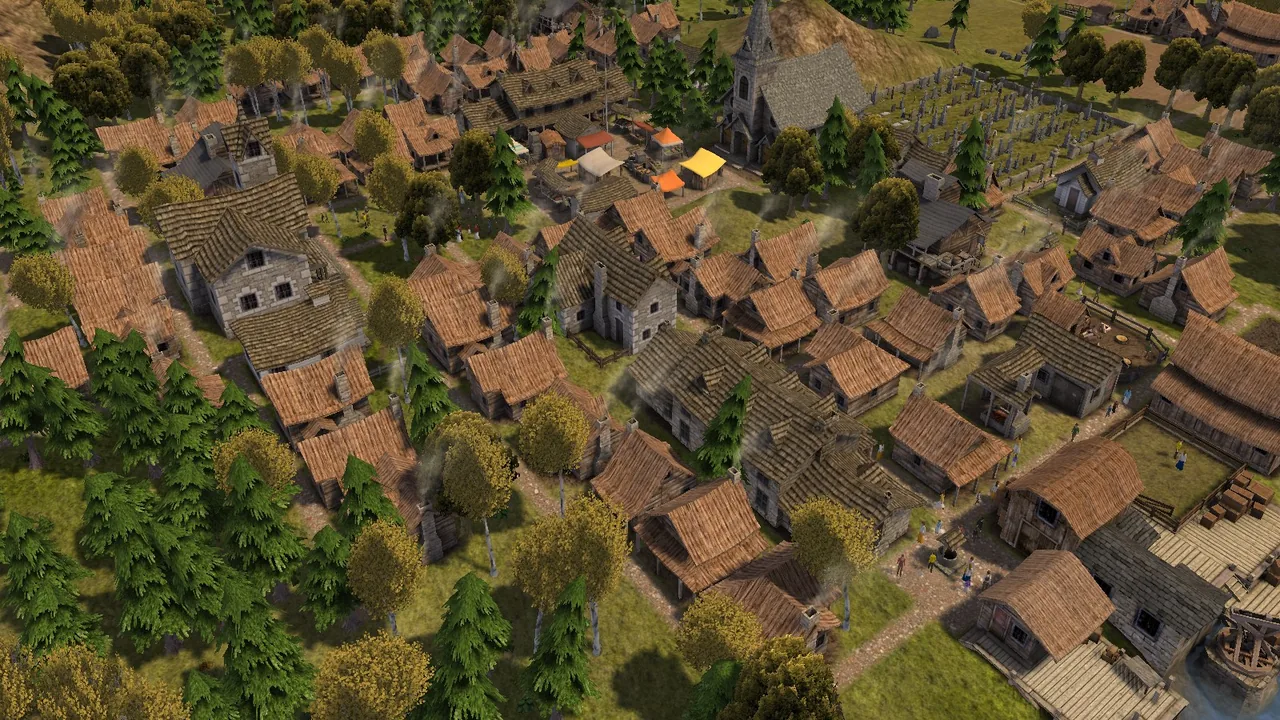
You start with exiles and limited supplies. After reading the terrain, you choose sites for homes and production buildings.
Assign citizens to food, firewood, tools, and clothing. You also need laborers to haul materials and workers to build.
Check food and firewood before winter. If a harvest is running late, change job assignments or the order of construction.
More homes give new families somewhere to live. Food use rises, while the children take time to join the workforce.
Once the town is stable, you can turn to trade, education, and disaster preparation. Achievements offer goals with their own conditions.
Core systems
Citizens
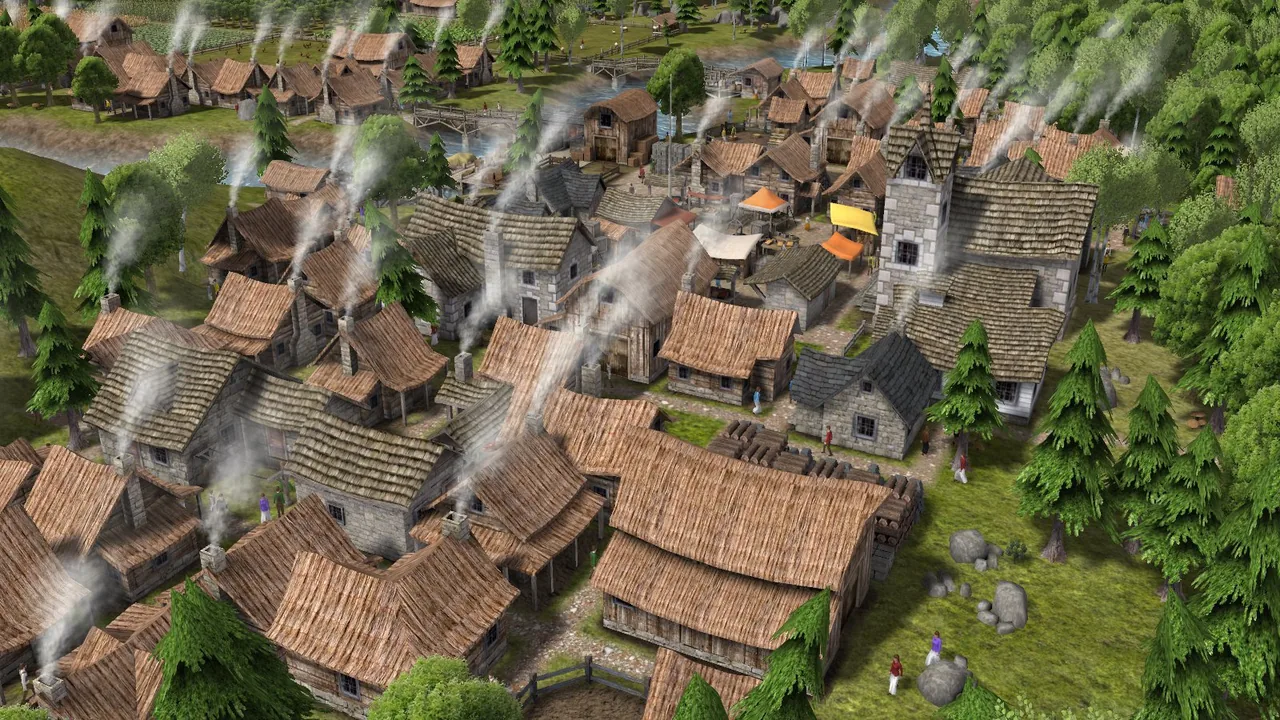
Citizens age, work, form families, and eventually die. The same population count can contain very different shares of children and workers.
Build homes to make room for the next generation, or wait until food and labor can support growth. Expand too fast and consumption rises; wait too long and the current workforce grows old.
Professions
Assign citizens to farming, gathering, smithing, construction, and other work. If every laborer takes a dedicated job, materials may not reach building sites.
An immediate food shortage may call for more producers, but seasonal work and construction still need people. Before filling another workplace, check who remains to haul supplies.
Homes
Homes shelter citizens from the cold and give new families a place to live. An empty building does not raise the population; citizens must be ready to move in.
A run of new homes encourages families, but food consumption follows. Leave too long a gap and the workforce may age before replacements grow up. Land and building materials are part of that timing.
Food Production
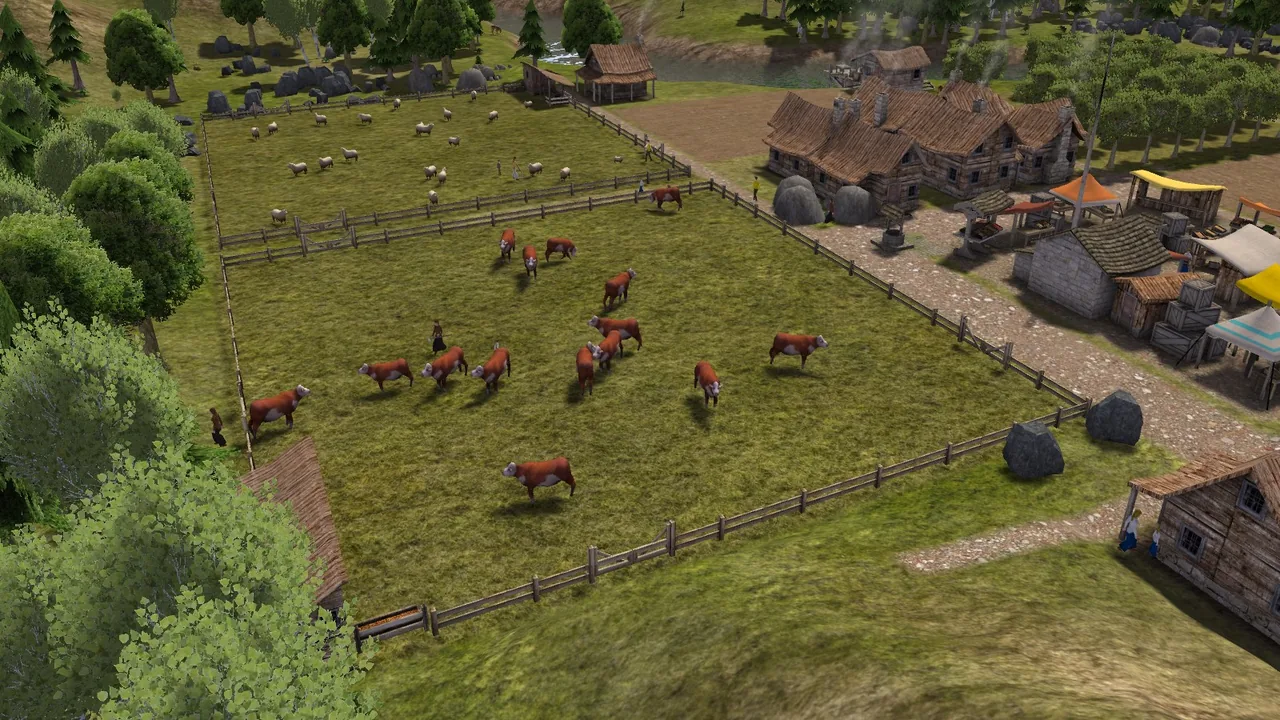
Hunting, gathering, fishing, crop fields, orchards, and pastures supply food. Certain sources depend on the season or terrain, so stores matter while you wait for a harvest.
If you commit land and workers to fields and orchards, what will feed the town when a harvest runs late? Gathering and fishing spread the risk of delays or infestations. Homes compete for the same land.
School House
A School House educates children for future work. While they attend, they are not available as workers.
You can bring young citizens into work sooner or give them time to study. A school also needs a teacher, so consider whether food production and hauling can spare that worker.
Trading Post
The Trading Post lets you barter with merchants arriving by boat. It can bring in livestock, crop seeds, and goods the town lacks.
Keep goods such as firewood for citizens, or haul them to the post for trade. What you produce locally and what you obtain from merchants changes the buildings you need and the distance goods travel.
Disasters
Fires, tornadoes, disease, and infestations can damage buildings, harvests, and citizens. You can disable disasters when creating a town.
Even while expanding production, you can reserve materials and workers for wells or hospitals. Those buildings give the town ways to respond when fire or disease strikes.
What sets it apart
There is no currency or technology tree to advance. Gather the required materials and you can choose a building.
There are no outside enemies. A winter without firewood, disease, disasters, or an aging workforce can threaten the town.
Expansion adds mouths to feed. The question is how quickly the town can grow while supplying its citizens and replacing its workers.
Learning curve and difficulty
Starting conditions, climate, terrain, and the disaster setting let you change the difficulty.
With practice, you can read an uneven age profile or a delayed harvest before food runs out, then adjust housing or job assignments.
A long walk between homes, workplaces, and storage costs working time. Those distances matter as the town spreads.
Achievements such as Mountain Men, Isolationist, Uneducated, and One with Nature set conditions that make you rethink systems you usually use.
Builds and playstyles
Forest food belt
Place gathering and hunting around a forest, then add fishing. These food sources and the resulting stores can carry the town through a late field harvest.
Trade-led production
Produce goods such as firewood for barter and obtain missing resources at the Trading Post. Long trips from production to storage and onward to the post tie up laborers.
Short walking routes
Place homes near workplaces, storage, and markets. As the town spreads, this layout limits the time citizens spend walking to work or collecting supplies.
Gradual housing growth
Add homes gradually while watching food stores and citizens' ages. The spacing helps avoid a sudden rise in consumption without leaving too few young workers later.
What longtime players say
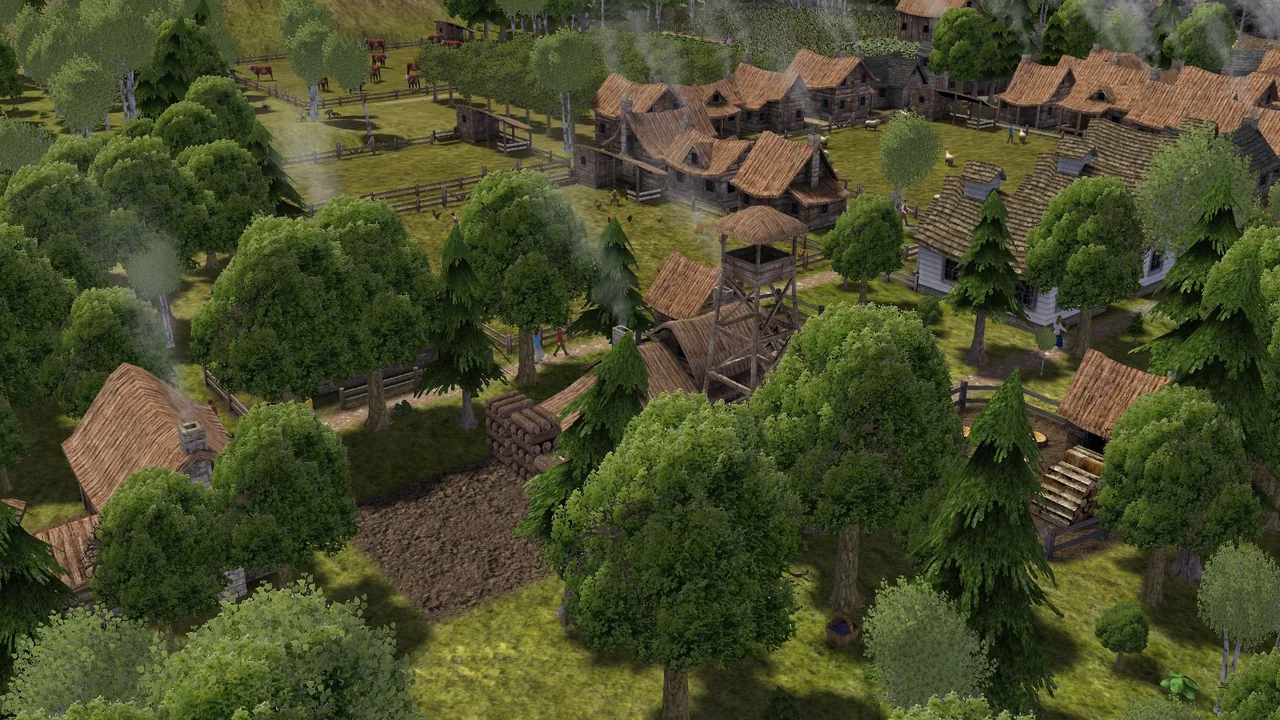
Players building large towns notice the time spent hauling goods across them. There are also reports of slowdowns or freezes as settlements and populations grow.
After long stretches with the game, players describe returning to reconsider when to add homes and how much food the next generation will need.
After the base game, mods offer more buildings and ways to change a town's appearance, giving builders another reason to keep working on it.
What players like
In the early and middle stages, building homes too quickly or running short of firewood or tools can disrupt food production and winter survival later. That delayed collapse makes players want to revise their approach in the next town.
Once they have built with the base game's buildings and crops, players can use mods to change the buildings or appearance of a town and keep building.
The town is pleasant to watch as the seasons change, yet food and firewood stores still need attention. Reviews describe enjoying that quiet view while worrying about the next winter.
New homes allow families to grow, but children take time to become workers. Players enjoy weighing food shortages from building too quickly against an aging workforce from waiting too long.
The screens and icons make jobs and supplies fairly easy to follow. Once the basic controls are clear, players can focus on stores and what citizens are doing.
Combat and a technology tree do not set the pace. Players who like choosing when to add housing or turn to trade appreciate being left to shape the town themselves.
Common complaints
After food and labor stabilize, the late game offers few new buildings or explicit goals. Adding more of the same homes and production buildings can feel repetitive.
Materials take time to cross a sprawling town. Since players cannot closely specify citizens' routes or hauling destinations, construction may stall and crops may be harvested late.
Reviews report slowdowns and freezes after towns or populations grow large. That matters to players who want to keep expanding a settlement.
Who it’s for
It suits players who enjoy timing new homes against the next generation of workers and checking whether food and firewood will last through winter. Reassigning jobs before a shortage hits is part of the appeal.
It also suits players who would rather shorten walks between homes, workplaces, and storage or obtain missing goods through barter than manage combat.
Who might not enjoy it
If you want a steady stream of new buildings and explicit objectives after food and population stabilize, late-game expansion may feel repetitive.
If you want to specify citizens' routes and hauling destinations in detail, delays in construction or harvesting may be frustrating.
FAQ
- Does it support Japanese, Simplified Chinese, or Korean?
- No. English is the only officially supported language. Community translations are available through Steam Workshop, but they are not official localizations.
- Is cooperative play available?
- No. The official store lists Banished as single-player.
- Can the difficulty be adjusted?
- You can choose the starting conditions, climate, and terrain. Disasters can also be disabled if you want to focus on running the town.
- Is additional content available?
- Steam Workshop has mods for buildings, professions, crops, translations, and balance changes. The developer also provides a Mod Kit.
These impressions are based on 100 Steam reviews sorted by “Most Helpful.” They do not represent the views of all buyers.

Image: Banished on Steam