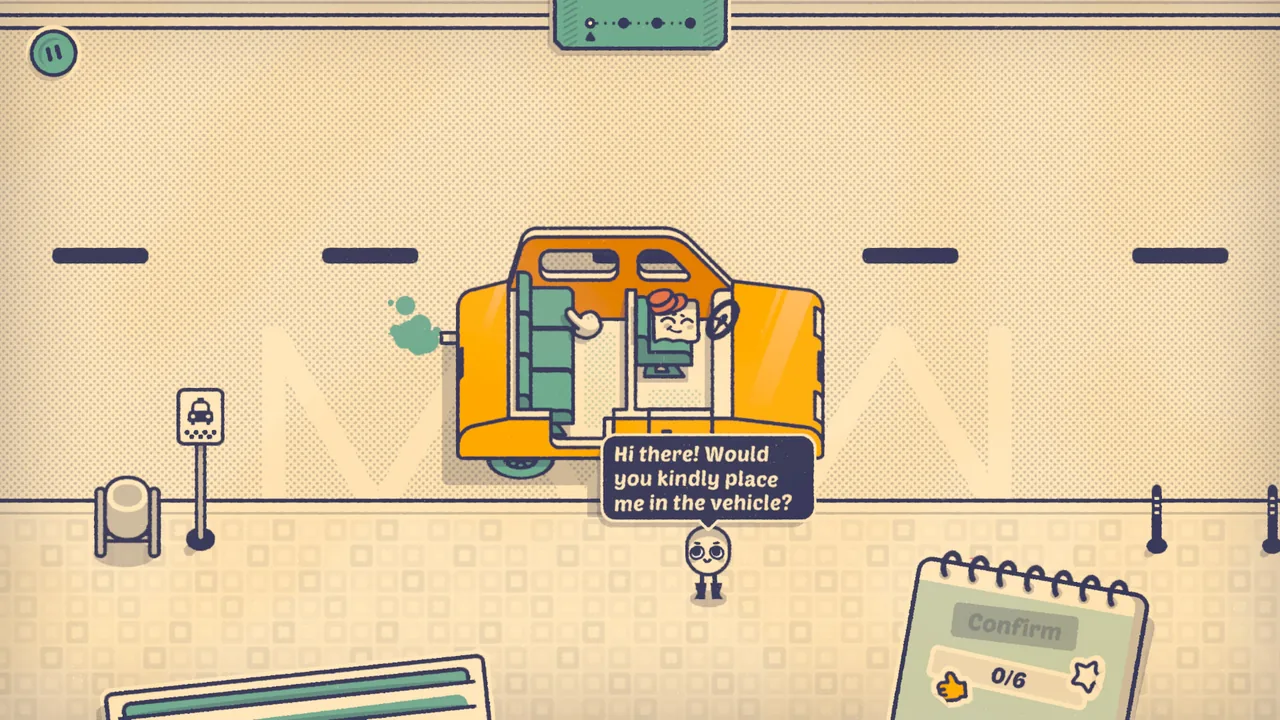
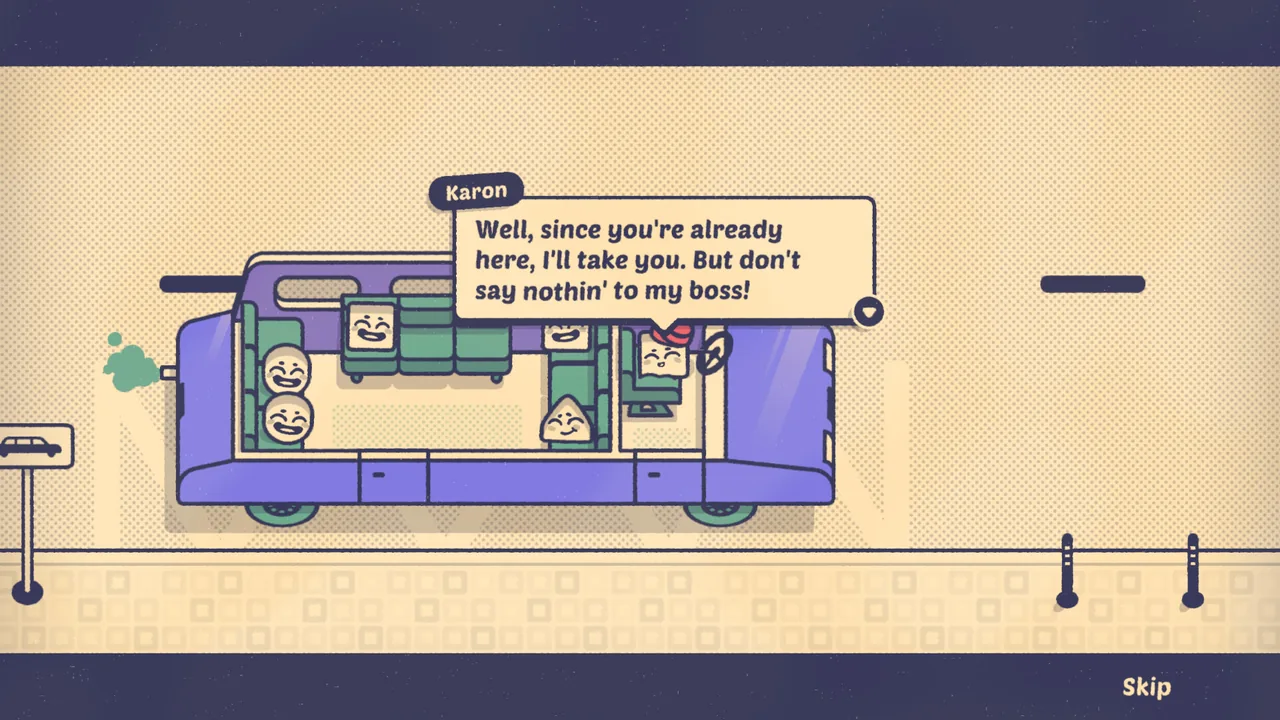
A logic puzzle about finding seats that fit each character’s likes and dislikes. Read their preferences and consider both the seat and the person beside it.
Settings such as cinemas, buses, and wedding receptions bring characters with different tastes. It suits players who want to revisit preferences and try arrangements without a timer.
What makes it fun
Preferences come together
Comparing requests and finding a combination of seats and neighbours that fits can feel satisfying.
Preferences give characters personality
Reading preferences can also be enjoyable for the personality they give each character.
A story between arrangements
Following the characters’ story between seating puzzles can also be enjoyable.
Game details
As of Nov 17, 2026- Languages
- Japanese, English, Simplified Chinese, Korean / 19 languages total
- Official website
- potipoti.studio
A typical session
Read the preferences in the scene and consider what seat or neighbour each person wants.
When choosing a seat, consider the preferences of both the person being placed and their neighbour.
Try combinations and reconsider the arrangement. Focus on the stated preferences rather than a timer.
Progress opens new scenarios with characters who have different tastes. Read the preferences presented in each new setting.
Core systems
Character preferences
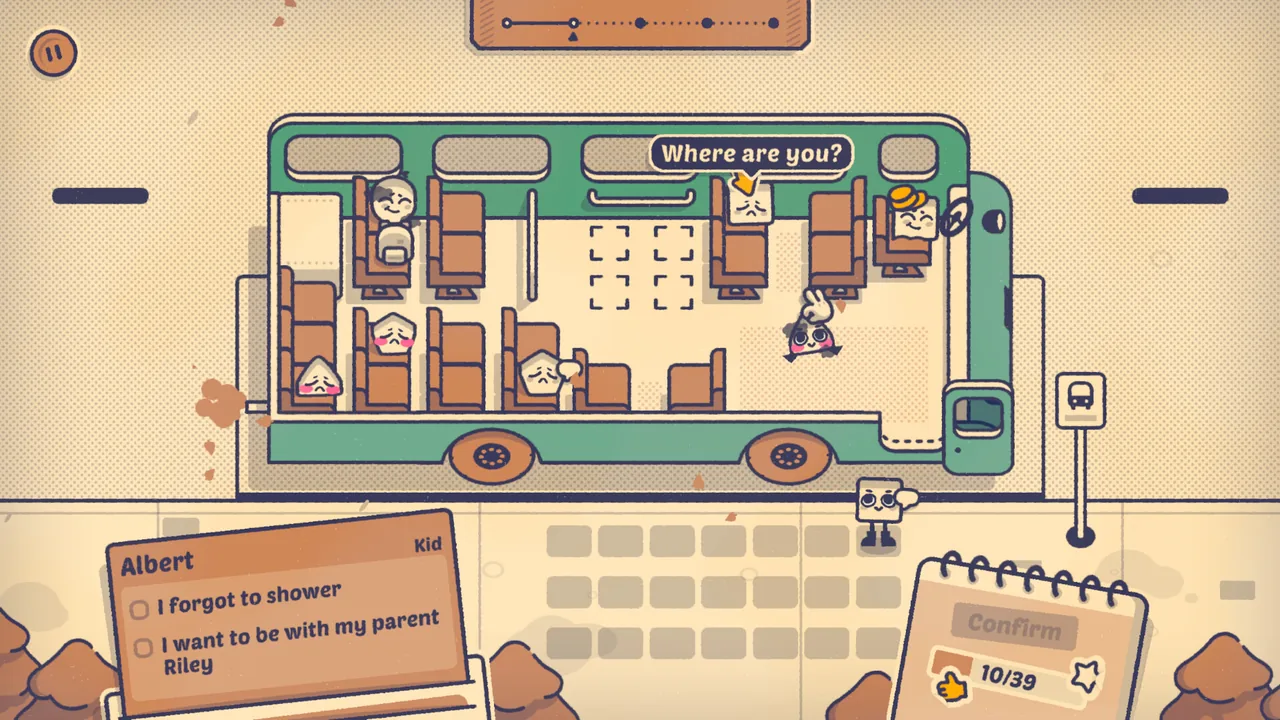
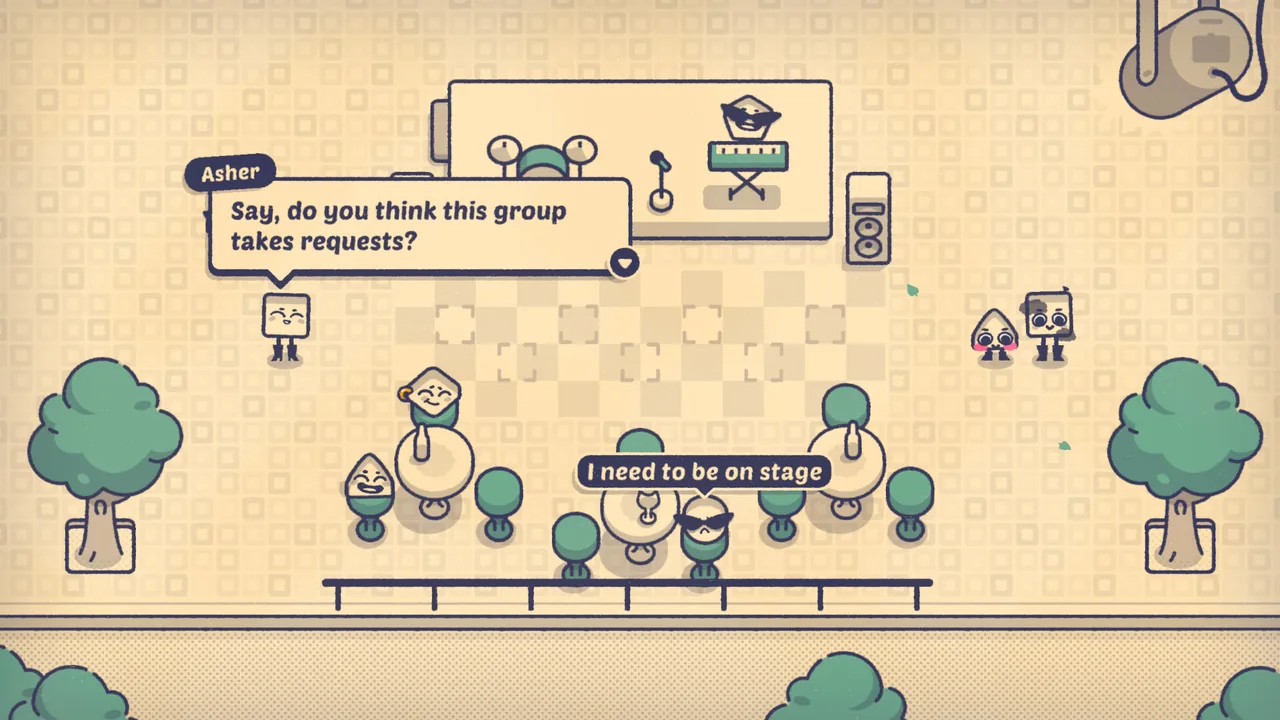
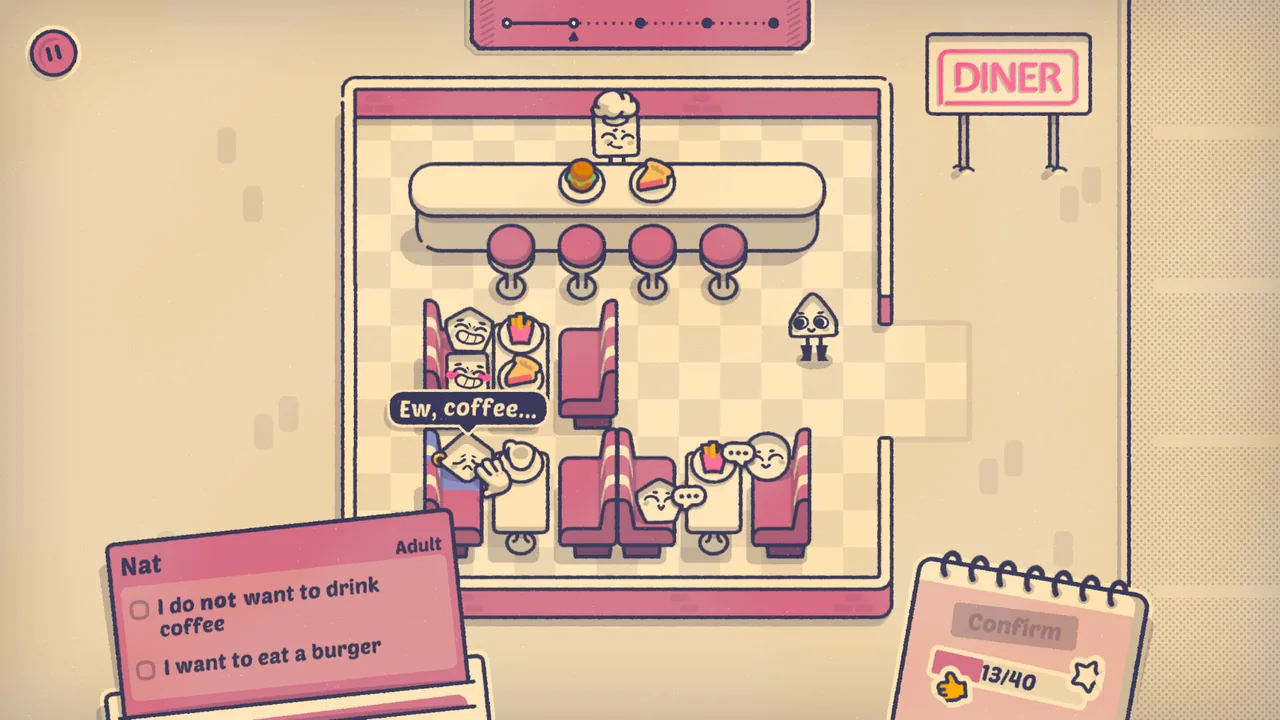
Each character has likes and dislikes that inform their seating needs. Reading what they want is the starting point, not simply putting a person in a seat.
Decide where to place each person to satisfy those preferences.
Seat neighbours
Who sits beside a character can be part of the seating conditions.
Consider the seat and its neighbour together. When finding a placement for one person, also compare the preferences of the person beside them.
Unhurried experimentation
The main seating puzzles have no timer, leaving room to experiment with character arrangements.
Reconsider preferences rather than rushing to place everyone. Use the time to experiment at your own thinking pace.
Changing settings
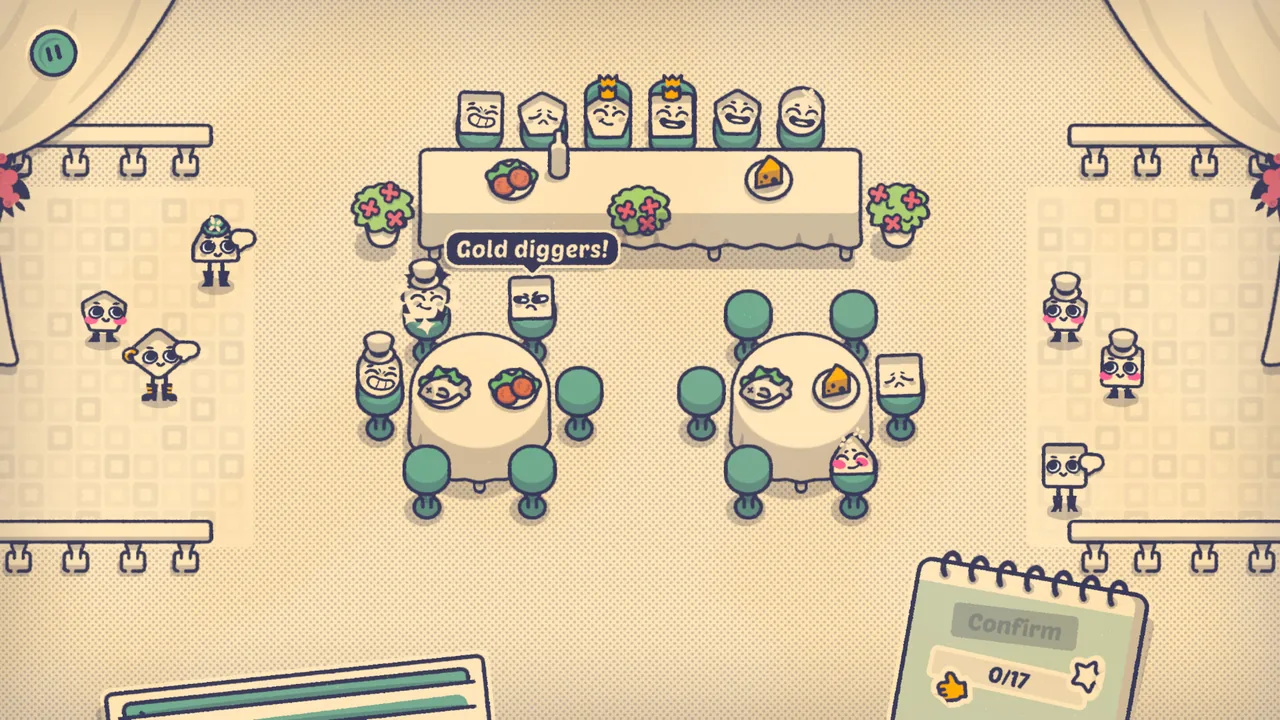
Settings such as cinemas, buses, wedding receptions, and taxis introduce characters with different tastes. New scenarios unlock as you progress.
Rework the seating around the preferences presented in each new scene.
What sets it apart
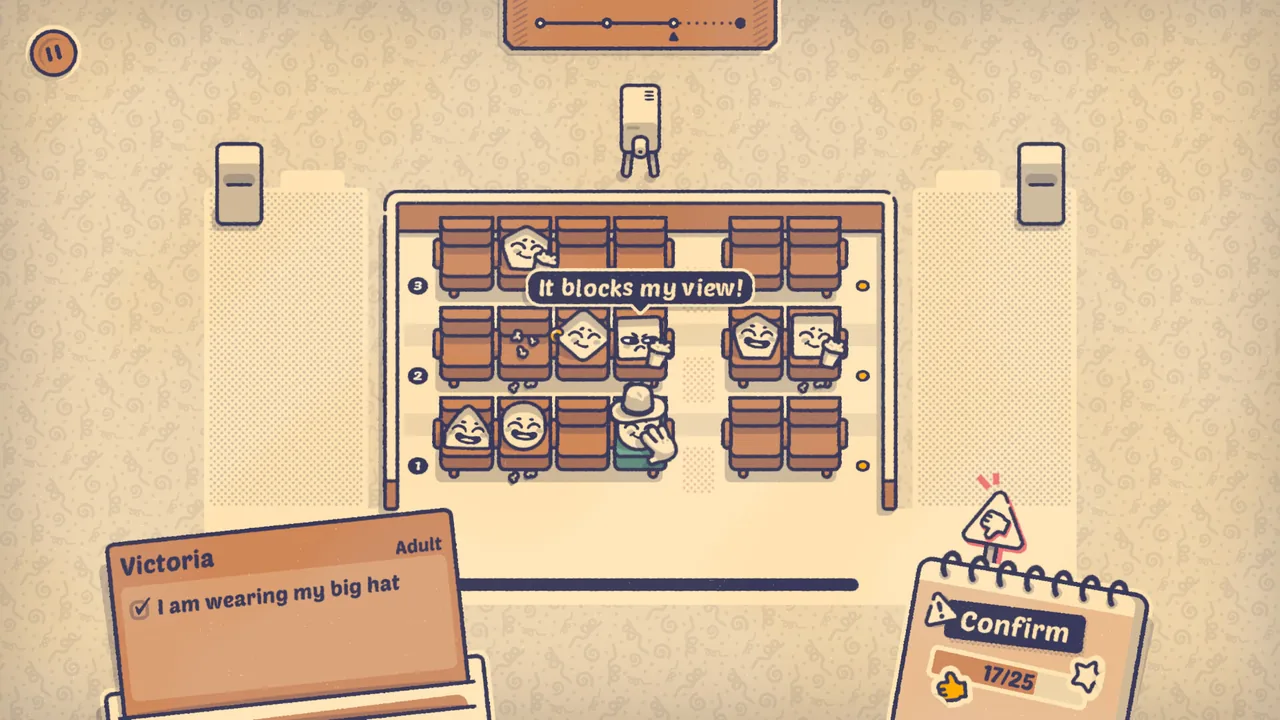
An arrangement is judged by the seated characters’ preferences rather than appearance alone. Thinking about a seat also means thinking about its occupant and neighbour.
Familiar settings such as cinemas, crowded buses, wedding receptions, and taxis are reconsidered through people’s preferences. Each setting and cast brings another arrangement to work out.
The main seating puzzles have no timer and allow experimentation. You can spend time rereading preferences rather than rushing to place everyone.
Learning curve and difficulty
Move from reading one person’s preferences to comparing those of neighbours together. Consider relationships across the arrangement rather than each seat and occupant alone.
When trying an arrangement, relate placements to preferences. Look for combinations that satisfy the conditions rather than merely memorizing a layout.
What longtime players say
Even if familiar with placement puzzles, reread preferences in each new scene. The setting changes, but the people’s particular requests also inform the next decisions.
When considering another arrangement, test it against personal preferences and neighbour conditions. Freedom to experiment is distinct from ignoring the requests.
What players like
Comparing preferences and finding an arrangement that fits can feel satisfying.
Having room to calmly rethink placements can feel relaxing.
Reading preferences can bring out the characters’ personalities and add enjoyment to arranging seats.
Following the story between puzzles can offer a welcome change of pace.
Common complaints
Continuing to work through similar seating arrangements can feel repetitive.
If you want puzzles that demand a major change in thinking, the variations in seating can feel limited.
Who it’s for
A fit for reading preferences and working out combinations of seats and neighbours.
A fit for taking time to experiment with arrangements rather than racing to finish.
Who might not enjoy it
If you want to arrange seats purely for appearance, consider that this is a puzzle about satisfying character preferences.
FAQ
- What do you consider when choosing seats?
- Consider each character’s preferences and their compatibility with neighbouring people.
- Do you have to arrange seats against the clock?
- The main seating puzzles have no timer, so you can check preferences and experiment with placements.
- Can the preferences be read in Japanese?
- The game supports Japanese interface text.
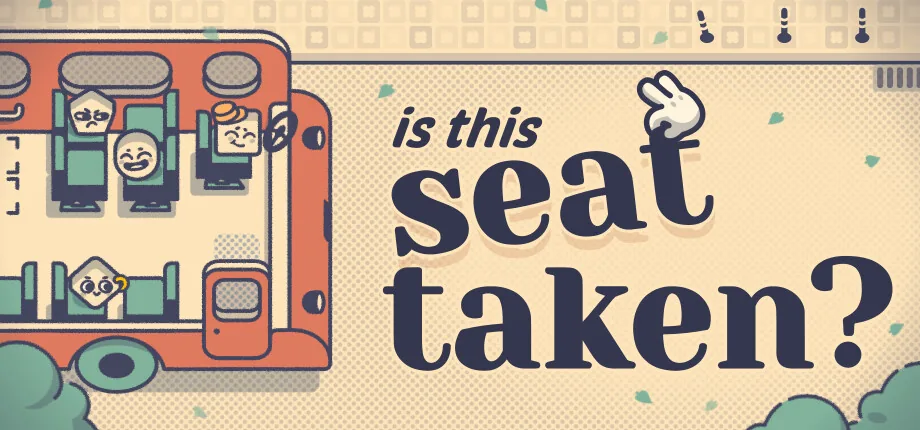
97% Overwhelmingly Positive · US$9.99
View on Steam ↗Image: Is This Seat Taken? on Steam