Predy Media > Detective > Game page
Game pageUnheard - Voices of Crime: Features, Player Feedback, and Who It Suits

This mystery game asks you to replay conversations happening at the same time in different rooms, identify the speakers, and reconstruct each case.
It suits players who enjoy following dialogue for clues. If you want demanding deductions throughout the base game, the time spent listening may weigh more heavily.
What makes it fun
Another room changes what you know
Move your listening position across the floor plan to hear conversations taking place in other rooms at the same time. Replaying a moment elsewhere can change how you understand an earlier line.
Choose whose voice to follow
When a character moves to another room, you can follow them or shift your listening position to someone whose story crosses theirs. Revisit the same stretch of time to hear how their stories connect.
Earlier cases gain new meaning
As connections between the cases emerge, earlier scenes and lines can take on a new meaning. The story invites you to rewind and reconsider events you had followed separately.
Game details
As of Oct 29, 2026- Steam Deck
- Playable
- Release date
- Mar 29, 2019
- Developer
- NEXT Studios
- Languages
- Japanese (Full audio), English (Full audio), Simplified Chinese (Full audio) / 4 languages total

A typical run
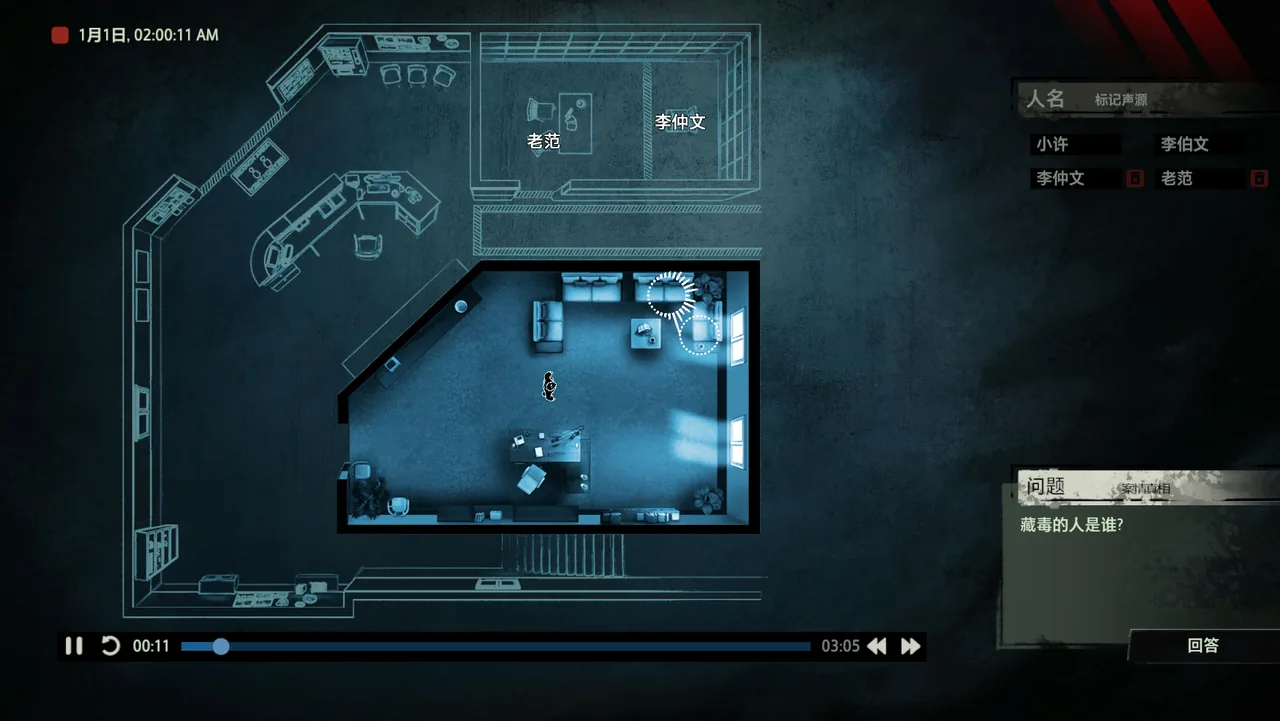
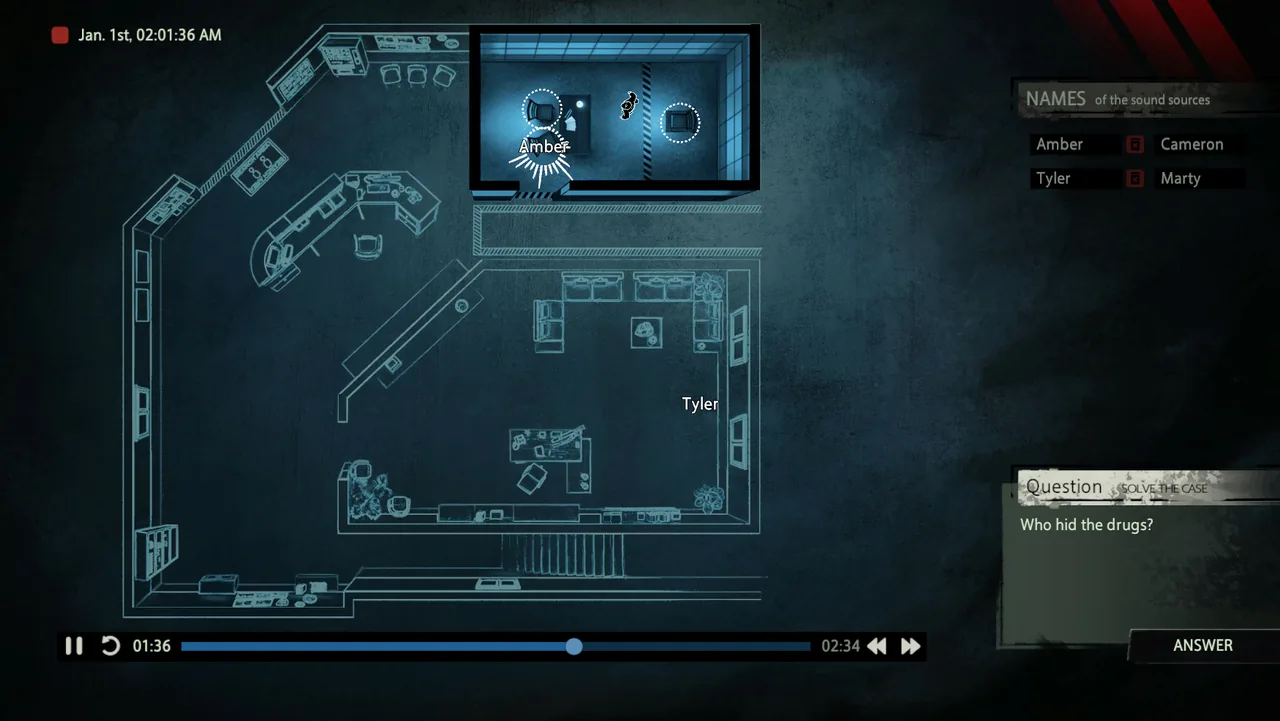
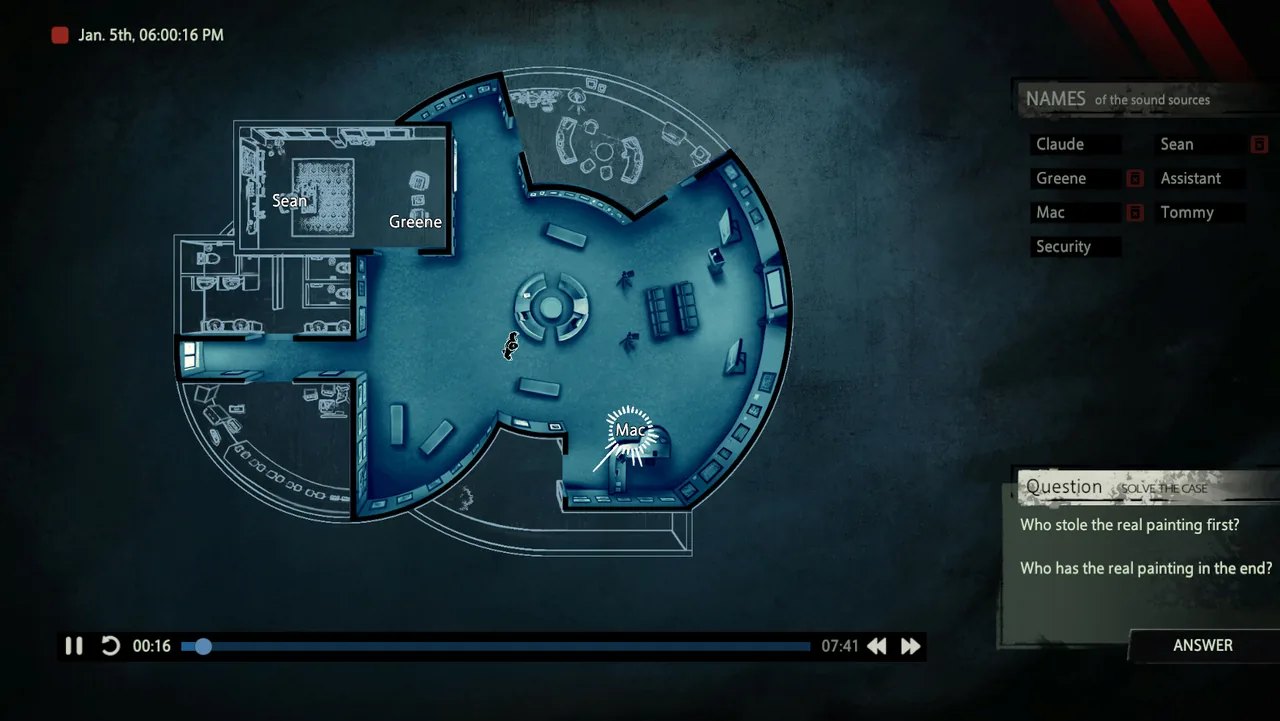
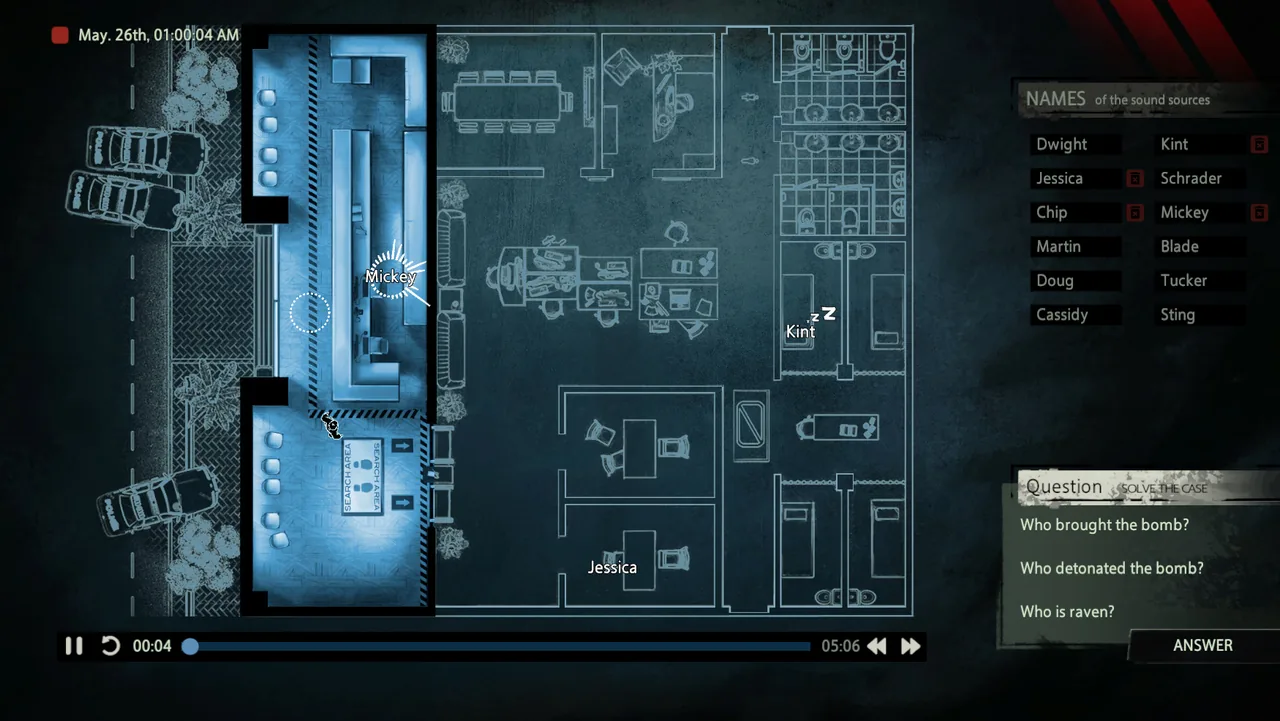
A case opens on an overhead plan that shows character positions as time moves forward.
You move near a character or into a room to hear conversations within range.
You switch who you follow or rewind to check what happened in another room at the same time.
You assign names to voices and answer the case questions.
If a clue is missing, you return to a particular place and moment to listen again.
Core systems
Acoustic Detectives
You hear the sounds of a past crime scene. You control where you listen rather than controlling anyone at the scene.
The person you stand near determines which conversation you hear. If something elsewhere matters, you can rewind and check that room afterward.
Follow conversations
You can trail a character into another room and keep listening. A person mentioned on a call may lead you to another relevant scene.
You choose whether to stay with a speaker or change targets when their paths cross. Leave too early and you may miss the line that explains what they said before.
Match names to voices
You use conversations to assign names to unidentified voices. A direct greeting may settle a name; a job or relationship may narrow the candidates.
You decide whether to enter a name now or wait for another conversation. Filling the remaining slots by elimination does not necessarily explain the relationships behind a case question.
Replay audio
Rewinding lets you hear the same period from another room or beside another person. You can also jump back to a moment you want to check.
You can follow each person through a scene or compare selected moments. The latter is faster, though a casual mention of a name or motive may pass you by.
Open-Ended Narrative Mystery Game
Clues have no fixed collection order. You choose whose account to hear within the same place and period.
You can start with someone who seems central to the case or check the people around them. Eventually, the events heard separately must fit on one timeline.
What sets it apart
You collect clues from conversations happening at once instead of picking up objects at a scene.
You find the information you need by changing where and when you listen. Opening a hidden room is not the route to it.
Identifying the voices is only part of the work. You still have to put movements and lines of dialogue in order.
Learning curve and difficulty
The opening cases make it easier to learn how names connect to voices. Later, characters move and conversations cross more often.
Once you know the routine, choosing a place and moment to check can be more useful than replaying a recording from the start.
Following someone named on a call or someone who has moved to another room can change the meaning of an earlier line.
Relationships become harder to track in the add-on cases. Brief notes on times and events can help you find what to replay.
Builds and playstyles
Character trail
Follow a chosen character through their moves and establish their sequence of actions. Revisit the other person where their paths cross to check who knew what.
Moment cross-check
Pick a moment when the case changes, then listen in another room during the same period. This helps check where someone was and what happened around a particular line.
External case notes
Write down names, roles, and what each person knows. In the denser add-on cases, paper gives you room to arrange information beyond the game's comments tied to moments on the timeline.
What longtime players say
After learning to match voices and names in the base game, players found more to untangle in the add-on cases' relationships. Rewinding to compare lines from different scenes becomes a bigger part of the work.
Listeners who enjoy colloquial Chinese delivery find that it gives characters personality. Others struggle with regional accents and find repeated checks tiring.
For players tracking relationships over long recordings, comments attached to the timeline can feel too limited. They want room on paper to record names and roles.
What players like
Players who like building a case from spoken exchanges enjoy changing listening positions to catch conversations they missed. It gives them a different routine from searching a scene for objects.
For players familiar with the base game's controls, the add-on cases bring relationships that take more work to untangle. Rewinding and comparing lines across scenes becomes more rewarding.
The base game lets players learn the controls while matching voices to names. That works for those who would rather collect and arrange conversations than face a dense logic puzzle immediately.
The closing answers and developments have sent players back to earlier cases and lines. Revisiting dialogue to see what it meant suits those who like tracing planted clues.
Follow another character through the same period and conversations missed before begin to connect. Players enjoy seeing the case take shape as they change whom they follow.
On the Chinese voice track, colloquial lines and vocal delivery help listeners get a sense of the characters. In add-on cases, tone can also make a line sound like a lie.
Common complaints
In the base game, a conversation can reveal an answer outright. Players seeking sustained deduction in the name matching and case questions may find too little to work out.
Replaying stretches with little useful information can make the listening feel repetitive. It is especially tiring for players who find it hard to stay focused through long conversations.
Players have found the English and Japanese performances exaggerated or the dialogue awkward. Since listening drives the game, acting that grates can pull attention away from a case.
Without subtitles, players with hearing or auditory processing difficulties can miss information from the opening cases. Those less comfortable with the spoken language also struggle to check what was said.

Who it’s for
It suits players who want to replay a scene beside another character and piece together where people went and what they said.
If you like noting who knew what at each moment, following characters and collecting their conversations gives you material to work with.
Players comfortable with an add-on's supported voice language can take the base game's replay routine into cases with more tangled relationships.
Who might not enjoy it
It may not suit players who need subtitles or find it hard to stay with long spoken scenes.
If you want dense logic problems throughout the base game, the time spent listening and collecting information may feel long.
FAQ
- Which voice languages are supported?
- The official store lists full audio in English, Simplified Chinese, and Japanese for the base game. Korean and subtitles are not listed as supported.
- Is there cooperative play?
- No. The official store lists the game as single-player.
- Can the difficulty be adjusted?
- The official store does not establish whether difficulty can be adjusted. You can replay the audio and narrow your search by character, place, and moment.
- Is there additional content?
- Yes. The official store lists The Lethal Script, the Ghost Festival Special, and Dark Fortune Teller. The Lethal Script has English and Simplified Chinese full audio; the other add-ons list Simplified Chinese only. Their language tables do not list Japanese audio.
These impressions are based on 100 Steam reviews sorted by “Most Helpful.” They do not represent the views of all buyers.

Image: Unheard - Voices of Crime on Steam