Predy Media > Detective > Game page
Game pageThe Roottrees are Dead: Investigation, Player Impressions, and Who It Suits

This investigation puzzle has you reconstruct a wealthy family’s tree using an old web, books, and periodicals.
Much of the play lies in finding the next search term in a document, then using what you find to match names and portraits to the tree.
What makes it fun
Follow a stray keyword
Search for a term tucked into an article, and it can lead to another page or book. The new context may suddenly explain something you read earlier.
Let confirmed entries narrow the tree
Place names, photos, and occupations on the Family Tree, then use confirmed entries to narrow the remaining possibilities. When the evidence and elimination line up, stalled branches start to open up.
Uncover the family behind the names
As you connect names on the Family Tree through articles, diaries, and photos, relatives' relationships and hidden history come into view. The search for heirs lets you piece together the family's past yourself.
Game details
As of Oct 29, 2026- Steam Deck
- Playable
- Release date
- Jan 15, 2025
- Developer
- Evil Trout Inc.
- Languages
- English (Full audio), Simplified Chinese (Full audio) / 8 languages total
A typical run
Read the assignment and the material at hand, then inspect the gaps in the Family Tree.
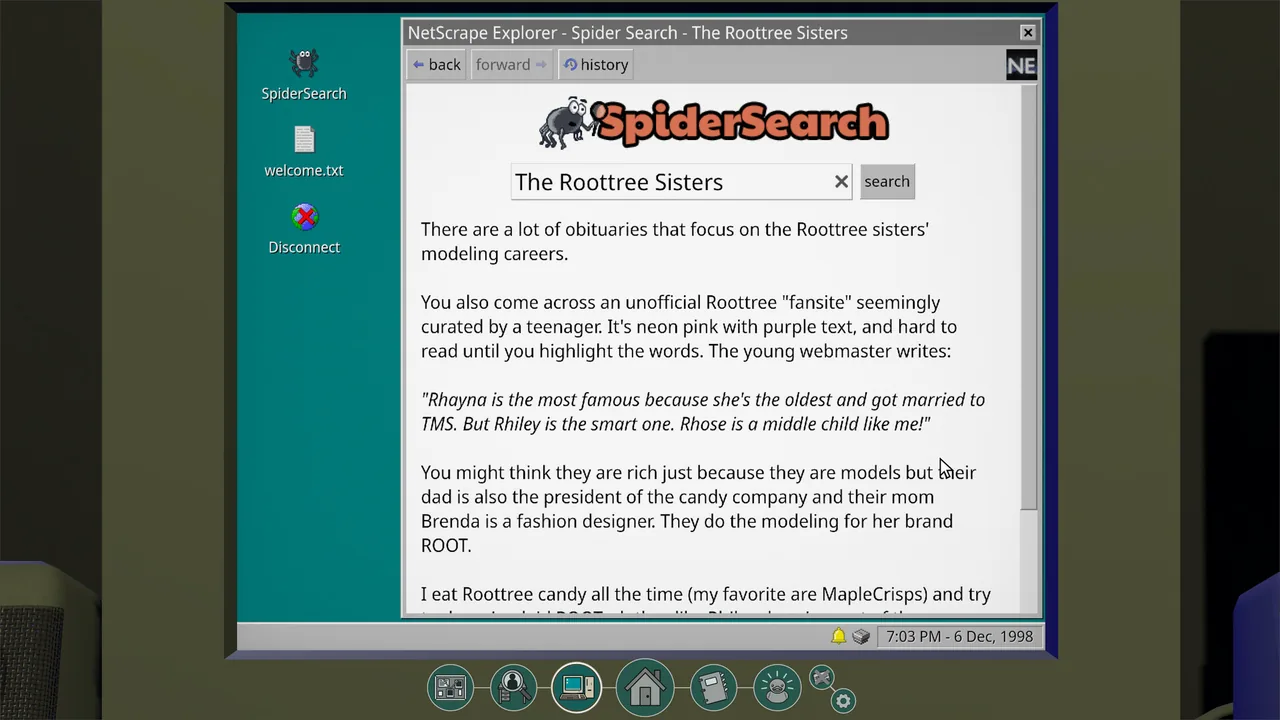
Enter names and organizations into the Search Engine, looking through articles and photographs for another useful term.
When you find a title, author, or publication, look up the corresponding book or periodical.
Place names, portraits, and occupations on the tree. Confirmed people help narrow the remaining choices.
Completing the main case opens Roottreemania, which gives you another tree to investigate.
Core systems
Family Tree
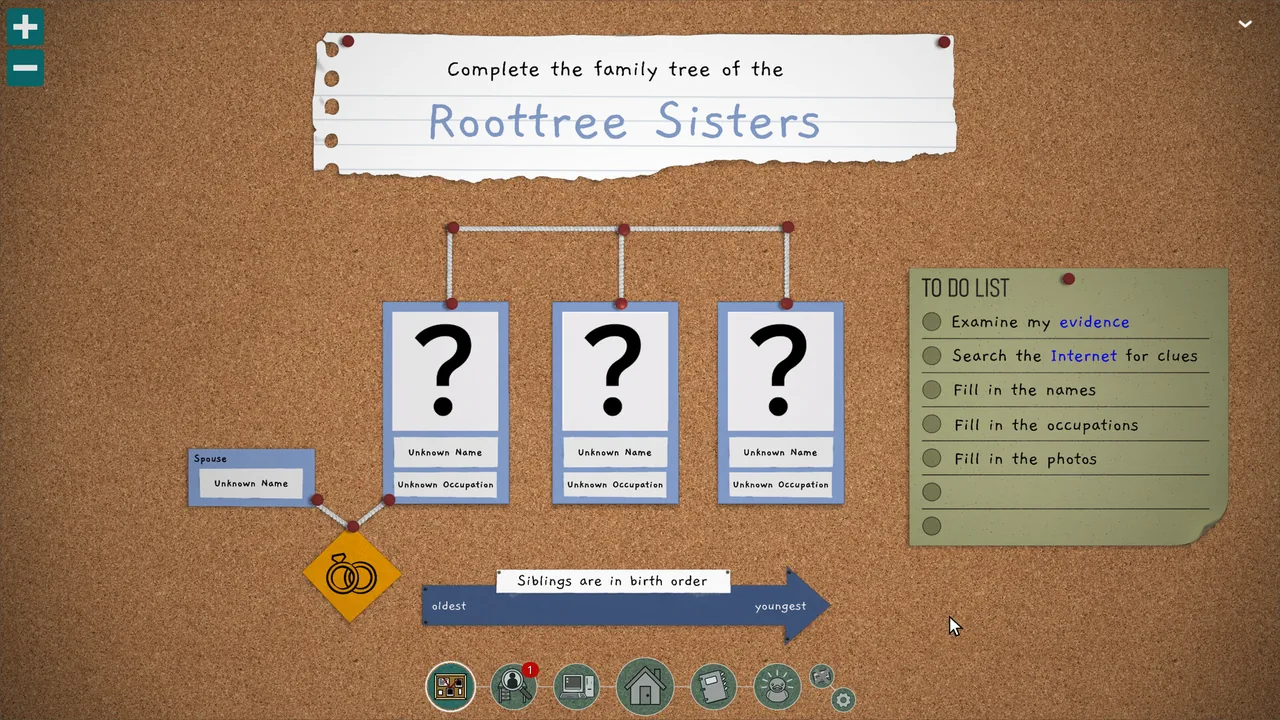
The tree holds each person’s name, portrait, occupation, and place in the family. Correct groups of entries become confirmed.
Start with people backed by evidence, or use confirmed positions to rule out other candidates. Similar names and surnames changed through marriage can undo an early guess.
Search Engine
It searches the game’s old web for the words you enter. A result may contain the name or reference that leads to another source.
If a full name goes nowhere, try an organization or place mentioned nearby. Weak guesses can leave you cycling through documents you have already read.
Books and Periodicals
Books and magazines are sources you look up separately from the web. A title, author, or publication name can be a lead.
You might follow a person named in the article or check the book title tucked beside it. Each term can open a different source.
Highlighting System
Selected passages go to the Notebook with links to their sources. Those links let you return to the original material.
A saved search term is quick to scan; its surrounding sentence helps preserve its meaning. Highlight too much and the passage you need becomes harder to find.
Notebook
The in-game Notebook holds highlighted passages and your own notes. You can record aliases and theories still awaiting proof.
Keep notes linked to their sources in the game, or use paper when you want more room to lay out relationships.
Roottreemania
This included follow-up mystery examines the family after the main case. It gives you a new tree to fill while you investigate hidden blood ties.
You must decide how far to revisit people and sources from the main case. Ignoring old leads can leave you stuck; checking everything takes time.
What sets it apart
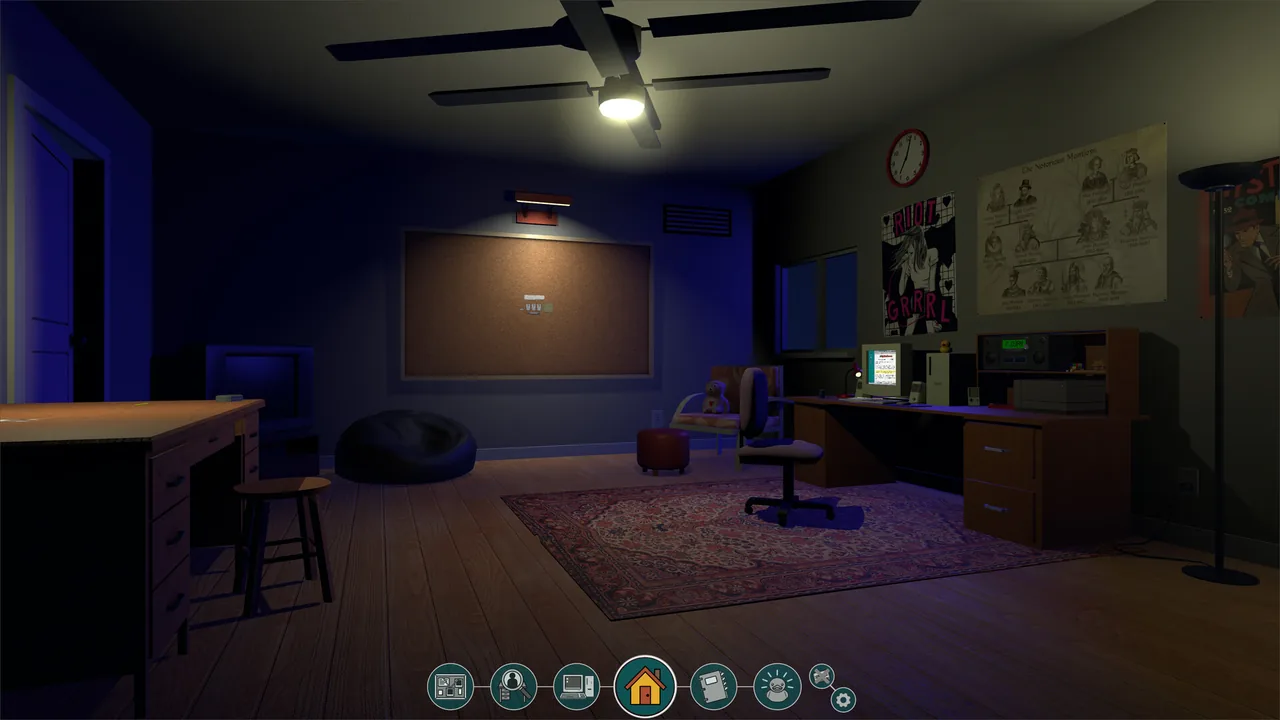
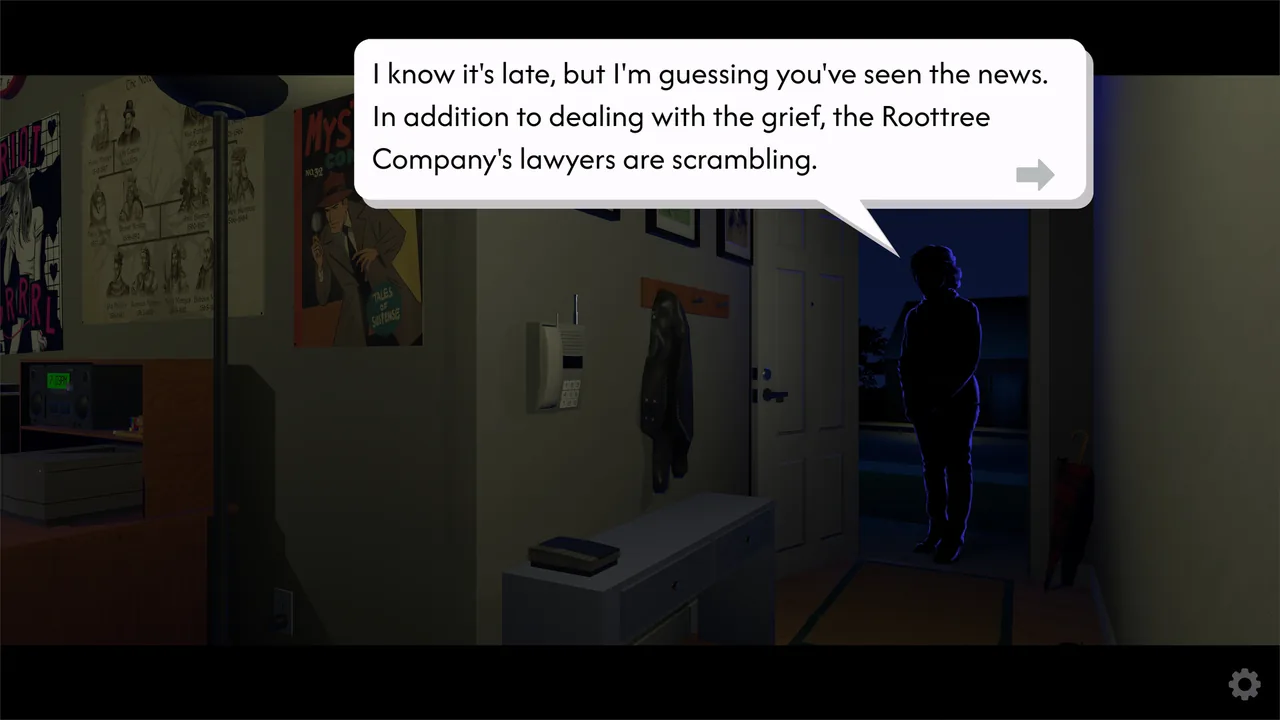
The investigation takes place among a living room desk, computer, documents, and Family Tree.
Finding the term that opens another source moves the case forward, even before you can place a person on the tree.
The main case asks you to trace blood relatives for an inheritance. Explaining the plane crash is outside your assignment.
Learning curve and difficulty
In the main case, pick out proper nouns and family relationships from prose, then check them against another source.
Once people are confirmed, use the remaining portraits and occupations to rule out candidates where searching has stalled.
Roottreemania gives old material a new purpose. Nicknames and changed surnames matter when you revisit familiar people.
When you are stuck, the duck offers hints in stages. You can stop at a broad direction or ask for a more specific source.
Builds and playstyles
Search-chain approach
Move from a person’s name to an organization, book, or magazine, then test the terms each source reveals. This suits players who like gathering documents before filling the tree.
Confirm-and-eliminate approach
Confirm people with solid evidence first, then reduce the places left for other names and portraits. Leave weaker guesses blank until the field narrows.
Person-by-person notes
Keep a person’s full name, nickname, former surname, and connections together. The notes help after a break or when Roottreemania sends you back to that person.
Targeted hint use
Ask the duck about the point where you are stuck, then read the indicated source yourself. This suits players who want to continue without consulting a full solution.

What longtime players say
The main case let them follow search terms from clue to clue. In Roottreemania, rechecking old sources and making less direct connections brought that progress to a halt.
Keeping names and family links in mind became difficult. These players reorganized their notes or tried to avoid a long break between sessions.
A small search term can lead through people and documents. Later, an earlier passage makes sense as those scattered details form a family history.
For these players, spotting the next term in a passage was more engaging than placing entries on the Family Tree.
What players like
A minor term opens another source, which can explain a passage read much earlier. Players praise that chain of discoveries.
Connecting diaries, articles, and photographs reveals family secrets and changes across generations. Those discoveries gave players a reason to keep looking.
Players praise the Simplified Chinese version for adapting abbreviated names, wordplay, and lyrics to Chinese.
The duck moves from a broad direction toward a specific source. Players can reread the evidence themselves before asking for the answer.
In the main case, confirmed names, portraits, and occupations leave fewer candidates. Players like being able to put their research to work through elimination.
There is no time limit, and the calm music suits long stretches of reading. That pace appeals to players who want to investigate at their own speed.
Highlighted passages retain source links in the Notebook, making clues and previously read documents easier to revisit.
Common complaints
Name order, nicknames, former surnames, and similar names make people hard to match. Players report confusion when searching in Chinese and tracing names in Roottreemania.
Roottreemania sends players back to sources from the main case, often without an obvious term to search. For these reviewers, progress began to feel like rechecking the archive.
Players expecting to solve a crash or murder mystery found the inheritance case and family gossip less compelling.
Organizing notes and entering search terms can be cumbersome. On a handheld, repeatedly typing names with the on-screen keyboard adds to the work.
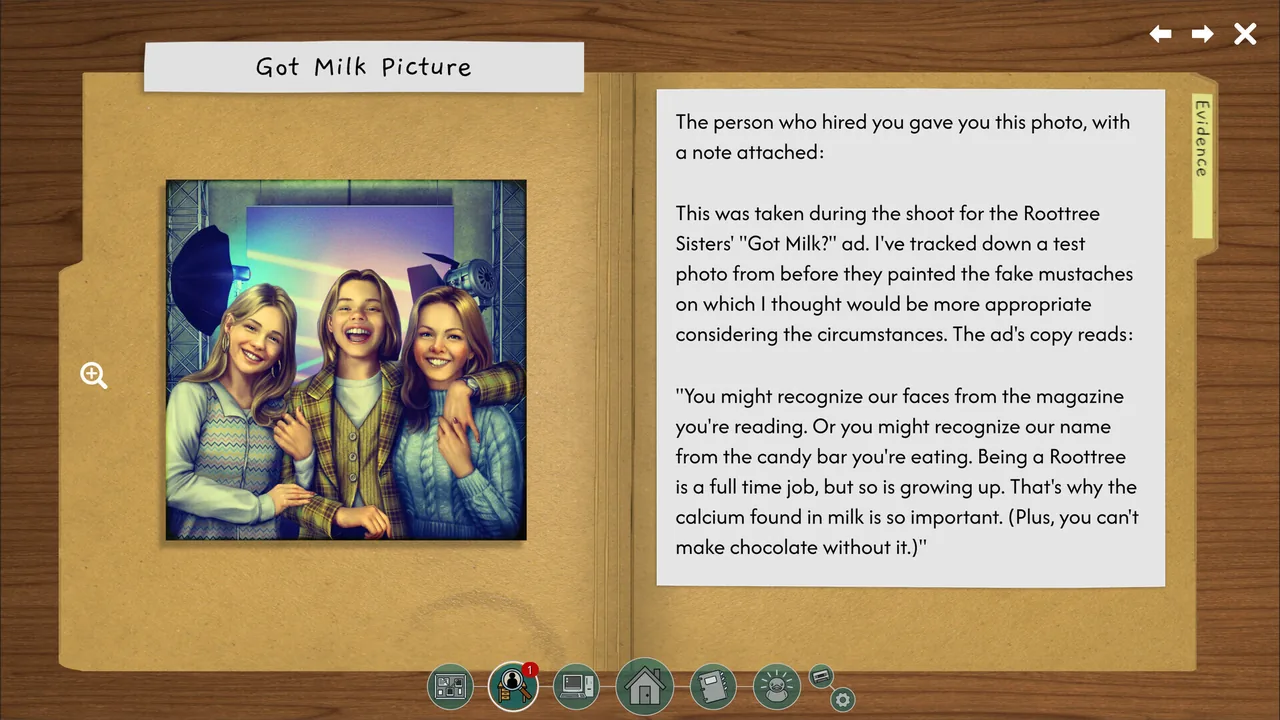
Graduation clothing, English nicknames, and occupation labels can serve as clues. Players unfamiliar with the relevant customs or language found their meaning hard to read.
Who it’s for
It suits players who like spotting a proper noun at the edge of a document and using the search result to open another source.
Players happy to leave blanks open while noting aliases and family links can also make good use of the Family Tree’s elimination process.
If you want to keep investigating this family, Roottreemania asks you to reread old sources and trace hidden blood ties.
Who might not enjoy it
If you chiefly want to solve a murder or explain the crash, the inheritance investigation may leave you cold.
If long documents and tracking names are a chore, Roottreemania’s searches through old material may wear on you.
FAQ
- Is Japanese supported?
- Steam’s supported-language list does not include a Japanese interface or subtitles.
- Does it support co-op?
- Steam lists single-player as a feature. You can discuss evidence around one screen, but no co-op mode is listed.
- Does the Simplified Chinese version include audio?
- Simplified Chinese is supported for the interface, subtitles, and full audio.
- Is the follow-up mystery sold separately?
- Roottreemania is included with the game.
- Is it playable on Steam Deck?
- Steam marks it as playable. Since you enter text often, check whether its input method suits you before buying.
These impressions are based on 100 Steam reviews sorted by “Most Helpful.” They do not represent the views of all buyers.

Image: The Roottrees are Dead on Steam