Predy Media > Factory automation > Game page
Game pageSatisfactory: Features, Player Feedback, and Who It Suits
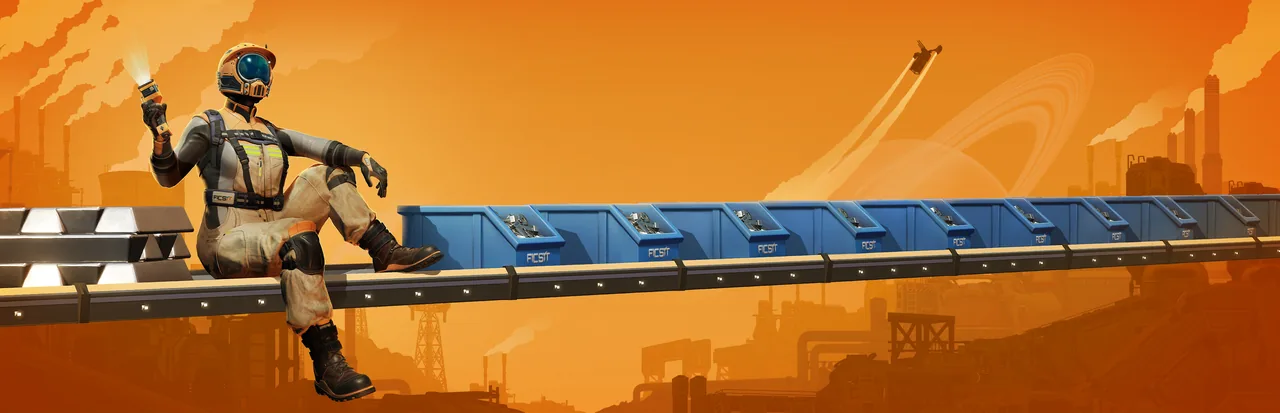
Satisfactory is a first-person automation game in which you explore a planet, bring resources to your factories, and process them.
You can focus on matching production rates, designing the buildings, or finding a way to move materials from distant sites.
What makes it fun
Rework the line for new parts
A new part may need more than your existing line can supply. Do you add machines or check the capacity of your Conveyor Belts? You can trace the bottleneck through a route you built and rework it.
Watch your belts run
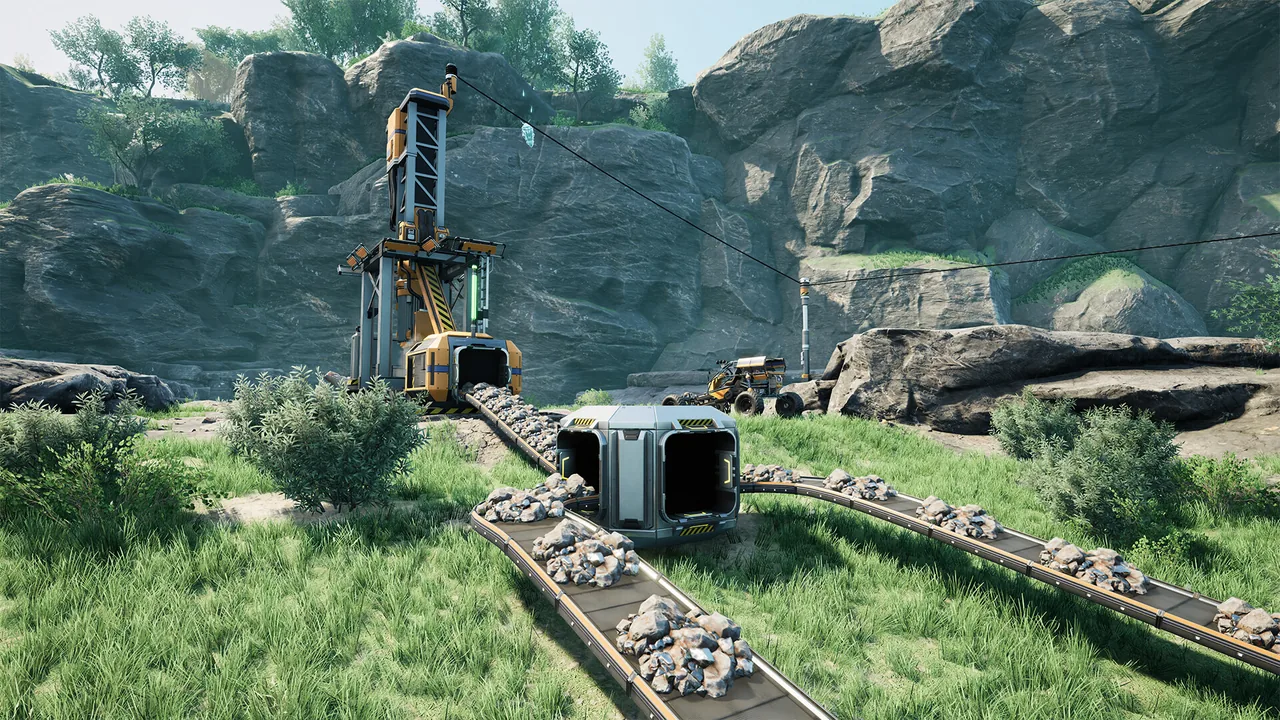
Items travel along your Conveyor Belts and reach the machines you connected. You can walk through the factory and follow the route you planned as it comes to life.
Choose your factory's shape
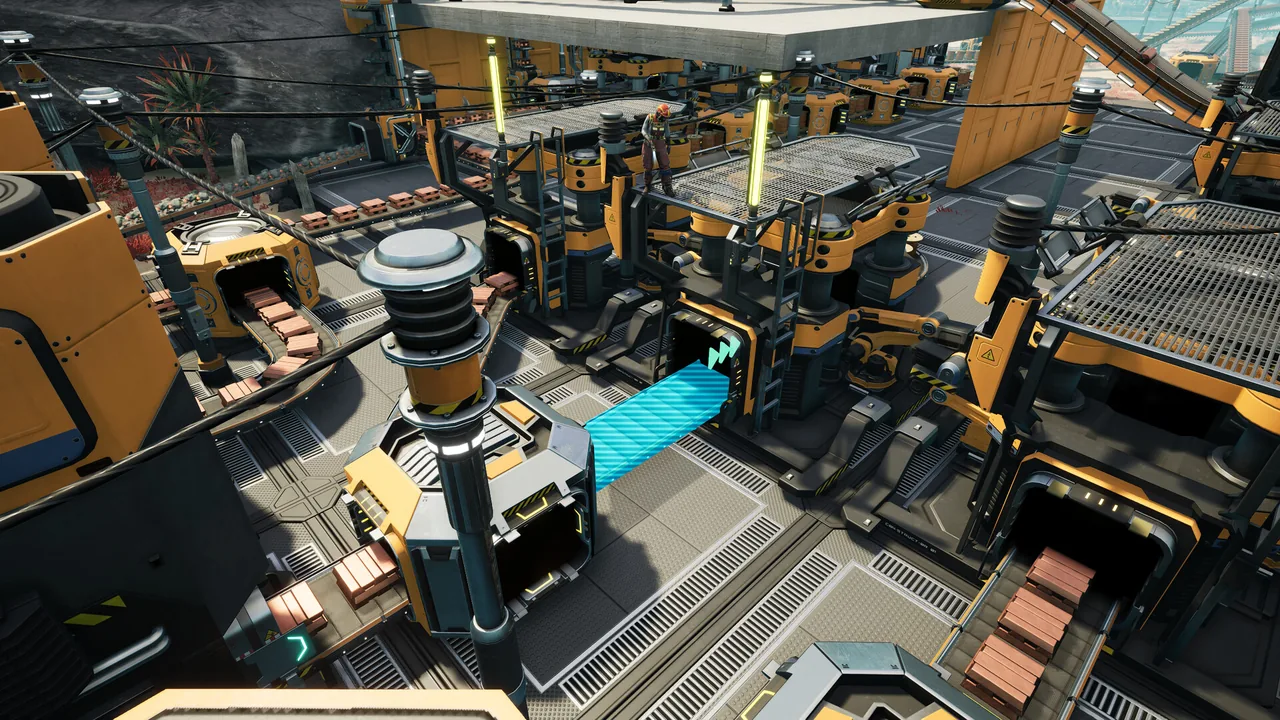
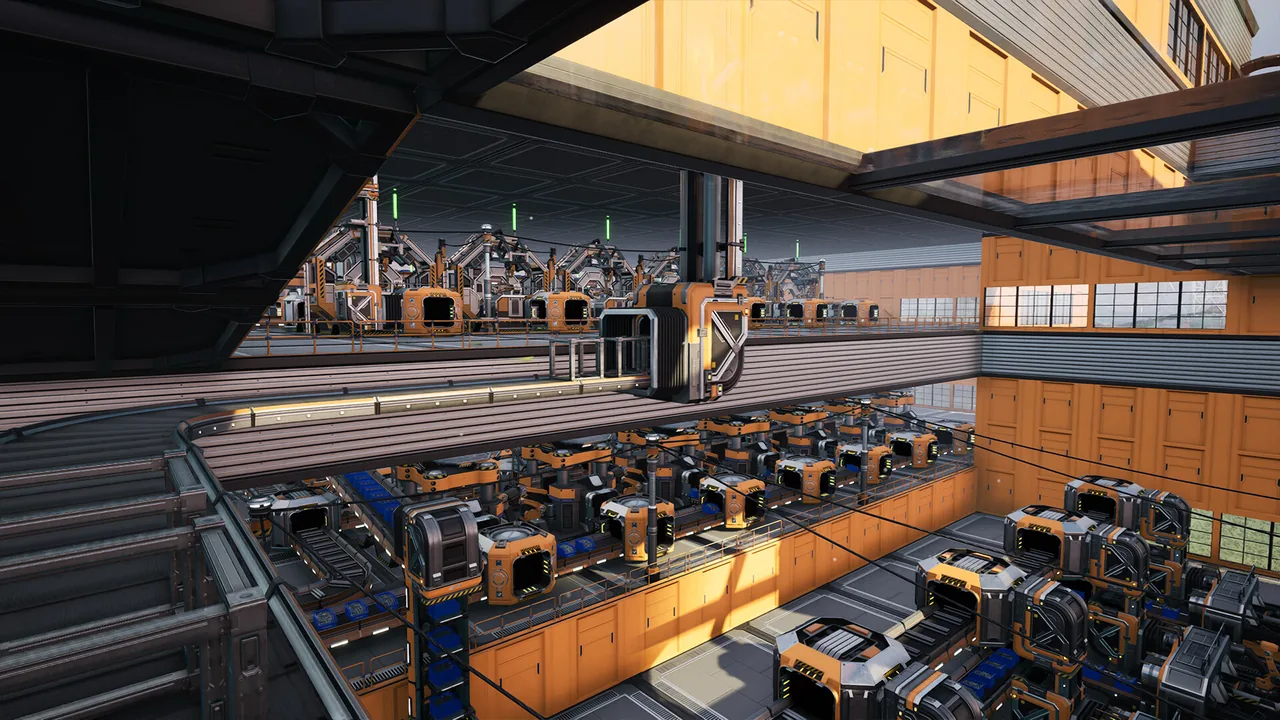
Run Conveyor Belts straight across the ground, or stack machines inside a tidy building. You get to decide how the factory looks as well as how it produces parts.
Game details
As of Oct 29, 2026- Steam Deck
- Verified
- Release date
- Sep 10, 2024
- Developer
- Coffee Stain Studios
- Languages
- Japanese, English (Full audio), Simplified Chinese, Korean / 13 languages total
A typical run
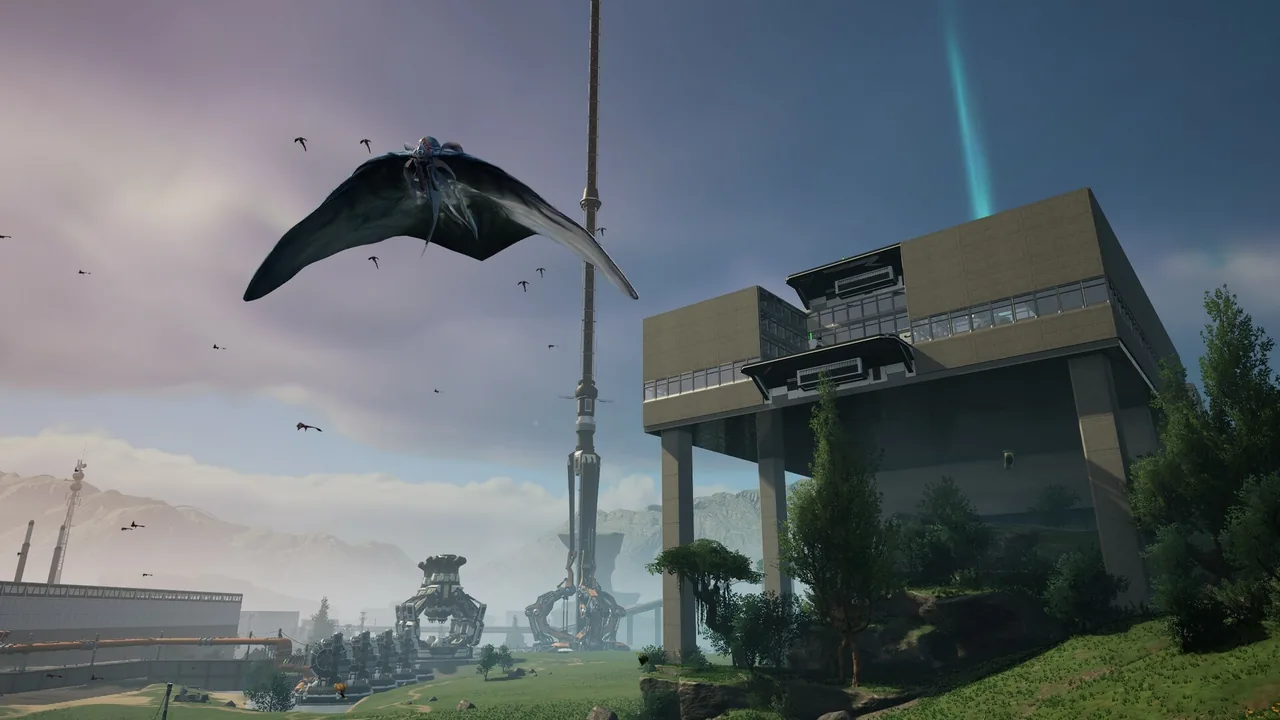
Gather ore, work through HUB Milestones, and automate extraction and processing.
When the next parts demand more output, revisit your machine count. Check Conveyor Belt throughput and spare power as well.
Travel farther out for new resources and Hard Drives. MAM research and Alternate Recipes can change the route your production takes.
Deliver Project Parts to the Space Elevator to advance Project Assembly.
With normal building costs, you can dismantle a finished factory and recover its materials. Then rebuild it around a new layout or transport plan.
Core systems
Milestones
Deliver specified parts to the HUB to unlock buildings, recipes, and logistics equipment. Progress is also linked to the Space Elevator.
Do you pursue the next unlock now or get a steady supply from your current factory first? Rush ahead and you may have manual crafting and temporary lines to clean up later.
Space Elevator
The Space Elevator receives Project Parts and advances Project Assembly. At certain phases, delivery opens the next group of Milestones.
A permanent line for Project Parts avoids rerouting output for each delivery, but uses space and power. Using an existing line means switching it over when needed.
Conveyor Belt
Conveyor Belts carry solid items between machines. Each mark has a throughput limit, so splits and merges change how much reaches downstream machines.
Separate routes for each item make shortages easier to trace. Shared routes save space but can become congested, and expansion needs more thought.
Pipeline
Pipelines carry fluids such as water and fuel. Liquids respond to head lift and elevation. A supply failure calls for different checks than a stalled belt.
Keep the route relatively level or put pumps where fluid must rise. Check the height of each branch and fluctuations in supply too.
MAM and Alternate Recipes MAM; Alternate Recipes
The MAM researches materials and Hard Drives found during exploration. Alternate Recipes can change the raw materials, machines, power, and space a process needs.
If saving a raw material matters, start by comparing inputs. A shorter chain or a better connection to an existing site may point to another recipe. Choosing one can mean rebuilding nearby lines.
Blueprint Designer
The Blueprint Designer saves groups of machines and building pieces as Blueprints you can place again.
Small modules connect readily to other lines; larger ones reduce repeated placement. Work within the design area of your Designer while keeping the layout useful at other sites.
AWESOME Sink
The AWESOME Sink destroys eligible items for points that lead to FICSIT Coupons. It can also take eligible solid by-products that would otherwise back up.
Store surplus you expect to use, or send it into another process. Feeding it to the Sink helps prevent a line from stopping, but those items cannot be recovered.
What sets it apart
You build from a first-person view, placing factories across the terrain or stacking them into the air instead of arranging them on an overhead board.
Resource Nodes do not run dry. You have to move their output and provide enough processing capacity and power for it.
With normal building costs, dismantling returns construction materials. Trying another layout mainly costs the time spent designing the previous one.
Learning curve and difficulty
There is no fixed sequence of combat challenges to clear. Later parts call for more materials, making the choice of processing sites and transport routes harder.
If production lags despite matched machine inputs and outputs, check belt throughput, machine capacity, power, and fluid supply.
An Alternate Recipe cannot be judged by one output figure. Follow the chain from Resource Nodes to finished parts and compare what changes along the way.
Creature Hostility changes creature aggression. Creative Mode can also adjust progression and power requirements.
Builds and playstyles
Distributed production
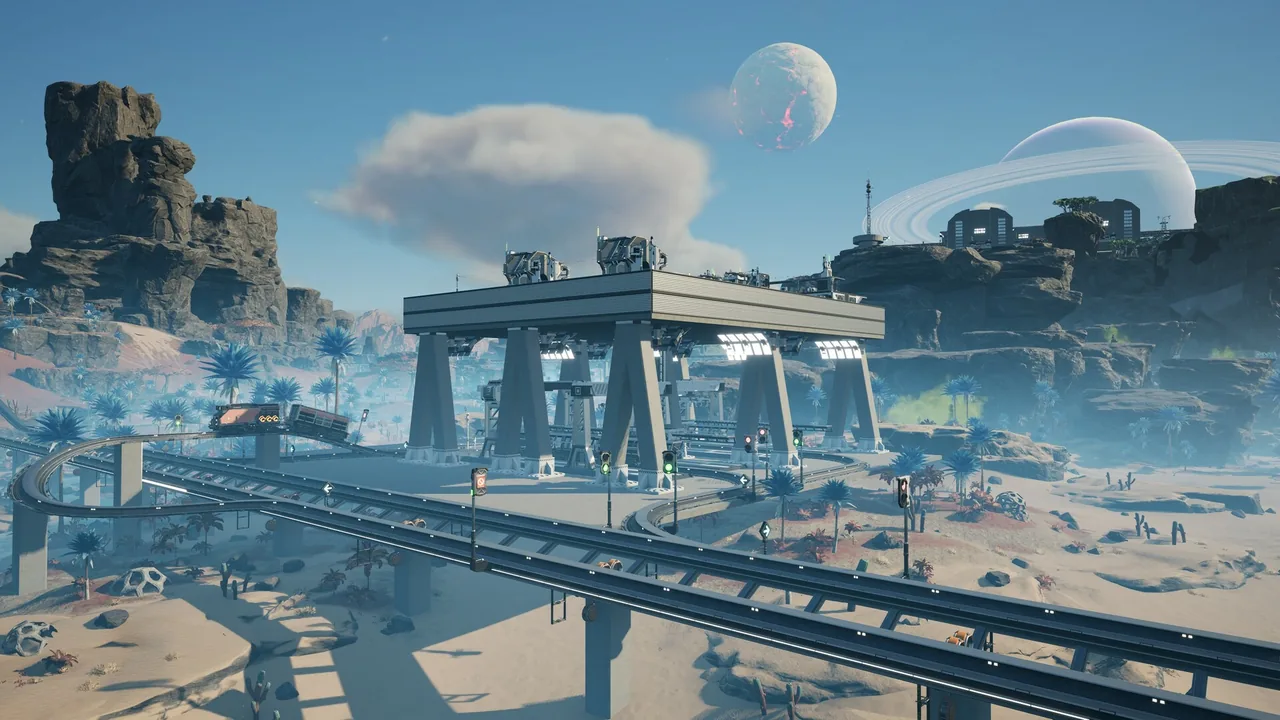
Process resources near their nodes, then carry intermediate parts by Train or Drone. The transport network takes more management, but factories can be placed around the terrain.
Centralized factory
Bring raw materials into a large factory for successive processing. The production chain is easier to follow, though expansion space and intake points deserve early planning.
Functional spaghetti
Run belts and lifts straight to the machines that need them, getting the line working first. Additions are easy, but tracing a later blockage through those routes can be a chore.
What longtime players say
Seeing flaws in an old factory can prompt another save or a different starting area. These players enjoy trying a new layout and revising it again.
Even after making progress, players describe wanting a fresh factory with different conditions or building plans.
In saves with sprawling factories, frame rates and stability can become concerns alongside the layout itself.
Reworking production lines, transport routes, and building layouts gives returning players another reason to keep building.
What players like
A new part exposes a shortage, so players add machines or dismantle an old line. They enjoy that cycle of rebuilding.
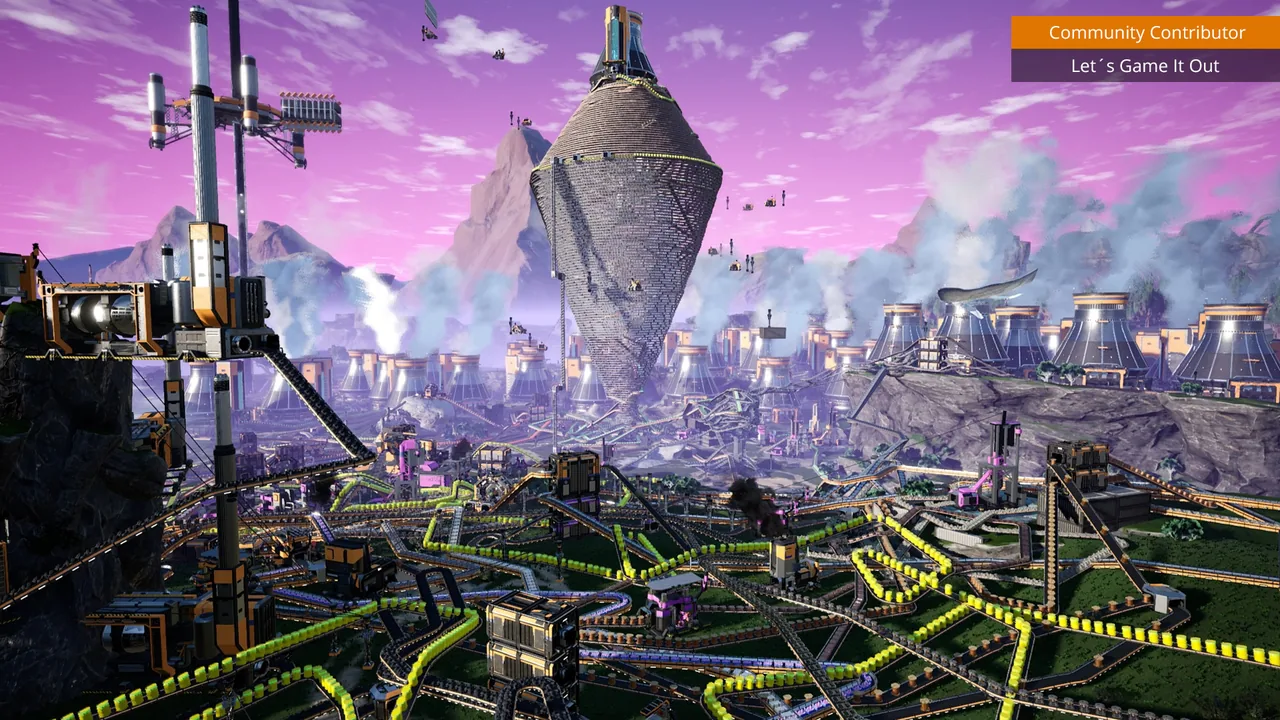
A factory can be a tidy vertical structure or a set of belts running over the ground to whichever machine needs them. Players appreciate having room for either approach.
Unlocks bring steel, oil, and the need to move goods farther. Players enjoy working out the next production step while their earlier factories keep running.
A break from building can mean searching the terrain for resources and research targets. Players enjoy those trips between factory projects.
The controls leave room to think. Players like checking machine inputs and belt throughput before deciding what to change.
Watching machines run and items travel along Conveyor Belts lets players see that a line they designed works.
Building a factory with friends in co-op appeals to these players.
Common complaints
Fixing a belt can reveal another line that needs attention. Players describe intending a short session and then struggling to find a stopping point.
A power shortage can stop machines, while a pipe may fail to deliver water. Players who encounter these shutdowns describe the work of finding the cause.
From the middle of the game onward, new parts draw on more materials and old lines take longer to rebuild. That work can make progress feel slow.
Players report frame-rate drops or instability in saves where their factories have grown large.
Who it’s for
It suits players who like following machine inputs and belt throughput to find why a needed part is running short.
It also suits builders who want to shape a factory's appearance, plan transport from distant sites, or rebuild a chain around Alternate Recipes.
If dismantling and trying another layout is fun in itself, Blueprints and long-range logistics give you more ways to keep building.
Who might not enjoy it
Players who want to finish a task in a short session may find that fixing one belt reveals the next shortage.
It may not suit anyone who dislikes locating a power failure, checking a pipe that has stopped supplying fluid, or tracing a complex part through its production chain.
FAQ
- Is Japanese text available?
- Yes. The Steam version supports a Japanese interface and subtitles. Voiced audio is in English.
- Does it support co-op?
- Yes. Online co-op shares progress for the HUB, MAM, Space Elevator, and related unlocks.
- Can combat pressure be reduced?
- Yes. Creature Hostility can be set to Passive or Retaliate. Arachnophobia Mode also changes the appearance and sounds of spider-like Stingers.
- Are materials lost when rebuilding?
- With normal building costs, dismantling returns construction materials and stored contents. Crafted parts cannot be broken back down into their ingredients.
These impressions are based on 100 Steam reviews sorted by “Most Helpful.” They do not represent the views of all buyers.
Image: Satisfactory on Steam