Predy Media > Action roguelike > Game page
Game pageRisk of Rain 2 Features and Reviews
Who Is It For?
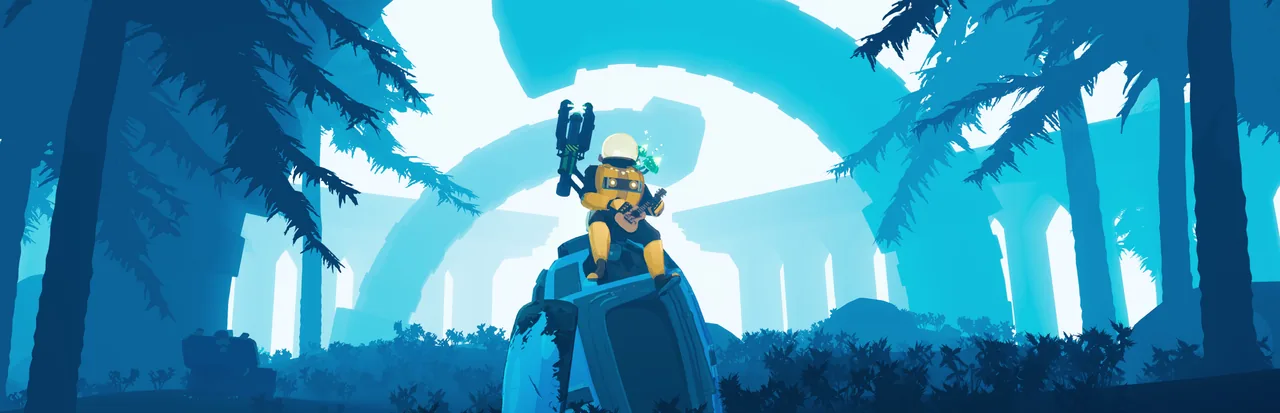
Enemies grow stronger over time, so each stage asks whether another chest is worth the delay before heading to the Teleporter.
The appeal lies in chaining passive item effects and learning how each Survivor moves and fights.
What makes it fun
One more chest?
Enemies keep getting stronger while you hunt for chests. Do your current items give you enough to head for the teleporter, or is another chest worth the time?
Let item effects spread through a crowd
Combine items that call down lightning on hit or cause explosions on kill, and build toward clearing whole groups of enemies. What you pick up changes how your attacks spread.
A new survivor, a new plan
Changing survivors changes how you attack and move, making you rethink even familiar items. Unlocking and selecting alternate skills can change how a familiar survivor plays, too.
Game details
As of Oct 29, 2026- Steam Deck
- Playable
- Release date
- Aug 11, 2020
- Developer
- Hopoo Games
- Languages
- Japanese, English, Simplified Chinese, Korean / 11 languages total
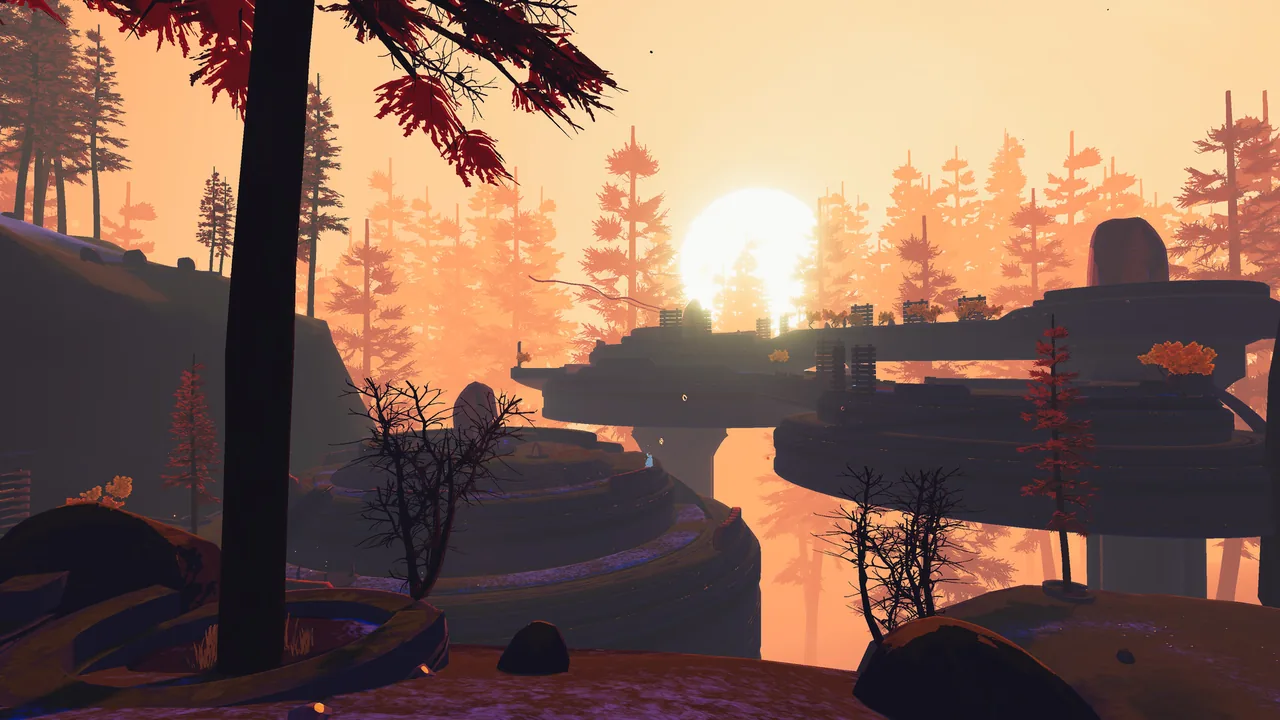
A typical run
Choose a Survivor, Loadout, and starting difficulty before a run.
Kill enemies for money, then search for chests and interactables to collect items.
Difficulty keeps rising while you explore. Decide whether to search for the remaining loot or head to the Teleporter.
Activate the Teleporter and stay in its zone to charge it. Defeat the boss to open the next stage.
Later, choose between the final boss and a loop. Looping takes your developed build into a more dangerous environment.
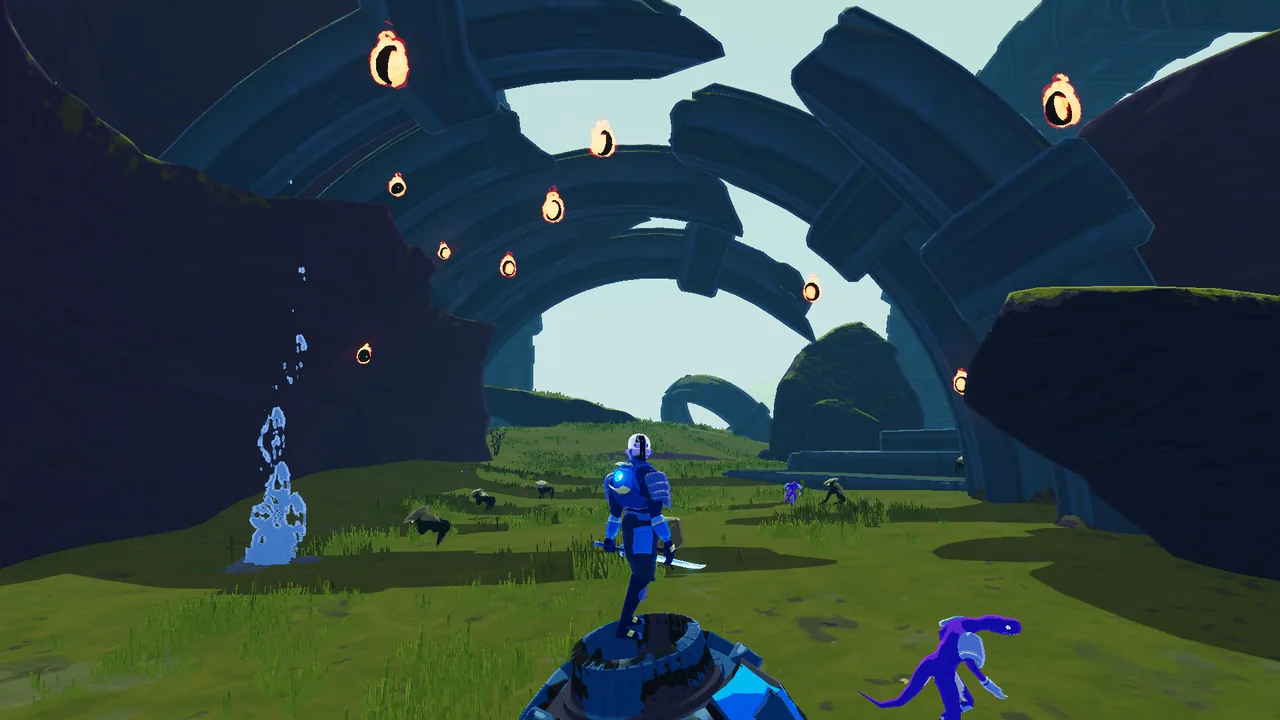
Core systems
Scaling Difficulty
Enemies grow stronger as time passes and stages are completed. Spawns become more aggressive too.
Enemies keep growing while you search for chests. Check what your current items can do before deciding whether to leave the remaining loot behind.
Item Stacking
Extra copies change an item's effect or number of uses. The part that improves, and the way it scales, depend on the item.
Take different effects to cover more needs, or stack copies to improve a trigger chance or damage source. Your Survivor's attacks affect which choice pays off.
Teleporter Event
Activate the Teleporter and charge it from inside its zone. Defeat the boss to open the next stage.
Charging stops when no player is inside the zone. Even when dodging enemies, you need a route back into it.
3D Printers and Scrapper
A 3D Printer randomly takes an owned item of matching rarity and replaces it with the displayed item. Matching Scrap made with the Scrapper is spent first.
Scrapping unwanted items first lets you use the printer without risking the items you mean to keep. The choice comes before you make the trade.
Survivors and Loadouts
Survivors differ in how they attack, move, and defend themselves. Unlocked alternate skills can be combined before a run.
Items can strengthen triggers your Survivor uses well or cover a weakness in range or movement.
Artifacts
Once unlocked, Artifacts change a run's rules, including item selection and friendly fire.
You can build around what drops or change the conditions to try out a particular build.
Eclipse
Eclipse is a challenge mode that adds a disadvantage after each successful clear with a Survivor. Artifacts cannot be used.
With no Artifacts to change the rules, you have to reconsider movement and healing. Fighting inside the Teleporter zone becomes tougher as well.
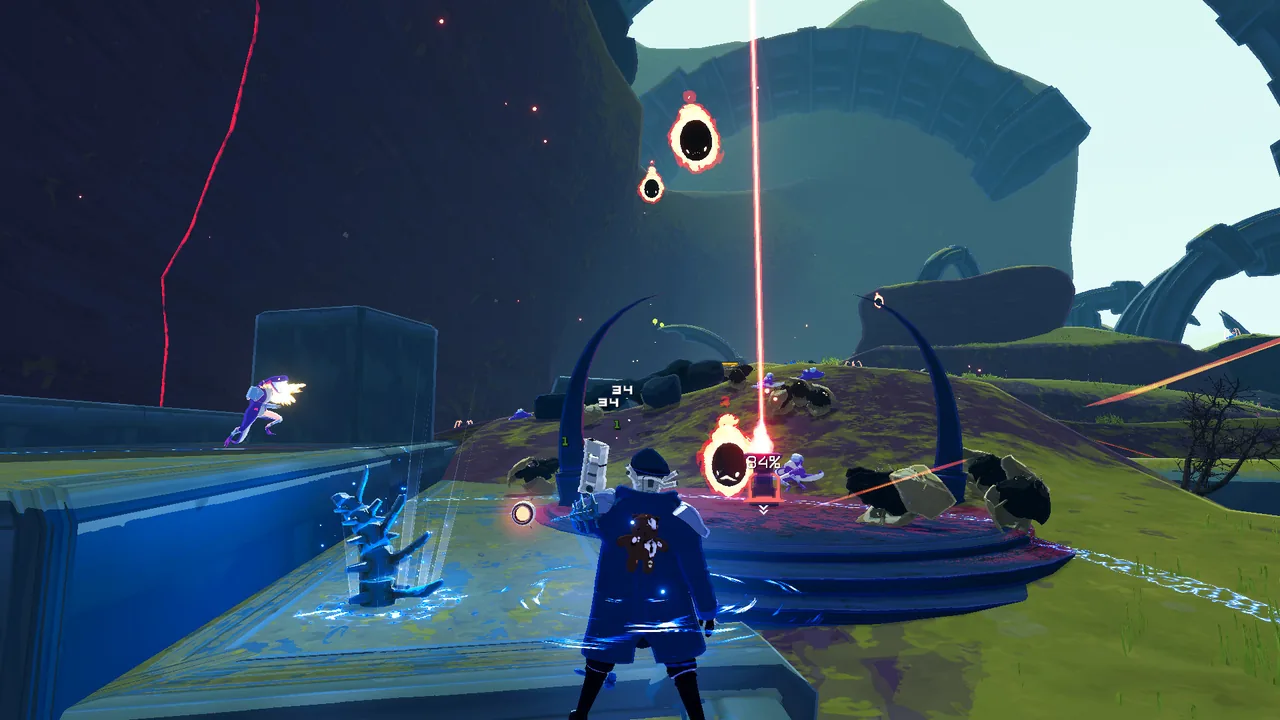
What sets it apart
Difficulty rises with time and again when a stage is completed. Leaving chests behind and rushing ahead is not always the answer.
You are not repeatedly swapping weapons. You stack passive effects until hits and kills start triggering further effects.
You can loop instead of heading for the final boss, taking an established build against stronger enemies.
Learning curve and difficulty
Choose Drizzle, Rainstorm, or Monsoon as your starting difficulty.
Eclipse is a separate challenge mode that adds disadvantages after successful clears.
Learn a route that lets you collect chests and return to the Teleporter. As you improve, you judge the remaining loot against the time it will take to reach it.
Late in a run, projectiles and item effects overlap on screen. You need to keep moving while picking out dangerous enemies and the direction of incoming attacks.
Builds and playstyles
Trigger-chain build
Stack on-hit and on-kill effects so missiles, lightning, and explosions spread through a crowd. Look for a reliable way to start the chain and effects that can reach the next enemy.
Concentrated-stack build
Once you find the 3D Printer you want, use a Scrapper to turn unwanted items of matching rarity into Scrap. You can stack the target item while keeping the items you need for movement and defense.
What longtime players say
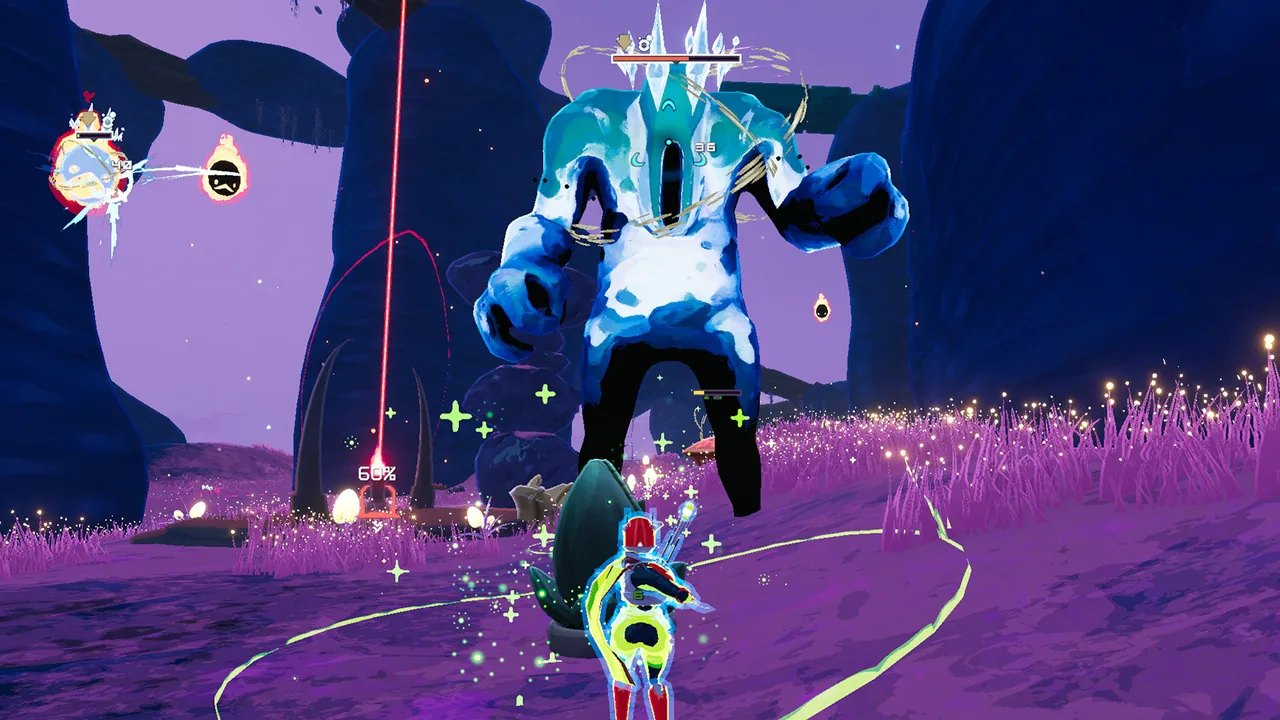
Even late in a run, when stacked items can clear crowds, a sudden burst of damage can end it. That danger remains part of the appeal for these players.
Long-time players return to try builds with different Survivors and Artifacts, or to take a run into a loop.
Players who have kept up with the game disagree about balance and update quality after additional content. Those who play co-op also raise connection problems.
For players who have spent a long time with the game, the soundtrack itself can be a reason to return.
What players like
The music heard while exploring and during boss fights stays with players after a run.
In co-op, conversations over chests and the confusion of fighting together become part of the fun. A familiar run feels different with friends.
Early enemies take effort to kill. Later, chained item effects can clear crowds, yet a sudden hit can still end the run. Players enjoy that swing in power and danger.
A run can be about trying another Survivor and chasing unlocks, or changing the rules with Artifacts to test a build. Players like having another goal to pursue.
Changing Survivors alters movement and attack range. It can make the same item useful in a different way, which players appreciate.
Learning map layouts, chest routes, and which items to take makes runs steadier. Players value being able to improve through knowledge as well as reflexes.
Common complaints
In co-op, only the player who picks up an item gets it, so teammates can fall behind in power. Players also report runs cut short by connection problems.
Early on, finding the Teleporter and understanding an item's effect before picking it up can take time. Players point to the limited guidance.
Late in a run, enemies, projectiles, and triggered effects overlap. It can be hard to see where an attack came from or what hit you.
Across repeated runs, searching for chests and heading to the Teleporter can start to feel familiar. Settling on the same builds adds to that repetition.
Who it’s for
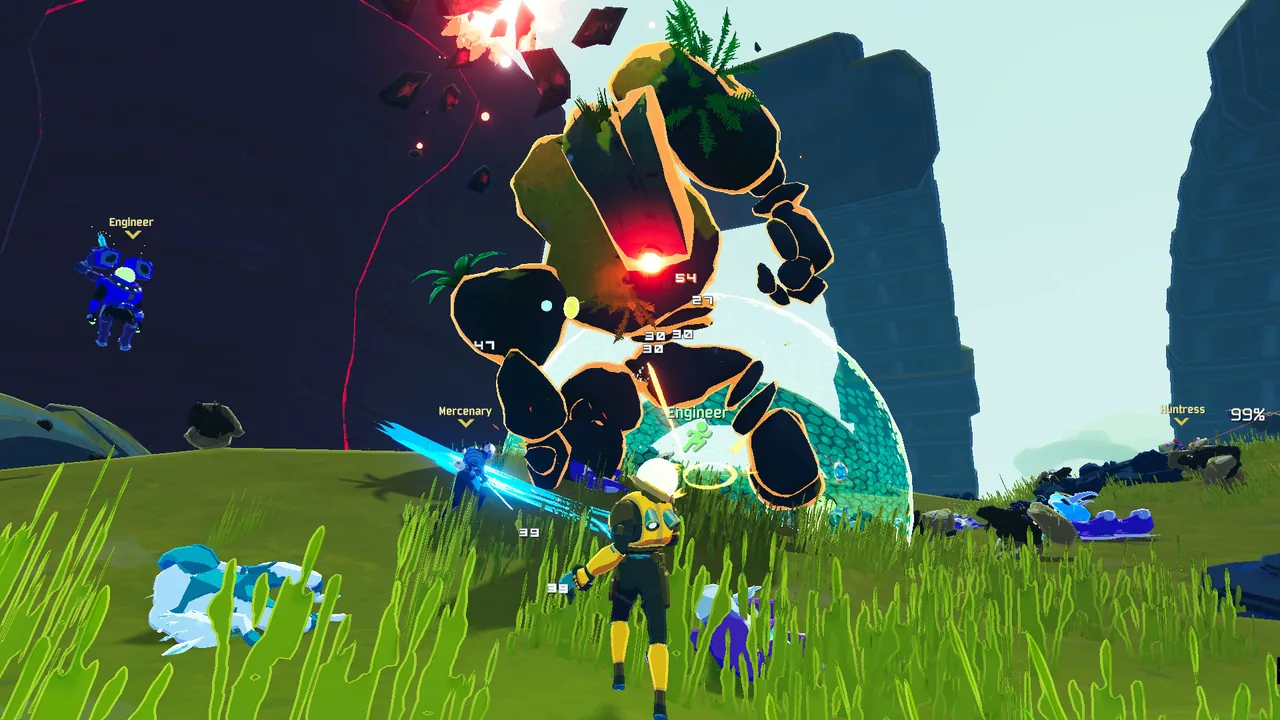
It suits players who want to decide when another chest is worth letting enemies grow before they head to the Teleporter.
It suits players who want to stack items that trigger on hits or kills and build a chain that spreads through a crowd.
It also suits players who want to switch Survivors and Loadouts, then rethink item choices around different movement and attack ranges.
Who might not enjoy it
Players who need to track every incoming projectile and the cause of each hit may struggle when late-run effects fill the screen.
Co-op players who expect automatic item sharing should take note: the player who picks up an item keeps it, and teammates can grow at different rates.
FAQ
- Is English supported?
- Yes. The Steam version includes an English interface.
- Can it be played solo?
- Yes. It supports single-player and online co-op.
- Can the difficulty be adjusted?
- Yes. You can choose a starting difficulty. Unlocked Artifacts can change a run's rules, while Eclipse is a separate challenge mode.
- Are expansions required?
- No. The base game can be played on its own. Expansions are sold separately.
These impressions are based on 100 Steam reviews sorted by “Most Helpful.” They do not represent the views of all buyers.
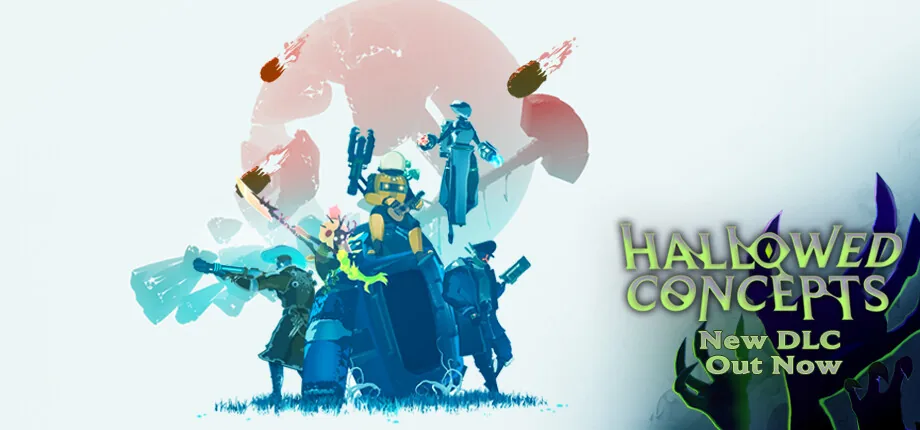
Image: Risk of Rain 2 on Steam