Predy Media > Metroidvania > Game page
Game pageOri and the Will of the Wisps: Features, Player Feedback, and Who It Suits

This exploration platformer has you chain movement skills to open routes, then change Spirit Weapons and Shards for combat.
How it lands depends on whether you enjoy traversal and detours or want combat to press you harder.
What makes it fun
Link your movement abilities
Dash forward, then Bash off an enemy or projectile to launch onward. As you gain abilities, you can find routes that keep you moving without landing.
Old paths open up
Remember places you cannot reach, then return with a new movement ability. Finding a collectible or side path that was out of reach makes revisiting an area rewarding.
Choose your fighting range
Assign spirit weapons such as the bow, blade, and hammer to your ability slots. The bow lets you attack from a distance, while the blade and hammer bring you closer to the enemy.
Game details
As of Oct 29, 2026- Steam Deck
- Playable
- Release date
- Mar 11, 2020
- Developer
- Moon Studios GmbH
- Languages
- Japanese, English, Simplified Chinese, Korean / 21 languages total

A typical run
In Niwen, you cross hazardous terrain and enemies while searching for a way forward.
A blocked route sends you elsewhere to learn a movement skill before you return.
Residents offer quests along the way. You choose whether to detour for collectibles and upgrades.
In combat, you assign Spirit Weapons to active controls and change Shards for the enemy or terrain.
Boss fights and escapes mark breaks between areas. They call on the attacks and movement skills you have learned.

Core systems
Shard System
Equipped Shards change offense, healing, movement, or collection. Completing Spirit Shrines expands your available slots.
Filling slots with damage Shards leaves less room for defense or collecting items. A fight and a sweep through an area may call for different loadouts.
Spirit Weapons
Melee weapons, the bow, and other attacks can be assigned to active controls. Actions differ in reach and energy use.
You can keep your distance with the bow or move in with a melee weapon. Attacks and healing share limited active controls, so every action cannot stay ready at once.
Spirit Trials
These optional races follow fixed routes and let you compare times with other players.
To cut your time, refine where you use a wall and the direction in which an enemy or projectile feeds your next movement skill. You can leave the trials for later while following the main path.
Spirit Shrines
These optional timed trials send waves of enemies at Ori and award a reward when cleared.
Chasing enemies keeps up the pressure but exposes you to retaliation. You can use the arena to hold your distance, change your loadout, or return later.
Difficulty Modes
Easy, Normal, and Hard modes change how demanding combat feels.
A lower difficulty keeps the story and exploration moving. On Hard, reading an enemy's move and stepping back into range between attacks carries more weight.

What sets it apart
Exploration rewards include Spirit Weapons, Shards, and resident quests as well as movement skills that open routes.
Within an area, route reading and avoiding contact give way to fights where you change weapons.
Resident quests and restoration work progress at the home area. People you meet while exploring leave visible changes there.
Learning curve and difficulty
You can choose Easy, Normal, or Hard.
Chaining Dash, Bash, and grappling actions makes your starting position and direction matter.
In Spirit Trials, you can improve a time by adjusting where each movement skill starts and where it sends Ori.
On Hard, sustained attacks invite retaliation. Watch the enemy's movement, then step back into range between attacks.
Builds and playstyles
Ranged bow setup
Use platforms or walls to keep your distance while firing the bow. When an enemy closes in, move to a new position before continuing to shoot.
Close-range pressure
Move in with a blade or hammer, then use a movement skill to change position after attacking. A hit does not always interrupt the enemy, so repeated attacks can draw a counterhit.
Traversal and collection setup
Equip movement and pickup Shards while sweeping an area for collectibles. If you have removed damage Shards, swap them back before a fight.

What longtime players say
Long-play reviews remember story scenes alongside the music and backgrounds of the areas.
After finishing, reviewers describe returning for missed collectibles or starting another run.
As the controls become familiar, movement skills begin to link without a pause. Reviews describe that change as a sense of improvement.
With more movement skills unlocked, crossing ground without landing becomes enjoyable in its own right and a reason to run through areas again.
What players like
Reviews tie memories of an area's scenery and story scenes to its art and music.
Story scenes and the ending stayed with reviewers after they finished.
As the movement kit grows, linking actions such as Dash and Bash lets Ori cross areas without breaking stride. Reviewers enjoy that control.
Collectibles and resident quests draw players off the main route. Returning with a new movement skill to open an old path is part of the appeal.
Reviews welcome the choice between fighting at bow range, moving in with a melee weapon, and changing Shards.
Restarting nearby after a failed attempt lets players retry a section and learn it as they go.
Common complaints
In boss fights, landing a hit may still leave Ori open to retaliation. Reviews of Hard also describe fights that drag on.
Early on and at branching areas, reviewers lost track of the next route and repeatedly checked the map or outside guides.
The late game felt brief to reviewers. Retracing familiar routes in the middle and late game also wore on players.
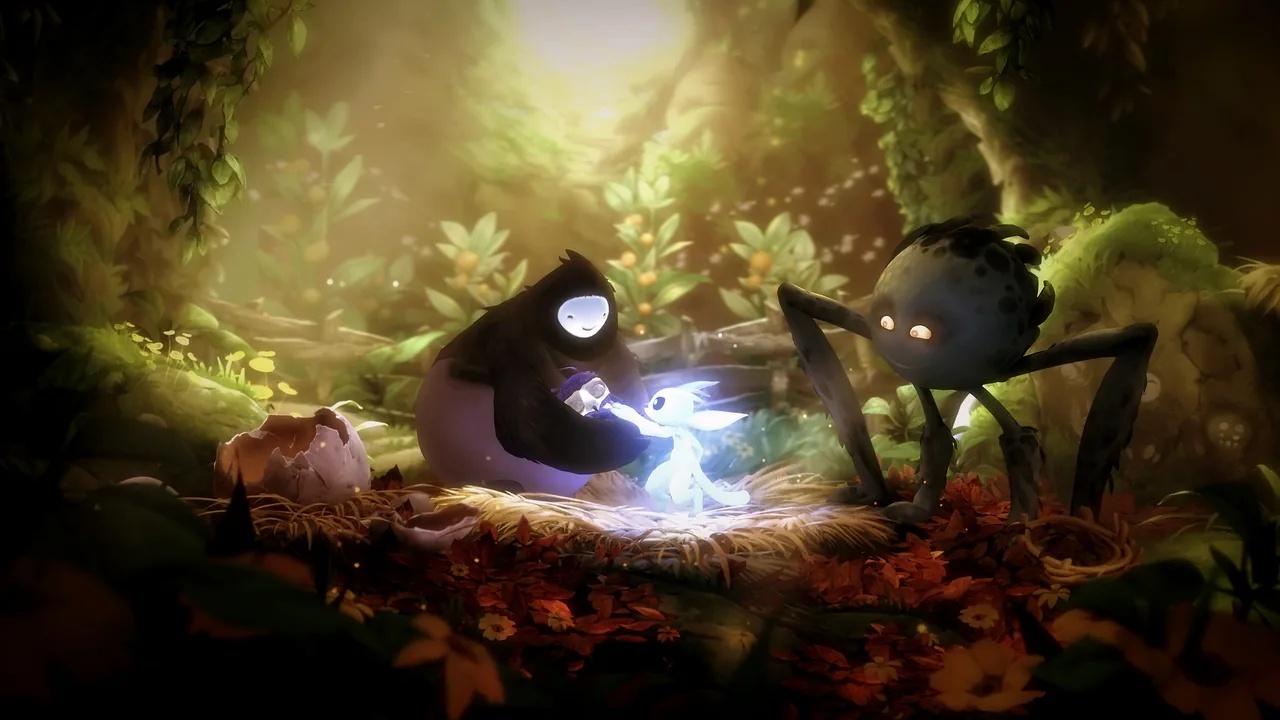
When light and particles overlap in combat, Ori's position or an enemy attack can be hard to follow. Boss fights brought this out in reviews.
Who it’s for
It suits players who enjoy linking moves such as Dash and Bash, then returning to earlier areas with a new movement skill.
It fits players who want to change Spirit Weapons and Shards, fighting from bow range in one encounter and moving in with a melee weapon in another.
Resident quests and collectibles offer detours for explorers, while Spirit Trials give route runners a time to refine.
Who might not enjoy it
If you want the next route marked at every step, checking the map in the opening or at branching areas may become a chore.
If you rely on clear attack tells to dodge, overlapping light and particles may make boss fights hard to read.

FAQ
- Does it support English text?
- Yes. The Steam release supports an English interface and subtitles.
- Is there co-op?
- No. Steam lists it as a single-player game.
- Can the difficulty be adjusted?
- Yes. Easy, Normal, and Hard modes are available.
- Does it support controllers and Steam Deck?
- It has full controller support. Steam marks it as playable on Steam Deck.
These impressions are based on 100 Steam reviews sorted by “Most Helpful.” They do not represent the views of all buyers.

Image: Ori and the Will of the Wisps on Steam