Predy Media > Metroidvania > Game page
Game pageOri and the Blind Forest: Definitive Edition Features and Reception
Who It Suits

This platform action game asks you to cross dangerous terrain with movement abilities acquired along the way. Combat takes a smaller role.
Bash turns enemies and projectiles into points to launch from, while escapes demand a chain of moves. You also decide where to place Soul Links.
What makes it fun
Launch off enemies and projectiles
Bash off an enemy instead of defeating it to reach the next platform. Bash off a projectile, and it flies opposite Ori, letting you send it into a wall or mechanism.
Chain moves through an escape
At key moments, escape sequences take the place of boss fights. Chain moves you have learned, such as double jump and Bash, to reach the next foothold.
Old paths feel different
A new movement ability gives you a choice: press on or return for a collectible you could already see. Chaining those moves changes how you cross familiar ground.
Game details
As of Oct 29, 2026- Steam Deck
- Verified
- Release date
- Apr 28, 2016
- Developer
- Moon Studios GmbH
- Languages
- Japanese, English / 8 languages total
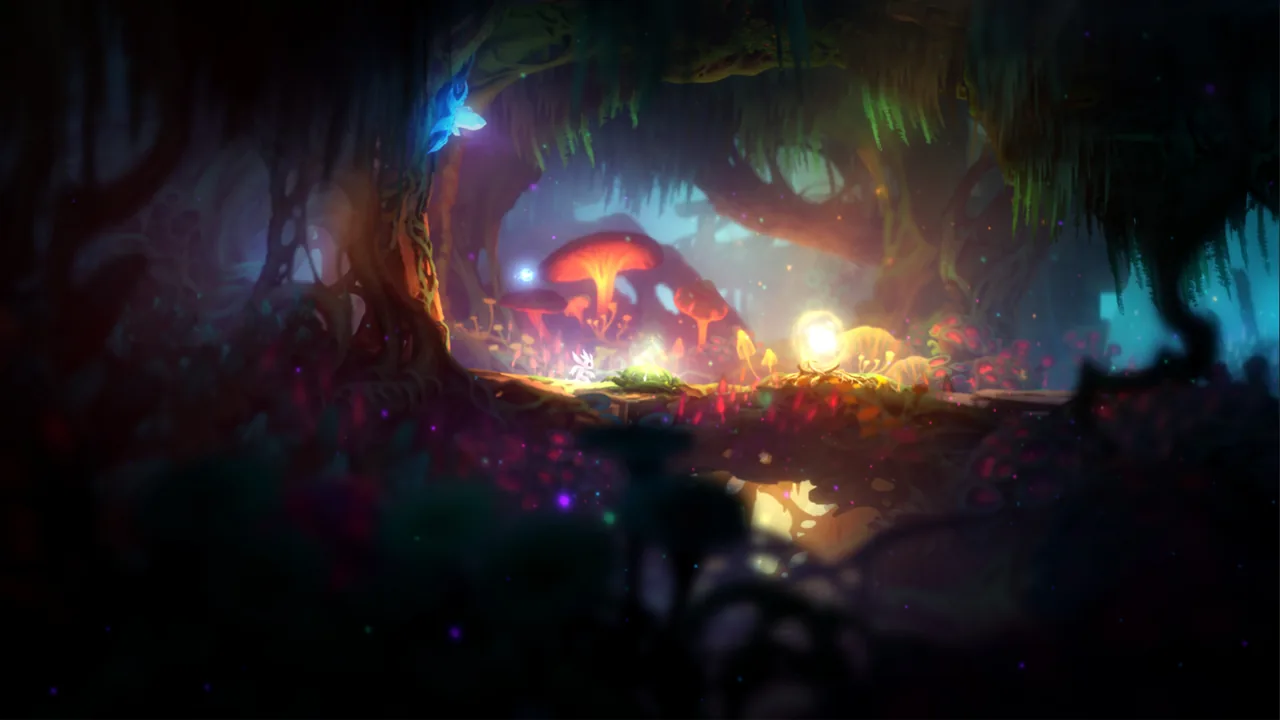
A typical run
You travel through Nibel, looking over the terrain and mechanisms that block your path.
Abilities gained through the story or detours let you reach platforms and pass walls that stopped you earlier.
Before a hazardous stretch, you decide whether to spend energy on a Soul Link or continue without a new checkpoint.
Once you learn Bash, you can launch from enemies and projectiles. The target flies in the opposite direction, which can open a route.
Key stretches include escapes that string together learned moves. Later, Spirit Wells let you return to earlier areas for missed pickups.
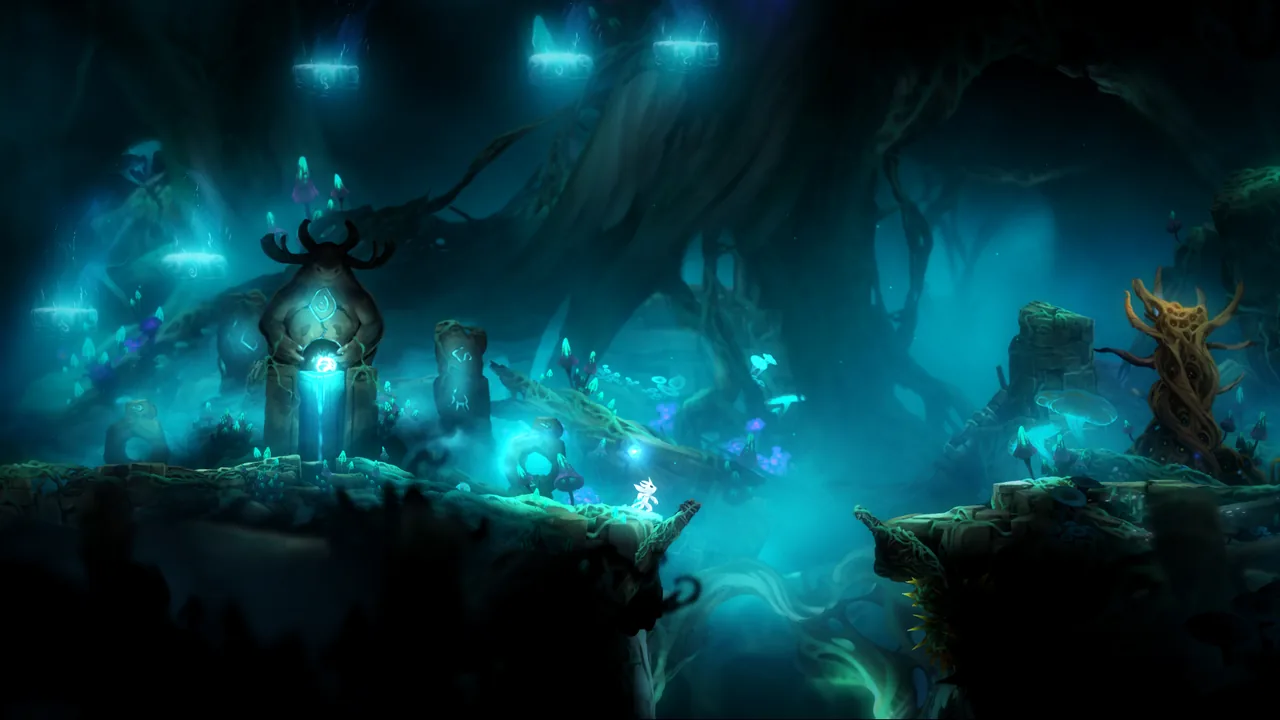
Core systems
Bash
Bash grabs an enemy or projectile and launches Ori in the direction you aim. The target flies the other way, so a projectile can be sent back into a wall or mechanism.
Keep an enemy available as your next launch point, or redirect a projectile toward a wall or mechanism. The target's position and your aim change the route.
Soul Link
Soul Link lets you spend energy to create your own respawn point in a safe spot.
Place one before a difficult stretch and you can retry quickly. That energy is then unavailable for abilities or healing. Press on without saving and a failure sends you farther back.
Dash
Dash moves Ori a short distance forward. Added in the Definitive Edition, it can be upgraded through the Ability Tree to damage enemies and work in the air.
Getting it early means taking a detour into the added area. It gives you more ways across the terrain, though a narrow landing still depends on where you start the dash.
Light Burst
This added ability throws a light projectile along an aimed arc at enemies or mechanisms.
You can throw immediately or take time to aim. The arc needs to meet the target's position.
Spirit Wells
Spirit Wells restore life and energy. In the Definitive Edition, you can also travel between wells you have found.
When you return for collectibles with more abilities, pick the well that gives you a useful approach. Undiscovered wells are unavailable as destinations, so stopping at them on the way matters.
Ability Tree
The Ability Tree spends ability points on combat, exploration, and survival upgrades. Dash and Light Burst have upgrades here too.
Choose whether to make collecting easier, prepare for damage, or defeat enemies faster. Main traversal abilities come from the story and exploration; tree upgrades alone cannot open paths that require those moves.
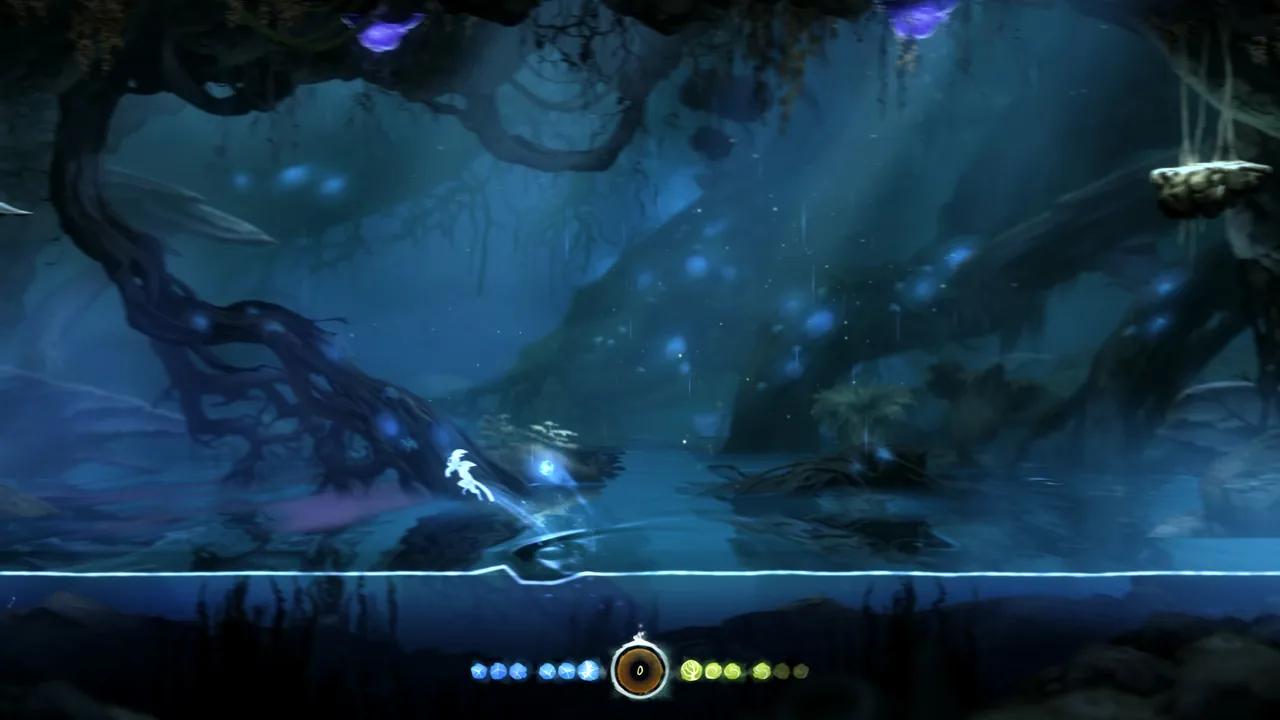
What sets it apart
An enemy can be a Bash launch point. Its projectile can also be sent into a wall to open the way.
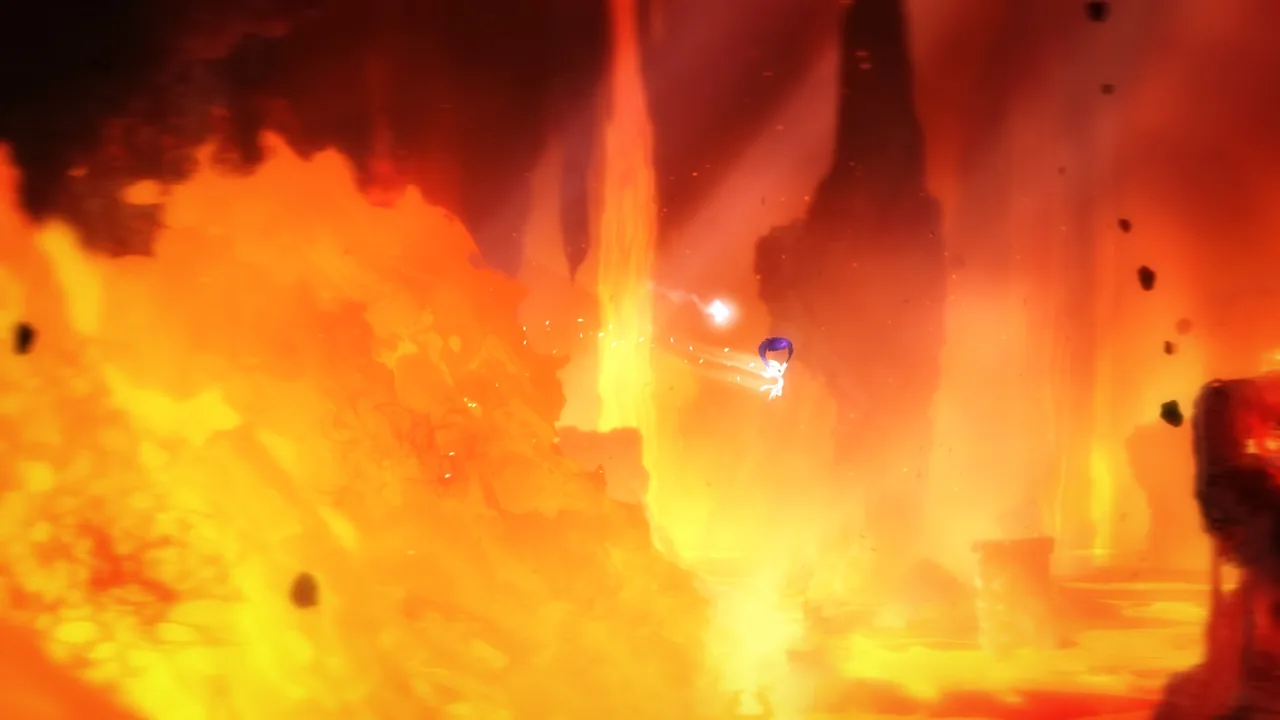
At key moments, you flee hazards such as rising water, chaining the movement abilities you have learned without stopping.
You choose where to put a Soul Link. Saving before a hard stretch uses energy you could otherwise spend elsewhere.
Learning curve and difficulty
You can choose Easy, Normal, Hard, or One Life.
With Bash, aiming Ori is only part of the move. You also need to read where the target will go after flying in the opposite direction.
Escapes leave little time to stop and inspect the next mechanism. Double jumps and wall movement have to lead into Bash and the feather.
You can place Soul Links during regular exploration. In One Life, avoiding death puts the emphasis on remembering traps and a safe route through them.
Builds and playstyles
Air-chain route
Use double jumps and the feather to stay high, then Bash from an enemy or projectile to keep moving. Leaving an enemy alive preserves it as the next launch point.
Projectile-return route
Bash from an enemy shot to launch Ori while sending the shot back. Aim it at a wall, a switch, or another enemy to change how you cross the room.
Late cleanup route
Advance the story to gather movement abilities, then return through Spirit Wells for missed pickups. The route back gives you room to chain those moves.
Combined challenge route
After learning the terrain and escapes, try conditions such as avoiding death or leaving ability points unspent. Work out which upgrades you can skip and how you will cross hazardous stretches.
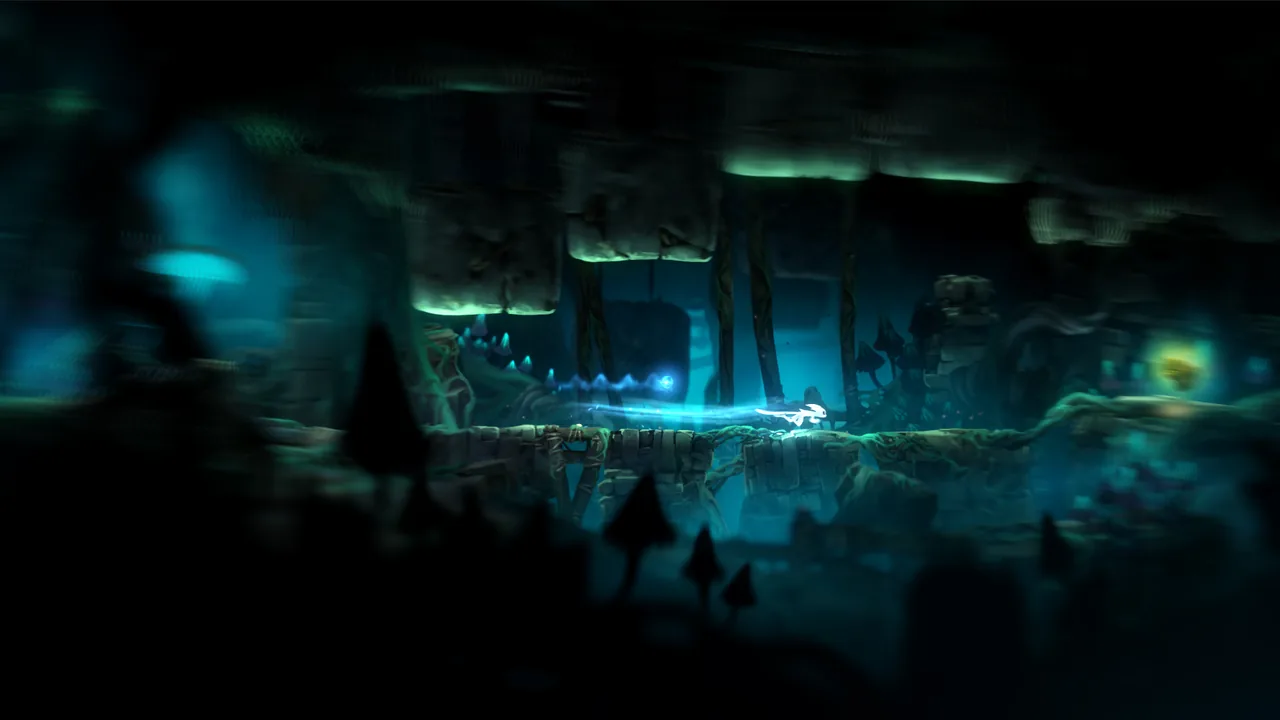
What longtime players say
For returning players, the forest's scenery, music, and story can be reasons to revisit it after time away.
No-death achievements and harder return runs involve memorizing terrain and refining a route. These players describe both the pleasure of improving it and the cost of a mistake.
The Definitive Edition's added abilities and travel between Spirit Wells help when revisiting areas and collecting what was missed.
Repeat players enjoy the return trip once they know the full moveset. Getting to a missed pickup gives them another chance to chain their movement abilities.
What players like
The hand-painted backgrounds give players reason to linger in the forest, while the score stays with them through exploration and heightens tense scenes.
Brief lines, animation, and music carry the story. Players recall its characters and events without needing long explanations from the game.
As abilities arrive, a jump can lead into Bash and carry Ori farther through the air. Players enjoy how much more they can do compared with the opening stretch.
Returning with a new ability puts previously unreachable places and pickups within reach. Familiar paths also take a different set of moves to cross.
Escapes demand one learned move after another. Players like how that pressure makes the story's immediate danger felt through the controls.
Restarting after a failure is quick. During regular exploration, a Soul Link placed before a mechanism lets players practice it again without a long trip back.
Common complaints
In escapes and later difficult stretches, traps or the way forward can be hard to spot. Having to learn the route through failures wears on these players.
Regular combat often means repeating Spirit Flame attacks. Players looking for different enemy types and ways to defeat them find that routine thin.
Bright effects and foreground art can hide enemy shots, traps, or platforms. Players can lose track of Ori's position or whether a hit landed.
Momentum and input feel stand out when landing on a small platform. Players trying to place Ori precisely on hazardous terrain find those slight slips costly.
Forget to place a Soul Link and a death can mean replaying a long stretch. Its energy cost and sections where it cannot be placed also draw complaints.

Who it’s for
It suits players who enjoy finding an aerial route by turning enemies and projectiles into Bash launch points.
It also suits players who want to place a Soul Link before a hard stretch, retry quickly, and learn an escape route move by move.
Who might not enjoy it
If you want each enemy to call for a different way of fighting, repeated Spirit Flame attacks may leave regular combat feeling plain.
If you expect to read and clear a trap on your first encounter, hard-to-see hazards and route learning during escapes may grate.
FAQ
- Is Japanese supported?
- Yes. The Steam version supports Japanese interface text and subtitles.
- Is there cooperative play?
- No. Steam lists the game as single-player.
- Can the difficulty be adjusted?
- Yes. You can choose Easy, Normal, Hard, or One Life. One Life is for a run focused on avoiding death.
- Does the Definitive Edition content require a separate installation?
- No. The new areas, Naru story scenes, Dash, Light Burst, and travel between Spirit Wells are built into the game.
These impressions are based on 100 Steam reviews sorted by “Most Helpful.” They do not represent the views of all buyers.

Image: Ori and the Blind Forest: Definitive Edition on Steam