Predy Media > Puzzle > Game page
Game pageLIMBO Features and Player Feedback
Who It Suits

LIMBO is a puzzle platformer where deaths reveal how traps work and physical contraptions open the way forward.
You can explore its wordless world by trial and observation, then work on late-game execution or a low-death full run.
What makes it fun
Puzzles of weight and momentum
Moving boxes, using ropes, and accounting for weight and momentum can reveal a way through. Even when you see the solution, you still have to time the jump.
Learn from each trap
An unexpected trap can reveal what moved and where the danger lies. After restarting, you can change the order of your actions and test a way past it.
Read the world yourself
The boy moves through the forest without directions or dialogue. Silhouettes and the sounds of machinery offer clues to hazards and mechanisms.
Game details
As of Oct 29, 2026- Steam Deck
- Verified
- Release date
- Aug 3, 2011
- Developer
- Playdead
- Languages
- Japanese, English, Simplified Chinese, Korean / 14 languages total
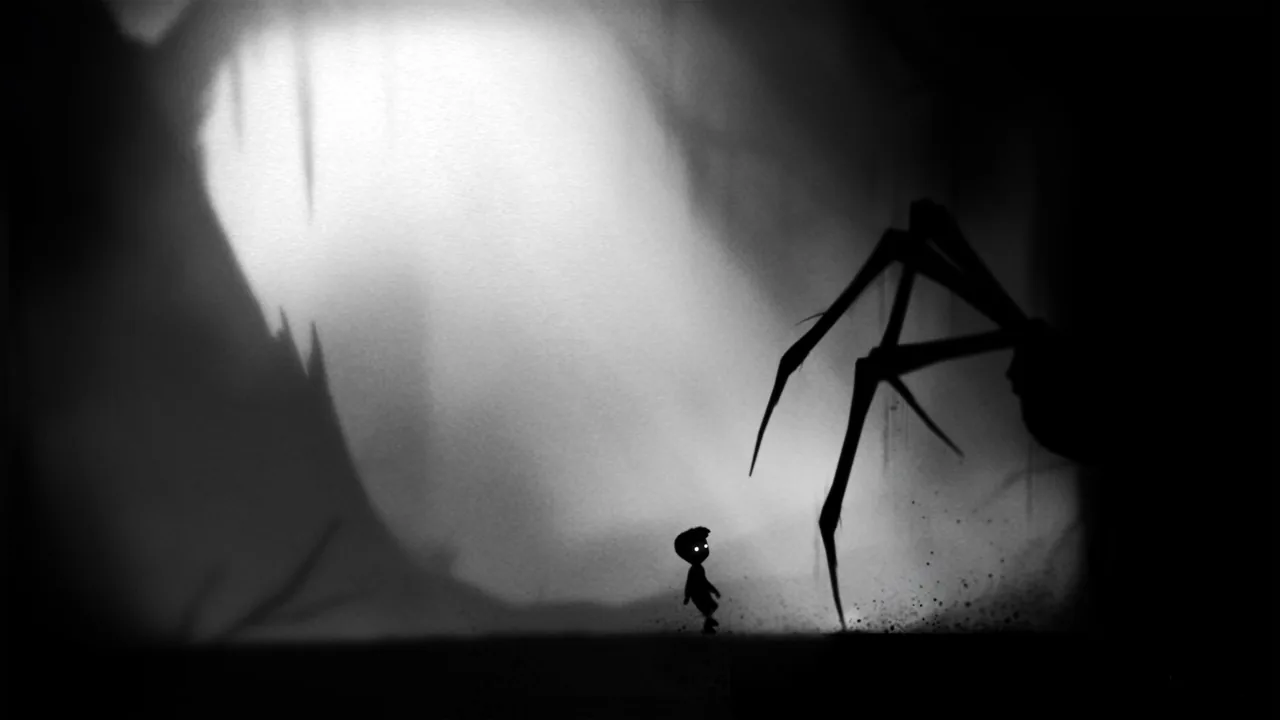
A typical run
The boy wakes in a forest. Control begins without an explanation or conversation.
You run, jump, and move objects to see how the terrain and traps respond.
Some traps are hard to avoid at first sight. After restarting nearby, you can work out their order and timing.
Farther on, boxes and ropes are joined by machinery, parasites, and gravity-based contraptions.
While searching for the boy's sister or after finishing the main route, you can pursue hidden eggs, achievements, and a concealed section played in darkness.
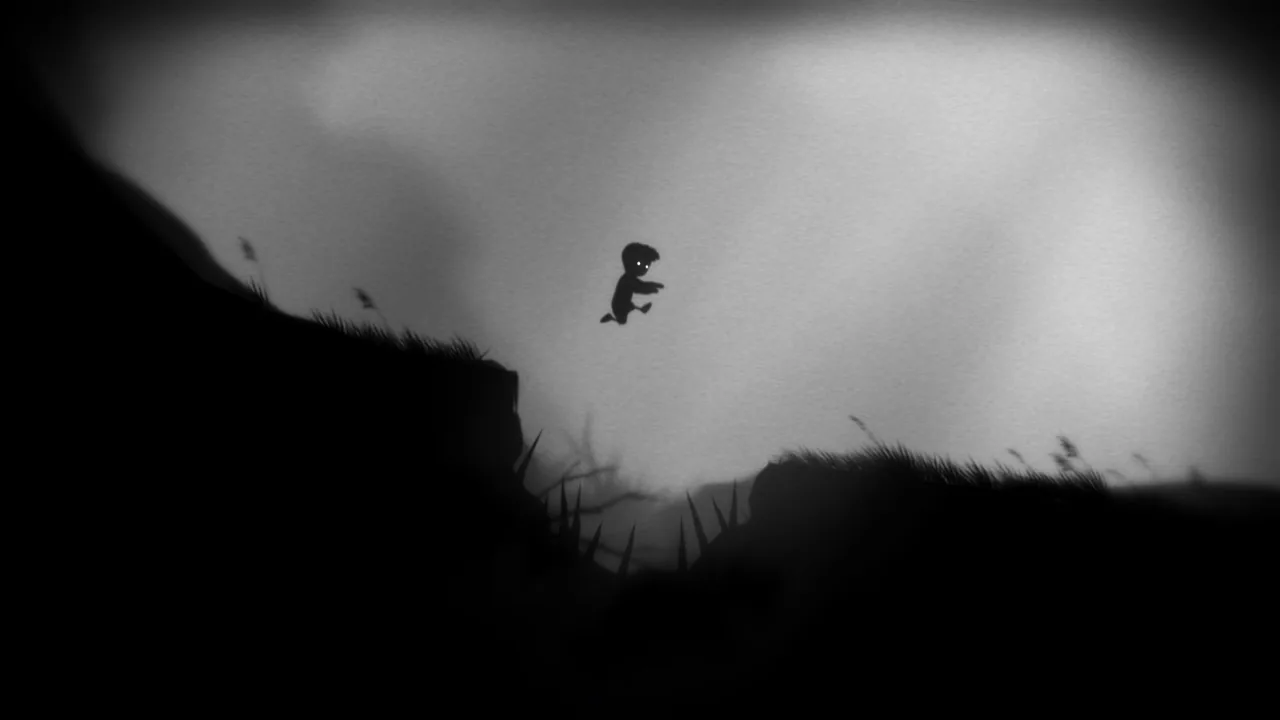
Core systems
Puzzle Platformer
Running, jumping, and moving objects form the small set of actions used to solve puzzles built into the terrain.
When the path seems blocked, you may need to go back and move a box or rope. Even after seeing the route, you still have to time the jump.
Physics
A box's weight, a pendulum's swing, and momentum become parts of the route ahead.
You decide where to place an object and when to let go. The position may be right, yet a misread of its momentum or travel time can send you back.
Single-player
You guide the boy alone. There are no cooperative roles to divide up.
Watch movement, listen for cues, and decide what to test first. No explanatory voice supplies the answer.
Steam Achievements
Eggs off the main route and special conditions for a full run give you goals beyond finishing the story.
You can follow the pace of a blind run or stop to inspect a suspicious ledge. Going after achievements also calls for repeat runs and section practice.
No Point in Dying
This Steam Achievement requires an uninterrupted completion under a strict death limit.
Rehearse dangerous sections first, then favor a route you can repeat reliably over a fast one. After a mistake, you must also decide whether to carry on or restart.

What sets it apart
Dialogue, tutorial text, and a persistent interface provide little direction. Trap shapes and sounds tell you what may be worth trying.
A death can reveal a trap's reach or the order in which it activates. The nearby restart lets you test that information quickly.
Industrial physics puzzles take up more of the route after the forest. The focus shifts from moving through a pursuit to working out a sequence and executing it on time.
Learning curve and difficulty
The standard route has no selectable difficulty tier. Where you get stuck depends on reading a contraption and repeating the inputs once you know the solution.
Early on, it helps to pause at a suspicious trap. Where you died can tell you how far it reaches.
In the industrial areas, place the box, watch the machinery cycle, and choose when to start running.
In gravity sections, picture where an object will move after the switch to avoid unnecessary trips back and forth.
No Point in Dying keeps asking for practice after the puzzle is solved. You need a route through dangerous sections that you can execute the same way each time.
Builds and playstyles
Blind Observer
Skip guides and read each death point or sound cue for clues. It also suits players who want to draw their own conclusions about the story from scenery and events.
Hidden-Egg Hunter
Check ledges and routes away from the obvious path for eggs and the concealed dark section. This suits players willing to interrupt the main route to inspect a place they may have missed.
Low-Death Runner
Practice dangerous sections before attempting No Point in Dying. This approach suits players who would rather memorize trap positions and safe places to wait than race ahead.

What longtime players say
In a low-death full run, a mistake means covering familiar ground again. That restart weighed on players pursuing the achievement.
Players pursuing No Point in Dying practiced difficult passages separately. They repeated trap positions, waits, and inputs until they could carry them into a full run.
After learning the main route, players returned with hidden eggs or a full run as their goal.
What players like
Footsteps, machinery, and other environmental sounds sit against monochrome visuals. Players remembered how that kept the wordless journey uneasy.
Reconsidering the terrain or a movable object can make the route click into place. That moment is what players enjoyed in the environmental puzzles.
The game leaves the boy and the ending open to interpretation through scenery and events. Players who like reaching their own conclusions valued that choice.
An unseen trap may kill you first, but a nearby restart lets you test what its reach taught you. For these players, death became a clue.
New contraptions appear toward the end as the puzzles grow harder. Players enjoyed having to rethink their approach farther into the route.
For achievement hunters, searching for hidden eggs and completing a low-death run offered goals worth the effort.
Common complaints
From the middle onward, missing a timing window can mean repeating an already understood sequence. Heavy-feeling movement and hard-to-read scenes added to the fatigue.
The boy's situation and the ending receive no clear explanation. Players looking for causes and answers finished with questions still open.
With No Point in Dying, a mistake can force another full run even after the sections are familiar. That repetition became a burden for achievement hunters.
Players who found the main route short also questioned whether its length justified the price.

Who it’s for
The puzzle platforming suits players who want to infer their next attempt from trap movement and environmental sound without waiting for instructions.
It also suits players who want to work out box placement, swinging motion, and gravity changes, then time the jump that makes the solution work.
Players who pursue eggs, the concealed dark section, and No Point in Dying during or after the main route can turn section practice into a full-run goal.
Who might not enjoy it
It may frustrate players who dislike repeating a precisely timed jump after solving a puzzle or dying to a trap that was hard to foresee.
Players who want a direct account of the world and ending may find its unexplained story unsatisfying.

FAQ
- Is the game available in English?
- Yes. Steam lists an English interface. The game does not rely on spoken dialogue or subtitle-heavy scenes.
- Does it have co-op?
- No. Steam lists LIMBO as single-player.
- Can I use a controller?
- Yes. The supplied Steam public data lists full controller support.
- Does it run on Steam Deck?
- The supplied Steam public data lists it as Steam Deck Verified.
- Is there anything to pursue after finishing?
- You can pursue Steam Achievements by searching for hidden eggs and the concealed dark section, or by attempting the uninterrupted low-death run for No Point in Dying.
These impressions are based on 100 Steam reviews sorted by “Most Helpful.” They do not represent the views of all buyers.

Image: LIMBO on Steam