Predy Media > Factory automation > Game page
Game pageFactorio Features and Reception
Who It Suits
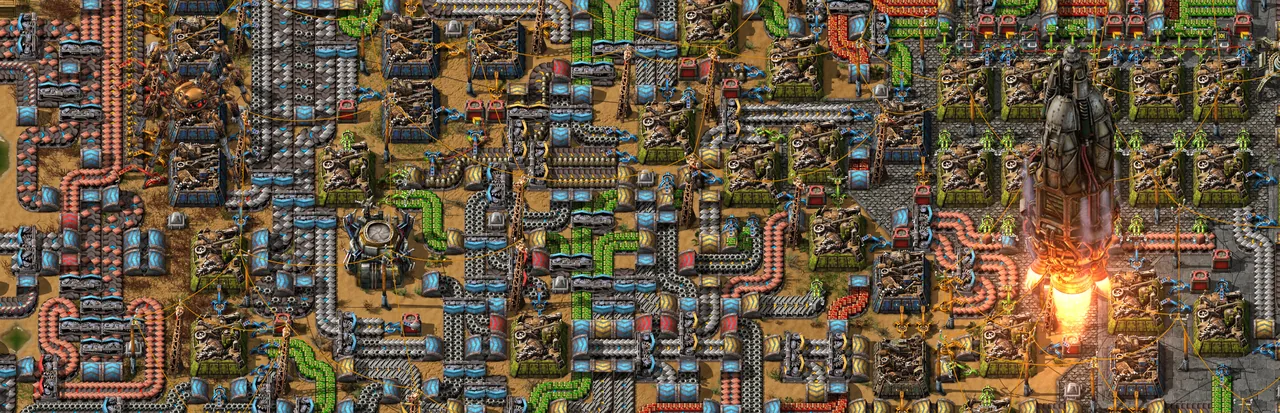
Factorio has you automate material transport, then trace and fix the bottlenecks that stop a factory from running.
You might route materials on belts, connect separate production areas by rail, or hand deliveries to robots. Each choice shapes the factory differently.
What makes it fun
Fix a bottleneck, find another
Add furnaces to make more iron plates, and ore or power may run short next. Tracing the line, fixing the cause, and watching production start moving again is the fun.
Choose your factory's shape
Run materials along a main bus, weave a spaghetti layout through open space, or split production across rail outposts. The same production goal leads to different decisions when it's time to expand.
Watch your factory take over
A camp where you gathered resources by hand grows into a factory that mines and smelts on its own. Eventually trains and logistic robots join in, and you can watch the production chain you built at work.
Game details
As of Oct 29, 2026- Steam Deck
- Verified
- Release date
- Aug 14, 2020
- Developer
- Wube Software LTD.
- Languages
- Japanese, English, Simplified Chinese, Korean / 30 languages total
A typical run
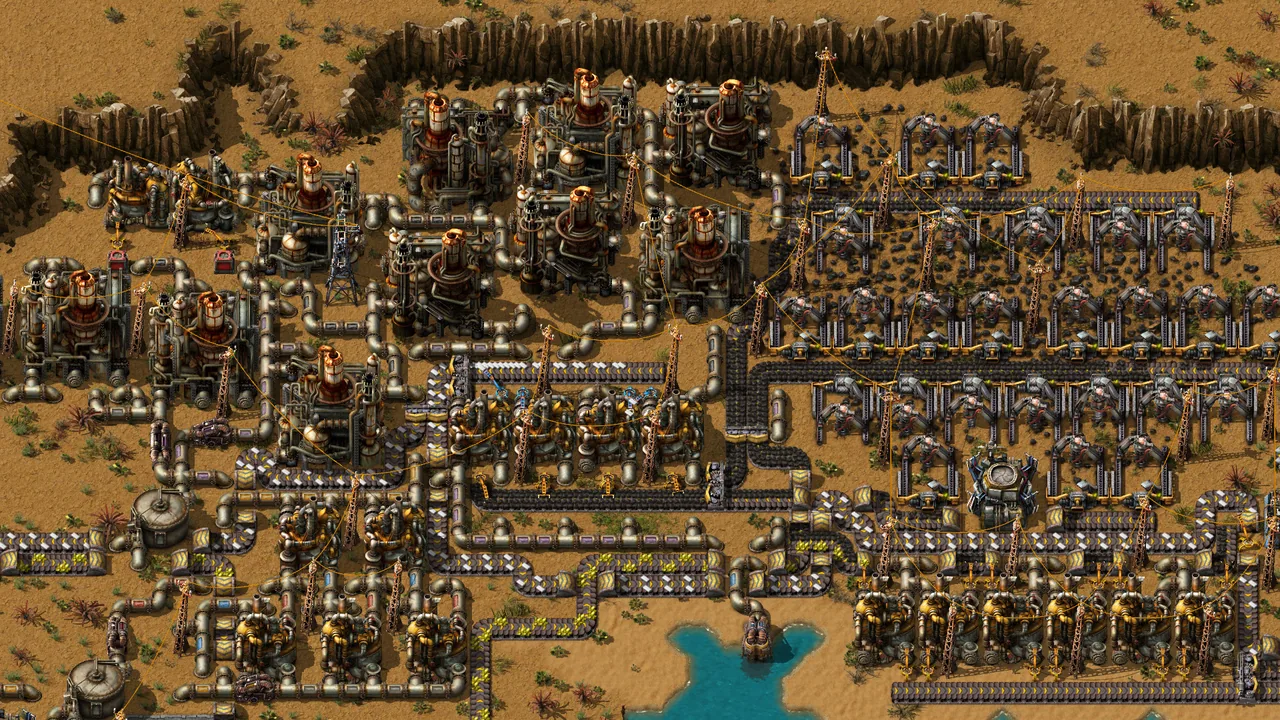
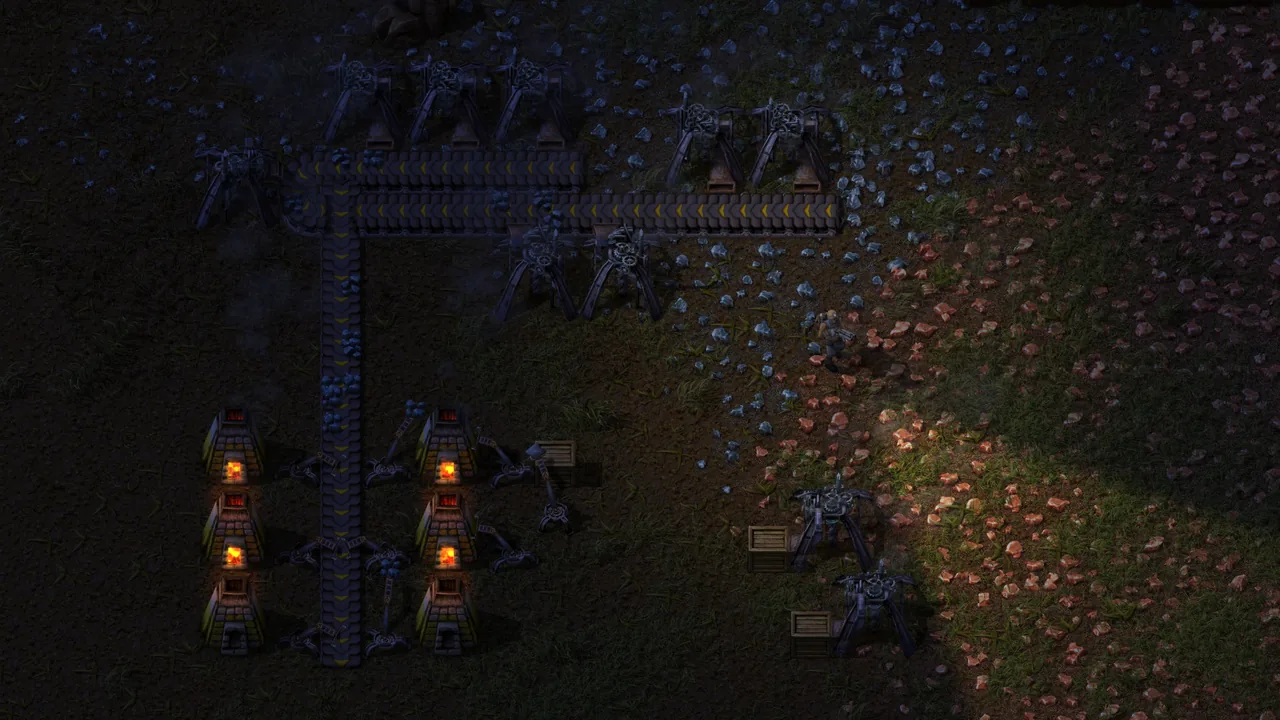
Freeplay starts with gathering resources by hand. Mining and smelting gradually pass to machines.
Once assembly and research are automated, raw materials or power may fall short. You check the stalled process and increase its supply.
Oil adds pipes for fluids alongside belts for solid items. When production stops, you trace which input or output is backed up.
When nearby ore patches run out, railways connect more distant mines. If pollution reaches enemy nests, defenses need attention too.
A rocket launch marks a milestone in the base game. Afterward, you can set your own production or layout goals and keep rebuilding.
Core systems
Belt transport system
Transport belts, underground belts, and splitters move items. The two lanes of a belt can carry different items.
You choose which materials use a trunk line and where they split or merge. A tightly packed route leaves little room to add another line later.
Fluid system
Pipes, storage tanks, pumps, and fluid wagons handle water, crude oil, and other fluids. Fluids connect and store differently from solid items.
You pipe each oil product to where it is needed. In a recipe with several fluid outputs, an unused product can back up and stop refining. You then have to store, crack, or consume it.
Railway
Stations, trains, and rail signals connect remote mines to the factory.
You set train lengths and station roles, then lay out track directions and signal blocks. Shared track saves space, but waiting trains at a junction may call for changes to signals or stations.
Logistic network
Roboports, logistic robots, and logistic chests move items through the air. Construction robots use the same roboports to build, repair, and remove structures.
You decide where to keep belts and where robots should carry items. They reduce tangled belt routes, but their power use, charging points, flight distance, and stock locations still shape the layout.
Blueprint
A Blueprint saves a layout and its settings so you can place it again as ghosts. Construction robots can build the saved design.
You can reuse a finished production line or adapt it to the site. Repeated modules make expansion quicker, but different terrain or incoming materials may require changes.
Circuit network
The Circuit network reads inventories and states from connected entities as signals. Conditions can then control machines, pumps, train stops, and other entities.
You decide what runs continuously and what starts only when an inventory signal calls for it. More controls also mean more signal conditions to inspect when production stops.
Pollution
Working machines and other buildings produce Pollution, which spreads outward. Reaching an enemy nest can trigger attacks. The amount produced, rather than the area reached by the cloud, contributes to enemy evolution.
You can increase production while spending resources on defense, or restrain the pollution cloud while you prepare. Expanding the factory also adds ground to defend.
What sets it apart
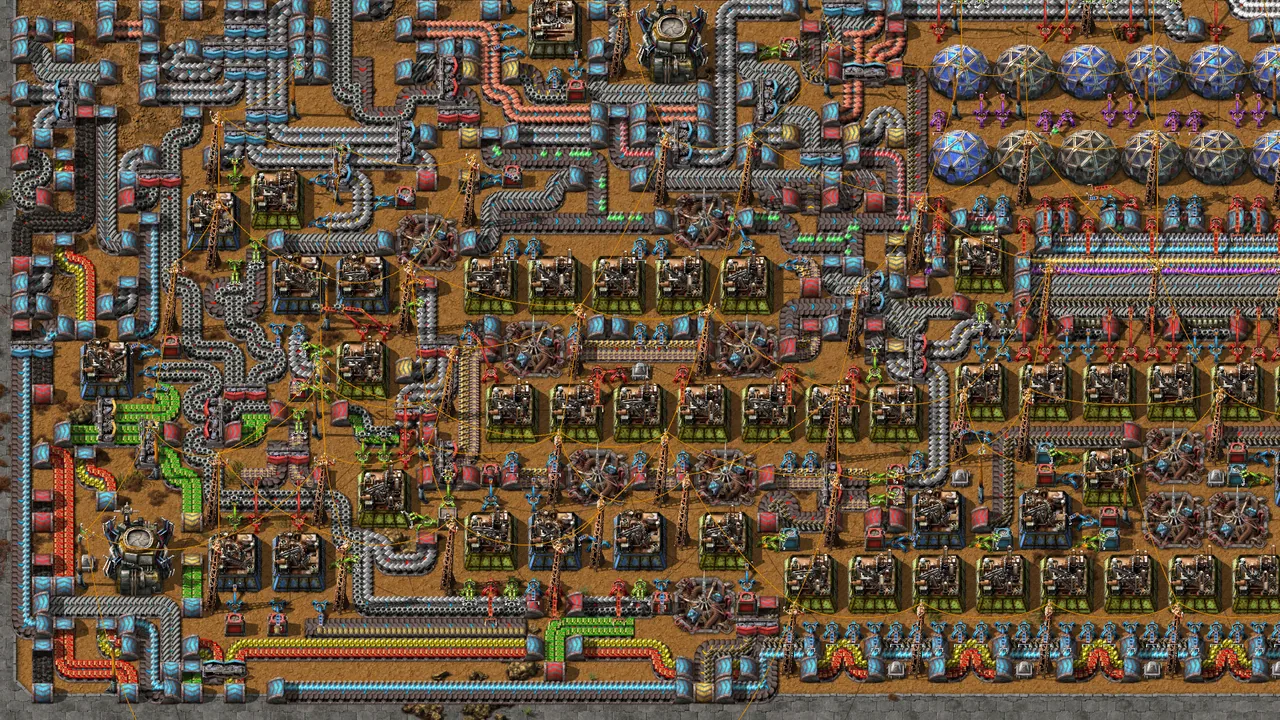
Adding smelters takes more ore and power. Research and defense draw materials from the same factory, so expanding one process affects the others.
More furnaces may solve an iron plate shortage only to expose a shortage of ore. Each fix changes where you need to look next.
The rocket marks a milestone in the base game. You decide whether to raise output afterward or rebuild the factory in another shape.
Learning curve and difficulty
There is no fixed ladder of difficulty. Map generation lets you change resources, enemies, pollution, research, and other conditions.
Early on, you keep materials flowing and leave space to expand. As the factory grows, fluids and railways enter the design; Blueprints, the Logistic network, and the Circuit network offer further options.
In a large factory, average output can hide a blockage. You may need to check brief material shortages, trains waiting at stations, robots waiting to charge, and falling power.
Achievements can change which tools or methods you may use. A familiar factory plan may need to be reconsidered before you build it.
Builds and playstyles
Main bus
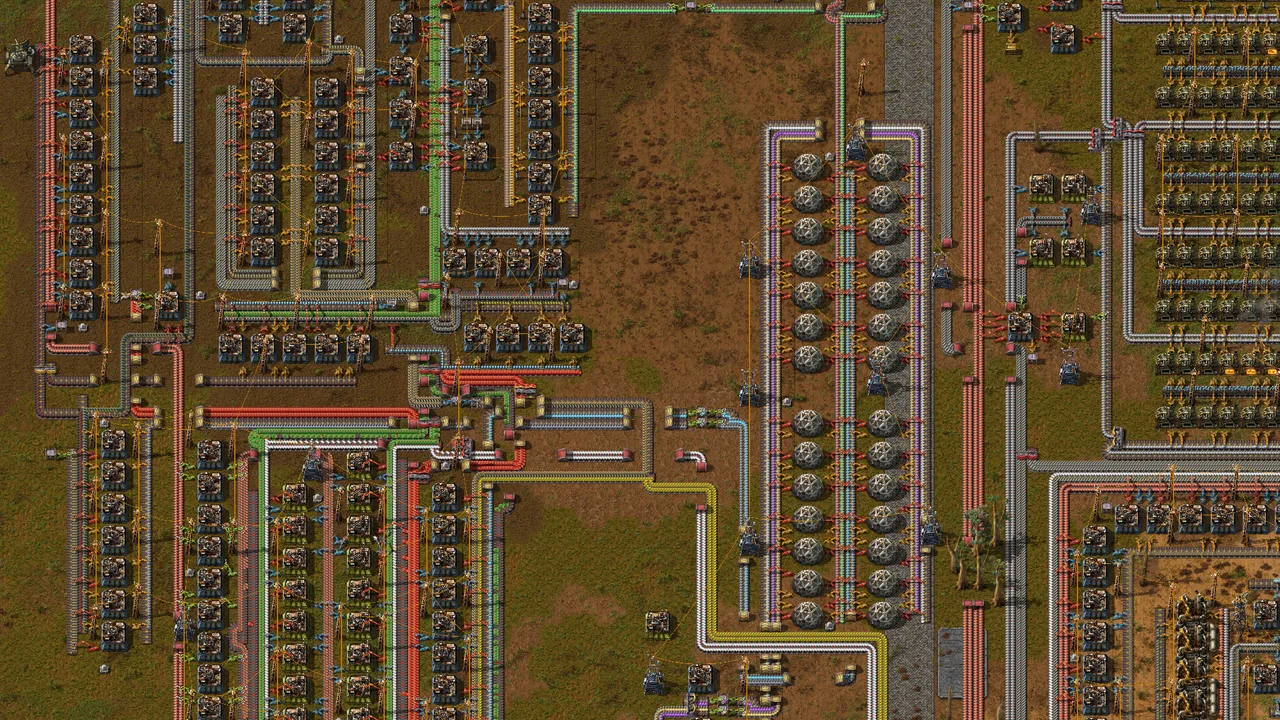
Common materials run along parallel trunk lines and branch into production areas. It is easy to trace where they go, provided you leave room to widen the bus later.
Spaghetti
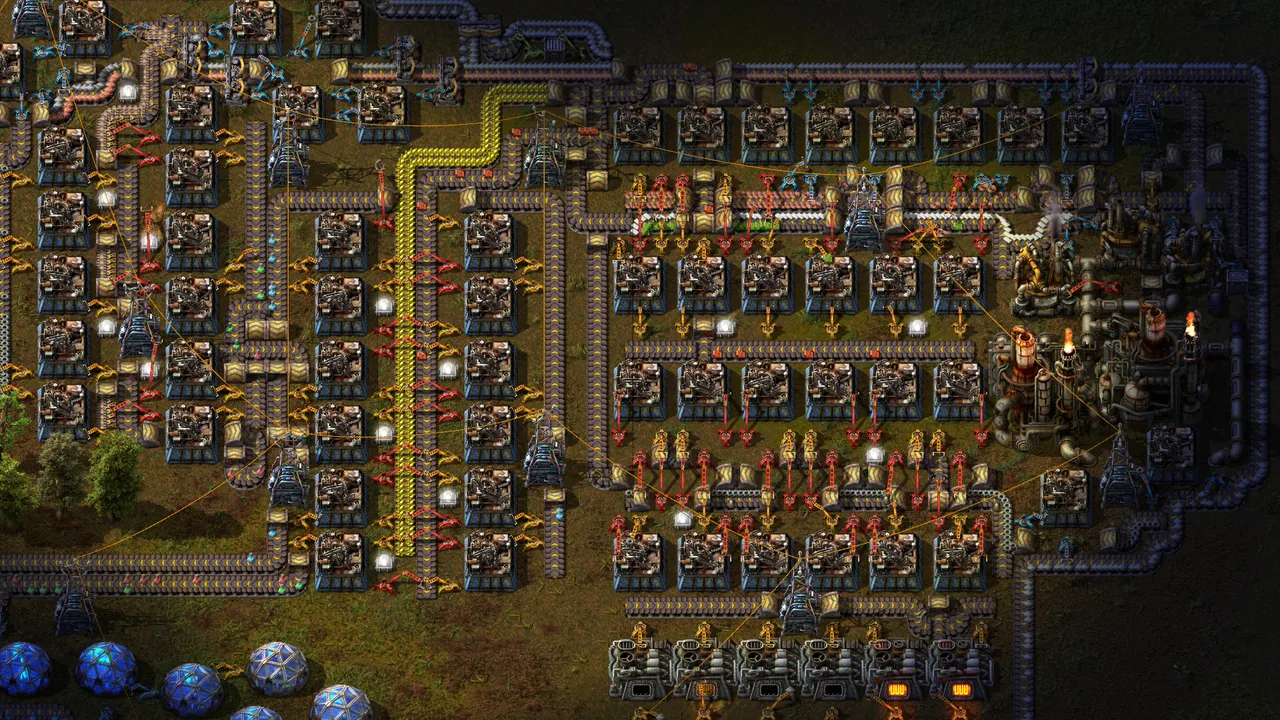
Machines go wherever space is available, with belts added as needed. Production starts quickly, but adding a process means tracing the existing routes again.
Rail-distributed factory
Mining, smelting, and component production sit at separate sites linked by trains. New sites are easy to add, but trains queued at stations can starve the factory. Signal placement matters as well.
Robot logistics
Logistic chests and robots replace tangled belt routes. If deliveries slow down, flight distance and charging queues are places to check.
What longtime players say
After working through base game production, players can use the official mod support for different production problems. It gives experienced builders a reason to redesign their factories.
On a new factory, returning players may rethink old smelting lines or rail layouts. A useful process can go into a Blueprint for the next build.
As factories spread out, attention moves from placing individual machines to watching rail connections, defenses, and logistics across distant sites.
Imperfect ratios and tangled belts do not prevent progress. Players who build through trial and error can grow attached to the lines they left in place.
What players like
One builder organizes materials on a main bus; another routes belts through spare space. Rail outposts and robot delivery offer further ways to reach the same production goal.
Adding furnaces to fix an iron plate shortage may expose a lack of ore or power. Players enjoy tracing the line, finding the cause, and seeing what needs attention next.
After exploring the base game, players can use mods or rules they set for themselves to change the production problem and build around those conditions.
Stable performance as factories grow is appreciated. Copying layouts and transferring settings also makes repeated design work easier.
The factory begins with hand-mined ore. Watching trains carry materials and robots move around a factory built from that start gives players a sense of progress.
Once a production line is saved as a Blueprint, construction robots can build it again. Players value leaving the repeated placement to them.
Common complaints
A quick belt fix can reveal another material shortage farther down the line. Each new task makes it easier to keep playing past the point when you meant to stop.
Players focused on exact ratios or neat layouts may rebuild lines that already work. Even steady research production can invite another adjustment when a small delay becomes visible.
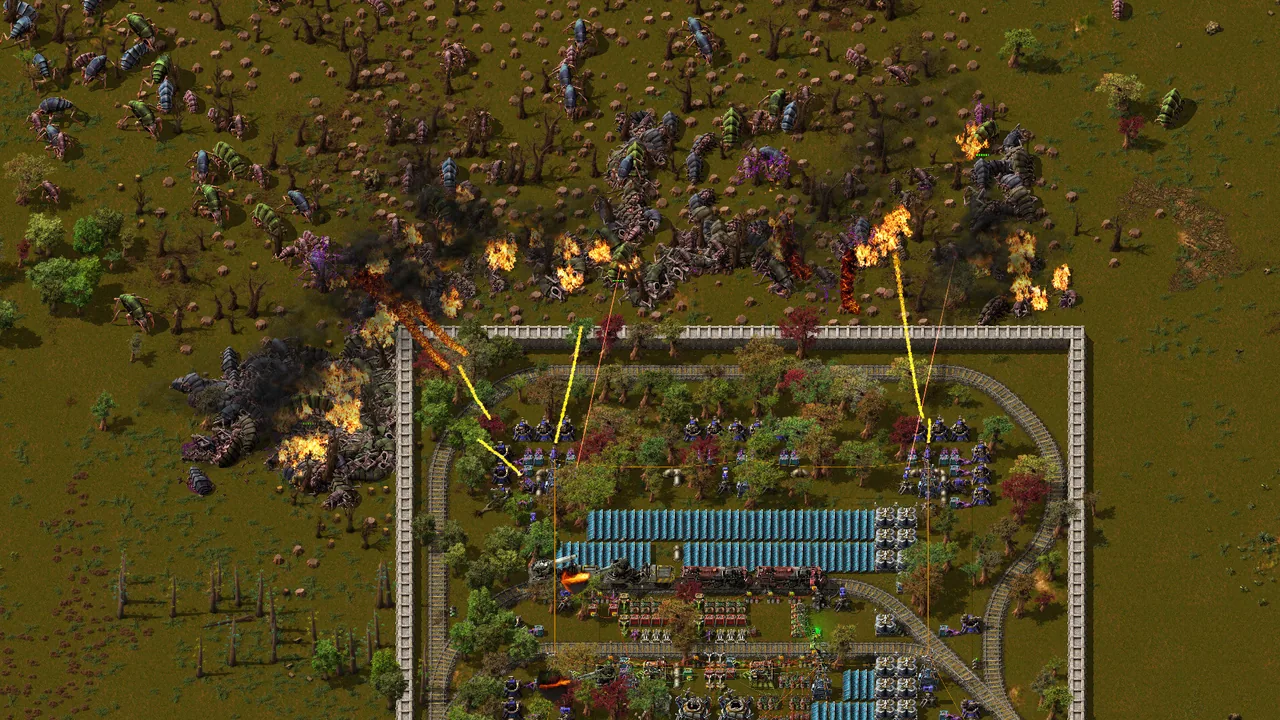
With enemies enabled, an attack can interrupt work on the factory. Diverting materials to defenses can be frustrating for players focused on production.
Mid-game oil brings pipes and fluid outputs into a factory already balancing inputs across several processes. Players can struggle to decide which blockage to tackle as they work toward chemical science.
Who it’s for
It suits players who want to trace an iron plate shortage beyond the furnaces to ore supply or power.
It also fits players who like rebuilding a smelting line in another layout, saving the useful version as a Blueprint, and reusing it during expansion.
Players who want to connect distant sites by rail, let the Logistic network handle deliveries, and use the Circuit network to control equipment will find room to work.
Who might not enjoy it
It may not suit players who find it tiring to trace oil pipes and input ratios, then learn by repairing a stalled layout.
If you want short, clear stopping points or cannot leave a tangled belt route alone, the next fix may keep pulling you back.
FAQ
- Is English supported?
- Yes. The interface is available in English.
- Does it support cooperative play?
- Yes. Online and local-network cooperation let players divide the work inside the same factory.
- Can the difficulty be adjusted?
- Yes. Map generation lets you change resources, enemies, pollution, research, and related conditions. You can also choose a setting without enemy units.
- Can I try it before buying?
- Yes. The official website offers a free demo covering the basic mechanics.
- Is there an expansion?
- Space Age is sold separately. It extends the journey beyond the rocket with planets under different conditions and interplanetary logistics.
These impressions are based on 100 Steam reviews sorted by “Most Helpful.” They do not represent the views of all buyers.
Image: Factorio on Steam