Predy Media > Factory automation > Game page
Game pageCaptain of Industry: Features, Player Feedback, and Who It Suits
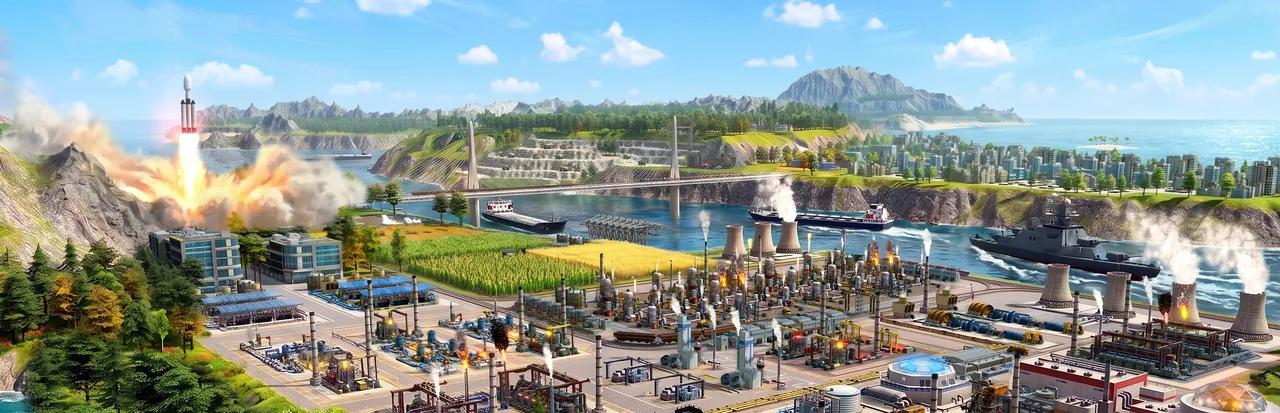
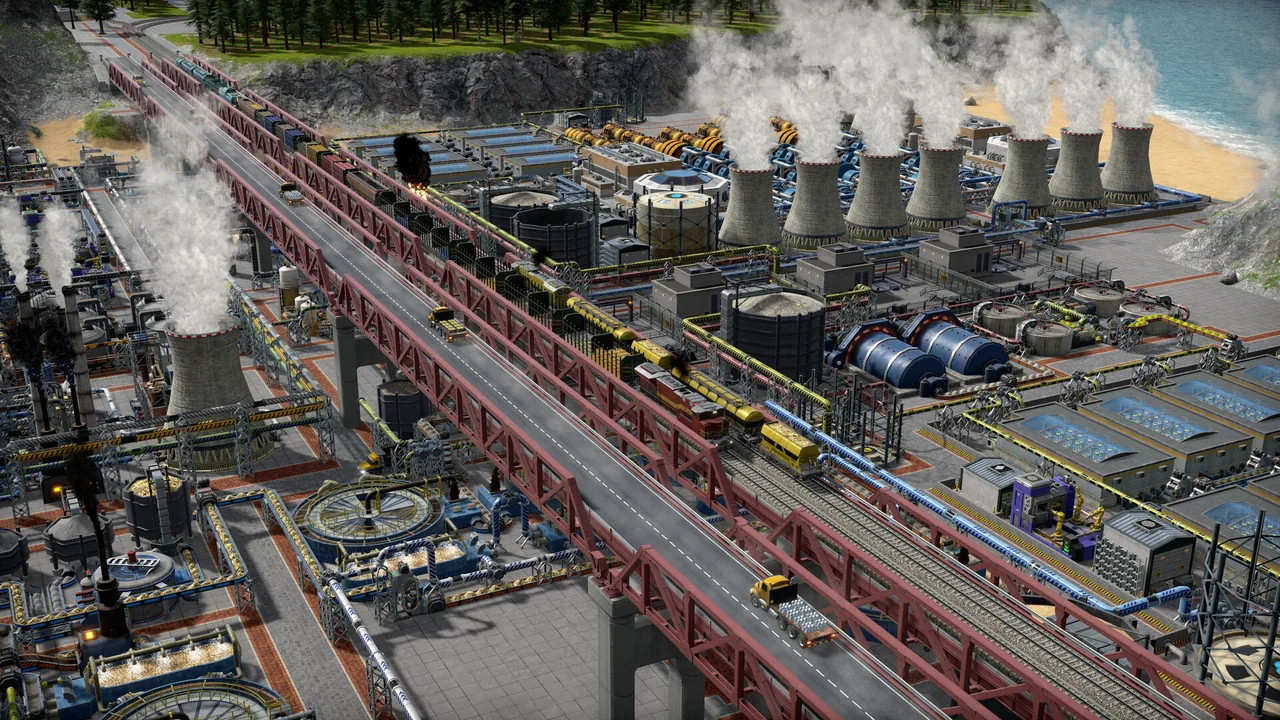
Mining changes the shape of the island, and the dirt and rock you dig out still have to be hauled away.
Building production lines is only part of the job. You also have to support the people, vehicles, and land those lines depend on.
What makes it fun
Build land from the rock you dig
Mining reshapes the island, and the rock and dirt have to go somewhere. Dump them along the coast, and you can make room for your next factory.
Untangle a stalled supply chain
More vehicles consume more fuel and maintenance. Delayed deliveries can then affect power and production. Tracing the shortage and getting a stalled process running again is part of the appeal.
Give byproducts a destination
A refinery's byproducts can feed another process, but a shutdown there can back up the refinery. Designing pipes for both reuse and disposal makes the layout more interesting.
Game details
As of Oct 29, 2026- Steam Deck
- Playable
- Release date
- May 31, 2022
- Developer
- MaFi Games
- Languages
- Japanese, English, Simplified Chinese, Korean / 20 languages total
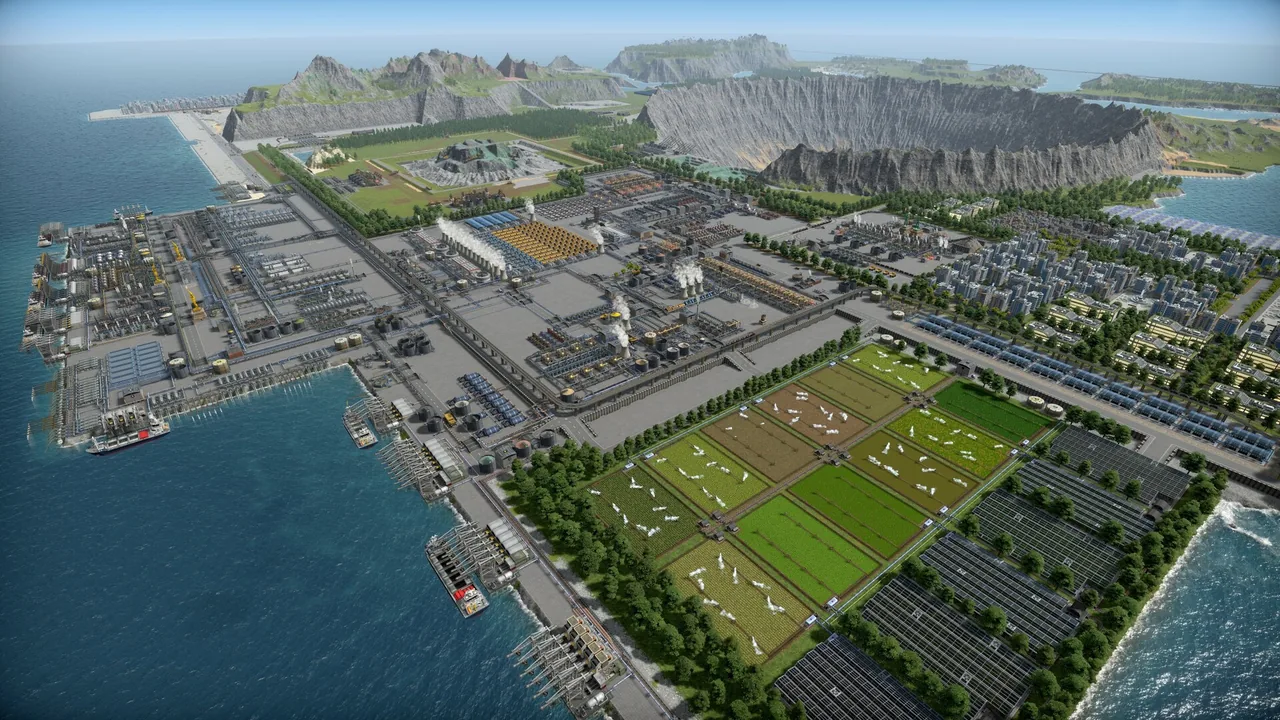
A typical run
You arrive with a small workforce and a ship carrying supplies. First, you gather wood and ore and establish Construction Parts and food production.
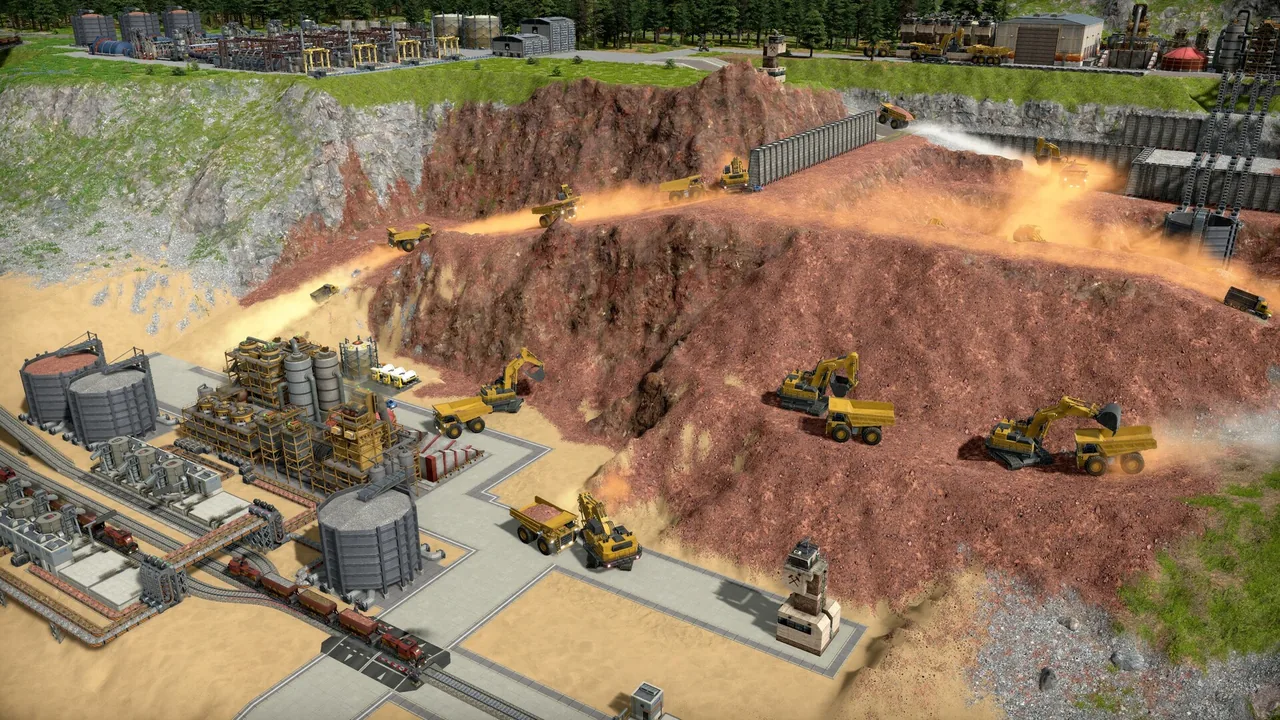
You designate mining and dumping areas as the pit deepens. Excavators and trucks still need a slope they can use to get in and out.
Research opens new equipment. As traffic grows, you can move established routes from trucks to belts and pipes; rail handles bulk cargo over longer distances.
Before adding residents, you check food and water supply. Power, healthcare, waste handling, and Maintenance also need room to grow.
As local deposits run low, you explore the world map and use Shipping Contracts for supplies. Further space development offers a route toward self-sufficiency through rare resources.
Core systems
Dynamic terrain
You can cut into mountains and use the spoil to fill valleys or reclaim coastlines. Deposits lie inside the terrain, and mining leaves a pit behind.
A route to the ore also needs a vehicle slope and a place for spoil. Clearing flat land too early ties up excavators and fuel needed for factory expansion.
Trucks, trains, belts, and pipes
Trucks deliver goods as demand arises. Belts and pipes connect machines directly, while trains carry bulk cargo over longer routes.
Vehicles remain useful where a mine face keeps moving. A settled trunk route can shift to fixed transport for greater throughput. Adding vehicles also raises fuel and Maintenance demand.
Maintenance
Vehicles and production buildings consume Maintenance. Shortages cause breakdowns; depending on difficulty settings, delayed deliveries or power generation can create further shortages.
Check spare Maintenance capacity before adding machines or vehicles. Pausing unused equipment reduces the load.
Unity
Supplying residents generates Unity. It pays for instant deliveries, edicts, Shipping Contracts, and world-map facilities.
Spending it all on routine imports or edicts leaves less for urgent construction or repairs. More residents will not steady the balance if household supplies fall behind.
Waste and pollution
Industrial byproducts and settlement waste need a reuse route, treatment, or a dumping site. Air pollution and other pollutants affect residents' Health.
If another process takes a byproduct, plan an outlet for when that process stops. Treatment uses land and workers, while continued dumping brings pollution. A blocked outlet can halt the product you wanted.
Shipping Contracts and Quick Trade
Shipping Contracts provide recurring exchanges with distant settlements. Quick Trade can cover an immediate shortage.
You can open another finite local deposit or trade processed goods and Unity for imports. Once contracts supply an essential material, production of the export good must keep running too.
Blueprints and planning mode
Blueprints save and share factory layouts. Planning mode lets you place a design before committing materials.
You can reserve space for the finished layout or build a smaller line that works now. If the outer buildings go up first, trucks may lose access to the middle. Leave room for later pipes as well.
What sets it apart
Mining does more than lower a resource count. It turns a mountain into a pit and leaves dirt and rock to transport.
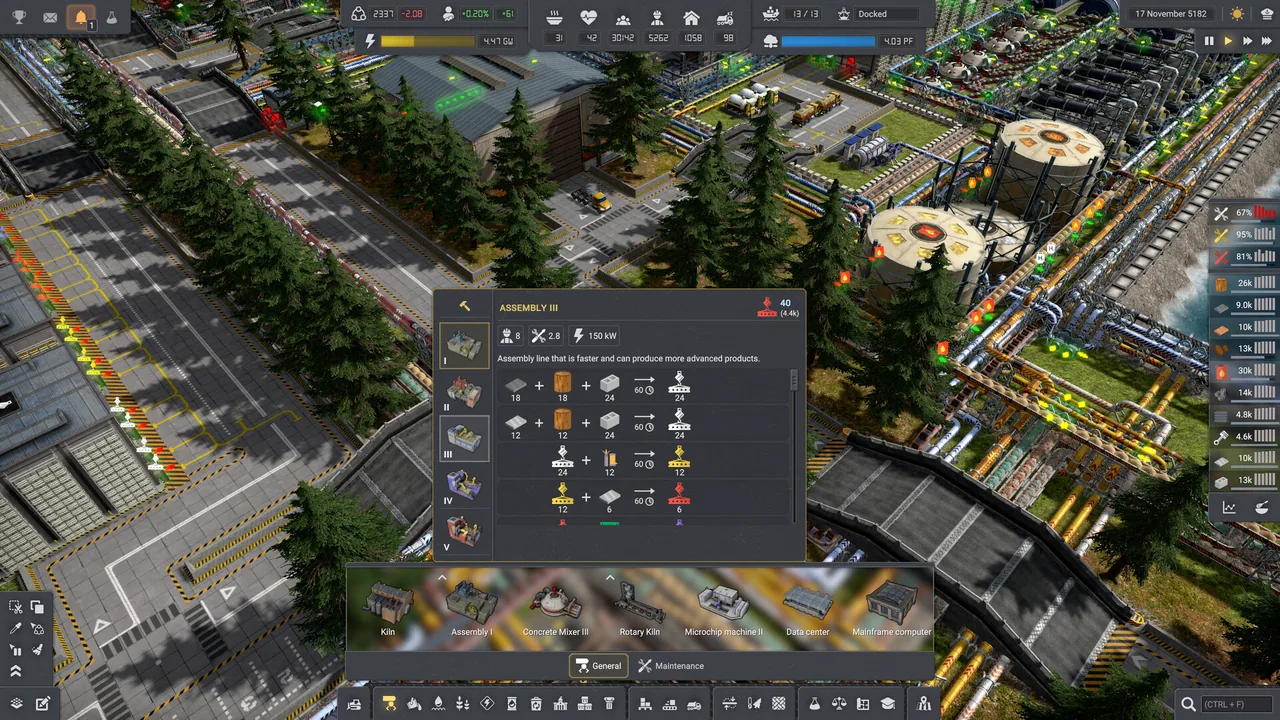
A bigger factory needs more workers, who need food and water. More delivery vehicles need fuel and Maintenance, supplied by the same industrial network.
Direct combat on the island takes a back seat to stalled food deliveries or transport that can bring the settlement and factory toward a wider shutdown.
Learning curve and difficulty
Difficulty settings change production and resource conditions. Realism settings also govern mechanics such as vehicles running out of fuel and machines breaking down.
During a rebuild, food and power still have to run while the replacement is built. The useful skill is switching over without losing fuel or Maintenance supply.
At a mine, keep the working face manageable and prepare excavator access and dumping areas first. Excavation is less likely to obstruct land preparation.
On demanding settings, storage alerts can reveal a shortage early. Facility priorities protect essential work, and Unity can cover an emergency delivery.
Builds and playstyles
Staged vehicle transition
Start with adaptable truck deliveries, then move established trunk flows to belts and pipes. Keep vehicles where the mine face continues to move.
Byproduct loop
Send outputs from refining and metal processing into other lines to reduce dumping and pollution. Give them another outlet so a stopped receiving line cannot block the main process.
Parallel rebuild
Keep the old food or water supply running while you build its replacement nearby. Check deliveries and output before switching. This uses extra flat land but keeps essential supplies flowing.
Terraforming first
Use spare dirt and rock to reclaim coastline for later factories or rail. Give land preparation its own work area so its vehicles do not hold up resource deliveries.
What longtime players say
Players with long saves who value the game still object to paid content during Early Access. Their concerns also include how the developers have handled community disputes and mods.
In a long-running island, you may wait for the next factory site to be leveled, then mark a new mining area when the old deposit runs out. For these players, upkeep can take time away from expansion.
Once a production line is running, there is still a mountain to cut down or a coastline to fill. Watching excavators and trucks move the spoil remains part of the appeal for these players.
In a long save, temporary early layouts can obstruct later expansion. Keeping supplies running while repairing those old choices becomes part of the game.
What players like
From the midgame, more vehicles can strain fuel and Maintenance, and delayed deliveries can reach power and household supply. Players enjoy finding the next blockage, including a backed-up byproduct, after fixing the last one.
For players who like successive building projects, fixing a pipe can lead straight to work on mining or transport. Others enjoy restarting to refine an early layout. Either way, finding a stopping point can be hard.
Early spoil can fill a valley; later it can extend a coastline for factories and transport routes. Players who enjoy earthworks value having a use for excavated material throughout a run.
Players drawn to industrial processes like the way smelting and refining connect with power and waste handling. The equipment's appearance adds to that appeal.
Logistics enthusiasts enjoy keeping trucks on changing mine routes while moving settled flows to belts, pipes, or rail as the factory grows.
When returning to a complex factory, players can use the explanations and information panels to trace a stopped process. That helps those who prefer diagnosing a shortage from the information at hand.
Without direct combat on the island demanding attention, these players can watch the machinery and focus on logistics and settlement supply.
Common complaints
The release of paid gameplay content during Early Access feels to these reviewers like selling a piece of the base game before it is finished. That describes their reaction to the sales model, not a verified developer intention.
Using starting supplies poorly or growing the population too fast can leave food and Health unsupported. If fuel, power, and Maintenance also run short, these players find recovery difficult.
In the midgame, a new production line may have to wait for flat land and construction. Population needs and existing utilities still demand work, leaving less time for expansion.
In larger factories, a distant truck may take a delivery while construction blocks access to the middle of a layout. Rail's land requirements and interface response can add friction later on.
Who it’s for
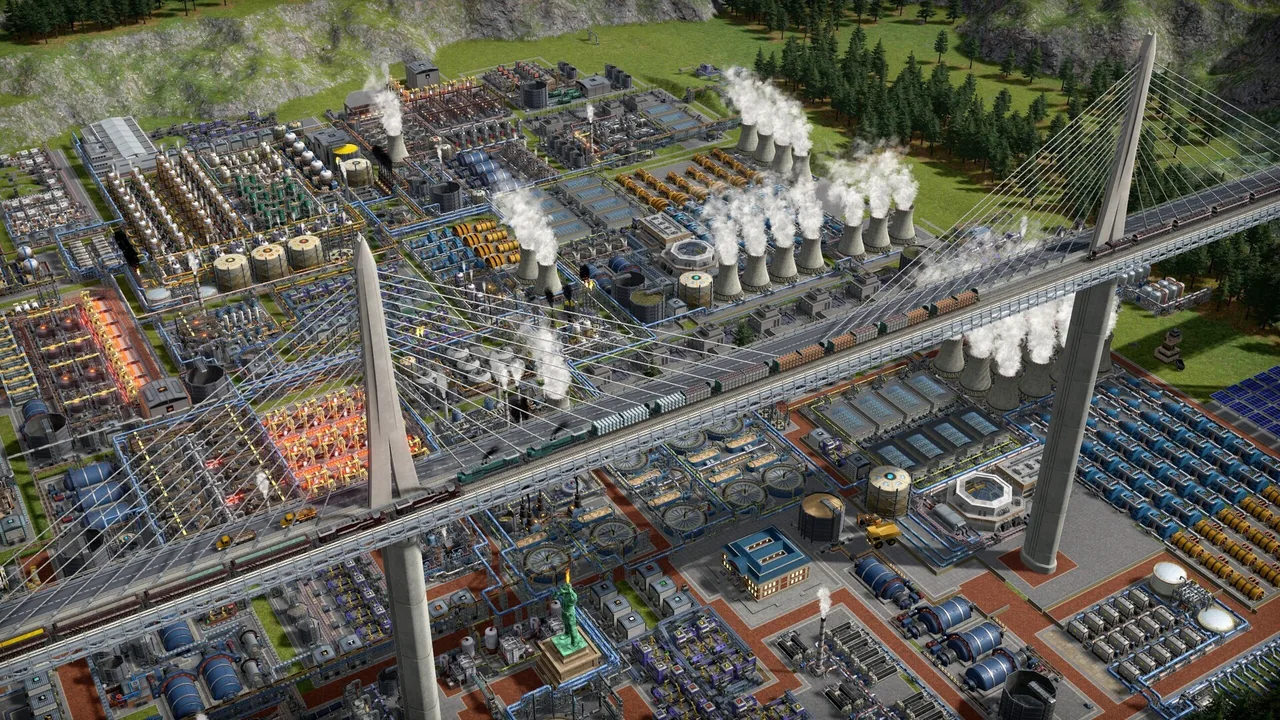
It suits players who want to plan mine slopes and spoil disposal, then reclaim land for the next factory after production is running.
It also suits players who follow a falling stockpile through household supply, Maintenance, and vehicle deliveries before rebuilding a line.
Who might not enjoy it
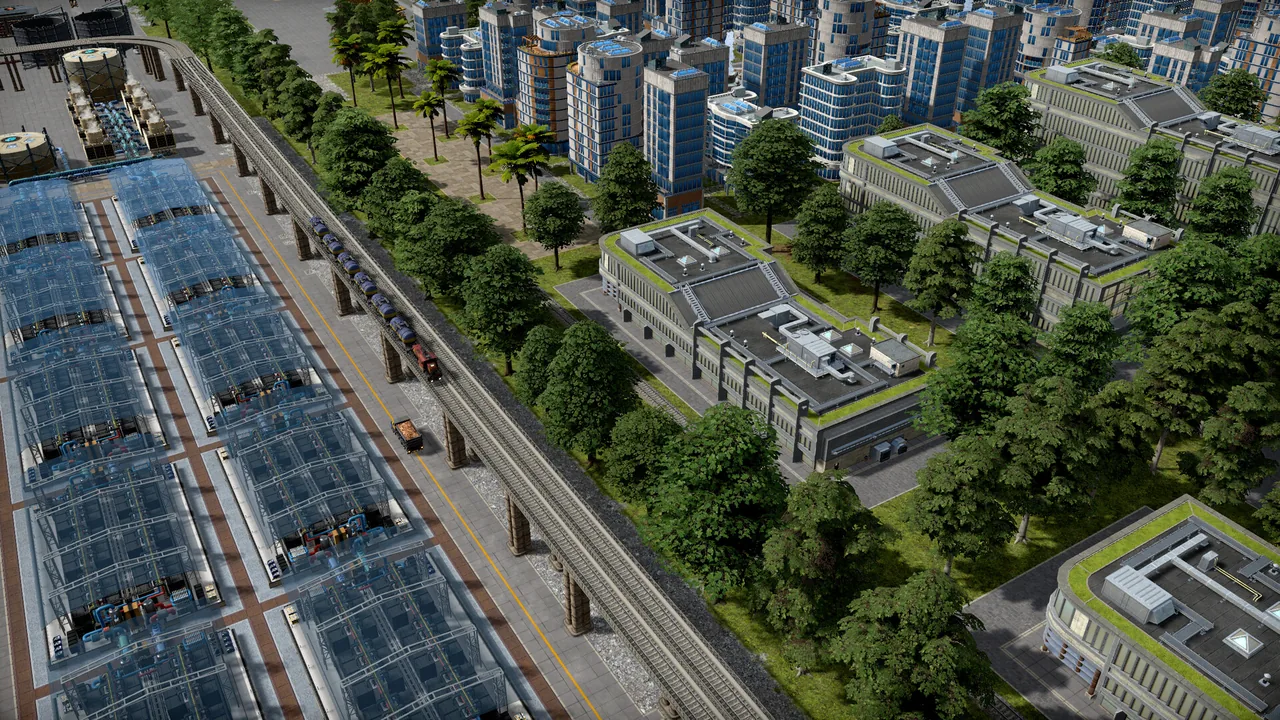
Players seeking rapid, repeated expansion may dislike waiting for land preparation and revisiting food, water, and other existing supplies in the midgame.
If you avoid paid gameplay content sold during Early Access, check the current sales model before buying.
FAQ
- Is the game available in English?
- Yes. Steam lists an English interface.
- Is there cooperative play?
- The current game is single-player. Multiplayer appears as a tentative item on the official roadmap, with no guaranteed release.
- Can the difficulty be adjusted?
- Yes. You can adjust production and resources, as well as Realism mechanics such as fuel depletion and breakdowns. Settings can also be changed during a save.
- Is there a mode for unrestricted design testing?
- Yes. Sandbox mode is available, along with blueprints, planning mode, and a map editor.
- Is additional content required?
- The base game remains in Early Access, and paid add-ons are sold. The developer describes them as optional for progressing through the base game.
These impressions are based on 100 Steam reviews sorted by “Most Helpful.” They do not represent the views of all buyers.
Image: Captain of Industry on Steam