Predy Media > Turn-based tactics > Game page
Game pageWarhammer 40,000: Mechanicus Features and Reception
Who It Suits
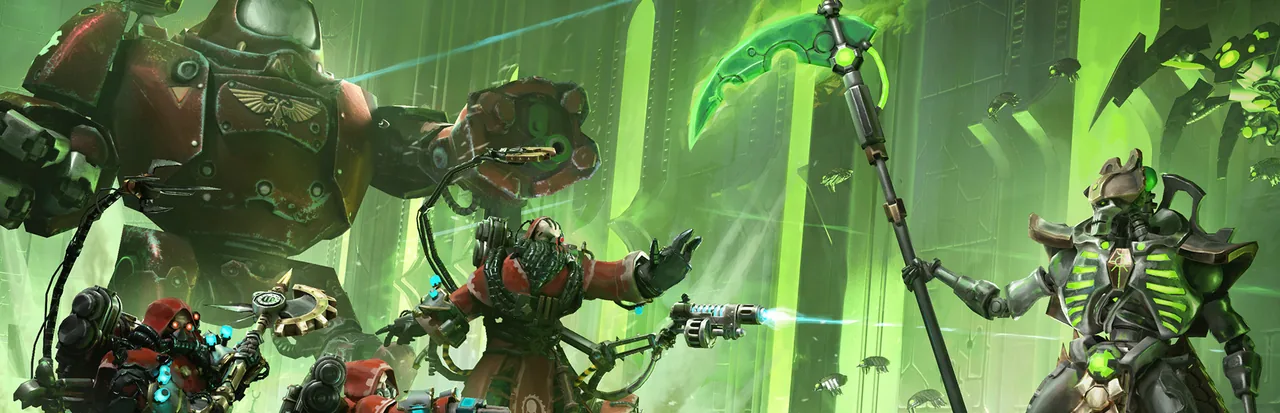
This turn-based tactics game asks you to collect Cognition Points and decide which member of the cohort spends them.
Detours through a tomb offer chances at rewards, while Awakening keeps rising. You choose when to stop exploring and head for the objective.
What makes it fun
Who gets the points?
Once you collect Cognition Points, you can spend them on extra movement or another Tech-Priest’s weapon. Because the squad shares the pool, the order in which you act shapes your attack.
Build each Tech-Priest
You can give each Tech-Priest different weapons, mechanical augments and upgrades. As you decide who handles ranged attacks or support, your cohort changes in both appearance and how it fights.
Game details
As of Oct 29, 2026- Steam Deck
- Verified
- Release date
- Nov 16, 2018
- Developer
- Bulwark Studios
- Languages
- Japanese, English, Simplified Chinese, Korean / 8 languages total
A typical run
A sortie begins aboard the ship, where you compare assignments and their rewards.
You fit Tech-Priests with Augments and gear, then add Troops to form a cohort.
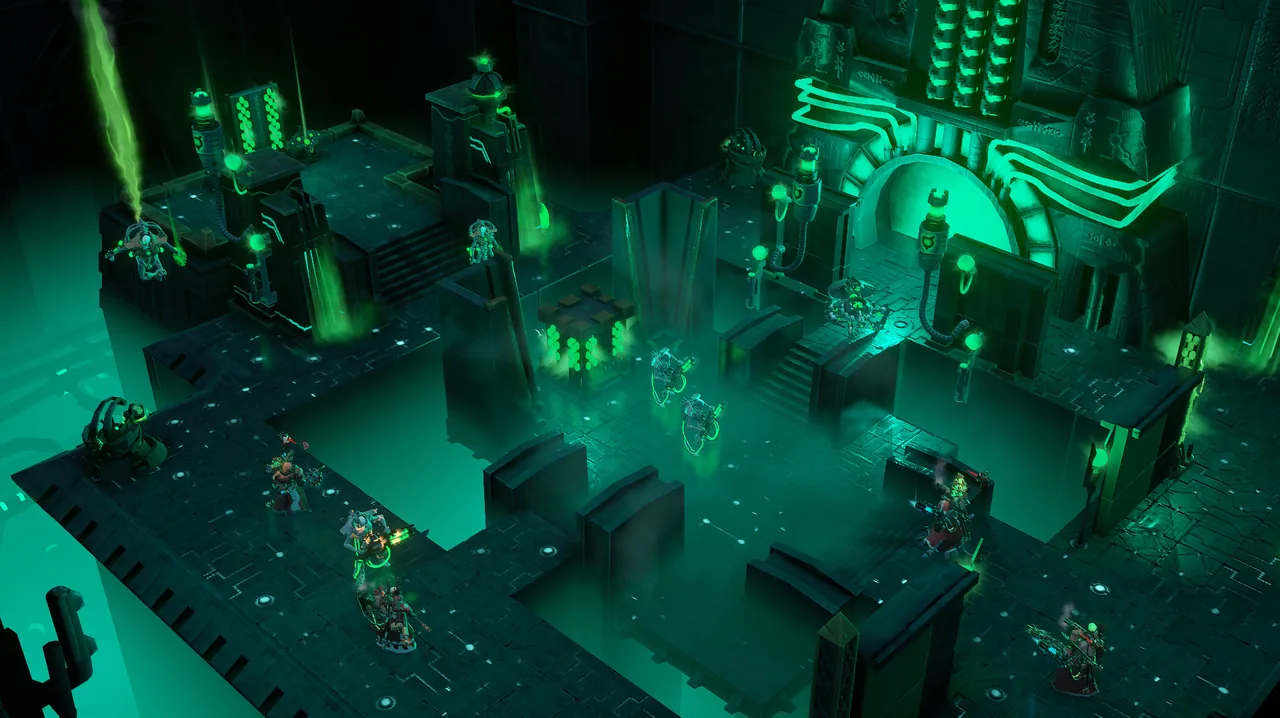
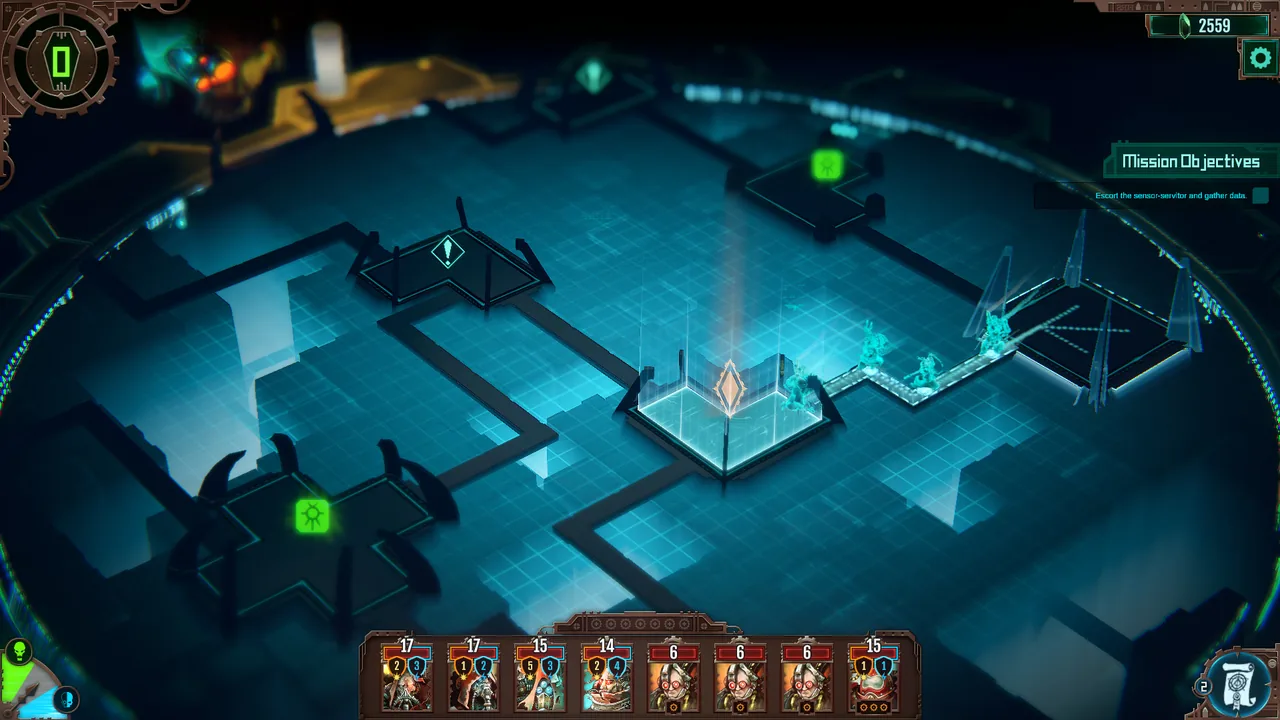
In a tomb, you choose rooms to enter. Events and battles lie between you and the assignment's objective.
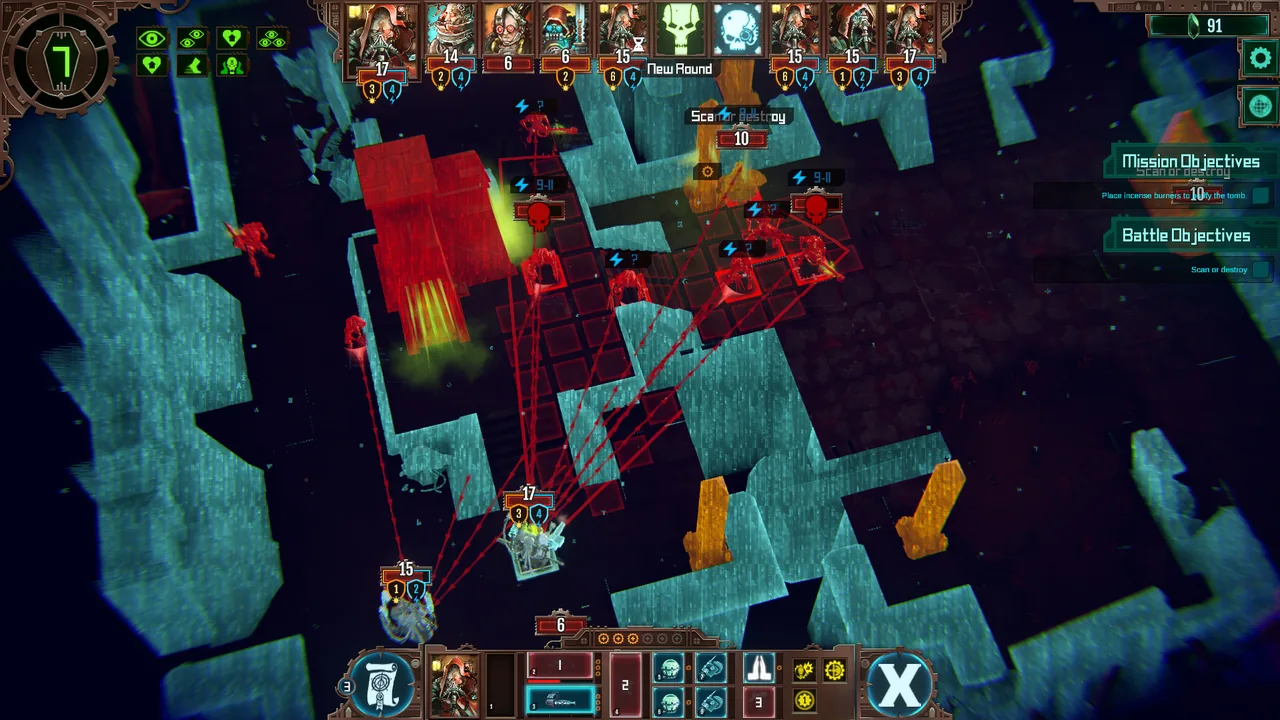
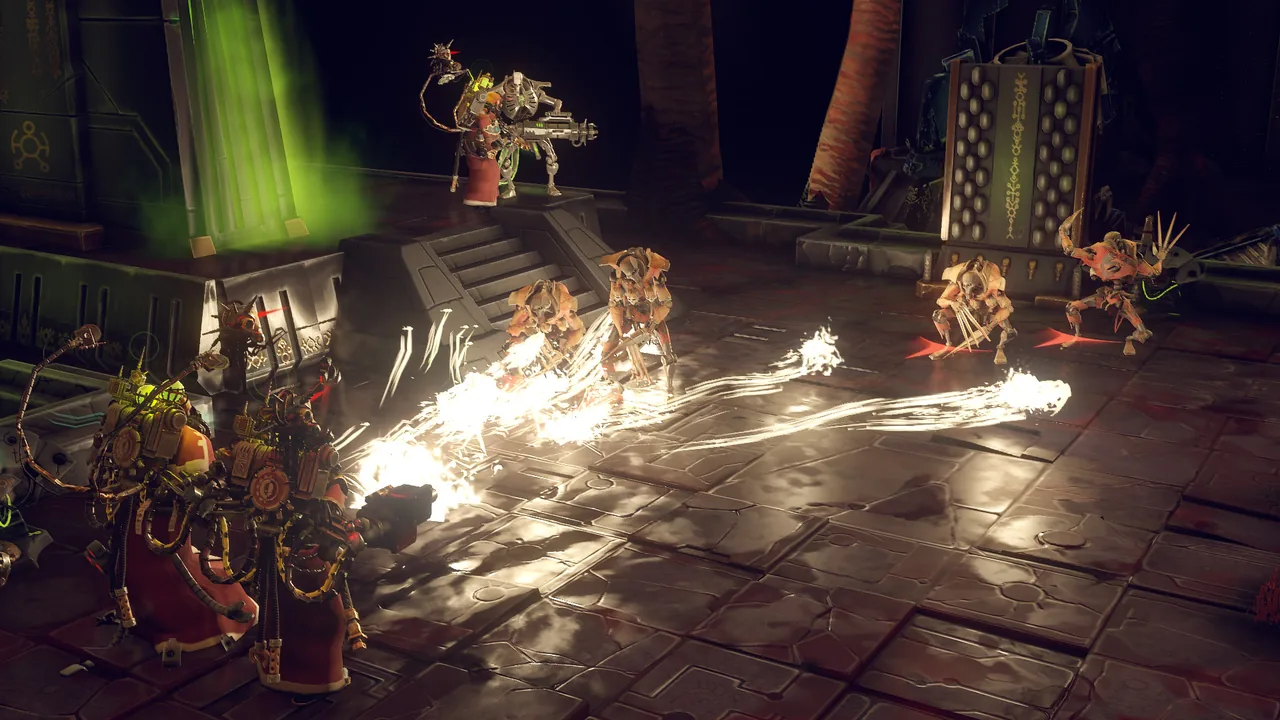
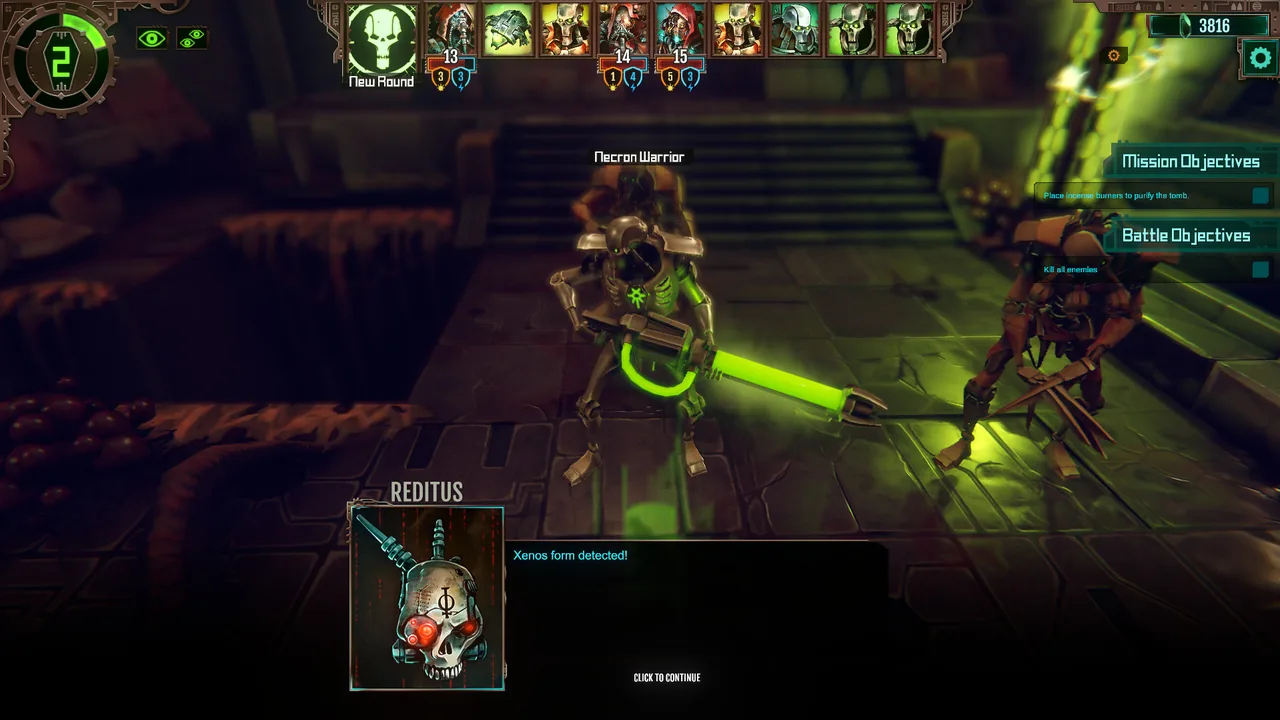
In combat, you reveal enemy armour. Collected Cognition Points pay for extended movement and weapons that require them.
Back on the ship, you use Blackstone and mission rewards to upgrade Tech-Priests, then adjust the cohort for the next assignment.
Core systems
Cognition Points
Tech-Priests share this combat resource. Weapons and abilities that require Cognition draw from it, as do extended movement and the deployment of certain Troops.
Do you spend the pool on the enemy in front of you or save it to reach a Cognition source? If you equip costly weapons, a collector or a weapon that works without Cognition gives the cohort a way to keep fighting.
Augments
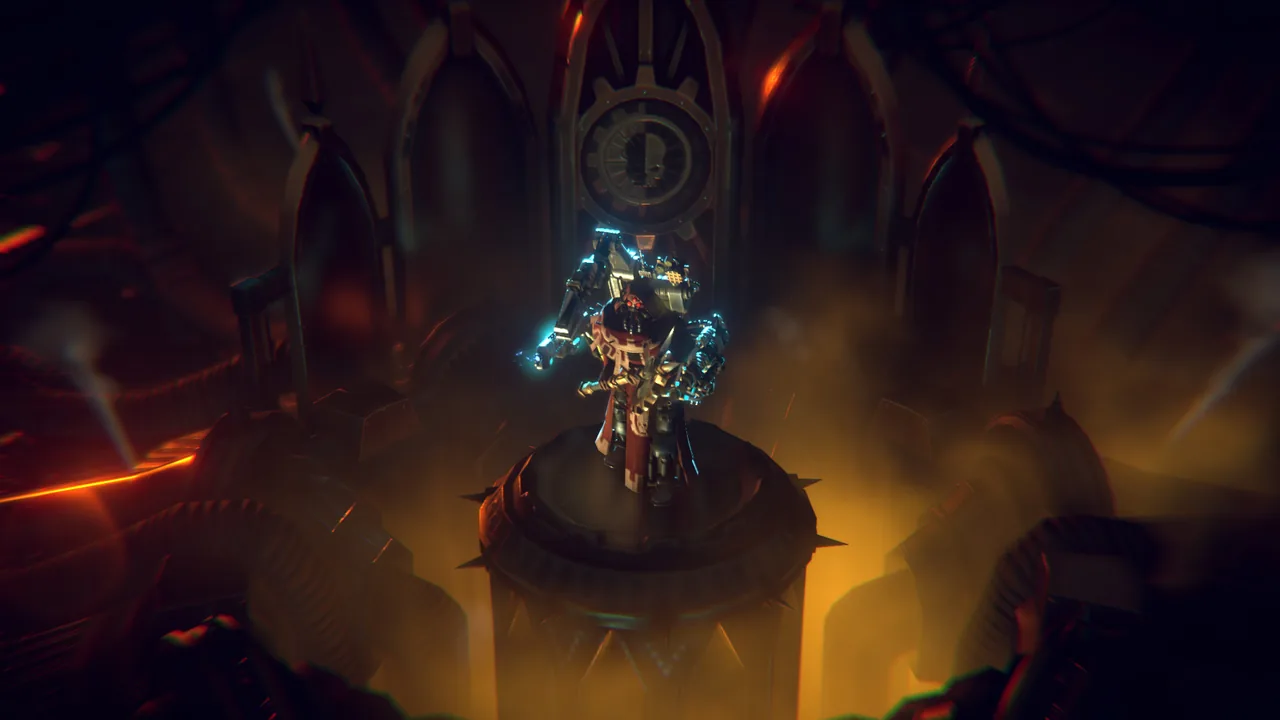
You can fit Tech-Priests with weapons, support gear, Servo-Skulls, and mechanical parts. The fitted parts affect their roles and appearance.
You might build a long-range attacker or assign a priest to healing or Cognition collection. Gear can focus on one job or cover a gap elsewhere in the cohort.
Awakening
Awakening tracks the Necron threat as exploration and combat progress. It also affects the course of the campaign.
A detour gives you more chances to find rewards or information while Awakening advances. A short route keeps the threat lower, at the cost of passing up those rooms.
Canticles
These support abilities come from in-game achievements. Each Canticle you bring can be used once per mission to restore Cognition, strengthen an attack, or heal.
Use one to press an advantage, or hold it until the pool runs dry. Before a mission, you can choose effects that cover what the cohort lacks.
Difficulty settings
You can choose a preset difficulty or adjust conditions separately. IronMan Mode and Permadeath are available too.
You can choose how harsh the early Cognition shortage feels and how much pressure enemies put on a developed cohort.
Heretek
This expansion deals with heresy aboard the ship. It adds a story, the Xenarite Discipline, Troops, weapons, and a combat environment.
You can bring xenotech-focused development and the added fights into the campaign. A review describes entering those fights early with an unfinished cohort and finding them punishing.
What sets it apart
Attacks generally do not rely on random hit rolls. Once range and targeting conditions are clear, their results are easier to predict.
Extended movement and weapons or abilities that require Cognition draw from a pool shared by the cohort.
There is no base-building layer. On the ship you choose assignments; on a sortie you consider tomb routes and each Tech-Priest's equipment.
Learning curve and difficulty
You can choose a preset difficulty or adjust conditions separately.
With experience, the spending order matters: who collects Cognition first, and whose weapon or extended movement uses it next?
Revealing physical and energy armour helps you choose an attack that gets through and limit losses.
Upgrades let attacks and Cognition collection feed into longer turns. If you want enemies to keep applying pressure later, you can adjust the difficulty settings.
Builds and playstyles
Cognition loop
Collection abilities and Servo-Skulls feed Cognition into costly weapons. Keep a collector in the cohort who can start refilling the shared pool after it runs dry.
Ranged area pressure
Long-range weapons, line attacks, and area attacks target groups of enemies. If Cognition-hungry weapons are central to the setup, bring a collector as well.
Specialised cohort
Separate Tech-Priests handle melee, ranged attacks, support, and Cognition collection. Fit their gear to those jobs, then have the weapon user act after the collector.
Troop screen
Troops hold the front or pin down enemies so Tech-Priests can act. Certain Troops cost Cognition to deploy, so leave enough in the pool for the priests' weapons.
What longtime players say
An assignment may present another goal, then end by asking you to eliminate the enemies. Reviews describe that pattern becoming more noticeable across repeated missions.
Skill trees and equipment let each Tech-Priest develop differently, while Troop choices change the cohort further. Players drawn to squad building value the changes in its appearance and turn-to-turn play.
Once the systems click, Cognition collection can lead straight into another attack. Reviews describe those powerful late-game chains as a reward for learning the game.
Players who want developed cohorts to keep facing resistance have used the difficulty settings. Their comments reflect how easily later builds can overpower enemies.
What players like
Organ and chant-led music meets mechanical sound design. Reviews praise the ritual feel it gives the Adeptus Mechanicus.
Each Tech-Priest can take different weapons, Augments, and development paths. Reviews enjoy building distinct melee and support roles within the cohort.
Dialogue, presentation, and story communicate the faction's outlook. The exchanges between Tech-Priests have also held players' interest.
The opening cohort feels fragile. Reviews enjoy how new equipment and abilities eventually let it string together longer turns.
Collect Cognition for a weapon, spend it on extended movement, or use it to deploy a Troop: reviews appreciate making that choice from a shared pool each turn.
Players who prefer planning from position and range welcome combat that relies less on random hit rolls.
Common complaints
Similar arenas and enemies recur, and assignments often end in elimination. Once a build settles, reviews describe finishing fights by repeating the same sequence.
Early missions can be punishing when the cohort lacks people and gear. After upgrades, it may overwhelm enemies; reviews object to how sharply that difficulty changes.
Movement and combat animations take time, including repeated enemy entrances and actions. Waiting through them becomes more noticeable across missions.
Tomb events can make the result of a choice hard to predict. Reviews say that players trying to limit Awakening may head straight for the objective instead of visiting side rooms.
Who it’s for
It suits players who like moving a collector first, then spending the shared Cognition on another Tech-Priest's weapon or extended movement.
It also suits players who want to choose tomb detours around Awakening and tune the difficulty once their cohort grows stronger.
Who might not enjoy it
If you expect each mission to bring substantially different arenas and goals, the recurring enemies and elimination fights may wear thin.
Players who want to skip movement and enemy animations quickly may dislike the waiting. Those expecting steady pressure throughout the campaign should also consider how upgrades change the difficulty.
FAQ
- Is English supported?
- Yes. The Steam version supports an English interface and subtitles.
- Is there cooperative play?
- No. The listed play mode is single-player.
- Can the difficulty be adjusted?
- Yes. You can adjust conditions separately and choose IronMan Mode or Permadeath.
- Is there additional content?
- Yes. Heretek adds a shipboard heresy storyline, the Xenarite Discipline, Troops, weapons, and a combat environment.
- Does it support Steam Deck?
- The supplied Steam public data records the game as Verified.
These impressions are based on 100 Steam reviews sorted by “Most Helpful.” They do not represent the views of all buyers.
Image: Warhammer 40,000: Mechanicus on Steam