Predy Media > Turn-based tactics > Game page
Game pageWargroove Features and Reception
Who It Suits
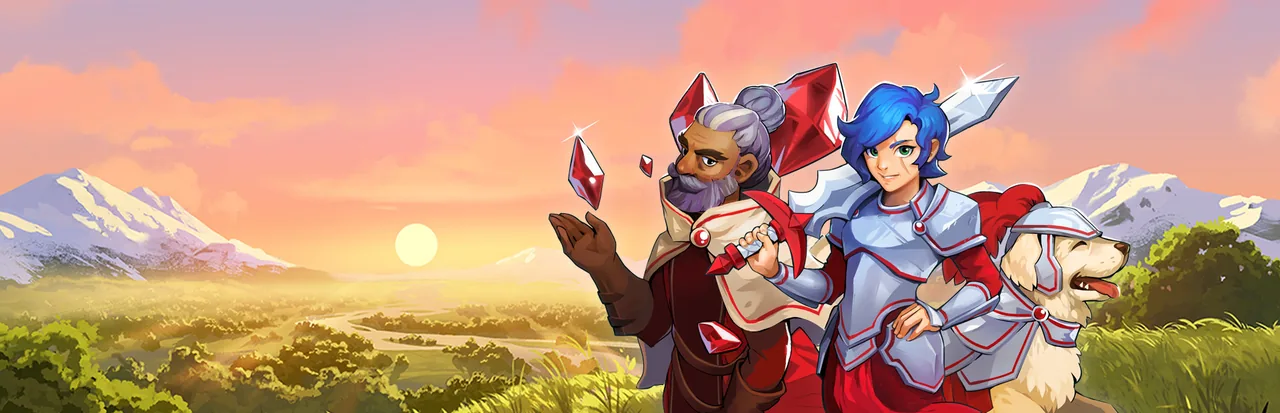
Wargroove is a turn-based strategy game where capturing buildings expands your income and recruitment options. Unit matchups and terrain shape how you advance.
Do you want to send a Commander into combat to charge a Groove, despite the risk of losing them? Do you enjoy working out capture and attack order across longer missions? Those are the decisions at its core.
What makes it fun
Turn captures into an attack
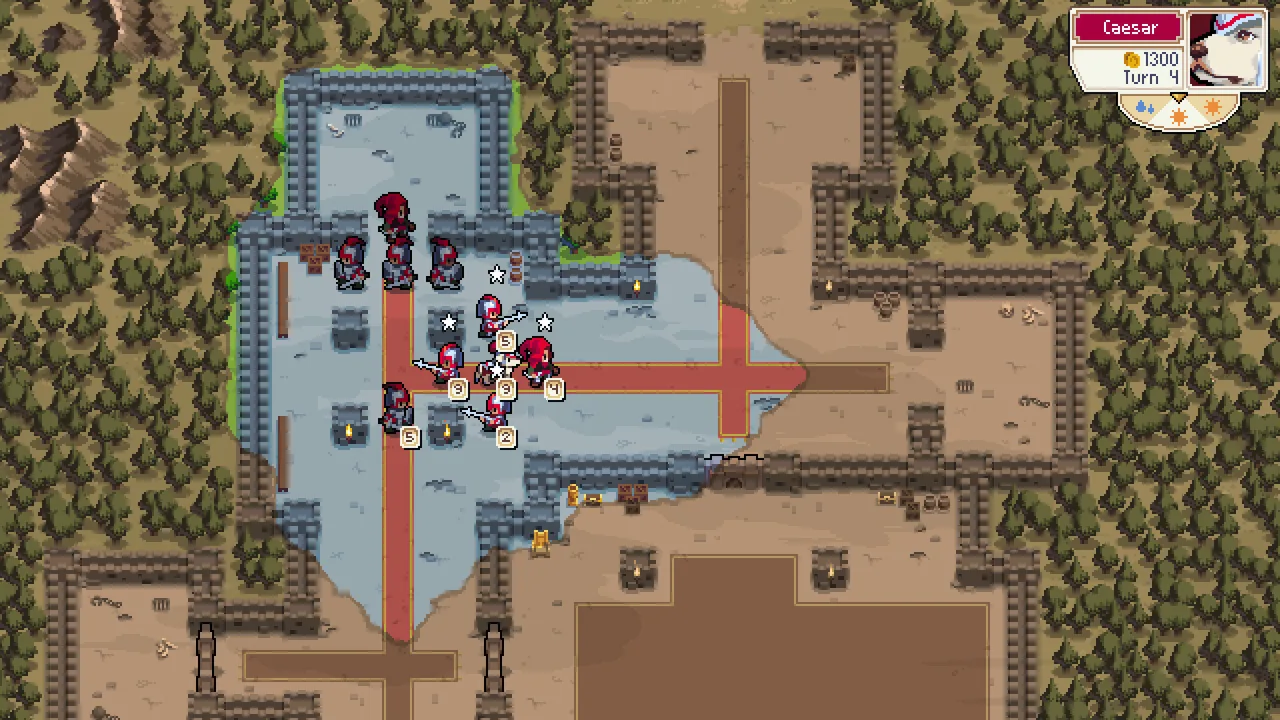
Capturing villages brings in gold, while taking a barracks lets you recruit closer to the fight. Do you rush a unit forward to capture buildings, or clear a path and escort it?
When to commit your commander
Fighting with your commander charges their Groove, but losing them can cost you the battle. You have to judge when that ability is worth pushing forward for.
Build a battle of your own
The in-game editors let you create maps, cutscenes, and campaigns. After working out how to win a battle, you can design the decisions another player will face.
Game details
As of Oct 29, 2026- Steam Deck
- Playable
- Release date
- Feb 1, 2019
- Developer
- Chucklefish
- Languages
- Japanese, English (Full audio), Simplified Chinese, Korean / 11 languages total
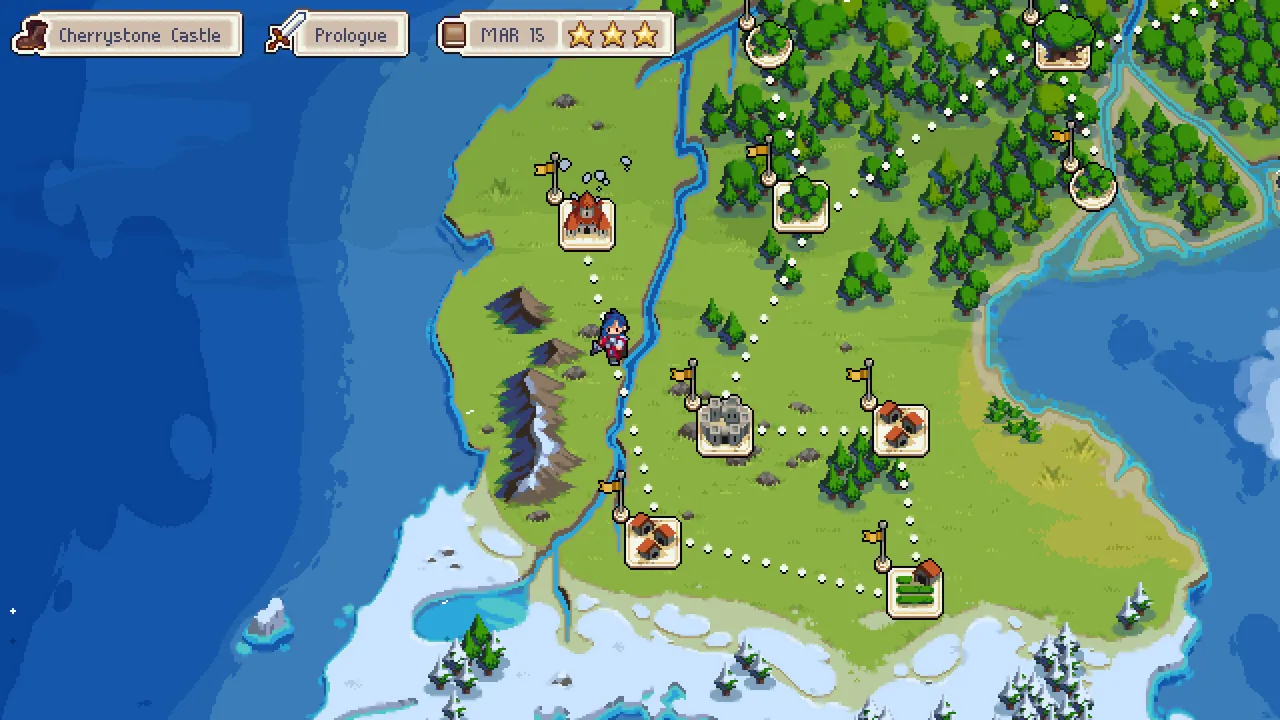
A typical run
Check the victory condition and terrain, then pick a safe position for your Commander and a route forward.
Capture Villages with eligible units to increase income. Barracks and similar structures give you another place to recruit.
Check matchups and terrain, then move and attack in an order that sets up Critical Hits.
Decide whether gold goes toward new units or Reinforcing wounded ones. Keep the Commander safe and defend your Stronghold in battles that include one.
The mission ends when you meet its victory condition. Campaign missions award stars according to how they are completed.
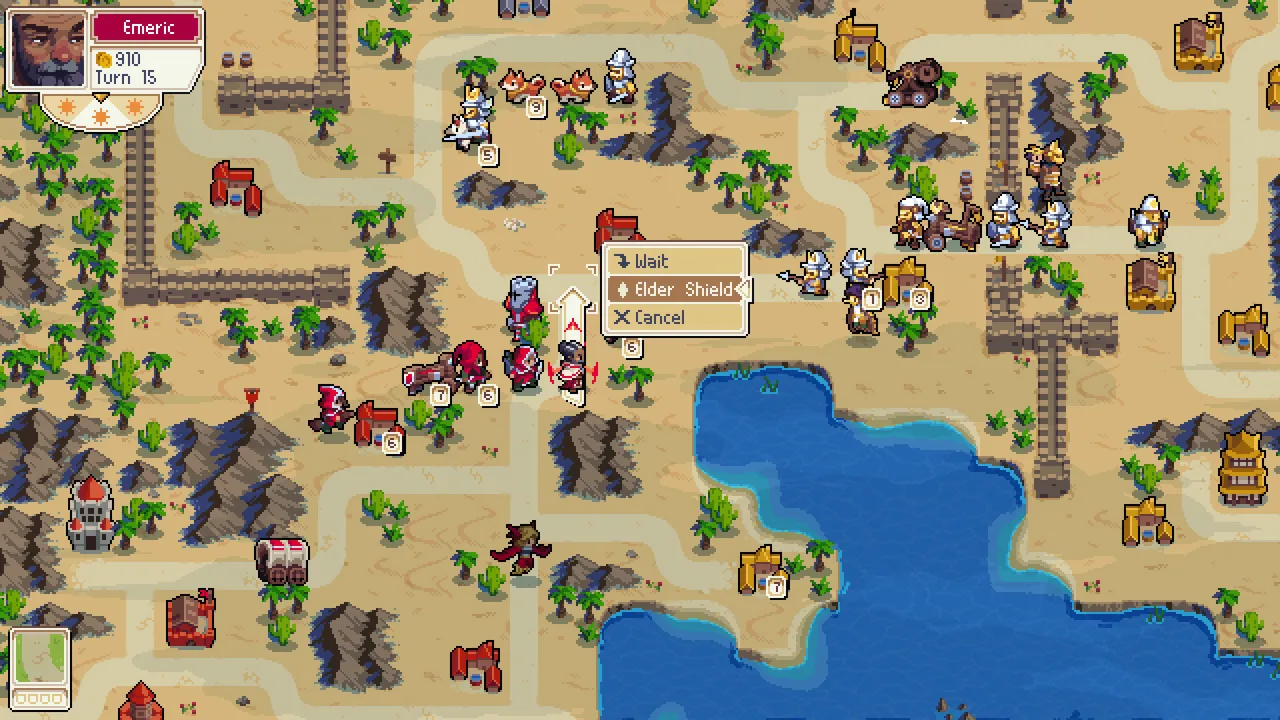
Core systems
Commanders and Grooves
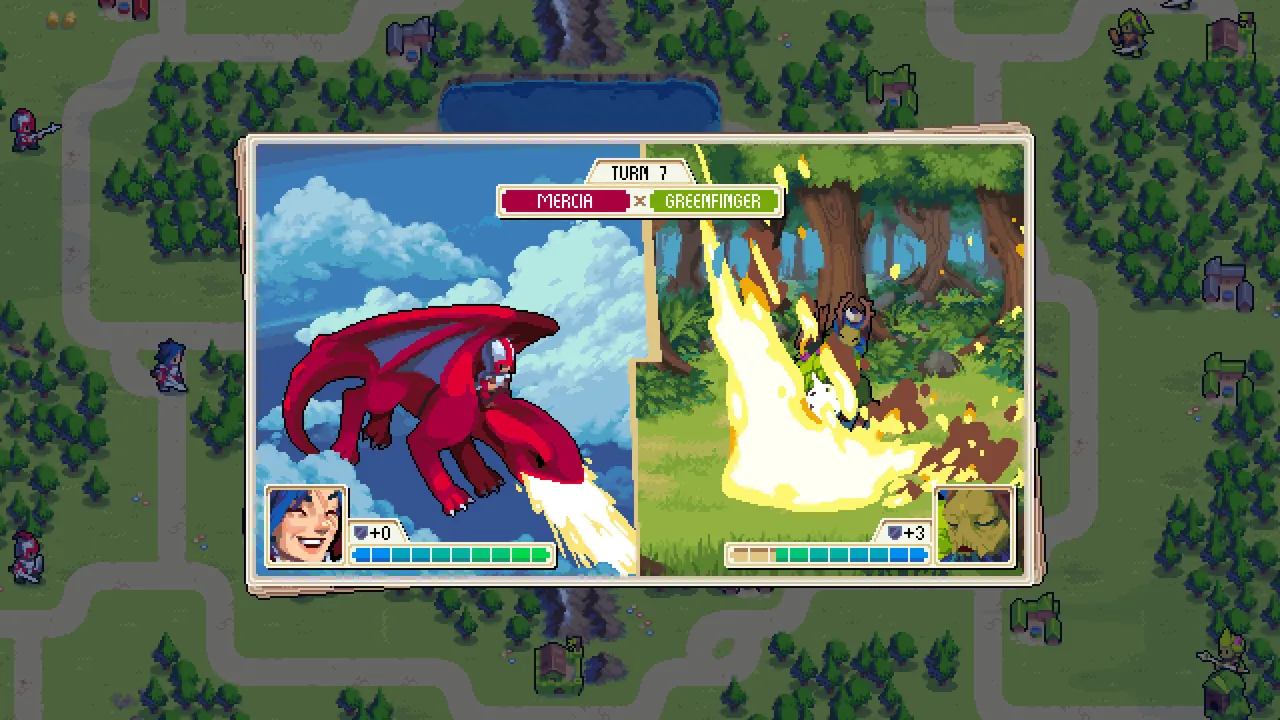
Commanders fight on the map as units. Losing one can mean defeat. Attacks, counterattacks, and other combat actions charge a Groove with an effect specific to that Commander.
Fighting on the front line charges a Groove faster, but exposes the Commander. Hold it too long and an opening to use it may pass.
Critical Hits
An attack deals more damage when its unit's Critical Hit condition is met.
A favorable matchup is not enough. Depending on the unit, adjacent allies, distance moved, terrain, or weather may matter. Setting up the hit can mean giving up another attack or a safe retreat.
Capture, Income and Recruit
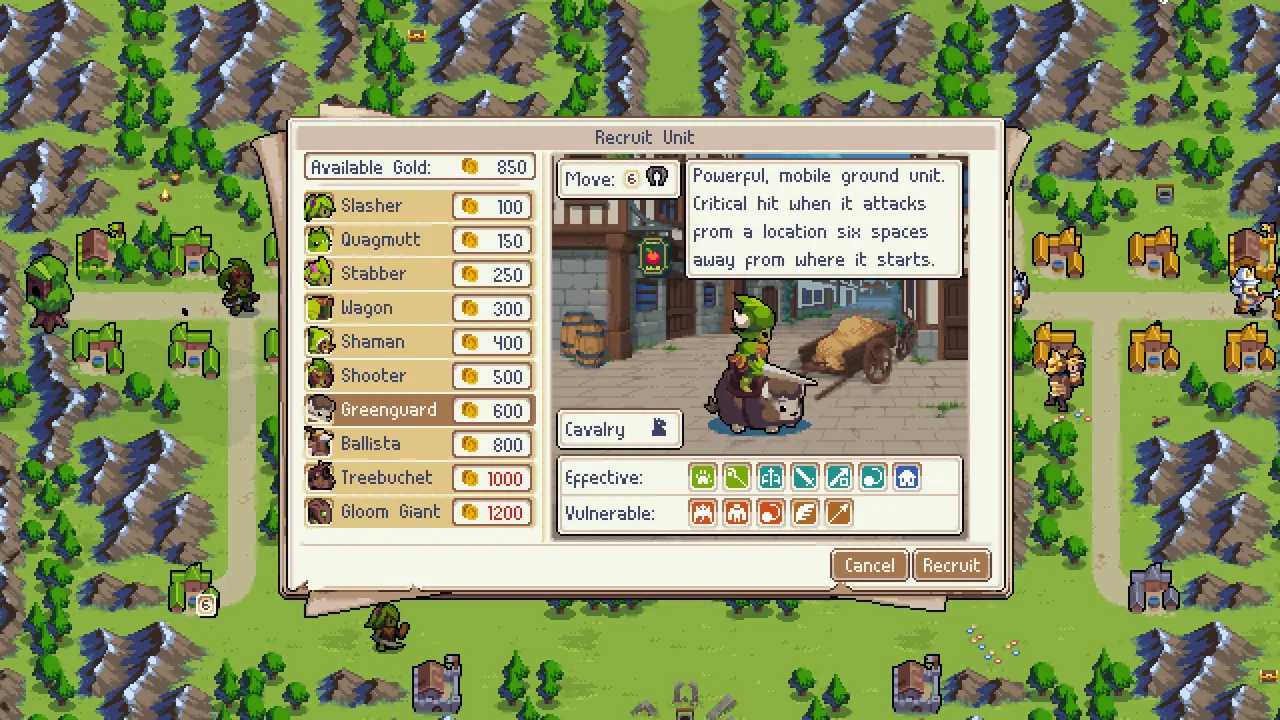
Villages and Strongholds provide income. Barracks and other recruitment structures let you hire units. Gold pays for recruits and Reinforcement.
Send cheap units out to capture buildings early, or recruit combat units to clear the route first. A capture near the front also needs an escort.
Reinforce
A wounded unit next to a friendly structure can recover by spending gold and some of that structure's health.
Healing an expensive unit keeps it in play, but spends gold that could recruit a replacement. The supporting structure loses health too, so you must choose which unit to preserve.
Puzzle Mode
Puzzle Mode starts from a fixed position and asks you to meet the victory condition during the current turn.
Work out how to sequence movement, attacks, and Grooves with the units already on the map. There is no time to build up income or an army.
In-game Editors
The in-game editors let you create maps, cutscenes, and campaigns. You can also set rules and event conditions.
Make a competitive map or a story mission with events. More triggers and branches mean more interactions to check before it runs as intended.
What sets it apart
A Commander is a unit on the map, not an ability used from outside it. It can take hits at the front, and losing it can mean defeat.
Critical Hits trigger when unit-specific conditions are met rather than by chance. Ordinary attack damage still varies within a range.
The editors go beyond terrain: they also handle cutscenes, campaigns, rules, and event conditions.
Learning curve and difficulty
The Campaign offers Story, Easy, Medium, Hard, and Custom difficulty settings.
Hard uses the standard rules and allows S-rank results.
As you learn the maps, you can judge when to send a capture unit forward and which unit can take a hit. You can also leave space for a Critical Hit and choose when to commit your Commander.
Puzzle Mode is about action order. In a long mission, where you set a Checkpoint affects how much you must replay.
Builds and playstyles
Territory-first
Send cheap capture units ahead and use Village income to fund later recruits. Taking Barracks or another recruitment structure moves production nearer the front. Push beyond your escorts, though, and the capture unit becomes easy to lose.
Critical formation
Choose the Critical Hit condition you want, then plan movement and attack order around it. That can mean holding an attack to leave a square open for the next unit.
Commander tempo
Bring the Commander into combat to charge a Groove, then use its effect to start a push. Since losing the Commander can mean defeat, each advance needs an escort and an escape route.
What longtime players say
After spending time with the Campaign, these players also tackle Arcade, puzzles, and player-made missions.
Extended play does not change every opinion of the Campaign's writing: its story and characters can still feel thin.
Others revisit Campaign maps to work toward ranks and stars, refining their route through each battle.
What players like
After the Campaign, players can turn to Arcade, puzzles, co-op, and created scenarios. That range of things to play appeals to them.
On demanding Campaign settings, players enjoy thinking ahead about unit placement and the order of their moves.
Playing competitive matches or co-op missions with friends and family is another draw.
The pixel-art battle scenes and music are part of what these players enjoy while working through maps.
For players who like making content, the in-game editors offer a way to build maps and campaigns.
Fans of this style of strategy game recognize the loop of capturing buildings, earning income, and recruiting units. Unit matchups guide the fighting that follows.
Common complaints
Players who start the Campaign to follow character growth can find its dialogue and characterization thin.
On broad Campaign maps, repeatedly recruiting and moving units can stretch a mission out. That pace wears on these players.
Certain Campaign missions feel like a search for an intended sequence, with little room to recover by changing plans.
In a long mission, a misclick or a change of plan is harder to live with because actions cannot be undone.
Players hoping for unique regular units in each original faction can find their shared roster disappointing.
Who it’s for
It suits players who like sending cheap units to capture Villages and Barracks, then using the income and new recruitment positions to support the next push.
It also suits players who plan which square to leave open for a Critical Hit and when to bring a Commander's Groove into the attack order.
After the Campaign, players who want turn-limited puzzles, co-op, and editor-made missions have more to explore.
Who might not enjoy it
Broad maps with repeated recruitment may frustrate players who want short missions. Those who need to undo a misclick may struggle with long battles too.
The Campaign may disappoint players seeking a story built around character growth or unique regular units for each original faction.
FAQ
- Which languages are supported?
- The interface and subtitles support English, Japanese, Simplified Chinese, Korean, and several other languages. Full voice audio is available in English.
- Does it support co-op?
- Yes. Local and online co-op are supported. The Double Trouble story can also be played solo.
- Can the difficulty be adjusted?
- Yes. The Campaign has preset difficulties and a Custom setting. Preset difficulty affects the stars you can earn, and Hard allows S-rank results.
- What does Double Trouble add?
- It is free additional content designed around co-op. It adds a story, Commanders, units, Arcade missions, and editor features.
These impressions are based on 100 Steam reviews sorted by “Most Helpful.” They do not represent the views of all buyers.
Image: Wargroove on Steam