Predy Media > Colony sim > Game page
Game pageTimberborn Features and Reputation
Who It Suits
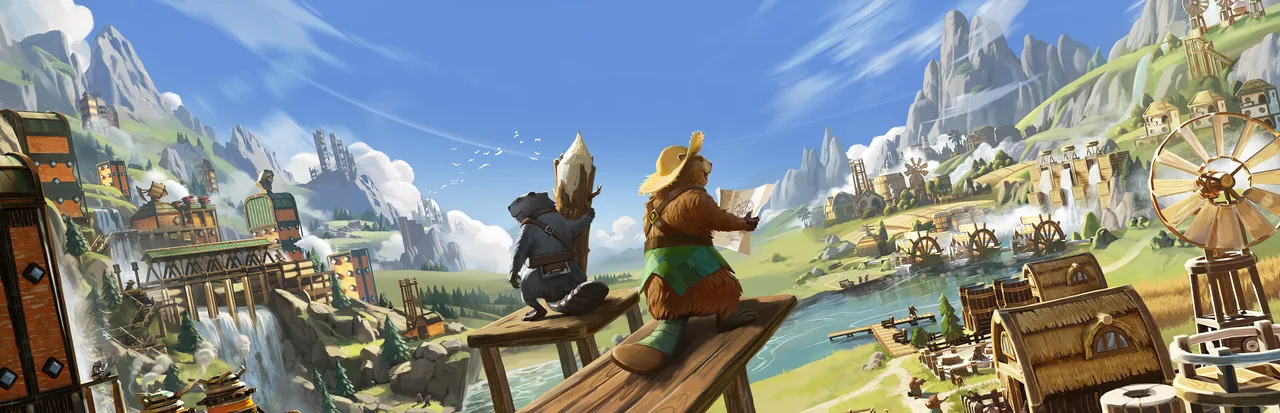
Timberborn is a sandbox city builder about redirecting water and settling dry land with beavers.
The opening revolves around storing water before droughts and badtides. Once the settlement is secure, you choose how far to develop its waterways and stacked buildings.
What makes it fun
When to grow the colony
As a drought or toxic season approaches, you need food and drinking water in reserve, yet more homes would bring workers for your projects. A larger population consumes more, making the timing of expansion a seasonal decision.
Give dry land a river
Water physics and terraforming let you do more than dam a river: you can guide it toward dry land. Planning where the water will exit and watching greenery spread gives each project a payoff.
Build up, keep the ground
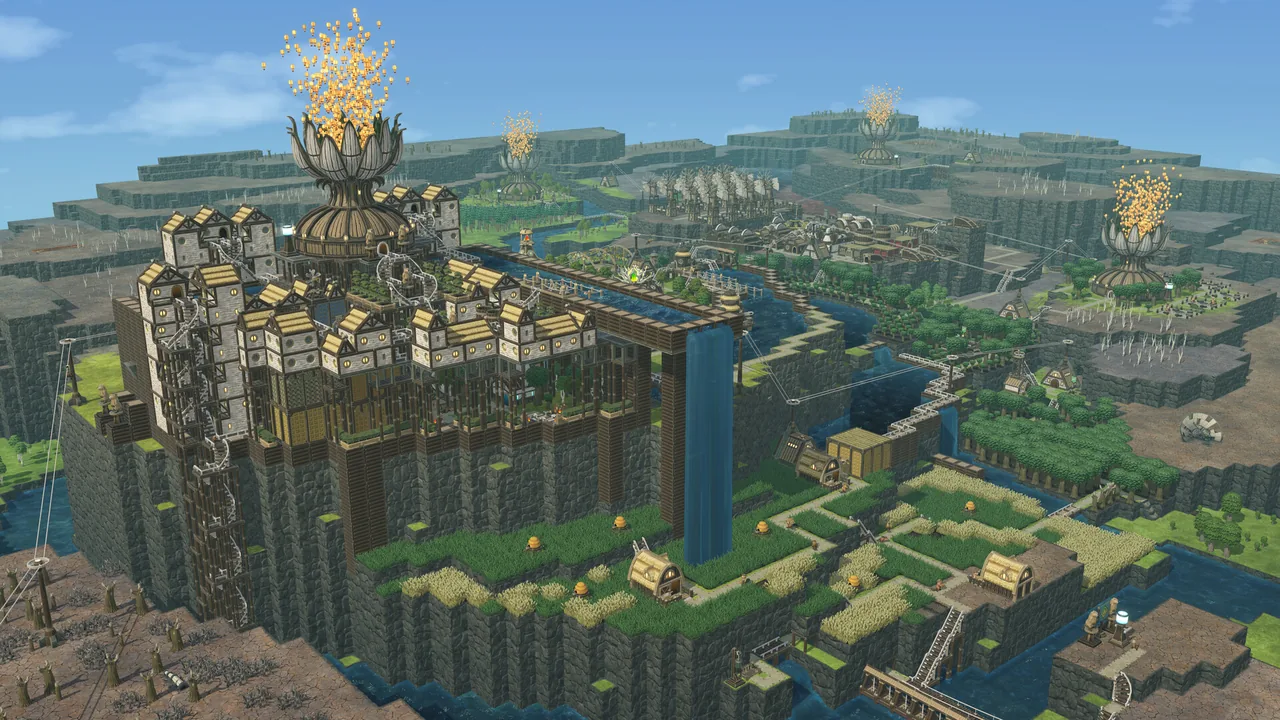
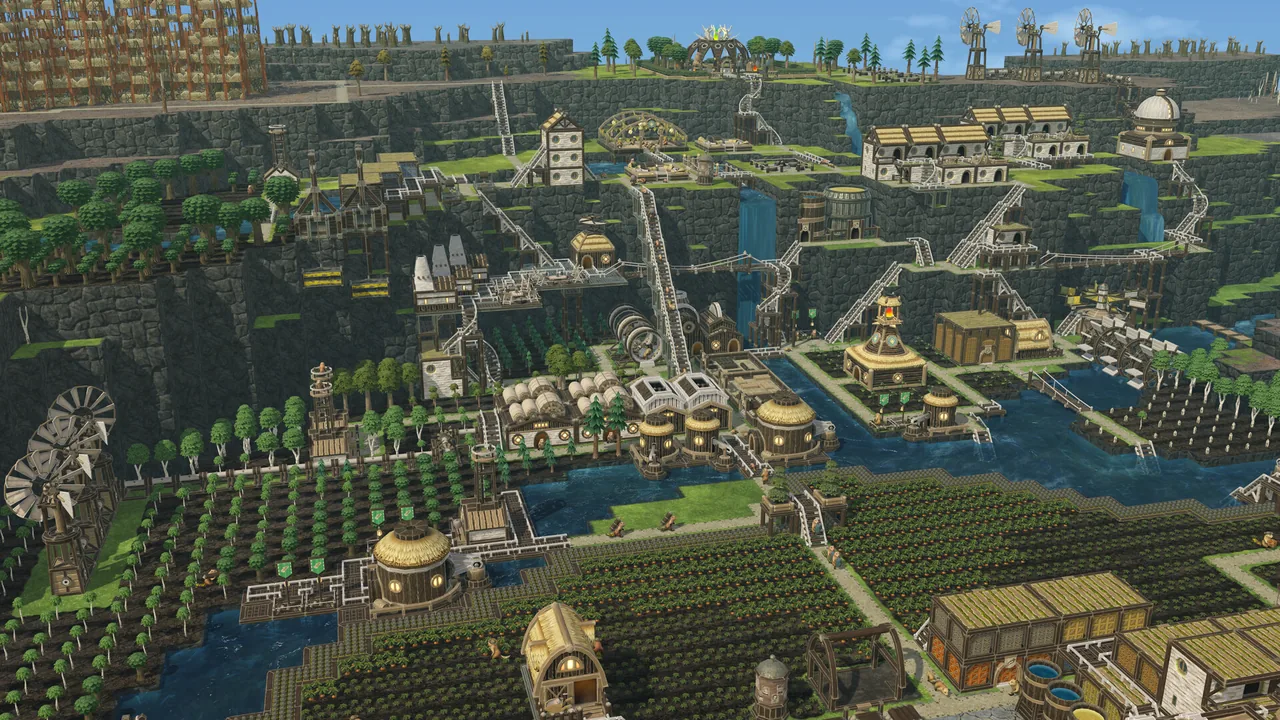
Vertical architecture lets you stack buildings and paths while leaving ground for fields and canals. Choosing where entrances and stairs connect gradually reshapes the whole colony.
Game details
As of Oct 29, 2026- Steam Deck
- Playable
- Release date
- Mar 13, 2026
- Developer
- Mechanistry
- Languages
- Japanese, English, Simplified Chinese, Korean / 15 languages total
A typical run
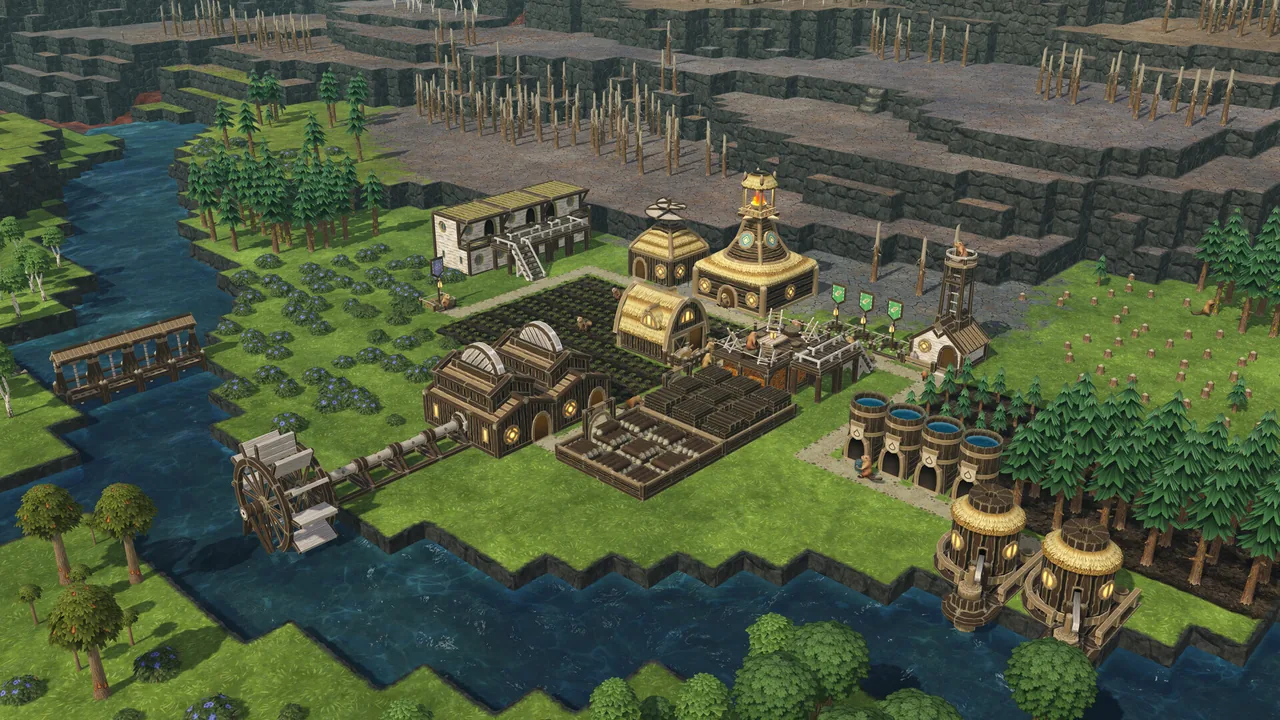
Choose a faction, map, and game mode. Check the river and elevation before placing the first settlement.
Gather logs, food, and drinking water, then build a way to keep water through droughts and badtides.
More housing brings more workers. It also raises food and water use, so expand only when reserves can support them.
With reserves in place, expand production. Redirect water with dams, floodgates, and canals, and revise hauling routes with elevated paths.
Later, introduce Automation and Bots. You can complete a Wonder or keep reshaping reservoirs and terrain.
Core systems
Wet, dry, and toxic seasons
Droughts and waves of toxic waste repeatedly interrupt the periods when the river flows. Fields and forests suffer when water no longer reaches them.
Do you build drinking reserves first, or also spend materials on keeping farmland wet and diverting badwater? If housing expands before those measures are ready, food and water can fall behind population growth.
Water physics and terraforming
Dams and floodgates hold water back. Aqueducts, canals, and tunnels redirect it, while explosives let you alter the terrain.
Build a small reservoir for the next drought, or plan waterways that can grow later. Misjudge an outlet or its height and farms may dry out, or the settlement may flood.
Vertical architecture
Buildings can be stacked, with platforms and bridges carrying the settlement upward. Power networks and paths can cross levels too.
Spreading across flat ground keeps routes simple. Building upward saves that ground, but poorly placed entrances, stairs, and hauling paths make travel slower.
Beaver societies
Nature-minded Folktails and industrial Iron Teeth differ in their buildings, technologies, and ways of growing the population.
Build around food and comfort, or give machinery and industry the lead. The available structures change where water sources and factories belong, even on the same terrain.
Automation
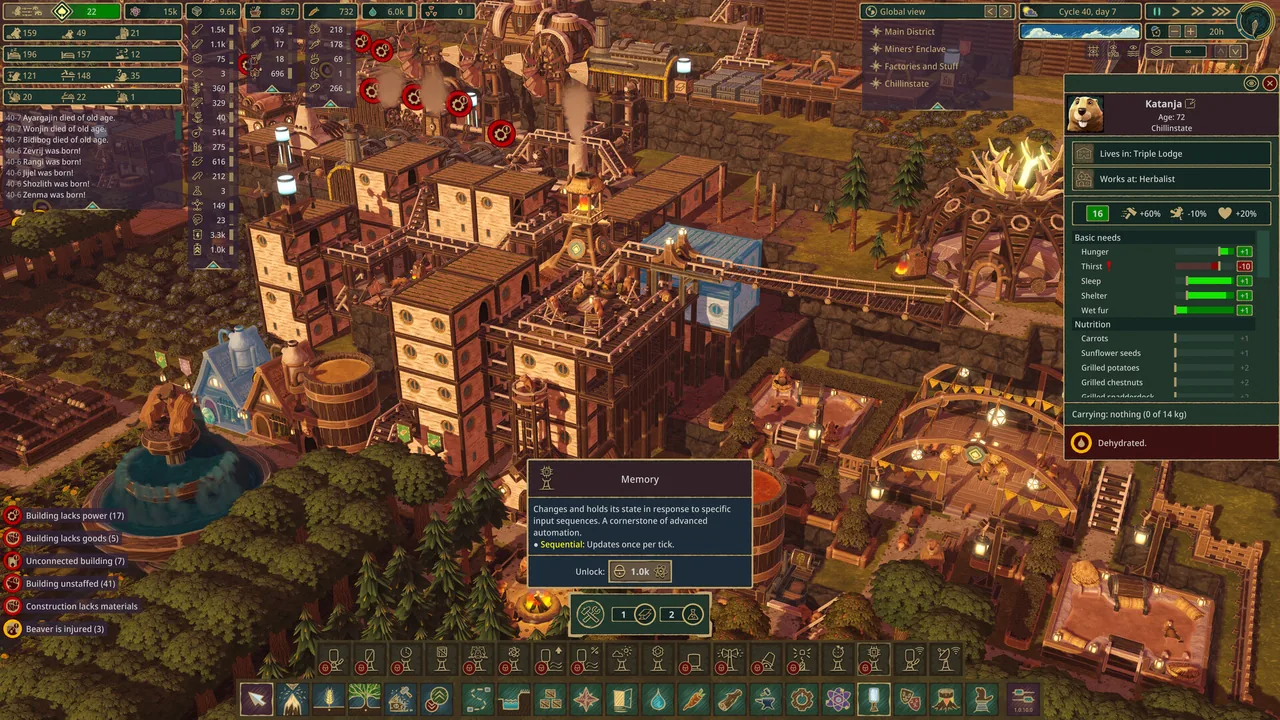
Signals from sensors, relays, counters, and timers can operate floodgates, workplaces, power networks, and other structures.
Switch equipment by hand when the season changes, or set water depth and contamination as conditions. This saves repeated actions, though a wrongly connected signal can affect the settlement's equipment.
Bots
Mechanical beavers can take over work and operate in hazardous areas. They require power and maintenance.
Build parts and support facilities to replace workers, or spend those materials improving life for living beavers. Introducing Bots means adding production to support them.
Well-being
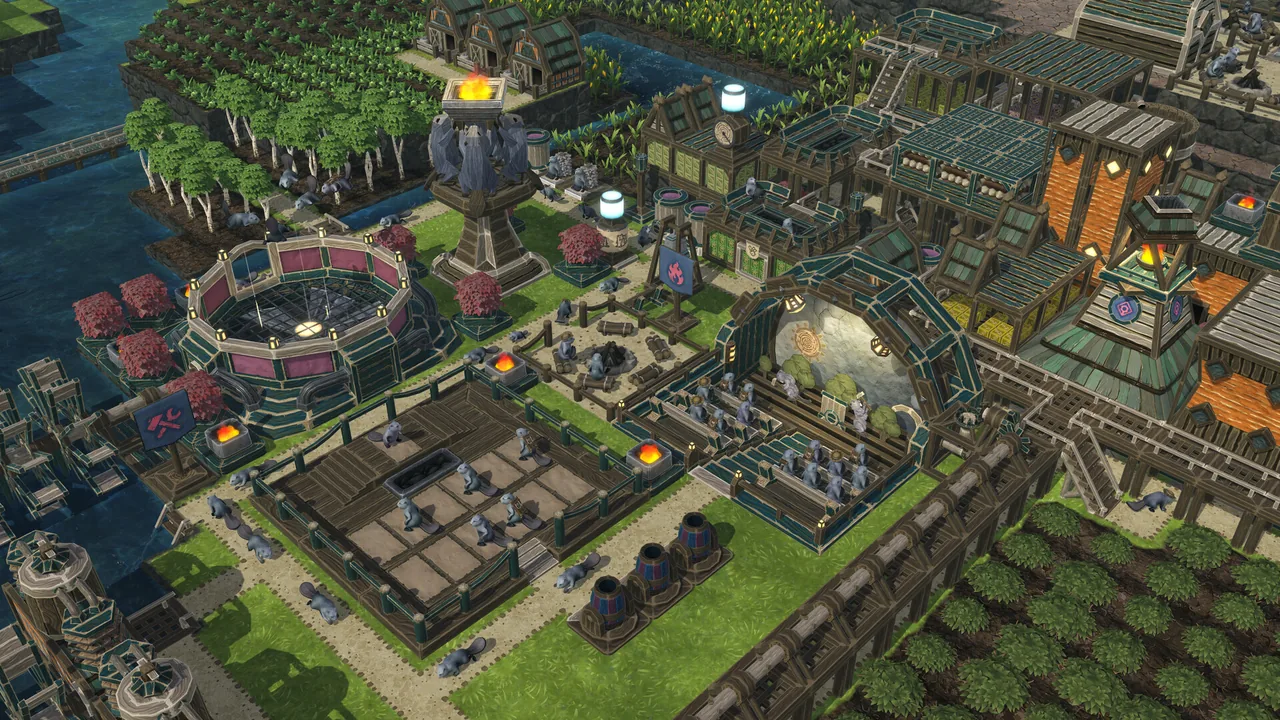
Food, leisure, and decorations meet the beavers' needs. Well-being also affects how they work.
Build the facilities needed for survival first, or put land and workers into meals and leisure. Once the settlement is secure, improving daily life can become a goal of its own.
What sets it apart
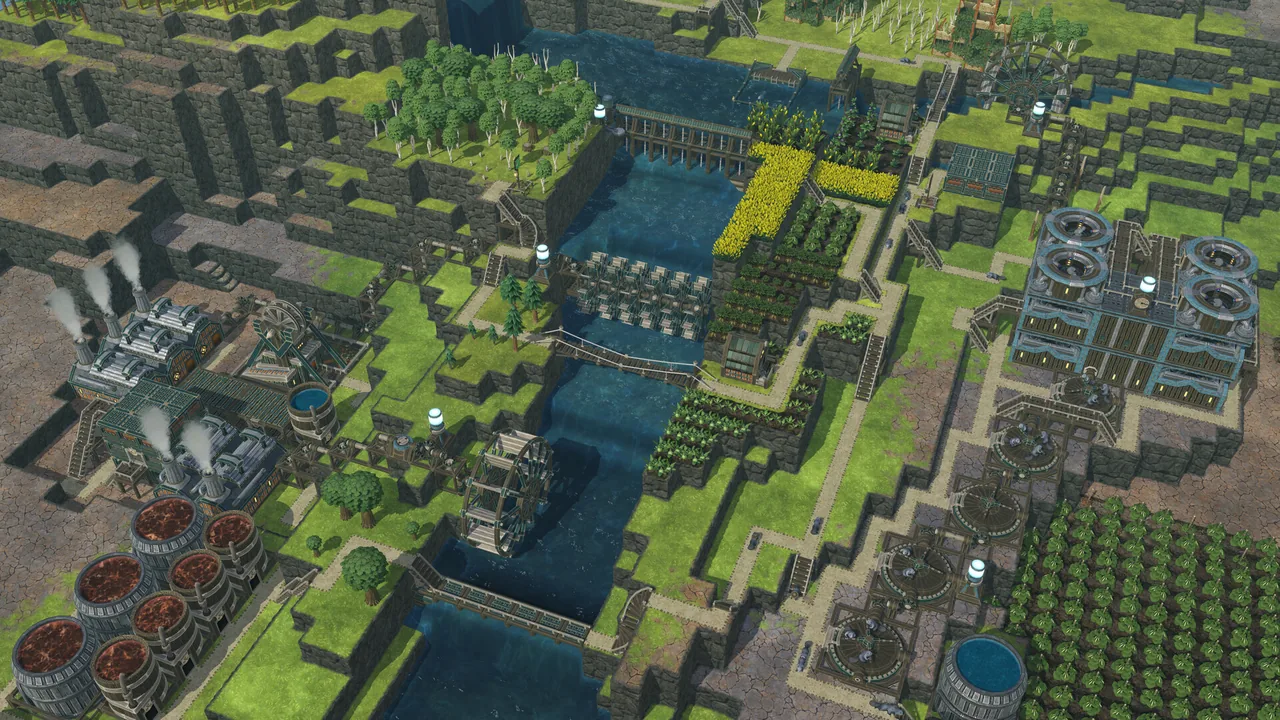
Water is more than a stockpile. It flows across the terrain, and you can dam it or send it elsewhere.
After the settlement stabilizes, you can enlarge reservoirs, run channels underground, or build elevated farms. You decide which project to pursue.
Population need not keep growing. If food and water reserves are tight, holding off on new housing keeps consumption in check.
Learning curve and difficulty
Choose Easy, Normal, Hard, or Custom Game Modes. You can change conditions such as weather severity and consumption.
On harder settings, the order of early construction matters before the first drought. Expand housing too soon and food or water reserves may run short.
With experience, you can read where water exits and at what height. That helps you leave room to enlarge a reservoir or add a badwater diversion later.
A secure settlement still leaves hauling distances and routes between levels to revisit. Changes to power connections and Automation conditions can reduce waiting.
Builds and playstyles
Reserve-first diversion
Hold off on new housing while you build drinking reserves and a route for badwater. Expand farms and industry once the settlement can withstand droughts and badtides.
Compact vertical settlement
Stack housing, storage, and workshops to leave flat ground for farms and waterways. Place entrances and stairs so beavers hauling materials need not take long detours.
Automated waterworks
Use sensors to detect water depth and contamination, then switch floodgates and pumps. This cuts down seasonal manual work and frees attention for larger projects.
Beaver-first settlement
Shorten workdays and spend materials on food, leisure, and decoration. Raise Well-being by shaping the settlement around the beavers' daily lives.
What longtime players say
Changing faction or map means rebuilding around different water sources and available structures. Mods offer another reason to start a new settlement.
In a large settlement, pathfinding and waits for hauled materials can get in the way of further design. Players also report slower performance at that scale.
Once survival is secure, players can shorten hauling routes or enlarge reservoirs. Elevated farms and another pass at the terrain provide projects they set for themselves.
A new map calls for another look at its water sources and elevation. A structure ignored in the previous settlement may become useful, giving experienced players a reason to return.
What players like
Waterworks can grow from early drinking reserves into river diversions, canals, and large reservoirs. Players who like planning a long project enjoy working out where that water should leave.
After food and water are secure, hauling routes can be shortened and terrain or farms rebuilt. Players who set their own goals can keep working on the settlement's appearance too.
Before an early drought or badtide, food and drinking reserves need checking. New housing increases consumption, and players enjoy the pressure of deciding when the settlement can support it.
Changing faction or map alters the terrain, water sources, and available structures. A build order from the previous settlement cannot simply be copied over.
On cramped maps, stacking buildings and paths leaves ground free. Players who enjoy deciding where entrances and stairs should connect find plenty to work through.
There is also pleasure in improving meals and leisure, then watching the beavers after work. That gives players a way to care for the settlement beyond expanding production.
After exploring the included maps, players can make terrain with the map editor. Steam Workshop and official mod support let them try other maps and structures.
Sensors and relays can take over floodgate and factory changes that otherwise recur with each drought or badtide. Automation appeals to players who like turning repeated actions into a working system.
Common complaints
Completing a Wonder gives a stable settlement an endpoint. Players who want a campaign or a continuing sequence of assigned tasks can still find it hard to decide when their town is finished.
Once reservoirs and diversions handle droughts and badtides, the late-game pressure fades. Players who want to keep preparing for new threats may instead find themselves waiting for construction.
Early guidance can end before a building's purpose is clear from the in-game text. When wood or food suddenly runs short, players can also struggle to work out why.
Players building large populations report slower performance. Pathfinding can also become noticeable when they try to expand further.
Major terrain projects involve stretches of waiting for materials to arrive and construction to finish. That pace can frustrate players who want to stay actively occupied.
Who it’s for
It suits players who like reading river height and outlets, then revising reservoirs and badwater diversions.
Once survival is secure, it also suits players happy to choose their next project: stack buildings and fix hauling routes, automate floodgates, or improve Well-being.
Who might not enjoy it
It may not suit players who want a campaign to assign the next task. The same applies if you expect new threats after reservoirs and diversions are working.
Consider the pace if you dislike waiting for materials on major projects, or want to avoid performance strain in a settlement with a large population.
FAQ
- Is Japanese available?
- Yes. The interface supports Japanese.
- Is there cooperative play?
- No. Steam lists Timberborn as a single-player game.
- Can difficulty be adjusted?
- Yes. Choose Easy, Normal, or Hard. Custom Game Mode also lets you adjust conditions such as weather and consumption.
- Are mods and custom maps supported?
- Yes. Steam Workshop, official mod support, and an in-game map editor are available.
These impressions are based on 100 Steam reviews sorted by “Most Helpful.” They do not represent the views of all buyers.
Image: Timberborn on Steam