Predy Media > Turn-based tactics > Game page
Game pageTactical Breach Wizards Features and Reception
Who It Suits
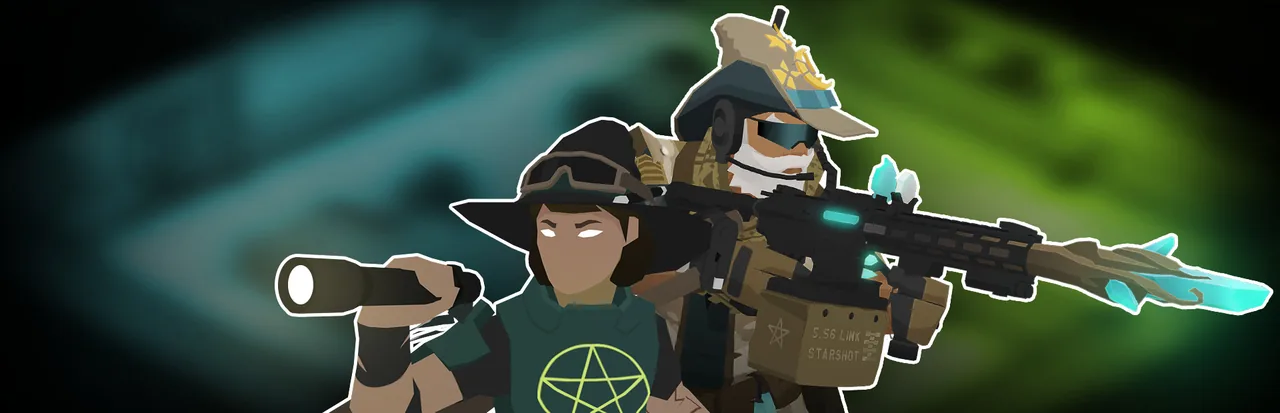
This story-driven, turn-based puzzle game asks you to move enemies and allies with a squad of wizards across handcrafted encounters.
Rewind lets you try a sequence, then reconsider where an enemy lands and which ally still needs an action. Players seeking a long-running squad campaign should know that each room is built around solving a particular tactical problem.
What makes it fun
A push sets up the next move
Shove an enemy into a wall, out a window, or into the path of another attack. The direction of the push changes how your squad can chain its abilities.
Test a move before committing
Rewind lets you redo actions within the current turn, while Foresee shows how enemies would respond if you ended it. You can test push directions and action order on the board before committing.
Confidence Goals change the puzzle
Confidence Goals add conditions such as using an ability in a particular way or finishing within a turn limit. You can return to a cleared room and work out a new sequence around those conditions.
Game details
As of Oct 29, 2026- Steam Deck
- Verified
- Release date
- Aug 23, 2024
- Developer
- Suspicious Developments
- Languages
- English (Full audio) / 1 languages total
A typical run
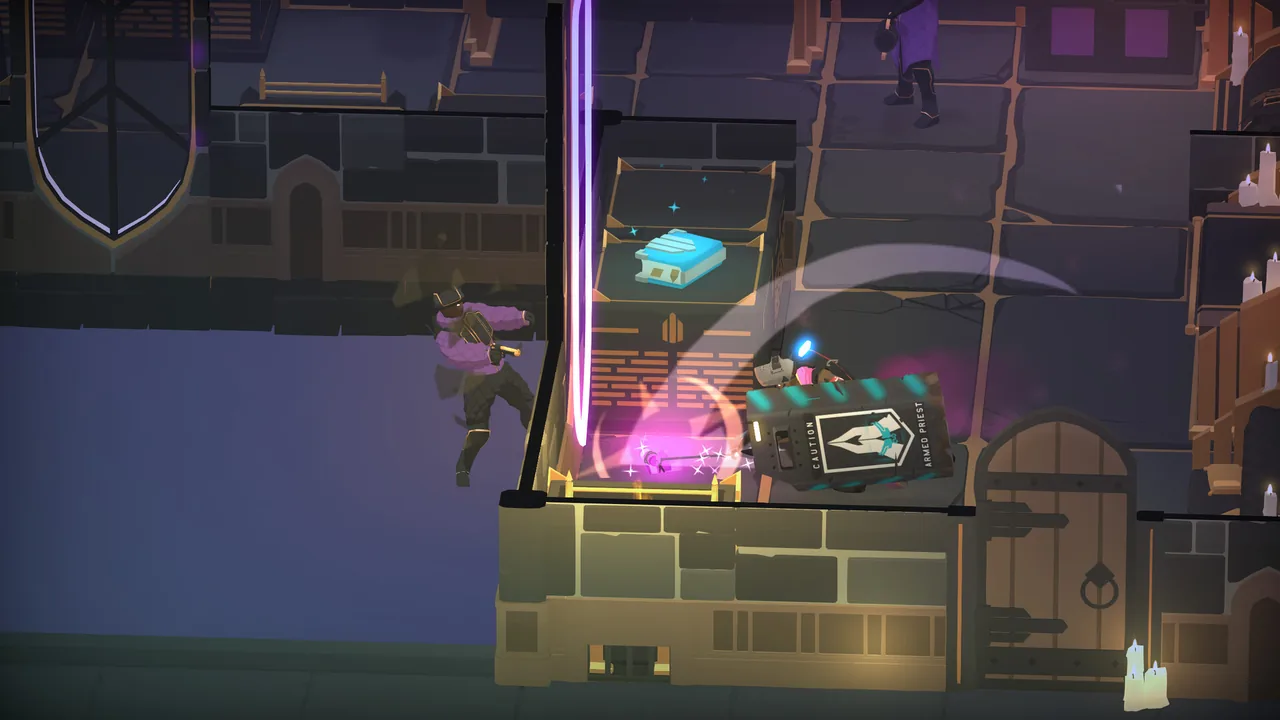
Before a mission, prepare the participating wizards and their unlocked Perks.
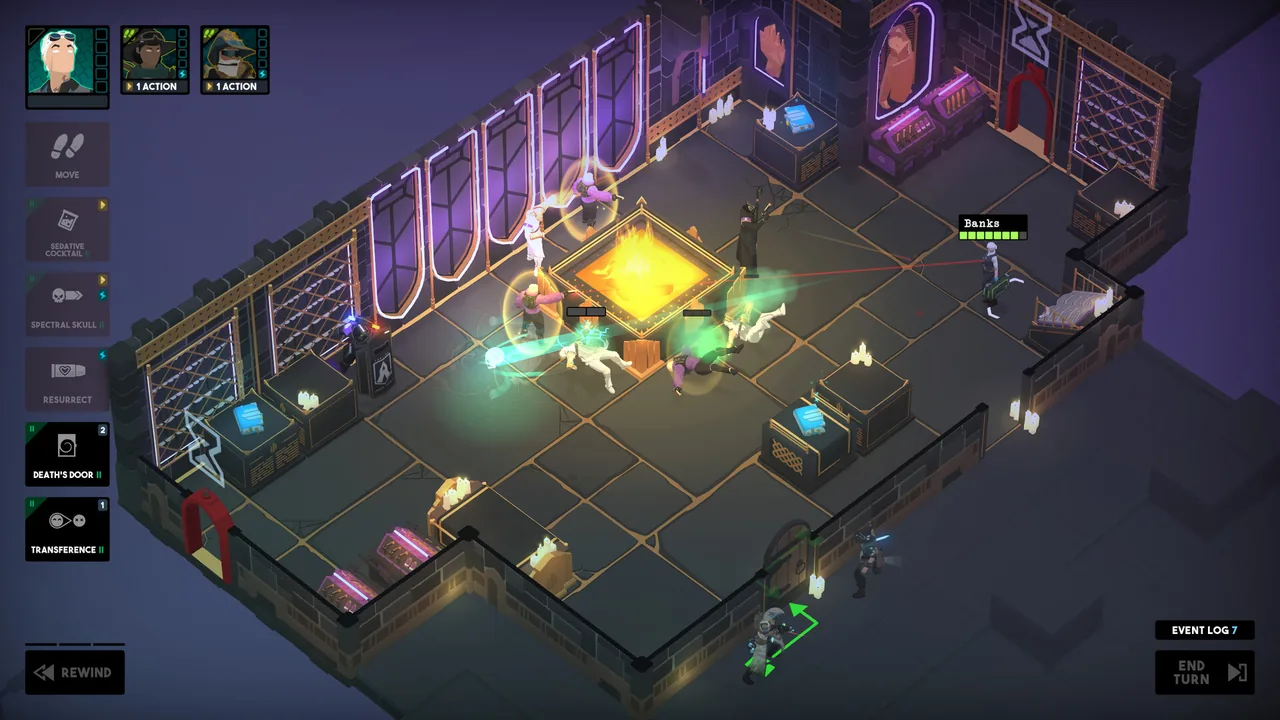
On entering a room, check enemy intent and the terrain. Plan movement, attacks, pushes, and pulls around where the targets will end up.
After acting, use Foresee to see how enemies would respond if you ended the turn in that position.
If the plan fails, Rewind within the current turn and change the positions or action order.
After completing the objective, continue the story. Review Perks, Confidence Goals, and the Conspiracy Map before moving on.
Core systems
Rewind
Rewind cancels actions taken during the current turn. You can test a push or an action order, then rebuild a combination that falls apart.
Try a sequence on the board before committing to it. Once you end the turn, you cannot return to the previous one.
Foresee
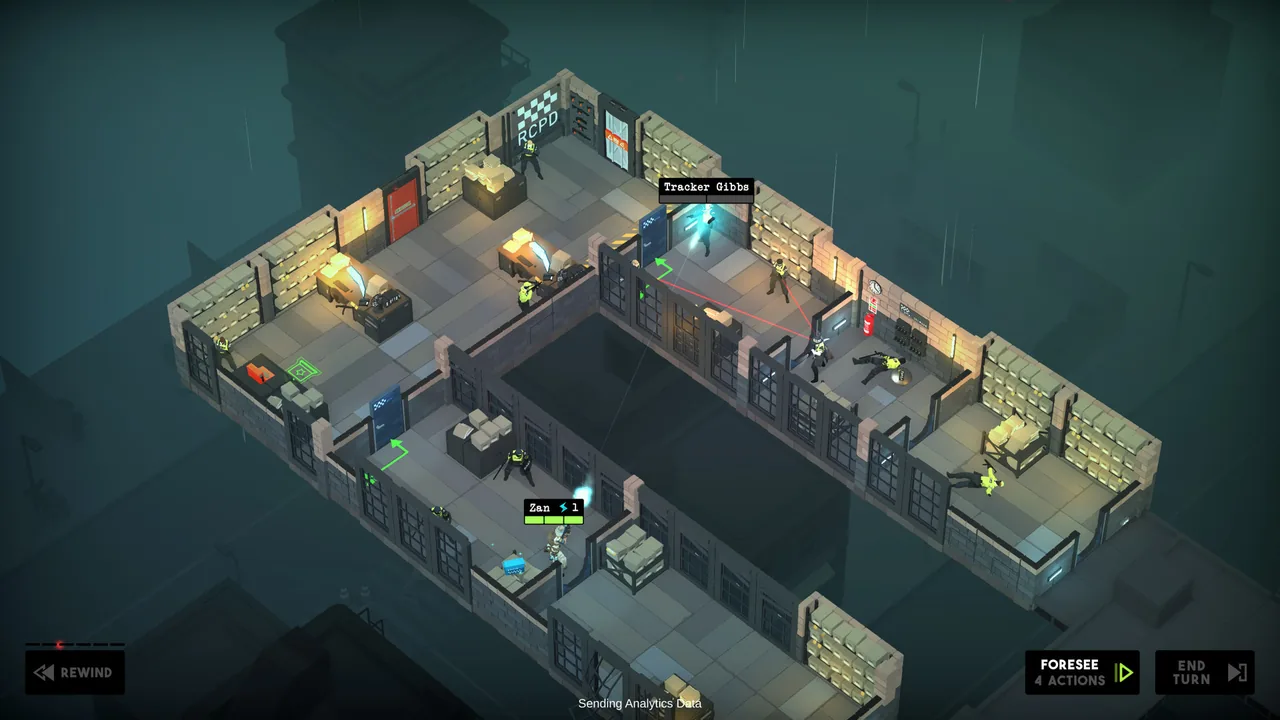
Foresee shows what enemies will do if you end the turn with the current arrangement.
Before committing, compare a position that avoids an attack with one that uses the enemy's line of fire in your squad's sequence.
Perks
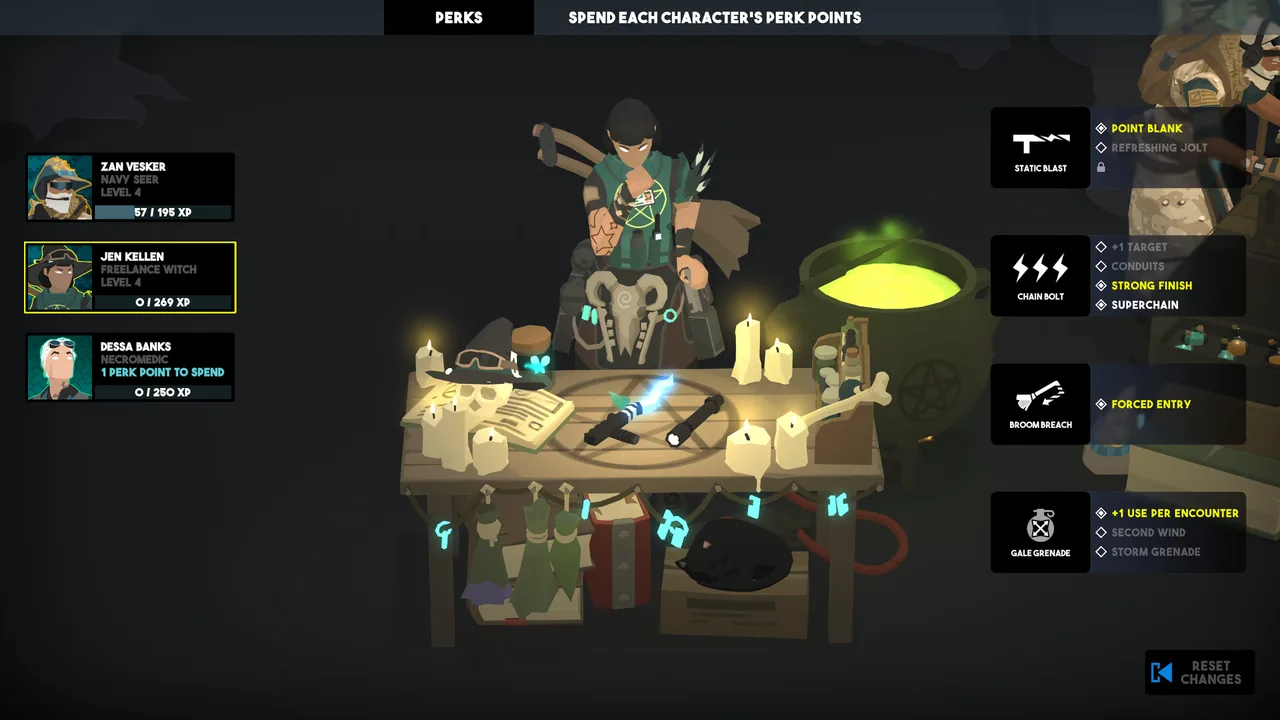
Perks add effects specific to each wizard's abilities. You can take your current squad and Perks back to earlier missions.
Choose an effect that makes an ability useful on its own or one that gives an ally another link in a combination. The choice changes which sequences are available.
Confidence Goals
Confidence Goals are optional conditions involving ability use, turn limits, and other challenges. Completing them earns confidence for outfits.
Finish the mission as planned, or revise positions and action order to meet the extra condition. The reward changes appearance, not combat power.
Conspiracy Map
The Conspiracy Map lays out key people and their relationships so you can revisit story information.
Check it when you want to sort out the people behind a conversation. It does not create major branching story paths.
Missions Hub
The Missions Hub lets you replay earlier missions with your current squad and Perks.
Continue the story or take abilities acquired later back to a Confidence Goal you missed.
Level Editor
The Level Editor lets you create missions. You can also play missions made by others through Steam Workshop.
After revisiting the campaign's handcrafted encounters, try a different layout or objective in a community mission.
What sets it apart
Hit-chance swings and permanent squad management are not the focus. In each handcrafted room, you can inspect the results and work out an action order.
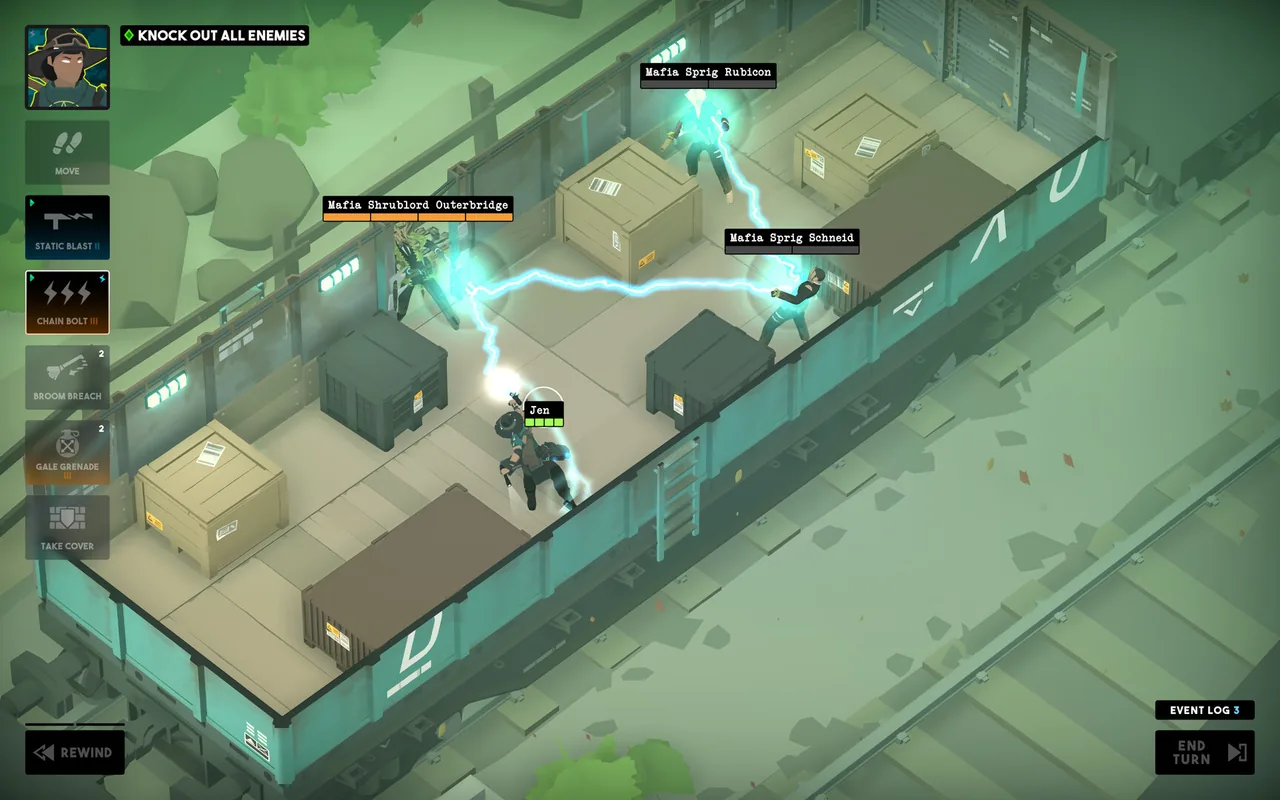
Direct damage often matters less than moving an enemy into a wall, an ally, a hole, or a window. The direction of a push can change what the next wizard is able to do.
Rewind and Foresee let you test an action and check the enemy response. You can revise the sequence before committing the turn.
Learning curve and difficulty
Difficulty settings include Easy, Medium, and Hard. Custom lets you adjust separate elements.
When choosing a push direction and position, account for the next ally's line of fire. Spending an action needed later can break the combination.
Confidence Goals may call for an ability use you would otherwise overlook. A turn limit can make you reorder a solution that already completes the mission.
After the story, Dream Training and player-made missions provide other problems for the combinations you have learned.
Builds and playstyles
Displacement chain
Push enemies into walls or windows to cause impact damage or send them out of the room. Set up the line of fire and landing point before the wizard delivering the push acts.
Action supply
Use abilities that grant allies extra actions alongside Perks that allow movement again. More chances to act still leave you deciding who moves first and where the next ally must remain.
Confidence cleanup
Plan backwards from a Confidence Goal instead of basic mission completion. Return with a different squad or Perks, and tackle separate conditions on separate attempts.
What longtime players say
Long-playtime reviews discuss testing pushes and positions with Rewind. Before ending a turn, they can rebuild a failed combination on the spot.
When the main objective feels easy, these players work through Confidence Goals that demand a tighter use of abilities. Difficulty settings give them another way to change the challenge.
In long-playtime reviews, the squad's characters, magical world, and writing remain memorable after the missions are done.
What players like
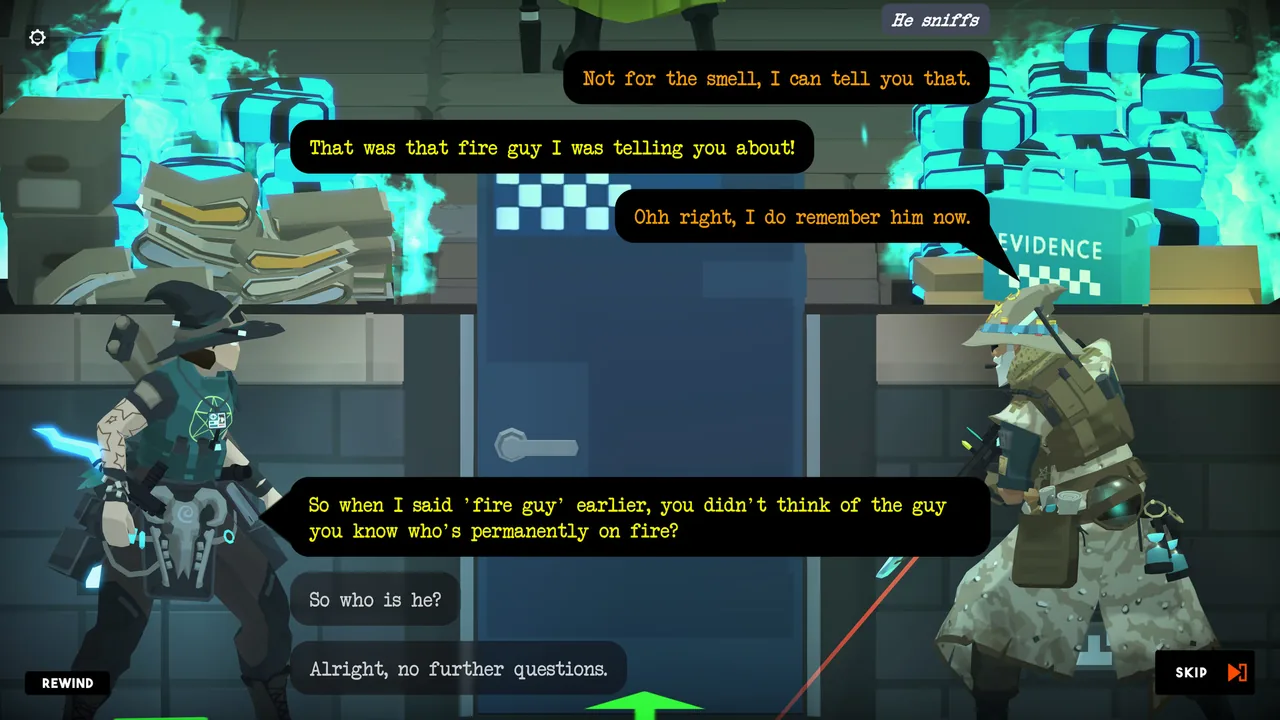
Reviews enjoy the modern jobs recast through magic and the squad's conversations. Between fights, jokes share space with heavier subjects.
These players enjoy reading enemy placement and terrain as a puzzle in each handcrafted room. As the squad gains abilities, they find different ways to assemble a breach.
Confidence Goal hunters find uses for abilities they might ignore when pursuing only the main objective. They also revisit cleared missions to work on conditions separately.
Perks change what abilities can do, while movement and displacement set up support from allies. Reviews also describe extending a combination with extra actions or renewed movement.
Players who like Rewind test positions and push directions directly on the board. When the combination fails, they try another approach within the current turn.
Foresee makes enemy responses visible, and outcomes do not depend on a hit roll. Players who want to plan around lines of fire and action order value that clarity.
For players who want more problems after the story, reviews point to additional missions, the Level Editor, and player-made Steam Workshop missions.
Common complaints
Players who find the main objectives easy look to Confidence Goals or difficulty settings for a tougher task. Without those extra conditions, the combat may feel too forgiving to them.
Players seeking a free-form squad campaign can find the handcrafted rooms restrictive. They describe positions and action order as steering them toward the designer's intended solution.
There is no official Japanese, Simplified Chinese, or Korean text. Reviews requesting Simplified Chinese translation describe the difficulty of following English dialogue and game-specific terms.
The steady stream of jokes and sarcasm can make the dialogue feel long-winded to players who want the story played more directly.
Players keen to get straight to the next fight can find that conversations, dreams, and the Conspiracy Map slow the passage between missions.
Who it’s for
It suits players who want to inspect enemy responses, then keep revising push directions, positions, and action order with Rewind.
Confidence Goals suit players who want another puzzle after clearing the main objective. They can take later Perks back into earlier missions.
It also suits players who like seeing a character's combat powers carry through to that character's role in the story.
Who might not enjoy it
Players seeking long-term squad management, resource planning, and unexpected losses may find its sequence of handcrafted tactical puzzles too prescribed.
Players who do not want to read English dialogue, or who tire of frequent jokes between missions, should account for the story's prominence.
FAQ
- Does it support Japanese, Simplified Chinese, or Korean?
- No. The official release supports English only.
- Is there cooperative play?
- No. The official store lists it as a single-player game.
- Can difficulty be adjusted?
- Yes. Choose Easy, Medium, or Hard, or adjust separate elements in Custom.
- Is there content after the campaign?
- Yes. There are additional missions and mission replays, plus a Level Editor and player-made Steam Workshop missions.
- Is additional content available?
- The Special Edition Upgrade includes developer commentary, outfits, the soundtrack, and an unreleased demo. The commentary has no subtitles.
These impressions are based on 100 Steam reviews sorted by “Most Helpful.” They do not represent the views of all buyers.

Image: Tactical Breach Wizards on Steam