Predy Media > Deckbuilding > Game page
Game pageSlay the Spire: Features, Player Views, and Who It Suits
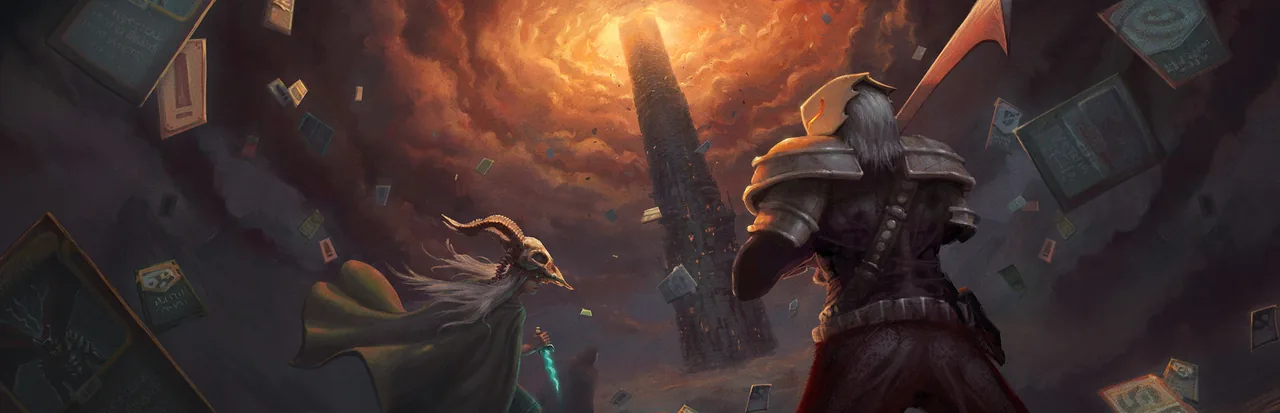
Combat and route rewards give you the pieces for a deck that can answer the next enemy.
Rather than waiting for a planned build to come together, you choose what helps the current deck reach the boss ahead.
What makes it fun
Build from what you find
A new card can work with cards and relics you already have. Even if your planned build does not come together, you can use those combinations to prepare for the enemies ahead.
A reason to take the risky path
Heading toward an elite can earn you a relic, but the fight may cost you health. You can weigh that route against one through a rest site while keeping the boss ahead in mind.
A new character, a new plan
The Ironclad can build around Strength, the Silent around Shivs, and the Defect around Orbs. Switching characters changes what you look for in card rewards.
Game details
As of Oct 29, 2026- Steam Deck
- Verified
- Release date
- Jan 24, 2019
- Developer
- Mega Crit
- Languages
- Japanese, English, Simplified Chinese, Korean / 17 languages total
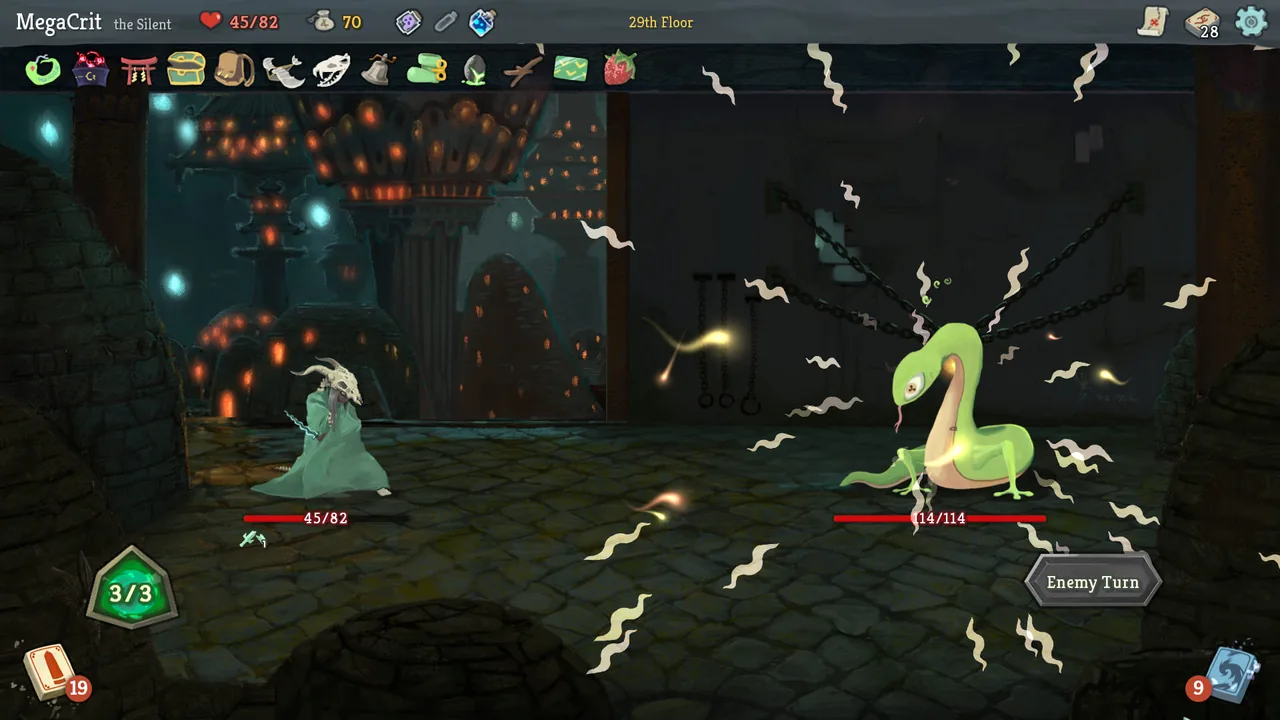
A typical run
Choose a character, then pick rooms along the branching Map.
In combat, you can normally see enemy Intent. Use it to decide whether to spend Energy on damage, defense, or setup.
After a win, you can add a Card Reward to the deck or skip it.
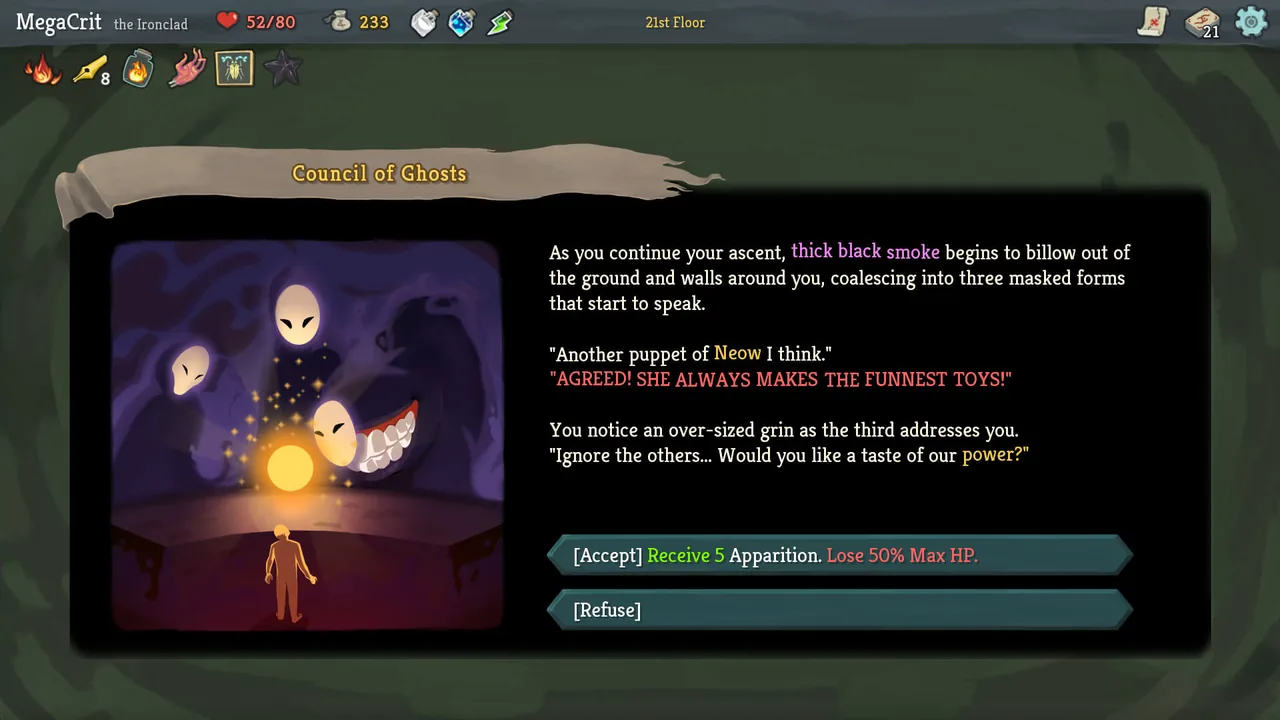
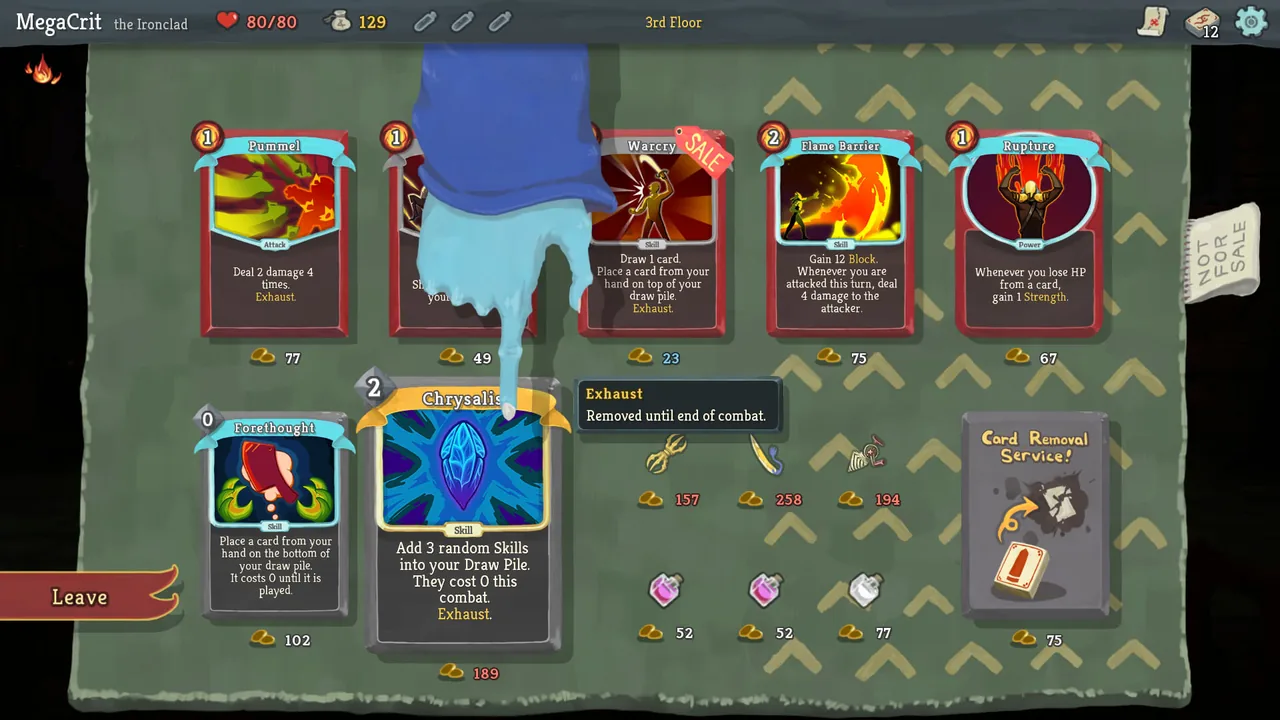
Pick routes through Rest Sites, Merchants, Events, and Elites. Weigh the reward against what the detour may cost in health.
Defeating a boss along the way opens the next Act. Death or completing the climb ends the run.
Core systems
Map
Combat, Elite, Rest Site, Merchant, and Event rooms are linked by branching routes. The upcoming boss is shown too.
Can your current health carry you through an Elite, or do you need a route with a Rest Site? Since no path visits every room, choose according to the rewards the deck needs.
Intent
The combat screen normally shows an enemy's next action, such as an attack or buff. That gives you a basis for spending the current hand and Energy.
Block the attack, set up for later turns, or try to finish the fight first. Spending resources to stay safe now can delay the setup you need.
Card Rewards
After combat and at certain other rewards, you may add an offered card to the deck. You can close the offer without taking one.
Take damage you need now, strengthen an existing interaction, or skip to keep key cards easier to draw. Waiting for a complete archetype can leave the deck short of answers on the way there.
Relics
Relics continue to affect cards or combat rules after you acquire them. What you already own can change the value of later card offers.
An Elite may offer a Relic, but getting there risks health. Boss rewards can also pair a strong effect with a restriction you must accept.
Rest Site
At a Rest Site, you can choose an action such as healing or upgrading a card.
Heal the damage already taken, or upgrade a card for later fights. You cannot do both on the same visit.
Ascension
Ascension is a staged difficulty system advanced through clears with each character. Higher stages make conditions involving enemies, resources, and events harsher.
Card picks and routes demand closer attention, as do Potion use and the order in which you play a hand. Even a small loss can affect whether you need to heal in the next Act.
What sets it apart
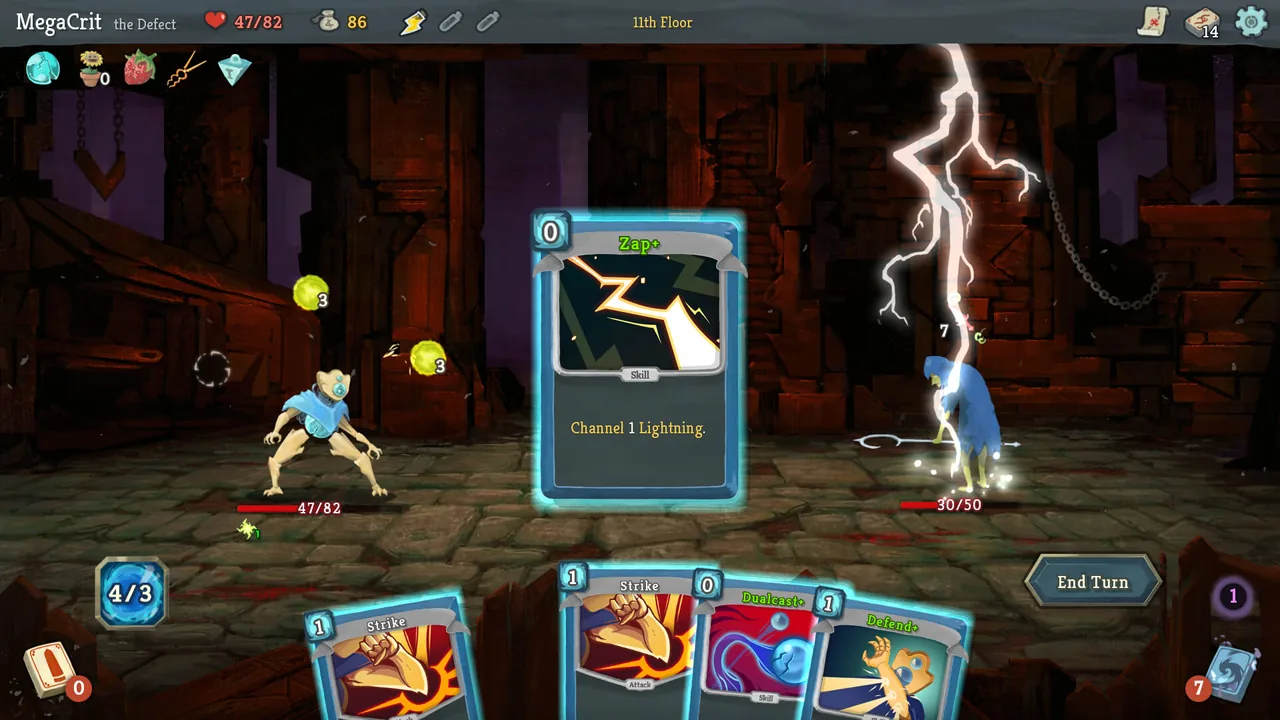
Enemy Intent is normally visible. You can check the incoming attack before deciding whether to hold cards for defense or spend them on setup.
Skipping a Card Reward can keep key cards easier to draw. Taking a dangerous Map route may instead bring a reward needed for later enemies.
Stats do not grow permanently between runs. Learning enemy matchups and when to take a card is what carries into the next attempt.
Learning curve and difficulty
To advance Ascension, clear the current stage with that character.
Knowing a powerful combination is not enough. You also learn to judge how quickly the next enemies demand damage, defense, or setup.
The Draw Pile and Discard Pile help you anticipate when another draw will reshuffle the deck.
At high Ascension, route choices account for later fights. So do decisions about when to spend Gold and Potions to preserve health.
Builds and playstyles
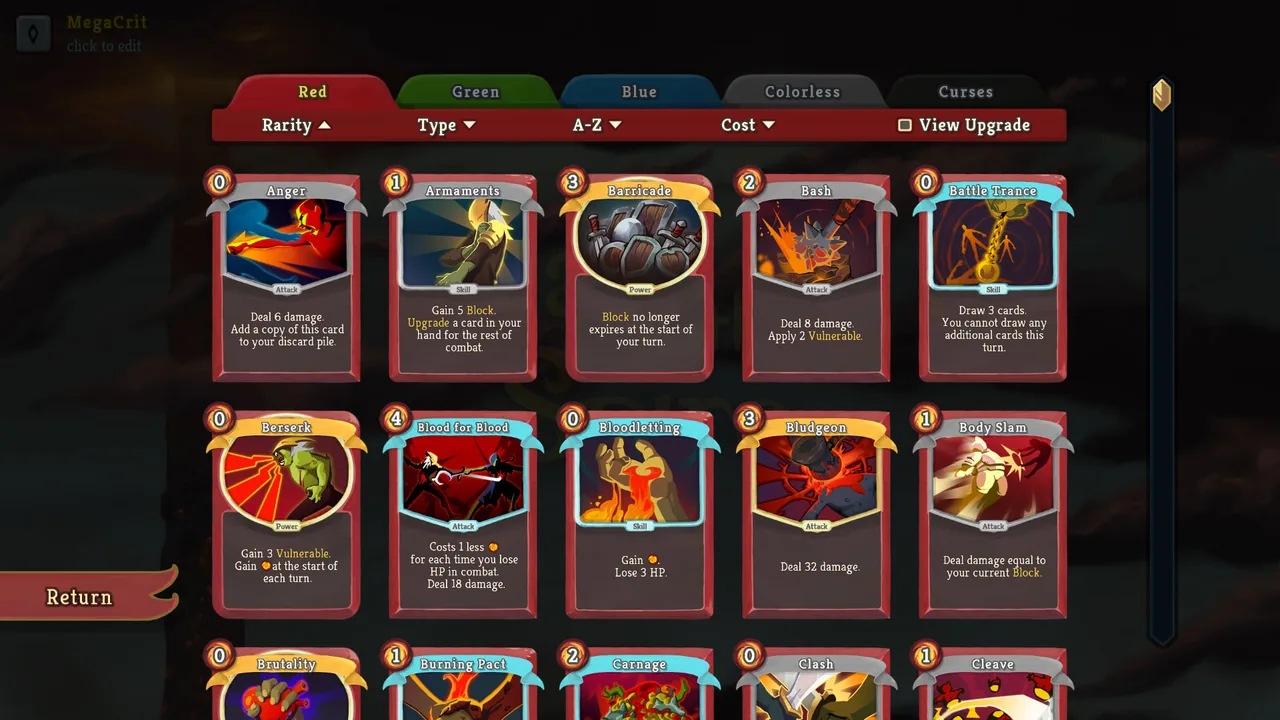
Ironclad Strength and Exhaust
Strength can raise attack damage. Exhaust can narrow the cards available to draw during a fight and trigger related effects. If you trim cards too eagerly without finding defense or a way to get started, the route can punish you before the build works.
Silent Poison, Shivs, and Discard
The Silent can wear enemies down with Poison, play repeated Shivs, or cycle cards through Discard and draw. Decide whether upcoming enemies call for a faster kill or a deck that can stay in the fight.
Defect Orbs and Focus
This approach generates Orbs and uses Focus to strengthen Lightning or Frost. How you survive the turns before those effects build up shapes the attack and defense cards you take.
Watcher Stance Switching
Switching Stances, including Wrath, changes both outgoing damage and the risk of incoming attacks. The choice is when to commit to an attack. A small deck can also replay the same cards in a cycle.
What longtime players say
Players at high Ascension describe continuing to learn how to use the cards and systems. Under harsher conditions, overlooking a useful option can matter.
With experience, taking a strong card in isolation becomes less appealing. These players look for answers to upcoming enemies and ask whether the deck will draw what it needs.
Long-time players also describe enjoying a return to the game after time away.
Players report continuing their runs after completing late-game goals with each character.
What players like
Changing card offers and enemies keep decisions tied to the current run, even late in the climb.
Changing characters means learning a different card pool and set of mechanics. Reviews enjoy rethinking the deck around Strength, Poison, Orbs, or other character tools.
Players enjoy finding card and Relic interactions, then changing the build to fit the rewards actually offered.
Skipping a Card Reward can make needed cards easier to draw. Reviewers value having to decide whether a strong card is worth adding to this particular deck.
A poor early card pick can inform the next run. Players describe revisiting those choices as the conditions get harder.
An Elite route offers a possible reward at the risk of health needed later. Players enjoy weighing that choice on the Map.
Common complaints
A bad draw, unhelpful rewards, and an unfavorable enemy can coincide, leaving a run hard to recover. Players also describe feeling the weight of luck at higher difficulty.
For players drawn more to visual spectacle or a continuing story than to deck building and combat, the restrained art and fragmentary narrative can feel thin.
After extended play, familiar card picks and similar openings can start to feel repetitive.
Who it’s for
It suits players who want to use visible Intent to estimate damage, then plan routes through Rest Sites and Elites around that risk.
It also fits players who like building answers to the next enemy from the cards and Relics offered, without waiting for a planned archetype.
Ascension gives players a reason to revisit when to skip a card and when to spend Gold or Potions.
Who might not enjoy it
It may not suit players who dislike working around poor draws and rewards when they coincide.
Players who mainly want a continuing story or elaborate visuals may find the focus on deck building and combat less appealing.
FAQ
- Is the game available in English?
- Yes. The Steam version includes an English interface.
- Does it include cooperative play?
- The base game is single-player. Steam Workshop is supported, but cooperative play is not a base-game feature.
- Can the difficulty be adjusted?
- Ascension provides staged difficulty, while Custom Mode lets you combine modifiers into a chosen set of conditions.
- What is Daily Climb?
- It is a scored mode played with a defined set of modifiers, with scores compared against other players.
- Are further content additions planned?
- The developer says that no new content updates are currently planned for this game.
These impressions are based on 100 Steam reviews sorted by “Most Helpful.” They do not represent the views of all buyers.
Image: Slay the Spire on Steam