Predy Media > Action roguelike > Game page
Game pageBrotato Features and Player Feedback
Who It Suits

Brotato is an arena shooter built around short waves and visits to the shop. Each character's strengths change which weapons and stats are worth buying.
Auto-fire lets you focus on movement. In Nightmare, shopping becomes tighter as you try to kill enemies before they can fill the arena with shots.
What makes it fun
Shopping shapes the next wave
Between waves, you can strengthen your damage now or reroll the shop for a weapon you want. How you spend your materials shapes the next fight.
Each character changes the build
A character's strengths change which weapons and stats you pursue. Matching a weapon's scaling to that character's bonuses makes the build come together.
Short waves put builds to the test
The next fight quickly shows what your weapon and item choices do. After a loss, you can change the combination and try another build.
Game details
As of Oct 29, 2026- Steam Deck
- Verified
- Release date
- Jun 23, 2023
- Developer
- Blobfish
- Languages
- Japanese, English, Simplified Chinese, Korean / 13 languages total
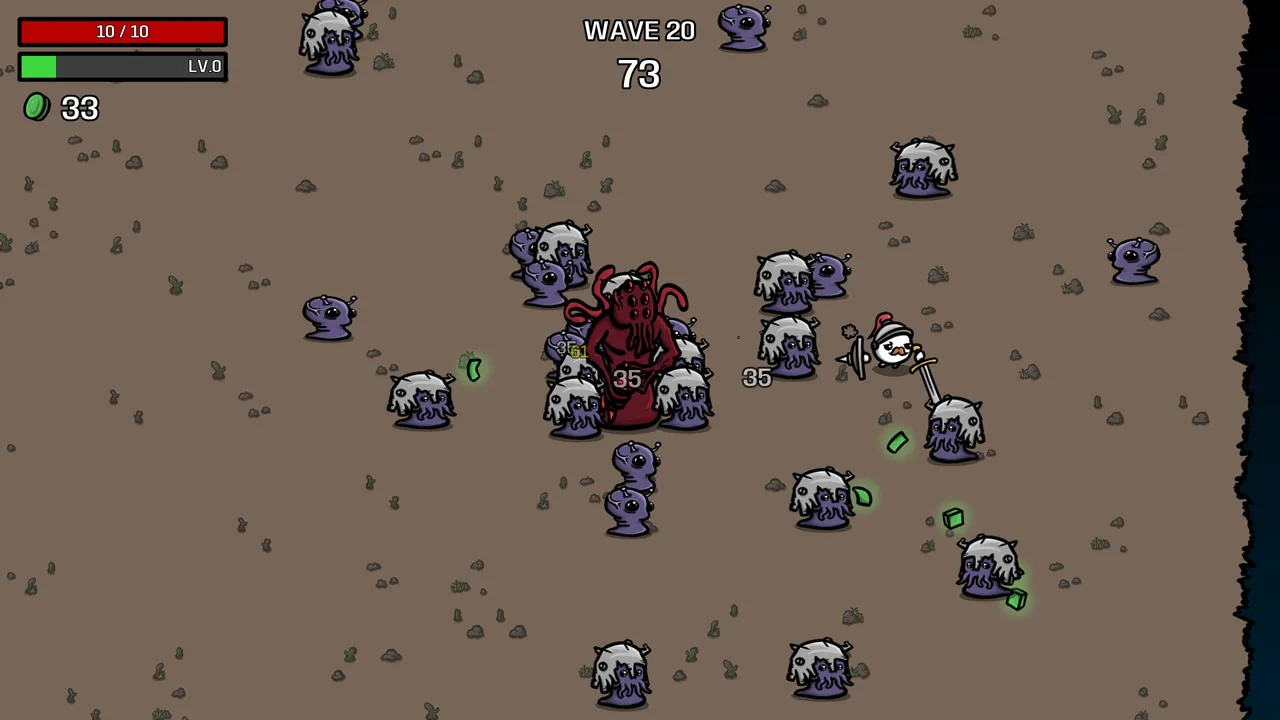
A typical run
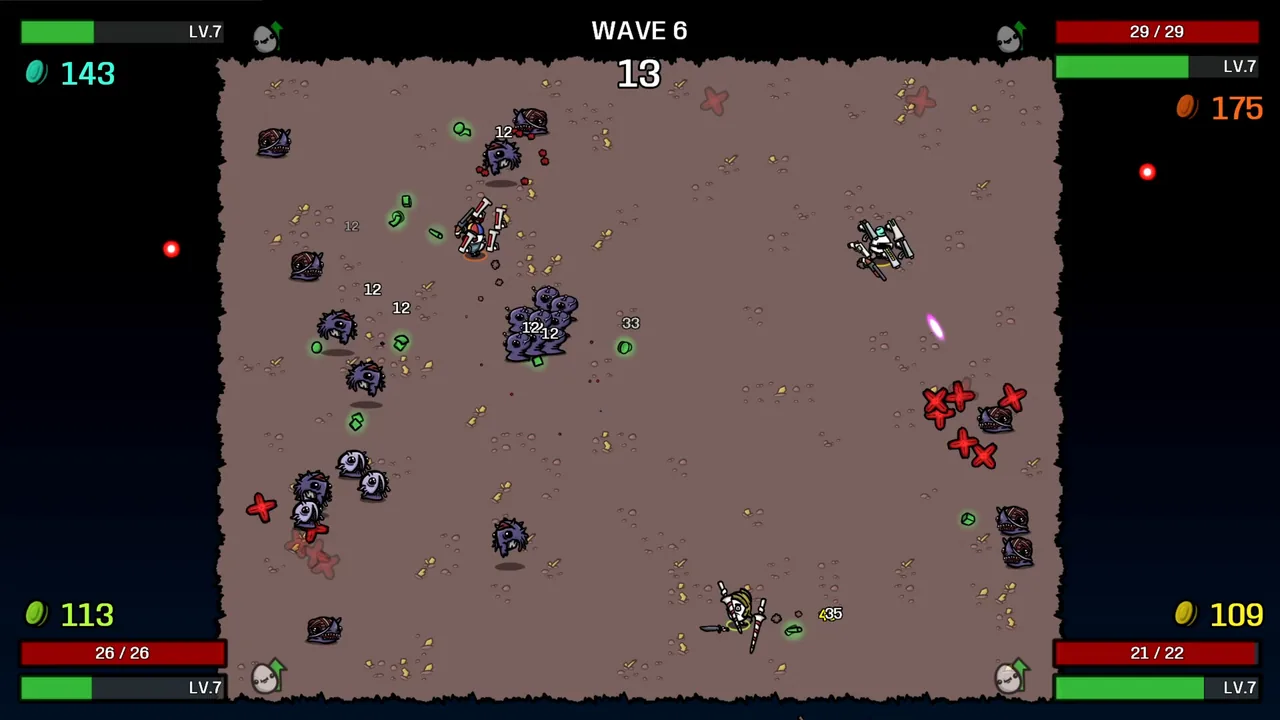
Choose a character and starting weapon, then enter a compact arena.
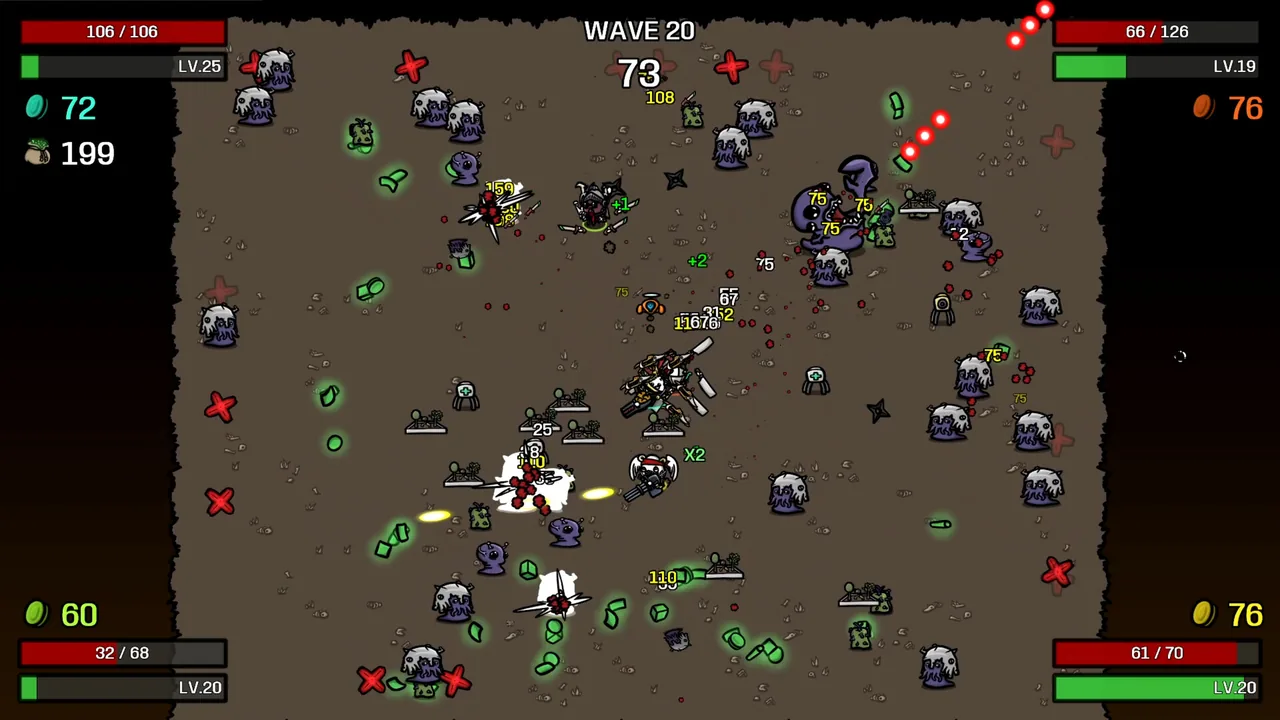
Weapons fire automatically by default. Keep your distance, leave an escape route, and plan a path through dropped materials.
Level-ups let you choose stats. After each wave, you can spend the materials you collected at the shop.
Complete your current weapon set, reroll for what you need, or hold on to materials for a later purchase.
Build around the character's strengths and survive the waves until rescue arrives.
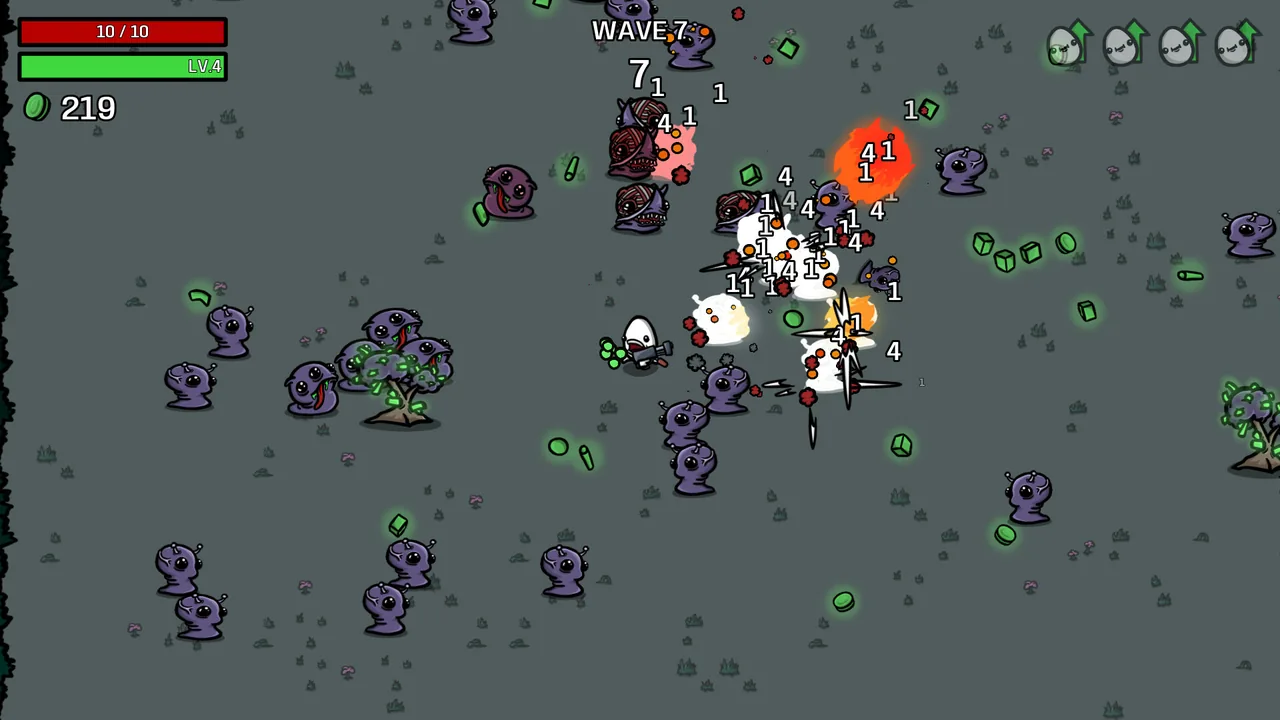
Core systems
Auto-firing weapons and manual aiming
Weapons fire automatically by default. Manual aiming is also available.
Auto-fire frees you to watch your spacing and route through materials. Choose manual aiming if you want to direct the attacks yourself.
Characters
Characters favor different weapons and stats. Some also change how shopping or materials work.
Buy toward a character's strength early and the build takes shape sooner. That leaves less material for items that cover a weakness.
Weapons and items
Weapons vary in range, attack timing, stat scaling, and special effects. Items can also change stats and how materials come in.
You can combine copies of a weapon you already use or add one with different scaling. An item is easy to pass over if it boosts a stat your build does not use.
Materials and shop
Materials dropped by enemies feed experience and also pay for purchases between waves.
Buy damage to get through the next wave, reroll for a needed weapon, or spend on an economy item that pays off later.
Accessibility options
You can adjust enemy health, damage, and speed. Nightmare's environmental projectiles have a setting too.
Changing enemy settings gives you room to practice a build or your movement. You can also leave the preset challenge in place.
Nightmare difficulty
Nightmare raises enemy health, damage, and speed. It adds exclusive enemies and events involving environmental projectiles or Fog.
You can leave room in the budget for economy and defense, or rush damage to kill enemies before they fire. The order of your purchases matters more.
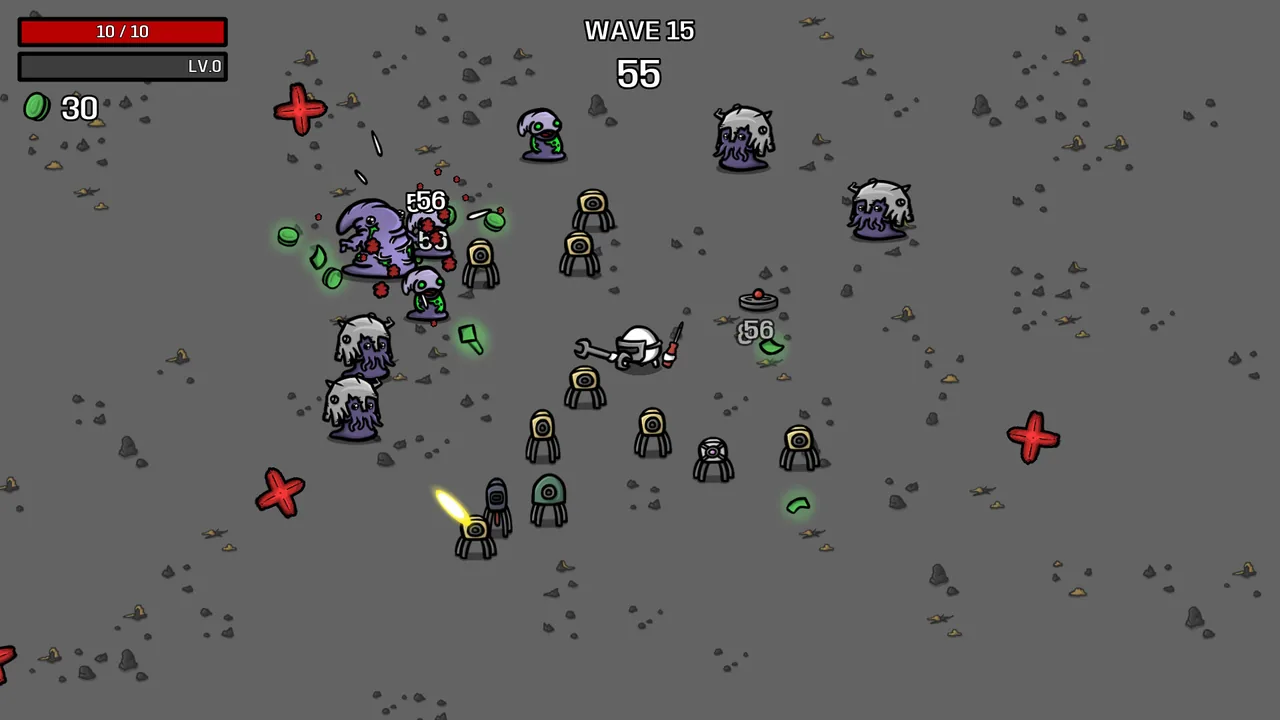
What sets it apart
You fight short waves in a compact arena and visit the shop between them. Those purchases shape the next fight.
Certain characters change more than starting stats, affecting weapon slots, materials, or how stats work.
There is no wide map to roam. You keep enemies from piling up in a confined space, then shop for what the next wave calls for.
Learning curve and difficulty
Early on, read the character's strengths and narrow your weapon and stat choices. Scattered purchases make the build harder to put together.
Collect materials without letting enemies cut off your escape route. At times, you need to clear them before they gather.
If the weapon you want is absent from the shop, weigh another reroll against buying what's available and moving on.
Nightmare brings environmental projectile and Fog events. Slow clearing gives enemies and shots time to fill the space you need for movement.
Builds and playstyles
Rapid-fire ranged build
Stack weapons such as the SMG, then raise Ranged Damage and Attack Speed. This helps keep enemies away, but enemies that fire projectiles when hit need care. You also need an answer when heavier individual hits matter.
Character specialization
Prioritize weapons and stats that benefit from your character's bonuses. Get the character's mechanic working before spending evenly across its weaknesses.
Damage-first Nightmare build
Put economy and healing purchases off early to secure enough damage before enemies multiply. If the shop misses the weapons or items you need, slow clearing can leave you short on materials too.
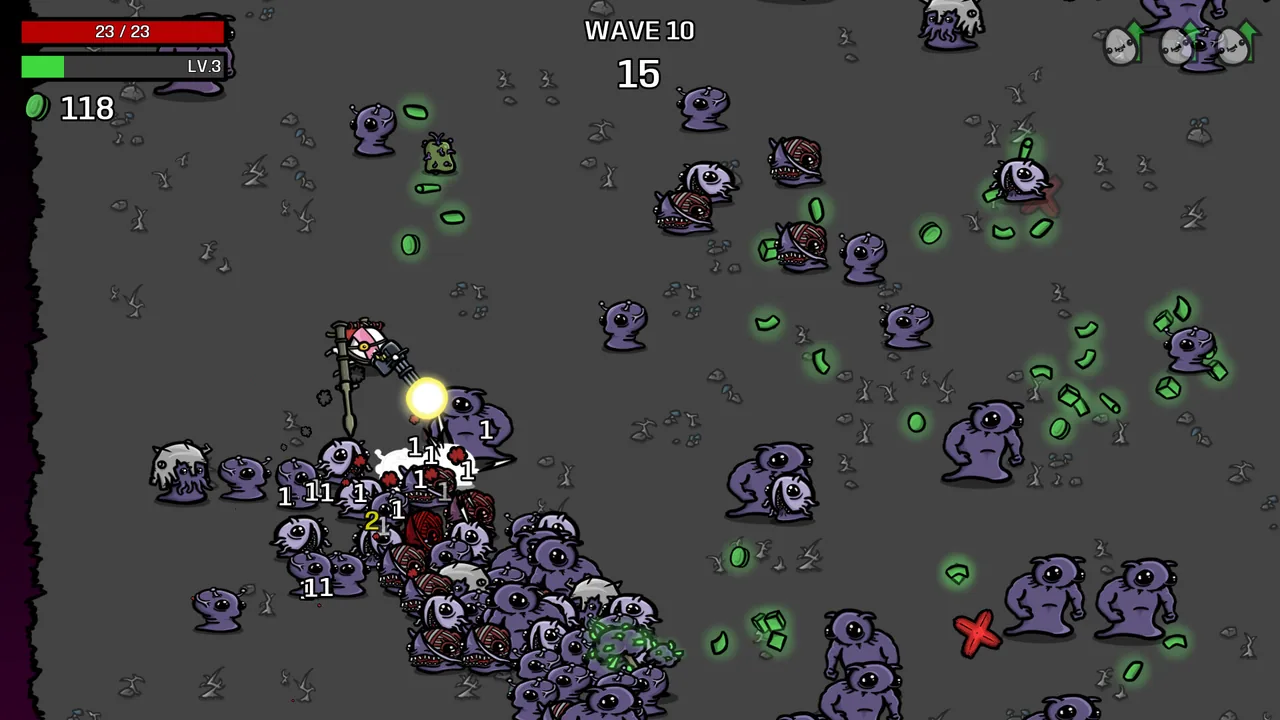
What longtime players say
Experienced players split on Nightmare. One finds a new challenge in killing enemies before they fire; another finds that tougher enemies and projectile pressure leave little room for melee weapons or economy purchases.
Long-time players return to different characters because each one changes the weapons and stats they want to buy, giving them another build to try.
Clearing a run with each character gives completionists a goal. Repeating those clears across maps can start to feel like working through a checklist.
Co-op players enjoy working out character pairings. There is also fun in watching a teammate try to survive after you have fallen.
What players like
Switching characters changes which weapons and items look useful. Players who enjoy building combinations describe returning to try a different setup.
With auto-fire handling attacks, movement is the main input. Players mention enjoying it with one hand or alongside another activity.
The short stopping points make it easy to leave and return. An idea for another build can also turn a brief session into another run.
For co-op players, time with friends and new character pairings give them reasons to start another run.
Displayed stats and weapon traits help players revisit a failed build and change what they buy next time.
The shop gives players a choice between hunting for a weapon, buying damage now, and spending materials on a later payoff. That decision is part of the appeal.
Common complaints
In Nightmare, tougher enemies and projectile pressure can push players toward damage purchases. Reviewers who want to try melee weapons, economy, or defense find that restrictive.
A missing weapon or damage item can leave a build unable to clear enemies early. Repeated rerolls without the needed offer make shop luck feel heavy.
For players clearing every character and map, repeating similar completion goals can become a chore.
Players report unreliable connections when using Remote Play Together for distant co-op. They also ask for dedicated online co-op.
Over longer play, backgrounds, enemies, and music can feel slow to change. Familiar scenes stand out even when a player switches builds.
Who it’s for
It suits players who want to return to the shop after each short fight and decide whether to combine weapons, reroll, or change their stat priorities.
It fits players who enjoy adapting weapon and stat choices to each character's strengths and restrictions within the same arena structure.
Auto-fire suits players who want to focus on movement. Enemy settings can be adjusted, while Nightmare offers a tighter test of what to buy for damage.
Who might not enjoy it
Players who want dedicated online co-op with distant friends may find the Remote Play Together setup inconvenient.
Players who want to explore melee, economy, and defense purchases freely at high difficulty may find Nightmare's damage demands and environmental projectiles restrictive.
FAQ
- Is the game available in English?
- Yes. The Steam version includes an English interface.
- Does it support co-op?
- It supports local co-op and Remote Play Together.
- Can the difficulty be adjusted?
- Yes. Accessibility options can change enemy health, damage, and speed. Nightmare's environmental projectiles also have a setting.
- Is there additional content?
- Abyssal Terrors is sold separately and adds a map, characters, weapons, items, and other content.
These impressions are based on 100 Steam reviews sorted by “Most Helpful.” They do not represent the views of all buyers.
Image: Brotato on Steam