Predy Media > Articles > Comparison
ComparisonPeglin vs Roundguard:
Plan the Board or Act During the Bounce?
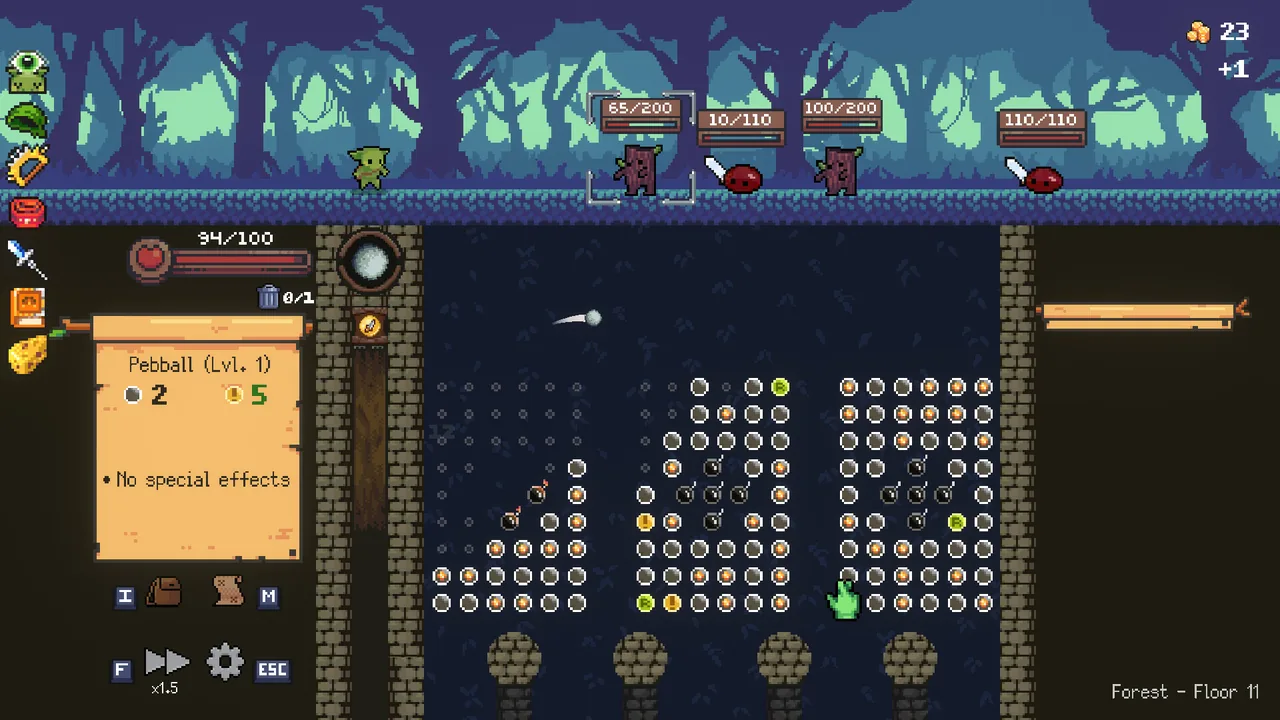 Peglin
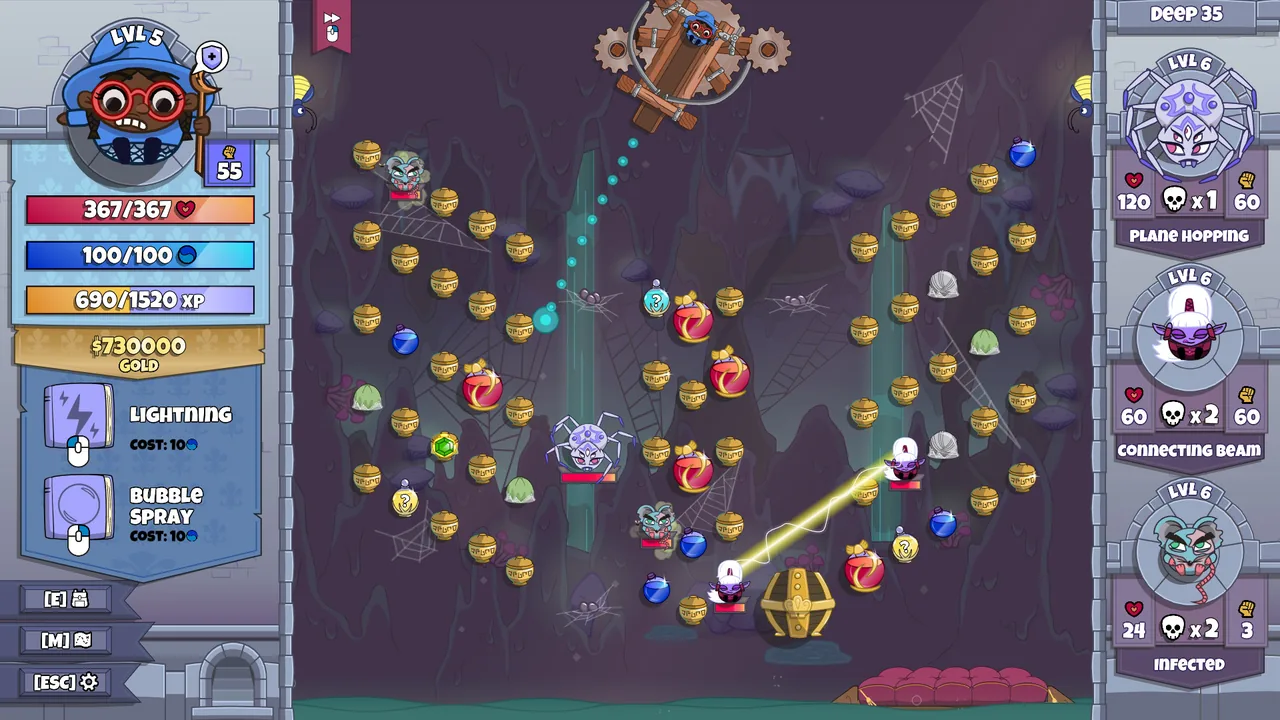 Roundguard
Images: Steam store (Peglin, Roundguard)
Start with when you want to make decisions: plan a shot around the board and your build, or keep using skills while the hero bounces.
We compare Peglin’s upgrades and saving for shops with Roundguard’s mana and gold that can help the next run; difficulty impressions stay in the review sections.
Which one is for you
 Peglin is for you if…It suits players who want to connect board targets with orb and relic combinations, developing a build from what turns up.It also suits players who want to weigh spending coins on an upgrade now against saving them to reshape a build at Haglin’s Shop.
 Roundguard is for you if…It suits players who want to watch the hero’s movement and choose when to use skills during the bounce.It also fits players who want to switch class toolkits or adapt familiar controls to Encore and rule-changing challenges.
Screenshots
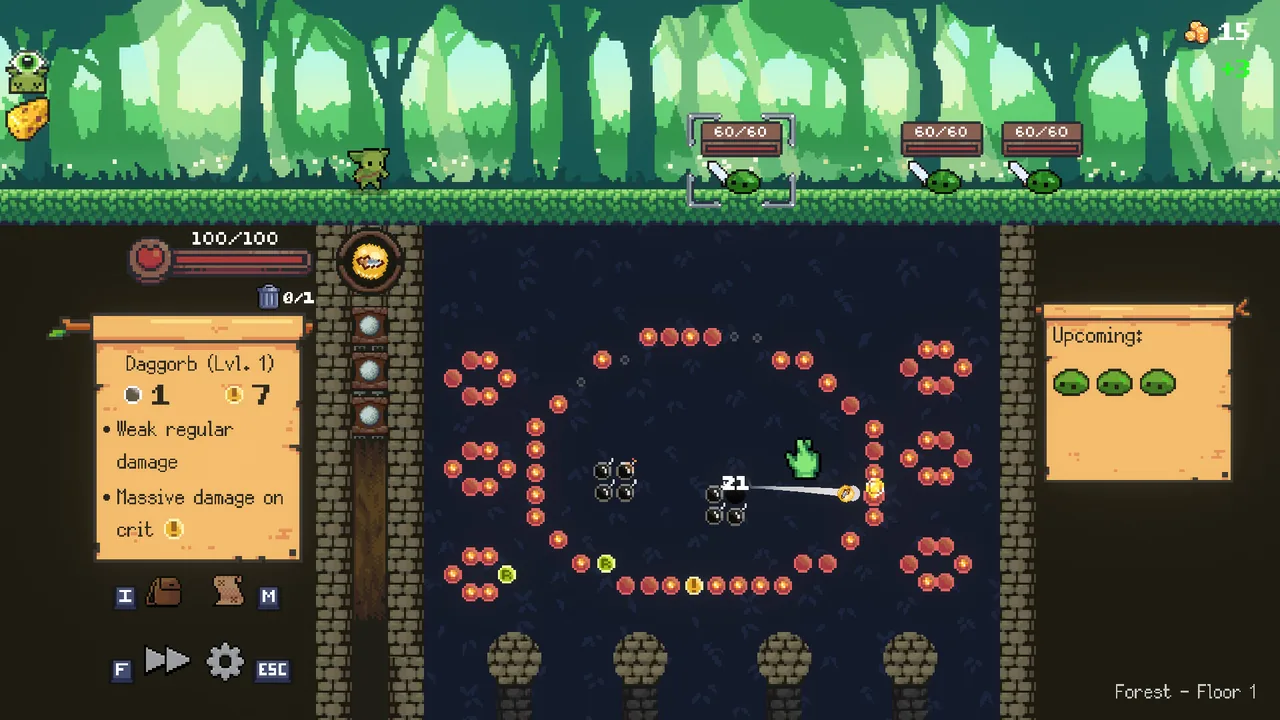
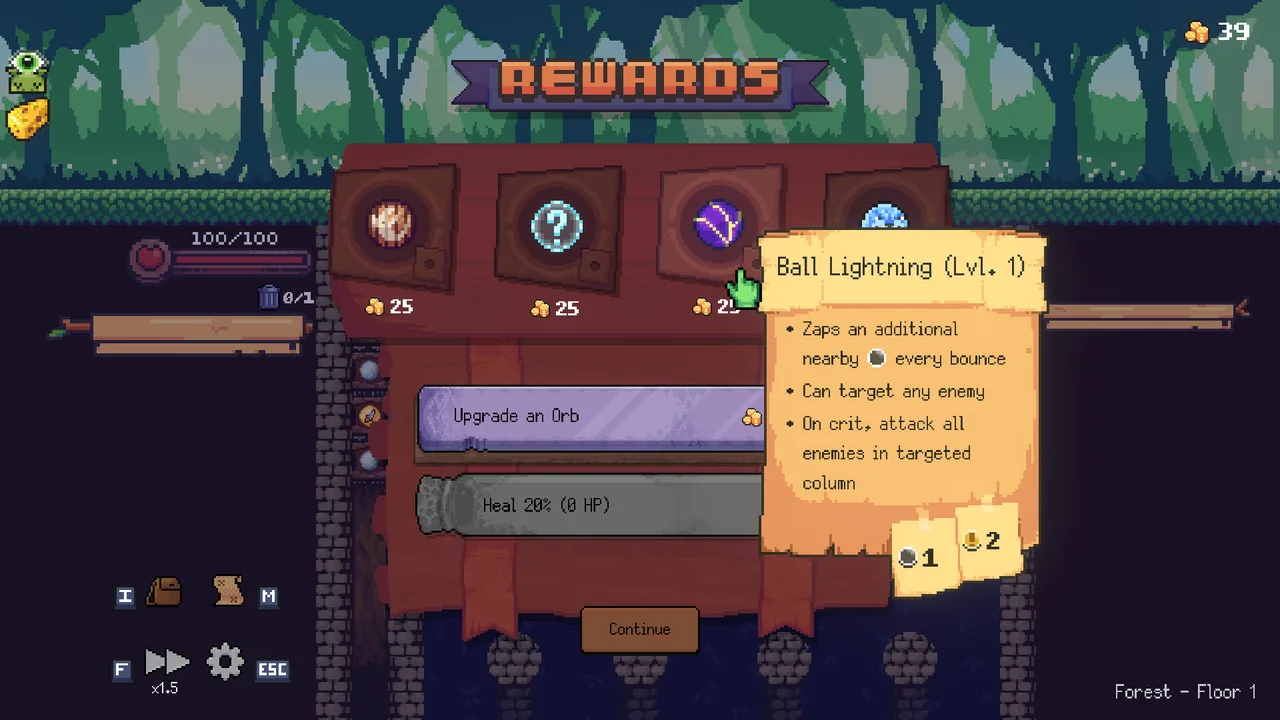
Peglin
Roundguard
Steam data side by side
| Peglin | Roundguard | |
|---|---|---|
| 83%Very Positive16,710 reviews · all languages | Positive reviews | 80%Very Positive452 reviews · all languages |
| US$19.99 | Price (United States) | US$19.99 |
| 34.2 hours | Playtime at review | 3.9 hours |
| Verified | Steam Deck | Verified |
| Aug 28, 2024 | Release date | Mar 13, 2020 |
| Red Nexus Games Inc. | Developer | Wonderbelly Games |
| Japanese, English, Simplified Chinese, Korean | Languages | Japanese, English, Simplified Chinese, Korean |
What each game is
Peglin
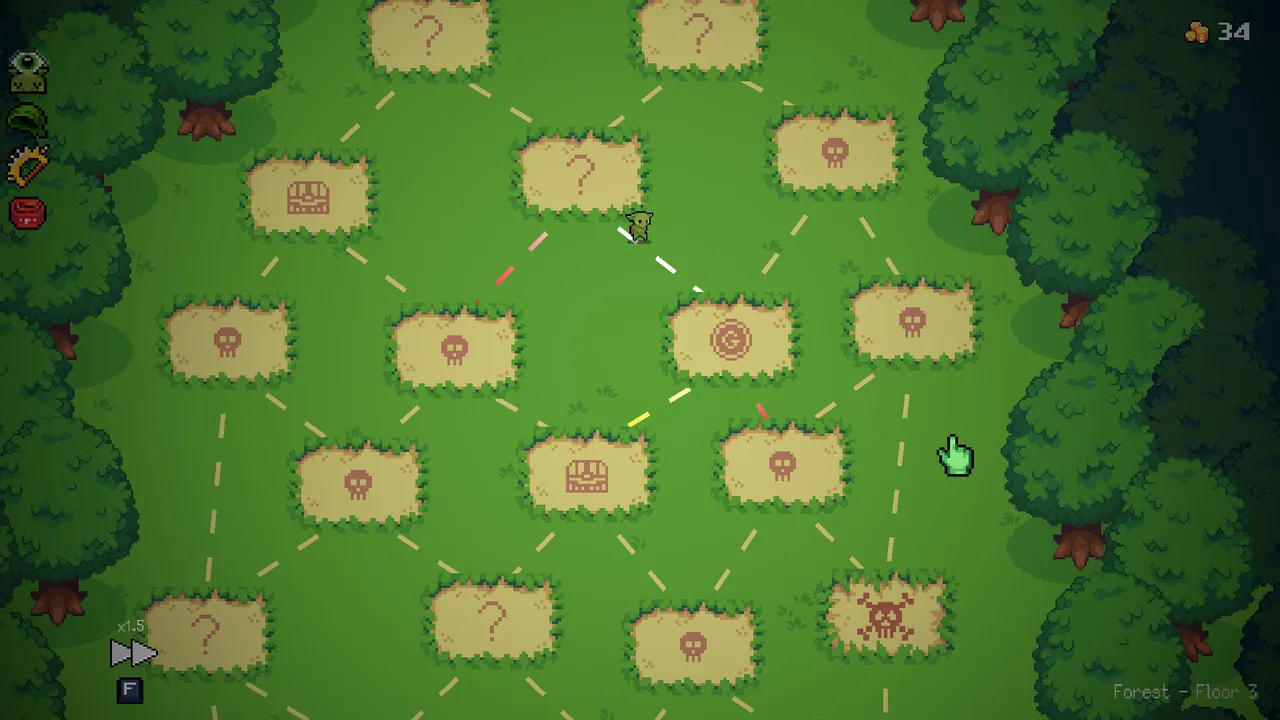
In Peglin, an orb’s hits on pegs build damage against enemies.
Before firing, read the board to choose targets such as critical pegs, refresh pegs and bombs.
Build around each shot’s trajectory, pairing special orb effects with relics that affect enemies or how the ball moves.
Spend battle coins on orbs and upgrades now, or keep them for later purchases.
Haglin’s Shop also removes orbs, so your budget can change what leaves the build as well as what enters it.
Maps, available orbs and enemies change between runs, so you build around what turns up.
Roundguard
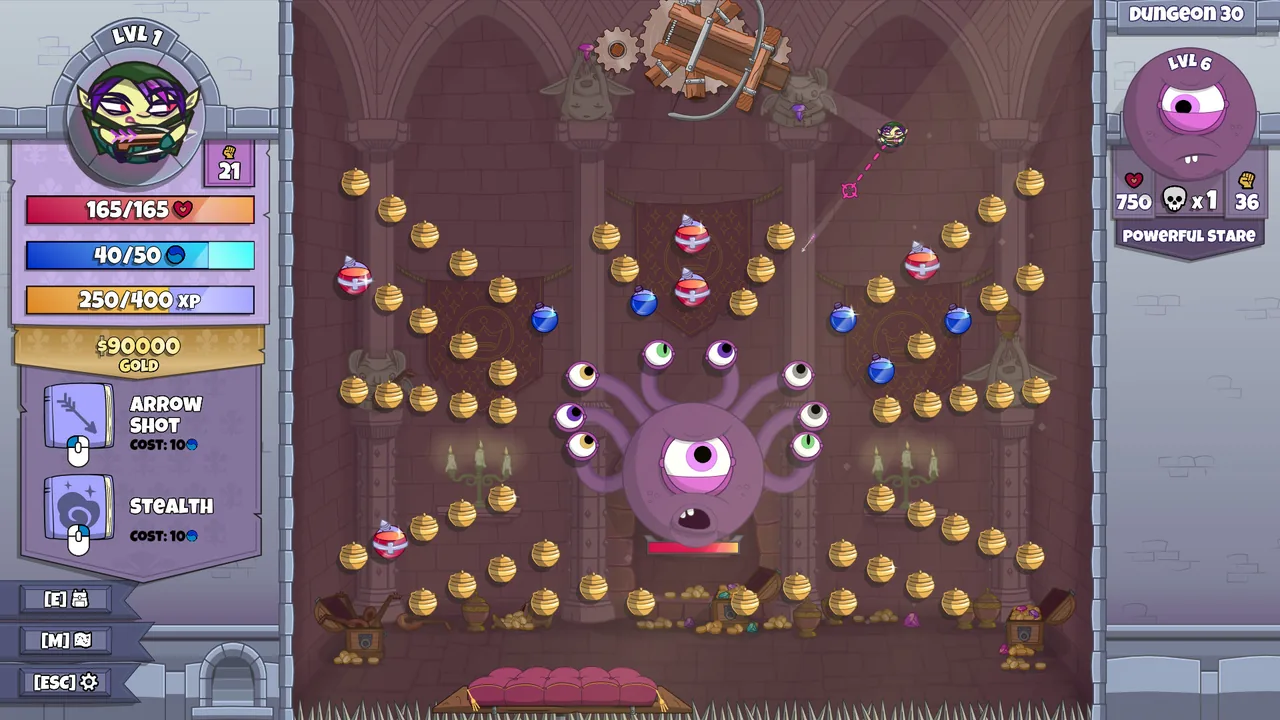
Roundguard launches the hero rather than a separate ball into rooms filled with monsters.
Warrior, Rogue, Wizard and Druid have distinct skills and items, so class choice changes what you can do during a shot.
After aiming and launching, use skills to influence movement or get more out of the shot.
Decide when to spend mana on skills and when to save it. With the Grit relic, skills cost health instead.
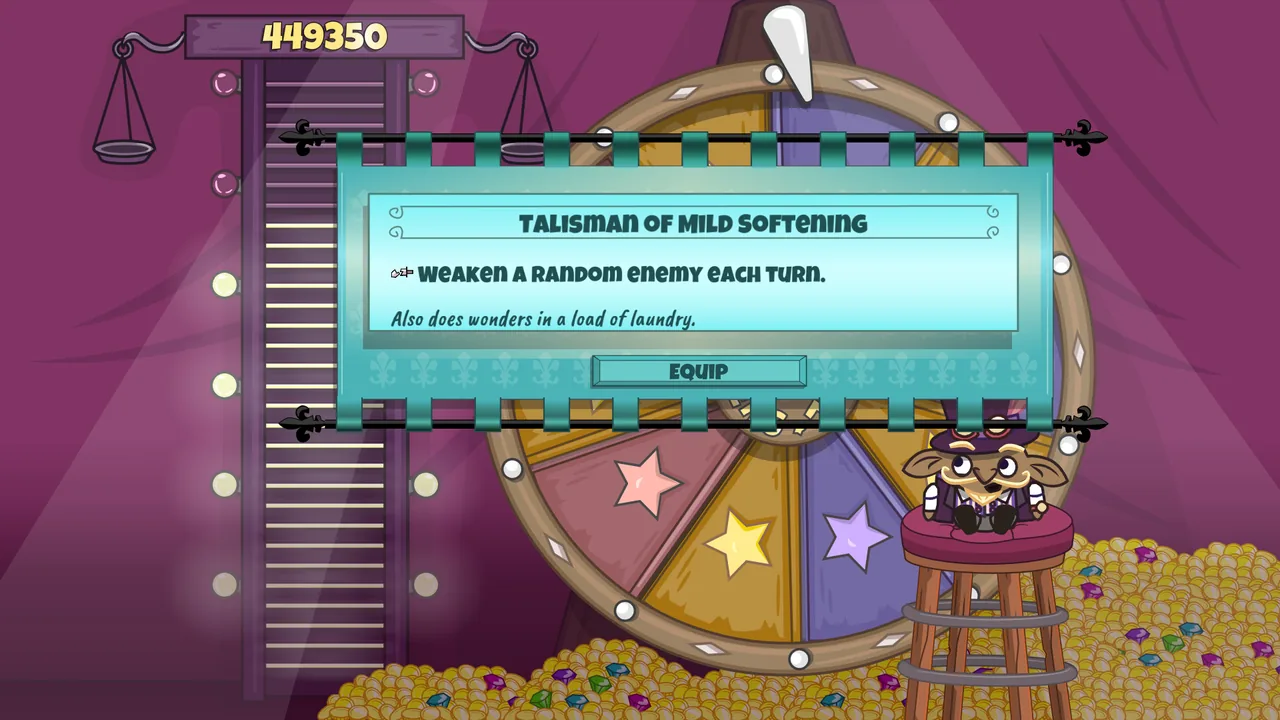
The more gold you collect before dying, the better your chance of getting a powerful trinket for the next run.
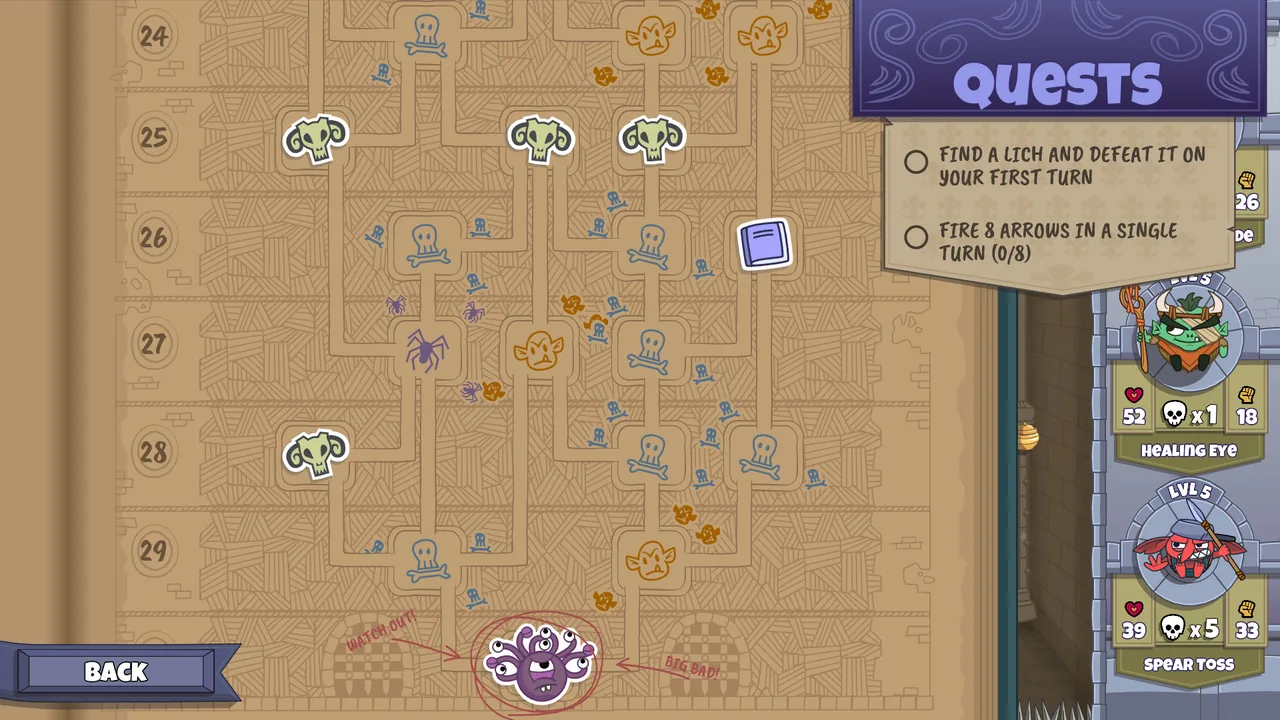
Generated rooms and maps, with changing quest and elite placements, ask you to match equipment effects to the situations you encounter.
For experienced players
Peglin
Cruciball includes damage for misnavigation and additional enemies in regular battles, changing route risks as well as the demands on a build.
Reviewers enjoy shaping a build from available orbs and relics and seeing it come together.
Accounts of higher Cruciball settings also describe struggling with boards, available parts or enemies that undermine a build.
Roundguard
Druid leaves Sprouts where gold pots break and can use them for teleporting or summoning allies, turning cleared targets into positions for later skills.
Beyond each hero’s escalating Encore difficulty, rule-changing relics and daily or weekly challenges offer different conditions to play around.
Reviews also describe struggling to recover health lost to collisions or status effects, even while defeating enemies.
How they play differently
When you act on a shot
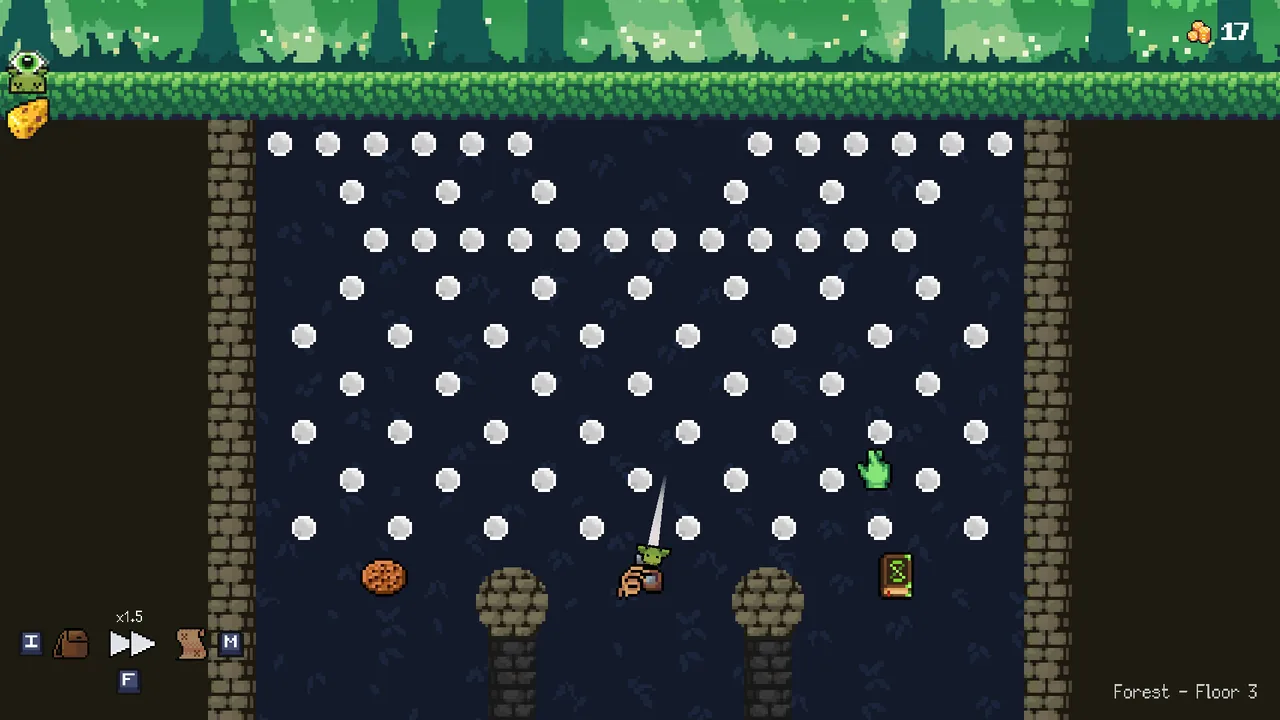
Plan targets before firing around orb and relic effects, special pegs and bombs.
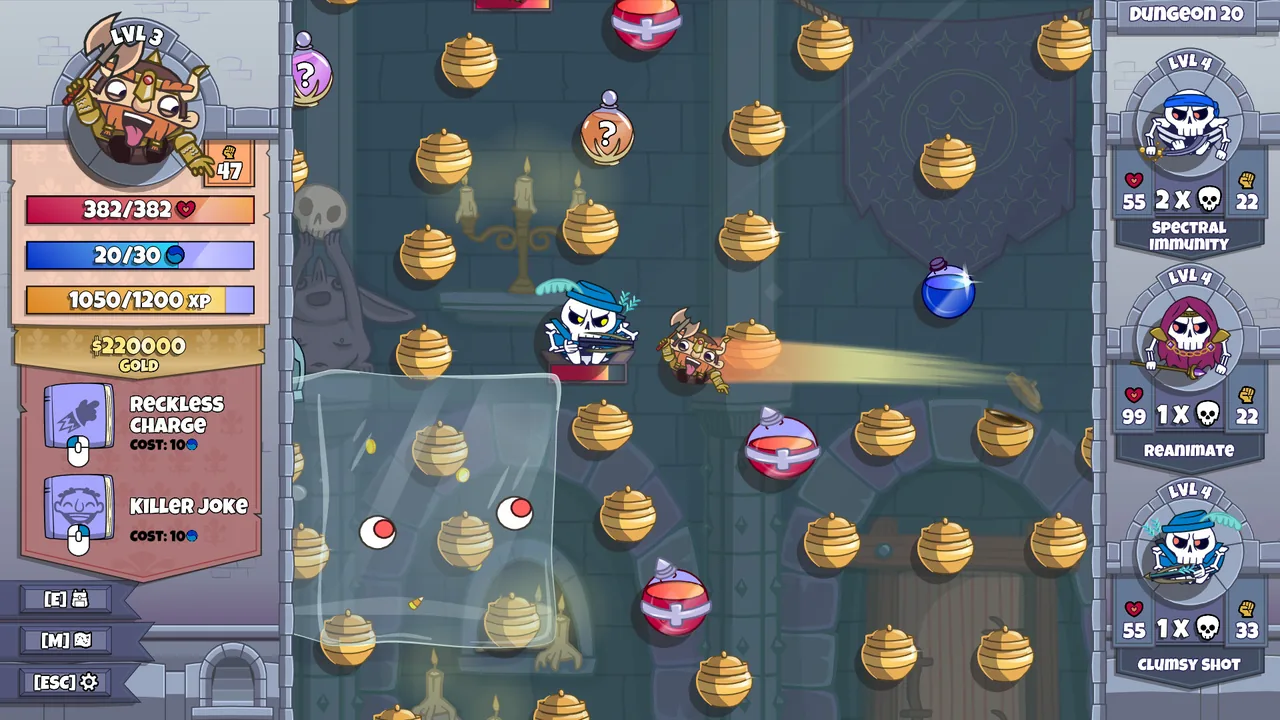
Use skills while the hero bounces to change their movement or get more out of the shot.
What to spend now and what to keep
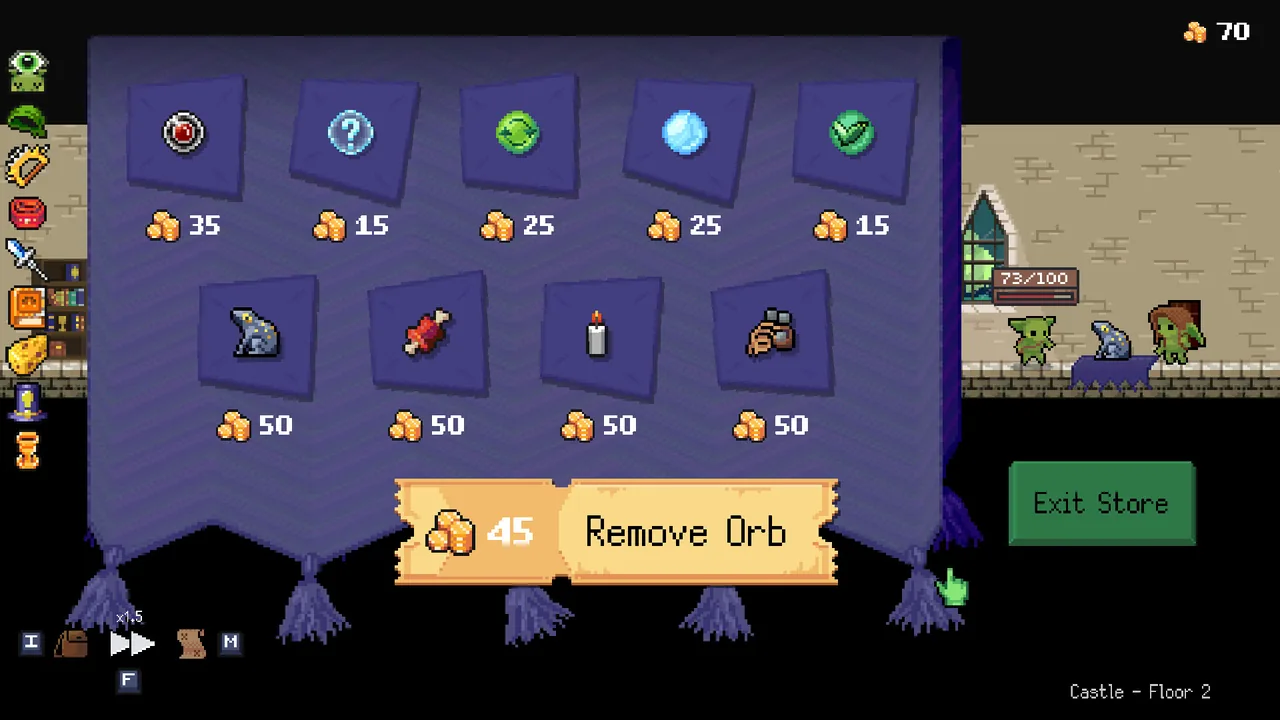
Choose between coins for post-battle orbs and upgrades and saving for purchases or removal at the shop.
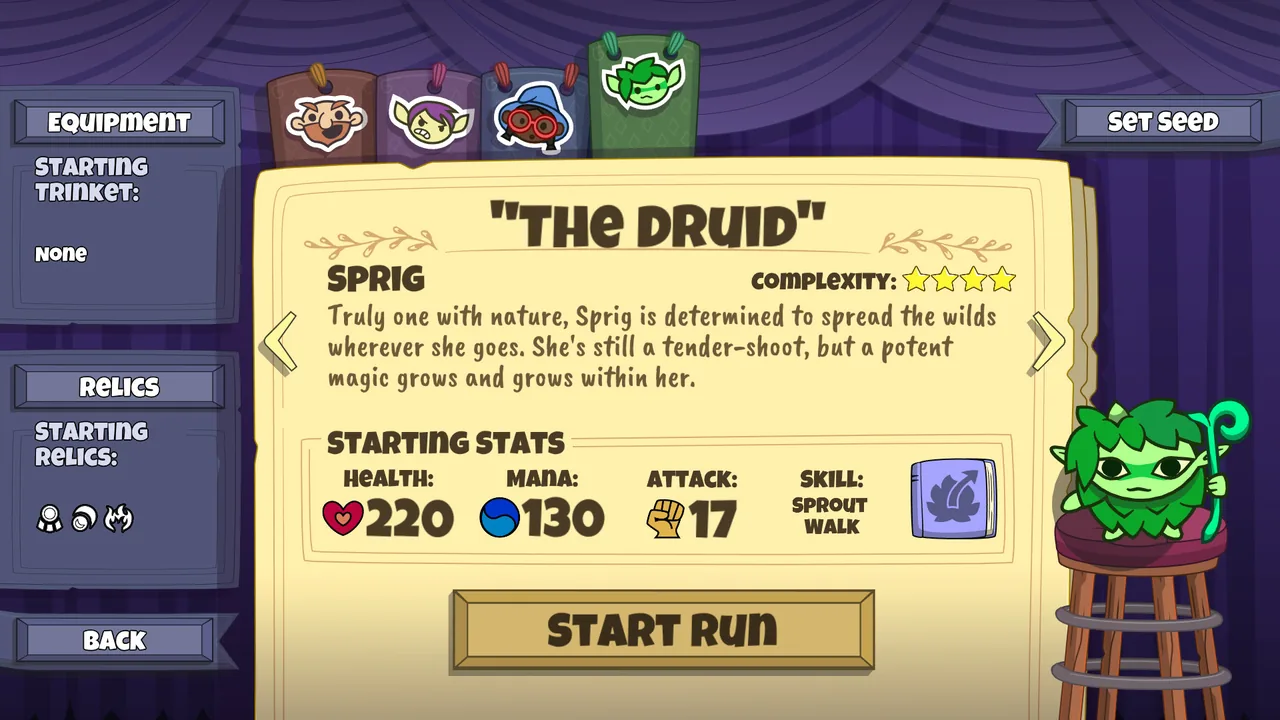
Choose when to spend mana on skills and when to save it. With Grit, skills cost health instead.
Changing the conditions of another run
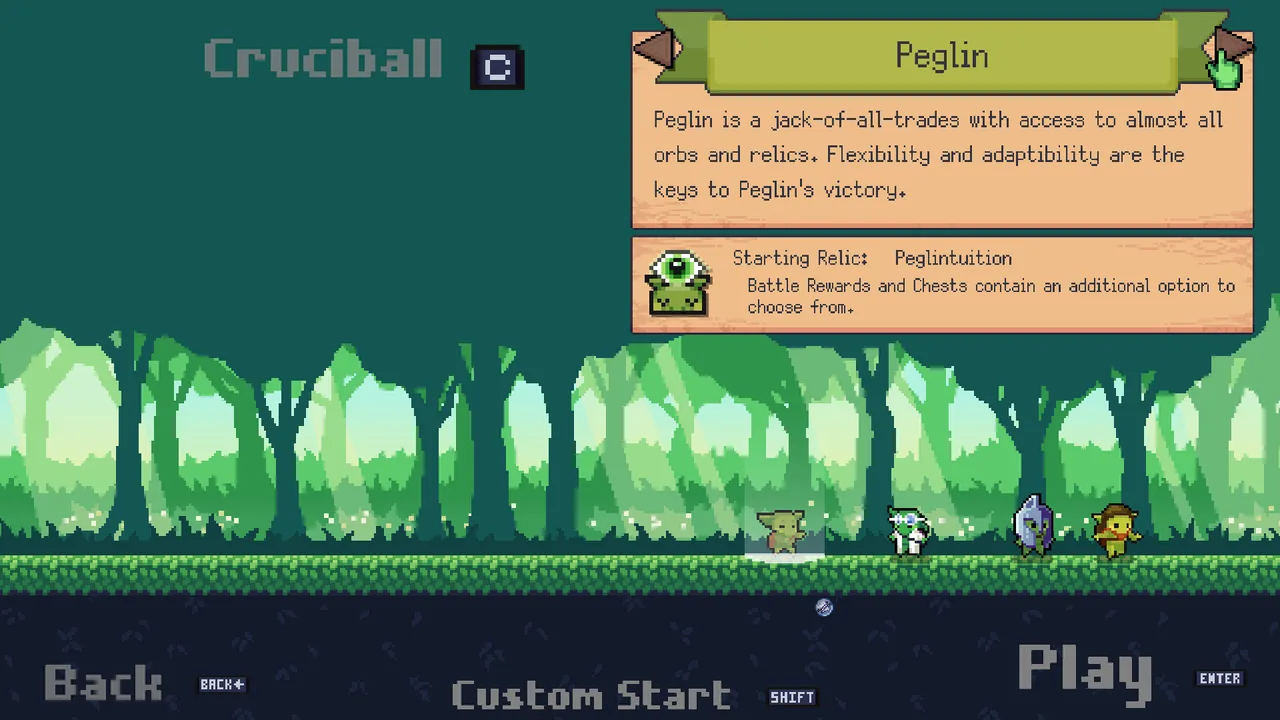
In Cruciball, plan routes and builds around damage from wrong turns and extra enemies in regular battles.

Choose hero-specific Encore progression, rule-changing relics or daily and weekly challenges.
What reviews praise
Peglin
- Players enjoy exploring orb and relic combinations and playing with their own builds.
- Reviewers enjoy launching balls after work or when they want to play something relaxed.
- Reviewers welcome additions or changes to the experience through updates.
- Reviewers find satisfaction in repeated bounces or watching the resulting damage climb.
- Players appreciate choosing their difficulty or the satisfaction of tackling higher Cruciball levels.
- Reviews value the room for player judgment through aiming, route choices or strategy.
- Players describe finding the ball-and-build gameplay approachable or enjoying it after learning its systems.
- Reviews praise the variety across runs that makes returning enjoyable.
Roundguard
- Players say they enjoyed Peggle-style bouncing-ball play in Roundguard.
What reviews flag
Peglin
- Reviews describe outcomes hinging on boards, ball trajectories or finding needed parts, leaving planning feeling unrewarded.
- Reviews find the range of areas or builds, or the freshness of repeated runs, lacking.
- Reviews find difficulty built around stronger enemies or player penalties frustrating rather than rewarding.
- Reviews describe difficulty making sense of effect names or interactions while learning the systems.
- Battles or the time spent watching the ball can feel drawn out, prompting requests for a faster pace.
Roundguard
- Reviewers feel bounces or luck can outweigh what they achieve through aiming and control.
- Reviewers find bouncing animations or the wait before the next room slow down play.
- Losing health to enemy collisions or status effects, without enough recovery, frustrates reviewers.
Peglin
Roundguard
If you're still deciding
For planning targets and builds before firing, revisit Peglin’s special pegs and coin decisions.
For acting during the bounce, return to Roundguard’s skills and mana, alongside the feedback on health attrition.
About the data and reviews
Table values are public Steam data; prices are from the United States store. Review points come from the 100 most helpful reviews of the past year for each game, and only points raised in at least three reviews are included. They do not represent every buyer's opinion.
Steam review opinions are grouped separately from documented mechanics.